Muhammad Hendra
In an increasingly fast-paced world, the subtle yet profound act of breathing often becomes an overlooked casualty, transforming from an innate, life-sustaining process into a shallow, tense, and restricted habit. Unnoticed by many, this dysfunctional breathing pattern has far-reaching implications for physical health, cognitive function, and emotional regulation. A growing body of scientific inquiry, alongside ancient wisdom traditions, highlights the critical link between conscious breathing and overall well-being, leading to the resurgence of practices like the Light, Slow, Deep (LSD) breathing technique. This method, championed by mindfulness expert Shamash Alidina, offers a pragmatic approach to re-calibrate the breath, fostering relaxation, expanding lung capacity, and calming the nervous system amidst the pervasive stressors of modern existence.
The Unseen Epidemic of Shallow Breathing in Modern Life
The human body is equipped with an extraordinary autonomic nervous system, a sophisticated control center that diligently manages vital, unconscious functions such as heartbeat, digestion, and respiration. This automaticity ensures survival without requiring conscious effort, yet it is also highly susceptible to external and internal influences. Contemporary lifestyles, characterized by chronic stress, prolonged sedentary periods, and constant digital engagement, frequently disrupt the optimal functioning of these autonomic processes, particularly breathing. The consequence is often a shift from efficient, diaphragmatic respiration to inefficient, shallow chest breathing, a condition many experience without ever realizing its detrimental effects.
This prevalence of compromised breathing is not merely an inconvenience; it represents a significant public health concern. According to various psychological and physiological studies, chronic shallow breathing can exacerbate anxiety, impair concentration, diminish energy levels, and negatively impact cognitive performance. The subtle yet constant physiological stress response triggered by inadequate oxygen intake and imbalanced carbon dioxide levels can contribute to a cascade of health issues, ranging from persistent fatigue to heightened susceptibility to stress-related illnesses. The imperative to address this widespread phenomenon has never been more urgent, positioning techniques like LSD breathing as essential tools for modern self-care.
The Autonomic Nervous System: A Delicate Balance
To comprehend the significance of conscious breathwork, it is crucial to understand its intimate connection with the autonomic nervous system (ANS). The ANS is broadly divided into two principal branches: the sympathetic nervous system (SNS) and the parasympathetic nervous system (PNS). The SNS is often dubbed the "fight-or-flight" system, responsible for mobilizing the body’s resources in response to perceived threats. It increases heart rate, dilates pupils, and diverts blood flow to muscles, preparing for immediate action. Conversely, the PNS is the "rest-and-digest" system, promoting relaxation, slowing heart rate, aiding digestion, and conserving energy.
Under ideal conditions, these two systems operate in a harmonious balance, responding dynamically to environmental cues. However, the relentless demands of modern life – work pressures, financial anxieties, social media overload, and urban noise – frequently keep the SNS in a state of chronic activation. This sustained sympathetic dominance can lead to a host of physiological and psychological ailments, including elevated blood pressure, digestive issues, sleep disturbances, and persistent anxiety. The breath, uniquely among autonomic functions, offers a direct pathway to influence this balance. By consciously altering breathing patterns, individuals can send signals to the brainstem that directly modulate ANS activity, effectively "turning down the volume" on the overactive sympathetic response and activating the calming parasympathetic branch.
From Ancient Wisdom to Modern Science: The History of Breathwork
The understanding of breath as a powerful tool for health and consciousness is far from new. Ancient civilizations across the globe developed sophisticated systems of breath control, long predating modern neuroscience. Practices like Pranayama in Yoga, originating in ancient India, meticulously categorize various breathing techniques designed to enhance vitality, calm the mind, and facilitate spiritual insight. Similarly, Qigong in China incorporates specific breathing exercises alongside gentle movements to cultivate and balance "qi," or life energy, for health and longevity. Indigenous cultures worldwide also integrated rhythmic breathing into healing rituals and meditative practices, recognizing its profound impact on physical and mental states.
For millennia, these traditions observed empirically what contemporary science is now systematically validating: that the rhythm, depth, and quality of one’s breath directly influence physiological processes, emotional states, and cognitive functions. The modern scientific community, through advancements in neuroimaging, psychophysiology, and biomedical research, has begun to unravel the intricate mechanisms by which breath influences heart rate variability (HRV), vagal nerve tone, oxygen saturation, carbon dioxide levels, and neurotransmitter release. This convergence of ancient wisdom and contemporary scientific validation underscores the enduring relevance and efficacy of breathwork as a cornerstone of holistic well-being.
Navigating the Digital Age: Screen Apnea and Sedentary Stress
A particularly insidious aspect of contemporary life contributing to dysfunctional breathing patterns is the pervasive engagement with digital screens and sedentary work environments. The term "screen apnea," coined by technology expert Linda Stone, describes the unconscious tendency to hold one’s breath or breathe very shallowly while focusing intently on digital devices. Whether engrossed in emails, social media feeds, or complex spreadsheets, individuals often exhibit a subtle yet significant interruption in their natural breathing rhythm. This phenomenon, while seemingly minor, can accumulate over hours of daily screen time, leading to chronic oxygen deprivation and an imbalance of gases in the bloodstream.
Compounding this issue is the widespread prevalence of sedentary desk jobs, which often involve poor posture. Sitting hunched over a computer for extended periods restricts the movement of the diaphragm, the primary muscle of respiration. This compressed posture prevents the lungs from fully expanding and contracting, forcing the body to rely on less efficient chest breathing. The result is a perpetual state of mild physiological stress, where the body struggles to obtain sufficient oxygen and efficiently expel carbon dioxide.
The Physiological Toll of Restricted Respiration
The cumulative effect of screen apnea and poor posture on breathing patterns has profound physiological consequences. Shallow breathing reduces the efficiency of gas exchange in the lungs, leading to lower oxygen levels in the blood and tissues, including the brain. This can manifest as fatigue, brain fog, and reduced cognitive clarity. Simultaneously, inefficient exhalation can lead to an accumulation of carbon dioxide, which, while necessary for certain physiological processes, can contribute to anxiety and a heightened stress response when unbalanced.
Moreover, chronic shallow breathing can negatively impact heart rate variability (HRV), a key indicator of autonomic nervous system health. A lower HRV suggests a less adaptable nervous system, often associated with increased stress, anxiety, and a higher risk of various health conditions. By disrupting the natural rhythm of the breath, modern stressors inadvertently sabotage the body’s intrinsic ability to maintain balance and recover from daily demands, making conscious breathing practices not just beneficial, but increasingly essential for sustaining health and resilience.
Deconstructing Light, Slow, Deep (LSD) Breathing: A Pathway to Calm
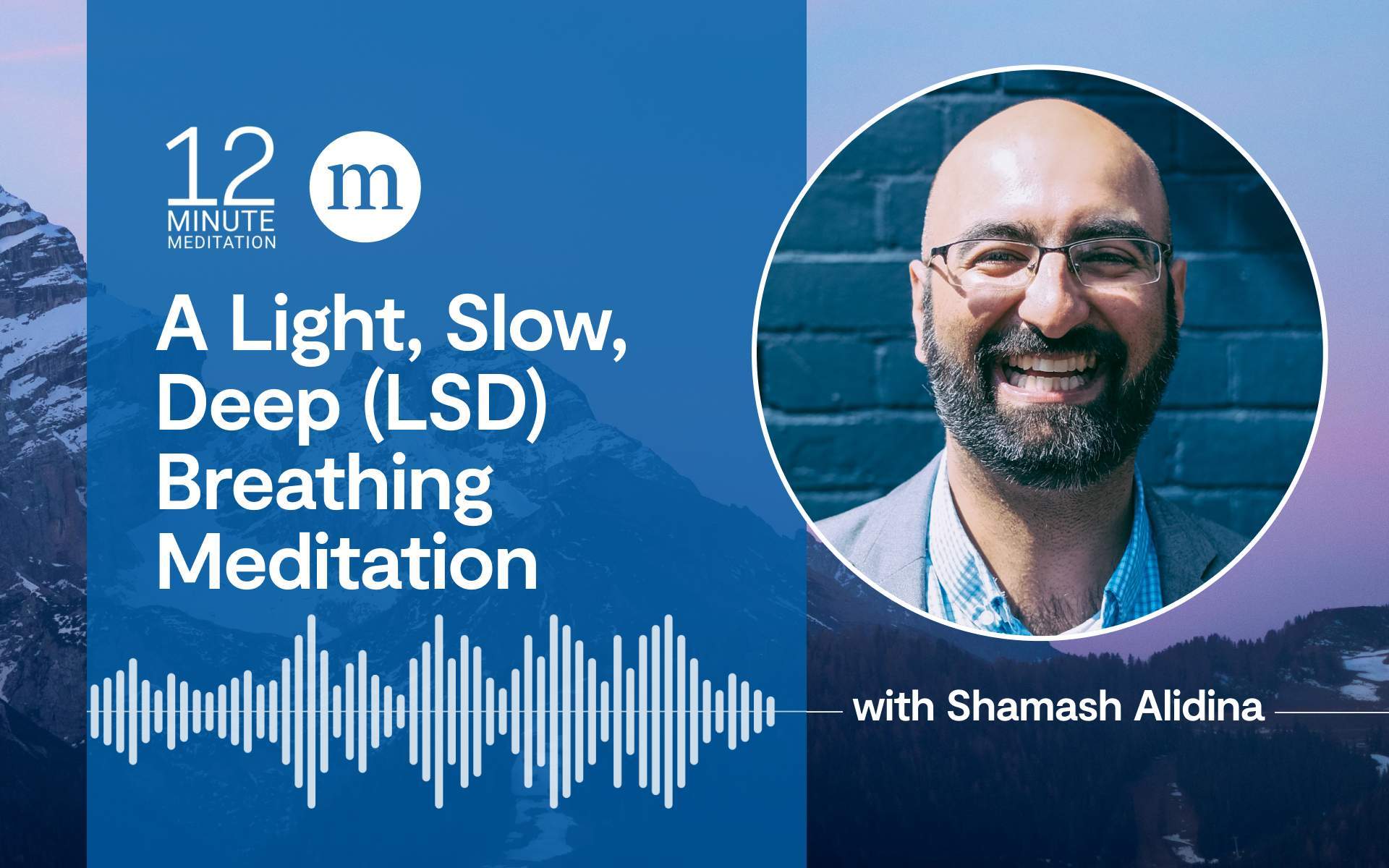
Against this backdrop of modern respiratory challenges, Shamash Alidina introduces the Light, Slow, Deep (LSD) breathing technique as a deliberate and accessible method to reset the body’s natural breathing rhythms. This approach directly counters the common tendency to breathe "backwards"—too hard, too fast, and with excessive effort. Instead, LSD breathing invites individuals to embrace an opposite, more natural, and ultimately more beneficial pattern. The three qualities—Light, Slow, and Deep—work synergistically to activate the parasympathetic nervous system, guiding the body into a state of calm, relaxation, and restoration.
Lightness: The Art of Effortless Inhalation
The "Light" aspect of LSD breathing emphasizes a gentle, almost imperceptible inhalation and exhalation. It encourages breathing through the nose, minimizing the volume of air taken in with each breath, and reducing the muscular effort involved. This lightness is crucial because it helps to maintain an optimal balance of oxygen and carbon dioxide. Counterintuitively, taking smaller, gentler breaths can actually improve oxygen delivery to the cells. This is due to the Bohr effect, a physiological principle stating that hemoglobin releases oxygen more readily in the presence of higher carbon dioxide levels. When we breathe too deeply and rapidly, we exhale too much carbon dioxide, which can paradoxically reduce oxygen availability to tissues. Light breathing helps to conserve CO2, facilitating more efficient oxygen utilization. Furthermore, the subtle nature of light breathing reduces the physiological "alarm" signals that fast, forced breathing can inadvertently send to the brain, thereby promoting a sense of safety and calm.
Slowness: Cultivating Rhythmic Serenity
The "Slow" component of LSD breathing focuses on elongating both the inhale and exhale, establishing a steady, rhythmic pace. This deliberate deceleration of breath is a direct pathway to calming the nervous system. Slow breathing has been scientifically shown to enhance heart rate variability (HRV), a marker of cardiovascular health and autonomic balance. A higher HRV indicates a more resilient and adaptable nervous system, better equipped to manage stress and recover from daily challenges. By slowing the breath, individuals stimulate the vagus nerve, a major component of the parasympathetic nervous system. Vagal nerve stimulation is known to reduce heart rate, lower blood pressure, and decrease the production of stress hormones like cortisol. This gentle pacing of the breath acts like a natural tranquilizer, signaling to the brain that the body is safe and can transition into a state of rest and repair, effectively "turning down the volume" on the internal noise of stress.
Deepness: Engaging the Diaphragm for Full Vitality
The "Deep" element of LSD breathing refers to the engagement of the diaphragm, the dome-shaped muscle located at the base of the lungs. Most people, especially when stressed, tend to breathe shallowly using only their chest muscles. Diaphragmatic or "belly" breathing, in contrast, involves the gentle expansion of the abdomen on inhalation and contraction on exhalation, allowing the lungs to fill more fully and efficiently. This deep engagement of the diaphragm not only maximizes oxygen intake and carbon dioxide expulsion but also provides a gentle internal massage to abdominal organs, aiding digestion and promoting relaxation.
Deep, diaphragmatic breathing also has a profound impact on lymphatic drainage and blood circulation, particularly venous return to the heart. It physically massages the vagus nerve, which runs through the diaphragm, further enhancing its calming effects. By consciously cultivating deep, abdominal breaths, individuals can unlock their full respiratory potential, promoting greater lung capacity, improving oxygenation throughout the body, and firmly anchoring the body in a state of grounded tranquility. Together, these three qualities—Light, Slow, Deep—form a powerful trifecta, meticulously designed to counteract maladaptive breathing patterns and usher in a state of profound physiological and psychological balance.
The Architect of Calm: Shamash Alidina and the Mindfulness Movement
The integration of the Light, Slow, Deep breathing technique into mainstream wellness discourse owes much to practitioners like Shamash Alidina. As a seasoned mindfulness expert, Alidina has been practicing mindfulness since 1998 and has dedicated over a decade to full-time teaching. His extensive experience and accessible approach are reflected in his successful training organization and influential publications, including "Mindfulness For Dummies" and "The Mindful Way Through Stress." Alidina’s work is characterized by a commitment to demystifying mindfulness and making practical tools for well-being accessible to a broad audience, a mission that resonates deeply with the simplicity and effectiveness of LSD breathing.
Alidina’s advocacy for breathwork aligns perfectly with the broader mindfulness movement, which has gained significant traction in recent decades. Mindfulness, defined as paying attention in a particular way: on purpose, in the present moment, and non-judgmentally, fundamentally relies on the breath as its primary anchor. The breath is always present, always in the now, making it an ideal focal point for cultivating present-moment awareness. By teaching individuals to observe and intentionally regulate their breath, Alidina and other mindfulness educators empower them to develop greater self-awareness, emotional resilience, and the capacity to navigate life’s challenges with greater equanimity. The increasing scientific validation of mindfulness-based interventions, coupled with the rising rates of stress and anxiety globally, has solidified the position of experts like Alidina at the forefront of a crucial public health conversation.
Broader Implications: Integrating Breathwork into Daily Living
The implications of adopting conscious breathing practices like LSD extend far beyond individual stress reduction; they represent a significant paradigm shift in how societies approach health, productivity, and overall quality of life. As awareness grows regarding the profound connection between breath and well-being, these techniques are poised to become foundational elements across various sectors.
Enhancing Well-being in Workplaces and Educational Settings
In corporate environments, chronic stress and burnout are significant contributors to reduced productivity, absenteeism, and high employee turnover. Progressive organizations are increasingly recognizing the value of integrating mindfulness and breathwork into their wellness programs. Simple, guided breathing exercises, like the LSD technique, can be easily incorporated into daily routines, offering employees practical tools to manage workplace stress, enhance focus during demanding tasks, and improve overall mental clarity. Anecdotal evidence from companies adopting such practices often reports improved team morale, reduced stress levels, and a more positive work culture. Similarly, in educational settings, students face immense academic pressure, social anxieties, and the constant stimulation of digital devices. Teaching children and adolescents accessible breathing techniques can equip them with vital self-regulation skills, improving their ability to concentrate, manage test anxiety, and foster emotional resilience, thereby creating more conducive learning environments.
The Future of Breath: A Foundational Practice for Holistic Health
The scientific community continues to explore the therapeutic potential of breathwork in addressing a wide range of health conditions, from chronic pain and insomnia to post-traumatic stress disorder (PTSD) and depression. Experts in integrative medicine increasingly advocate for breathwork as a non-pharmacological, cost-effective intervention that empowers individuals to take an active role in their own healing journey. The accessibility of techniques like Light, Slow, Deep breathing—requiring no special equipment, space, or significant financial investment—makes them ideal candidates for widespread public health initiatives.
The future envisions a world where conscious breathing is not merely a niche practice but a universally recognized and integrated component of preventative health and daily self-care, much like exercise or nutrition. As societies grapple with the complexities of modern living, the simple yet profound act of re-learning to breathe light, slow, and deep offers a powerful, accessible pathway to reclaiming inner calm, optimizing physiological function, and fostering a more resilient and harmonious existence for all.