rifanmuazin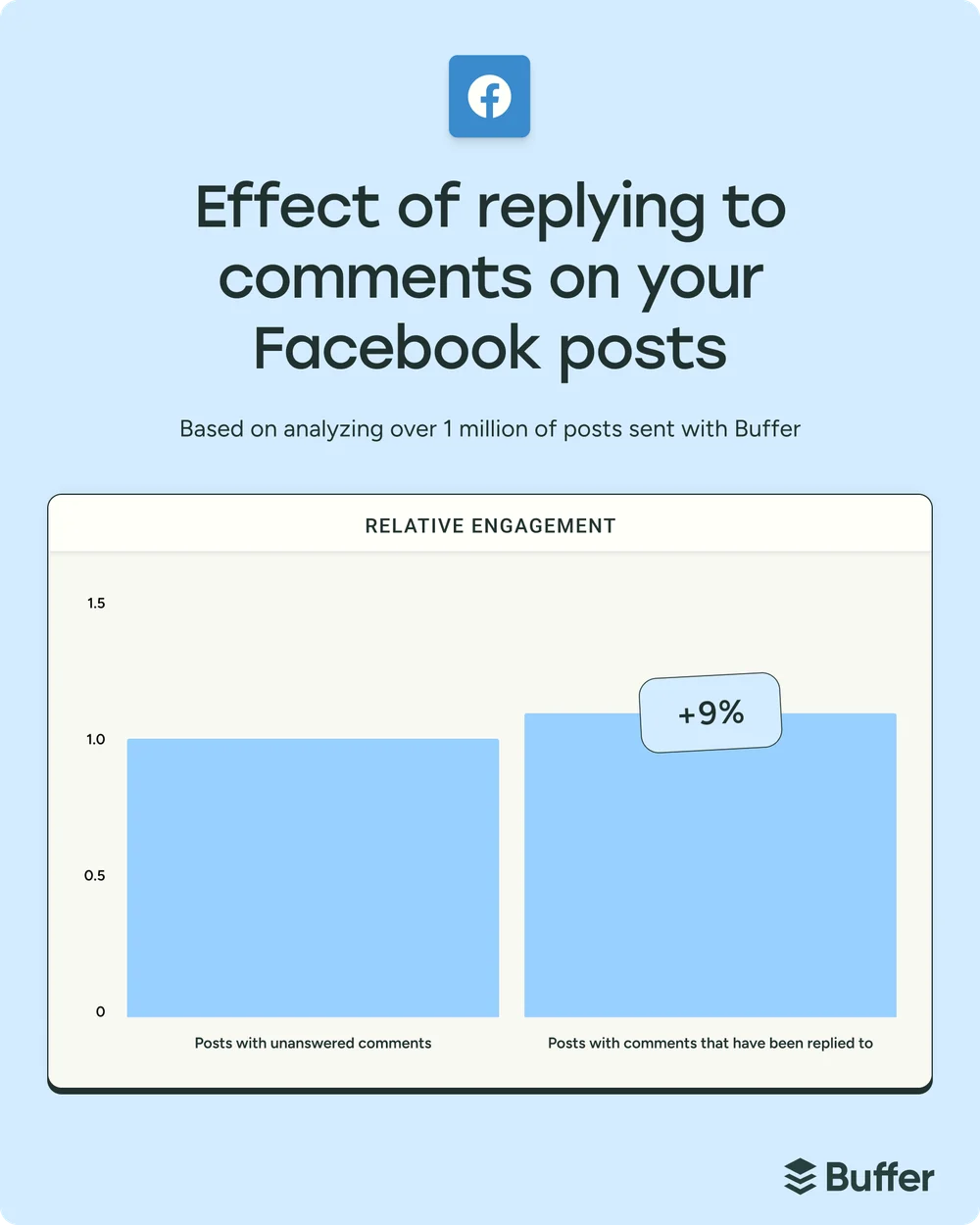
A groundbreaking cross-platform study conducted by social media management platform Buffer has unveiled compelling evidence that actively responding to comments on Facebook posts can significantly enhance engagement, leading to an average increase of 9.5% in reactions. This finding, derived from an extensive analysis of over one million Facebook posts, offers a crucial insight for creators, small business owners, and marketers striving to optimize their reach on one of the world’s most expansive digital platforms. While the percentage lift may appear modest compared to newer, more conversation-driven networks, its consistency across a massive dataset underscores its strategic importance within Facebook’s mature and broad ecosystem.
The Power of Interaction: Unpacking the Key Findings
The study, led by Buffer’s senior data scientist Julian Winternheimer, meticulously investigated the relationship between creator replies and post reactions across various social media platforms. Focusing specifically on Facebook, the research revealed that posts where creators engaged with comments consistently garnered approximately 9.5% more reactions—including likes, loves, and other emotional responses—than posts where comments went unanswered. This effect was found to be statistically significant (p < 0.001), lending strong credibility to the conclusion.
The significance of this discovery is amplified when considering Facebook’s immense scale. With over three billion monthly active users, even a single-digit percentage increase in engagement can translate into millions more interactions, substantially extending a post’s visibility and potential impact. For individuals and entities battling the complexities of algorithmic reach, this simple yet powerful tactic represents an accessible and immediate strategy for improvement.
Comparatively, the 9.5% lift on Facebook is less dramatic than the 42% increase observed on Threads or the 30% on LinkedIn in the same study. However, experts note that Facebook, as a highly established and diverse platform, often exhibits more nuanced engagement patterns. Its broad user base, encompassing a wide spectrum of digital literacy and interaction habits, means that consistent, albeit smaller, gains are particularly noteworthy. The study’s ability to isolate this effect amidst the platform’s vastness highlights the enduring value of genuine human interaction in an increasingly algorithm-driven environment.
Methodology: A Deep Dive into Data Analysis
To arrive at these robust conclusions, Julian Winternheimer employed a sophisticated analytical approach designed to eliminate confounding variables. The dataset comprised approximately one million Facebook posts that had received at least one comment, spanning a diverse array of accounts ranging from nascent creators to established brands, across various niches and audience sizes.
Crucially, the study utilized a fixed-effects regression model. This advanced statistical method did not compare larger Facebook Pages to smaller ones directly, which would have yielded limited insights due to inherent differences in audience, content strategy, and posting frequency. Instead, the model compared each individual account’s performance against its own historical data. By holding constant unique account characteristics such as audience size, content niche, geographic location, and posting frequency, the analysis effectively asked: "Does this specific Facebook Page perform better when it replies to comments versus when it does not?" This methodology allowed for a precise measurement of the impact of comment replies, isolating it from other factors that typically influence engagement.
As a secondary validation, a Z-score analysis was performed. This method assessed how far above or below an account’s "normal" performance level each post performed. Both the fixed-effects regression and the Z-score analysis converged on the same conclusion, reinforcing the reliability of the findings. The Z-score analysis indicated that roughly 53.8% of Facebook Pages performed better when they actively replied to comments, with these posts registering slightly above their typical engagement baseline, while posts without replies hovered at or below it.
An intriguing aspect of the data emerged during preliminary examinations: raw median numbers initially suggested that posts without replied-to comments actually had slightly higher median reactions (22) than those with replies (16). This apparent contradiction underscores the critical importance of advanced statistical modeling. Without controlling for the vast differences in page size and activity levels, such raw comparisons can be highly misleading. Once the fixed-effects model accounted for these disparities, the true, positive impact of replying to comments became clear.
It is also important to note the study’s specific focus on "reactions" (likes, loves, etc.) rather than total engagement, which would typically include comments. This deliberate choice was made to avoid circularity in the metric, ensuring that the study was truly measuring the effect of comments on other forms of engagement, rather than simply measuring more comments. While the study indicates a strong correlation, the researchers prudently acknowledge that it cannot definitively establish a causal link—it’s possible that highly engaging posts naturally attract more comments, prompting creators to reply more often. However, the consistency of this pattern across six different platforms analyzed by Buffer’s study significantly strengthens the inference of a positive relationship.
Facebook’s Algorithmic Landscape and the Value of Interaction
Facebook’s algorithm is a sophisticated system designed to prioritize what it terms "meaningful interactions." In this context, comments—especially back-and-forth exchanges—serve as a powerful signal to the algorithm that a piece of content is sparking genuine discussion and resonance among users. When a creator replies to a comment, they are not merely acknowledging a user; they are actively cultivating a conversation thread that signals to the algorithm that the post is generating real value, moving beyond passive consumption to active engagement.
Several factors likely contribute to why replying to comments translates into higher reactions on Facebook:
- Extended Visibility: Each reply refreshes a post’s activity, potentially pushing it higher in users’ feeds or resurfacing it for the original commenter’s connections. This extended lifecycle in the feed means more opportunities for diverse audiences to discover and react to the content.
- Relationship Signals: Facebook’s algorithm tracks the interaction history between accounts. Consistent replies from a Page to its followers build a stronger connection signal, making it more probable that future posts from that Page will appear in those followers’ feeds. Over time, these micro-interactions compound, fostering a loyal and engaged community.
- Social Proof and Authenticity: An active comment section, especially one featuring replies from the creator or brand, signals to other users that there is a real, responsive entity behind the Page. This human element can significantly increase trust and relatability, encouraging more users to pause their scroll and engage with the content, knowing their input might be acknowledged.
- Algorithmic Favoritism: By fostering "meaningful interactions," creators are aligning directly with Facebook’s stated goals for its platform. The algorithm is designed to reward content that promotes community and discussion, making replies a direct pathway to improved organic reach.
Strategic Implications for Creators and Businesses
For the vast ecosystem of creators, small business owners, and marketing professionals, the study’s findings offer actionable insights that can be immediately integrated into their social media strategies. While a 9.5% lift might not seem revolutionary compared to the rapid growth seen on newer platforms, its application on Facebook’s monumental scale promises significant dividends. A consistent, modest increase in reactions on a platform with billions of users can translate into substantial growth in audience reach, brand awareness, and ultimately, business objectives.
The beauty of this strategy lies in its simplicity and cost-effectiveness. Unlike tactics that require significant budget allocation for advertising or complex content overhauls, replying to comments can be implemented with zero additional tools or financial investment. It leverages existing content and audience interactions, transforming passive viewership into active community building.
Expert Recommendations for Enhanced Engagement
Managing comments across multiple platforms, including Facebook, Instagram, LinkedIn, Threads, YouTube, and TikTok, can feel overwhelming. Drawing on insights from the study and best practices in social media management, experts recommend the following approaches to effectively leverage comment replies:
- Time Blocking for Replies: Instead of attempting to respond to every comment as it appears, which can be unsustainable, dedicate specific time blocks each day for engagement. Two 10-to-15-minute windows—perhaps mid-morning and early evening—can efficiently cover comments generated throughout the day, catching different audience segments.
- Prioritize Conversational Replies: A simple "thank you" is polite, but it does little to perpetuate engagement. Focus on replies that encourage further conversation by asking follow-up questions, offering additional insights, or expanding on a point made in the comment. Phrases like "That’s a great observation; have you also considered…?" or "You’ve hit on a key point; we’ve found that…" can keep the discussion vibrant.
- Reply While the Post is Fresh: The Facebook algorithm, like many others, heavily weights early engagement. Responding to comments within the first few hours after a post goes live can signal to the algorithm that the content is resonating, potentially boosting its initial distribution and attracting more reactions. This strategy underscores the importance of scheduling posts during times when creators are available to actively engage.
- Utilize Integrated Management Tools: For creators and businesses managing multiple social profiles, toggling between various apps for comment moderation can be inefficient. Social media management platforms, such as Buffer’s Community tab, consolidate comments from all connected platforms into a single dashboard. This allows for streamlined replies directly from one interface, minimizing distractions and saving valuable time. Some tools also offer features like "Comment Score," which tracks reply consistency over time, helping to cultivate a habit of active engagement.
The Enduring Value of Human Connection
The Buffer study, encompassing millions of posts and nearly 100,000 Facebook profiles, provides a compelling, data-backed argument for the enduring power of genuine interaction. While the 9.5% reaction lift on Facebook may be at the lower end of the spectrum compared to more nascent, conversation-centric platforms, it is perfectly fitting for a mature network with diverse engagement patterns.
The overarching takeaway from this extensive analysis is refreshingly straightforward: effective social media engagement doesn’t necessitate deciphering obscure algorithmic secrets or exploiting loopholes. Instead, it reaffirms the fundamental principle of reciprocity—showing up for the audience who has shown up for you. While a 9.5% lift is not guaranteed for every single Facebook Page (the study found positive effects for approximately 54% of profiles), the odds are demonstrably tilted in favor of those willing to invest the time in authentic interaction. On a platform of Facebook’s unparalleled reach, even a modest, consistent boost in reactions can yield profoundly significant results over time, fostering stronger communities and amplifying content impact. This study serves as a clear directive for anyone serious about cultivating a thriving presence on Facebook: engage, converse, and connect.