Muhammad Hendra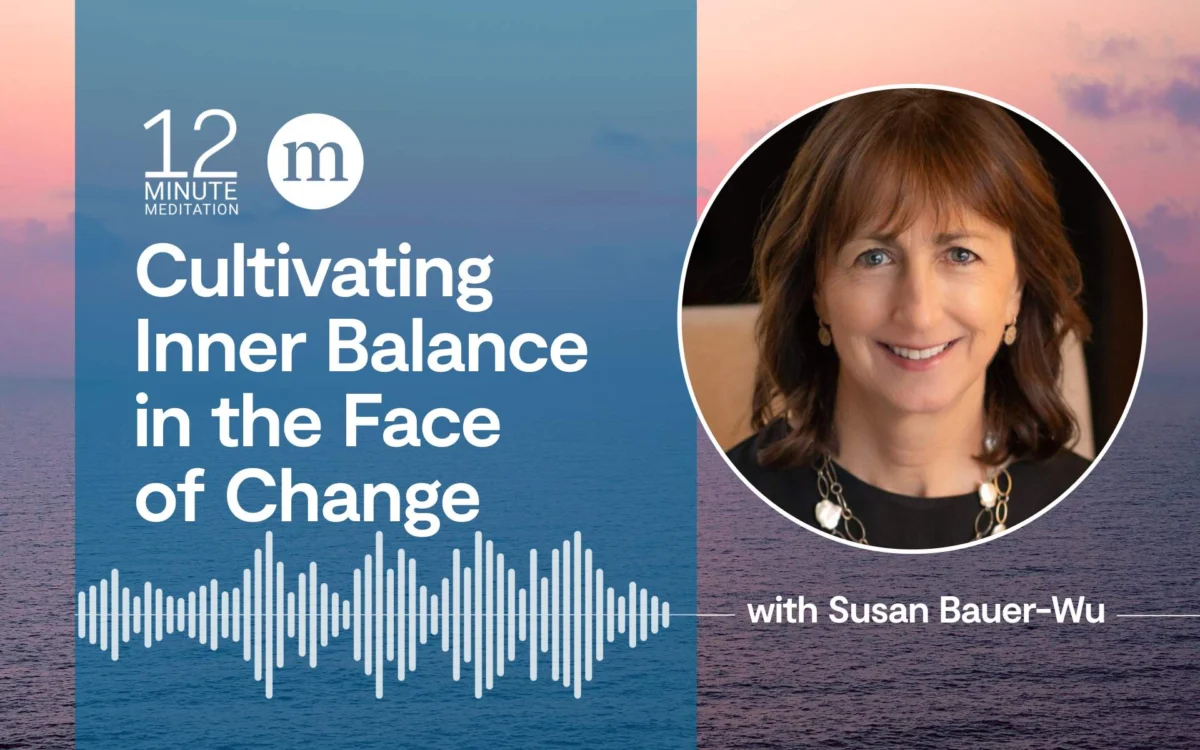
In an era characterized by relentless change and pervasive uncertainty, the pursuit of inner stability has become a paramount concern for individuals navigating the complexities of modern life. Susan Bauer-Wu, PhD, a distinguished registered nurse, nursing educator, mindfulness teacher, and researcher, and current President of the Mind & Life Institute, has introduced a guided meditation specifically designed to ground individuals in the present moment and cultivate a profound sense of equanimity. This practice offers a structured approach to fostering balance amidst life’s inherent fluctuations, providing a vital tool for mental and emotional resilience.
Understanding Equanimity in a Dynamic World
Equanimity, derived from the Latin aequus (even, level) and animus (mind, spirit), refers to a state of mental calmness, composure, and evenness of temper, especially in a difficult situation. It stands in stark contrast to the reactive mind, which often responds to external stimuli with immediate emotional upheaval or resistance. Bauer-Wu’s teachings emphasize equanimity as a quality that is simultaneously receptive and stable, allowing individuals to experience life’s "ups and downs" with a feeling of ease and allowing, rather than attachment or aversion. This state enables one to be fully present to both suffering and joy, integrating an understanding mind with a compassionate heart. Critically, equanimity is not indifference; it does not imply a lack of care or concern. Instead, it signifies an ability to allow life to unfold without personalizing events or becoming unduly attached to specific outcomes, fostering an open and gentle engagement with each passing moment.
The relevance of cultivating equanimity has surged in recent decades. Global events, rapid technological advancements, and the constant influx of information contribute to elevated stress levels and a heightened sense of instability. According to a 2023 report by the American Psychological Association, stress levels among adults continue to be significantly high, with many citing political climate, inflation, and global uncertainty as major stressors. In such an environment, the capacity to maintain inner balance becomes not merely a personal preference but a crucial psychological skill for overall well-being and effective functioning.
The Scientific Foundation: Mindfulness and Mental Well-being
The practice of cultivating equanimity is deeply intertwined with mindfulness, a core contemplative practice that has garnered substantial scientific interest over the past four decades. Mindfulness, defined as paying attention in a particular way: on purpose, in the present moment, and non-judgmentally, serves as the bedrock upon which equanimity can be built. Research into Mindfulness-Based Stress Reduction (MBSR) and other mindfulness-based interventions (MBIs) has consistently demonstrated their efficacy in reducing psychological distress, improving emotional regulation, and enhancing overall mental health.
Studies published in journals such as Psychosomatic Medicine and Mindfulness have shown that regular mindfulness practice can lead to significant reductions in symptoms of anxiety, depression, and chronic pain. Neuroscientific investigations, utilizing fMRI and other brain imaging techniques, have revealed that mindfulness meditation is associated with structural and functional changes in the brain. For instance, research indicates increased gray matter density in areas associated with learning and memory (hippocampus), self-awareness, compassion, and introspection (temporo-parietal junction, posterior cingulate cortex, cerebellum), and a decrease in amygdala volume, an area linked to fear and stress processing. These changes underpin the enhanced emotional regulation and cognitive flexibility that characterize a state of equanimity.
The development of equanimity through mindfulness is often described as a gradual process. Initially, practitioners learn to observe their thoughts, emotions, and bodily sensations without judgment. Over time, this non-reactive observation fosters a sense of detachment from transient experiences, allowing individuals to maintain a stable inner state regardless of external circumstances. This scientific validation underscores the practical utility and profound impact of practices like Bauer-Wu’s guided meditation.
Bridging Contemplation and Science: The Mind & Life Institute
Susan Bauer-Wu’s leadership role as President of the Mind & Life Institute places her at the forefront of efforts to integrate contemplative wisdom with modern scientific inquiry. Founded in 1987, the Mind & Life Institute emerged from dialogues between His Holiness the Dalai Lama and Western scientists, aiming to explore the interface between scientific understanding and contemplative traditions. The Institute’s mission is to alleviate suffering and promote flourishing by building a rigorous scientific understanding of the mind and integrating it with contemplative practices and perspectives.
Under Bauer-Wu’s guidance, the Institute continues to champion interdisciplinary research, education, and public engagement programs that investigate the nature of the mind, consciousness, and well-being. This includes funding cutting-edge research, organizing conferences that bring together leading scientists and contemplative scholars, and disseminating knowledge to a global audience. The Institute’s work has been instrumental in shifting the perception of meditation and mindfulness from esoteric spiritual practices to legitimate fields of scientific study with tangible benefits for human health and society. Bauer-Wu’s tenure reflects a commitment to rigorous inquiry while honoring the deep wisdom traditions that inform these practices, ensuring that the insights gleaned are both scientifically sound and ethically applied.
Susan Bauer-Wu: A Leader in Contemplative Science and Healthcare
Dr. Susan Bauer-Wu’s professional trajectory uniquely positions her to advocate for and teach practices like equanimity. As a registered nurse and nursing educator, she possesses a deep understanding of human suffering and the imperative for compassionate care. Her clinical experience, particularly in palliative care and oncology, provided firsthand insight into the profound challenges individuals face when confronting serious and life-limiting illnesses. This background informs her approach to mindfulness, emphasizing its practical application in mitigating distress and fostering resilience in the most trying circumstances.
Her academic career has involved extensive research into the impact of mindfulness and compassion on health outcomes. Her book, Leaves Falling Gently: Living Fully with Serious & Life-Limiting Illness through Mindfulness, Compassion & Connectedness, stands as a testament to her dedication to applying contemplative principles to healthcare. The book offers practical guidance for patients, caregivers, and healthcare professionals on how to cultivate inner peace and connection in the face of illness, a context where equanimity becomes not just desirable but essential for maintaining dignity and quality of life. Bauer-Wu’s work illustrates how mindfulness and equanimity can empower individuals to engage with their experiences, however difficult, with greater acceptance and inner strength, shifting focus from a struggle against reality to a gentle unfolding of life. Her combined expertise in clinical care, education, research, and organizational leadership provides a comprehensive and credible voice in the burgeoning field of contemplative science.
The Practice of Grounding: Inside Bauer-Wu’s Guided Meditation
While the full script of Susan Bauer-Wu’s guided meditation is intended for direct engagement, the underlying principles and typical elements of such a practice can be outlined to understand its mechanism for cultivating equanimity. A guided meditation to foster inner balance in the face of change typically begins with establishing a stable posture and bringing awareness to the breath, serving as an anchor to the present moment. This initial phase helps to quiet the reactive mind and shift attention inward.
Subsequent stages often involve a body scan, where attention is systematically directed to different parts of the body, observing sensations without judgment. This practice enhances interoception (awareness of internal bodily states) and helps to release physical tension, which is often a manifestation of mental stress. As the meditation progresses, practitioners are guided to acknowledge thoughts and emotions as they arise, recognizing them as transient mental events rather than immutable truths. This non-judgmental observation is crucial for developing equanimity, as it allows individuals to create space between themselves and their internal experiences, preventing identification with fleeting feelings of anxiety or discomfort.
A key element in cultivating equanimity is the invitation to embrace all experiences—pleasant, unpleasant, and neutral—with an attitude of acceptance and gentle curiosity. The meditation might encourage visualizing life as a series of waves, emphasizing the ability to "ride the waves of change" with a sense of ease and allowing, rather than resisting or being overwhelmed. The practice often culminates in cultivating self-compassion and extending compassion to others, recognizing shared humanity in the face of life’s challenges. The essence of Bauer-Wu’s meditation lies in fostering an inner environment where one can meet each moment with care and gentleness, detaching from outcomes and finding a stable center amidst constant flux.
Broader Implications: Equanimity for Societal Resilience
The growing recognition of the benefits of equanimity extends beyond individual well-being, impacting various sectors of society. In healthcare, integrating mindfulness and equanimity practices is transforming patient care, offering non-pharmacological approaches to pain management, stress reduction, and mental health support. Educational institutions are increasingly incorporating mindfulness curricula, teaching children and adolescents essential skills for emotional regulation, focus, and resilience, which are foundational for developing equanimity early in life.
In the corporate world, organizations are recognizing that a workforce capable of maintaining inner balance amidst pressure and change is more productive, innovative, and less prone to burnout. Leadership development programs now often include mindfulness training to enhance decision-making, empathy, and strategic foresight. The implications for societal resilience are profound. As individuals cultivate greater equanimity, they become better equipped to respond thoughtfully to collective challenges, fostering more constructive dialogue, reducing conflict, and promoting a sense of shared responsibility.
The accessibility of these practices, through platforms like guided meditations, books, and workshops, signifies a cultural shift towards prioritizing mental and emotional health. Organizations like the Mind & Life Institute play a pivotal role in ensuring that these practices are understood through a scientific lens, making them more palatable and acceptable to mainstream society. As global uncertainties persist, the collective capacity for equanimity may prove to be a critical factor in navigating future crises, promoting sustainable well-being, and building a more compassionate and stable world. The work of individuals like Susan Bauer-Wu contributes significantly to this evolving landscape, offering practical pathways to cultivate an essential inner resource for the challenges of our time.