
 Ali Ikhwan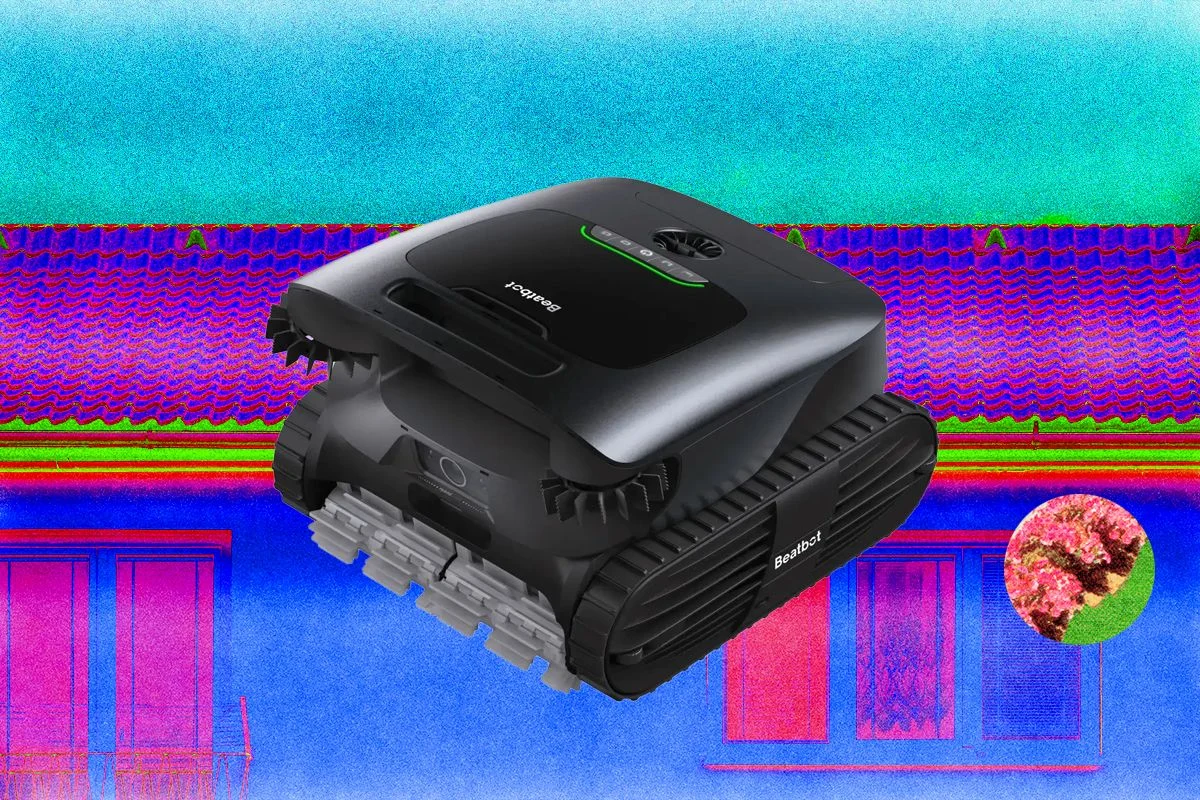
The Evolution of Pool Cleaning Technology: A 40-Year Chronology
The trajectory of pool cleaning technology began in earnest during the 1980s with the proliferation of pressure-side and suction-side cleaners. These units, which remain in use in many older installations, rely on the pool’s primary circulation pump or a dedicated booster pump to provide the energy required for movement and debris collection. While reliable, these systems are tethered by long, buoyant hoses that present navigation obstacles for swimmers and place significant mechanical strain on the pool’s filtration infrastructure.
By the early 2000s, the industry introduced the first generation of electronic corded cleaners. These robots operated independently of the pool’s pump, using internal motors to drive wheels or tracks and to vacuum debris into onboard filter bags. However, the "floating cable" remained a persistent point of failure, often tangling or restricting the robot’s reach in complex pool geometries.
The current era, defined by the 2024–2026 product cycles, marks the dominance of high-capacity lithium-ion battery technology. Modern units are now entirely cordless, utilizing sophisticated onboard sensors and artificial intelligence to map pool environments, detect debris in real-time, and execute precision cleaning patterns that were previously impossible.
Market Leaders and Premium Performance: The Beatbot AquaSense 2 Ultra
At the apex of the 2026 market stands the Beatbot AquaSense 2 Ultra, a unit that exemplifies the "all-in-one" philosophy of modern pool maintenance. Retailing at approximately $3,000, this flagship model represents the high-water mark for integrated cleaning capabilities.

Technical specifications for the AquaSense 2 Ultra include:
- Cleaning Coverage: Floor, walls, and waterline scrubbing, supplemented by surface skimming.
- Power Density: A high-capacity battery providing up to six hours of continuous underwater operation.
- Navigation: AI-powered debris detection and mapping.
- Weight: 29 pounds, necessitating a robust physical build for deployment and retrieval.
Industry analysis suggests that while the $3,000 price point is the highest in the consumer segment, the inclusion of surface skimming—traditionally a separate task—justifies the cost for owners of large, high-maintenance pools. The unit’s ability to float to the surface upon completion of its cycle addresses a long-standing pain point in robotic cleaning: the difficulty of retrieving heavy equipment from the pool floor.
Endurance and Automation: The iGarden M1-100 and K Pro Series
For pool owners prioritizing longevity and reduced intervention, the iGarden M1-100 has introduced a paradigm shift in battery endurance. By utilizing a 12,500 mAh battery, the M1-100 can achieve up to 10 hours of runtime in floor-only mode. This allows the unit to remain in the water for up to three weeks on a programmed intermittent cleaning schedule.
The iGarden K Pro further pushes these boundaries with a 15-hour battery life, catering to the "lazy pool owner" demographic. This trend toward extended "docking" in the water is supported by a shift in industrial design. Manufacturers are increasingly moving away from purely functional, "utility-grade" aesthetics toward sleeker, automotive-inspired designs that consumers find less objectionable when the robot is visible in the pool for extended periods.
Market Accessibility: The Rise of Budget-Friendly AI
The democratization of robotic pool technology is best evidenced by the Dreame Z1 Pro. Initially launched with a premium list price of $1,499, the unit has seen significant price adjustments, recently stabilizing near $549. Despite its lower cost, the Z1 Pro maintains advanced features such as:

- Underwater Navigation: Onboard sensors that generate graphical pool maps within a mobile app.
- Magnetic Charging: A plug-free system that mitigates the risk of water ingress into the charging port.
- Remote Operation: A dedicated remote control to summon the robot to the waterline for retrieval.
Market analysts note that the Z1 Pro’s success indicates a "trickle-down" effect, where features once reserved for $2,000+ units—such as waterline scrubbing and app-based mapping—are now becoming standard in the sub-$1,000 category.
Specialized Maintenance: The Robotic Surface Skimmer
While most robots focus on the pool floor and walls, a secondary market has emerged for dedicated surface skimmers. Debris that floats—such as leaves, pollen, and insects—can overwhelm traditional in-wall skimmers and eventually sink, increasing the workload for floor cleaners.
The Beatbot iSkim Ultra ($649) represents the most advanced entry in this category. Unlike "dumb" skimmers that move randomly, the iSkim Ultra uses front-mounted sensors to avoid collisions with pool tiles, protecting both the robot and the pool’s finish. These units are typically solar-powered, allowing for indefinite deployment during summer months. However, design challenges remain; for instance, the iSkim Ultra’s front-mounted debris basket release has been noted for accidental triggering when the unit encounters sharp corners in L-shaped pools.
Comparative Data and Testing Metrics
Standardized testing of robotic pool cleaners in 2026 relies on both qualitative and quantitative metrics. A standard testing protocol involves an L-shaped pool of approximately 468 square feet with a "PebbleTec" surface—a popular but challenging aggregate finish that requires significant scrubbing power.
Quantitative Debris Capture Test:

- Baseline: Real-world accumulation of organic dirt and local foliage.
- Controlled Test: 100 silk crafting leaves are scattered and allowed to sink.
- Efficiency Rating: The percentage of leaves captured versus those remaining after one full cycle.
High-end models like the Polaris VRX iQ+ and the Beatbot Sora 70 consistently achieve capture rates exceeding 95%, while budget models often struggle with "dead zones" in pool corners or on steep transitions between shallow and deep ends.
The Corded vs. Cordless Debate: Safety and Reliability
Despite the surge in battery-powered models, a segment of the market—and some industry veterans—maintains that corded robots remain superior for specific applications.
The Case for Corded Units (e.g., Polaris VRX iQ+):
- Unlimited Runtime: Ideal for very large residential or commercial pools that require constant filtration.
- Consistent Power: No degradation in scrubbing force as a battery nears depletion.
- Safety Record: While lithium-ion batteries are generally safe, there have been isolated reports of fires during charging. Corded units bypass this specific risk profile.
The Case for Battery-Powered Units:
- Maneuverability: No "cord memory" or tangling, allowing for complex pathfinding.
- Aesthetics: Clears the pool deck of trip hazards and unsightly 60-to-70-foot cables.
- Ease of Use: Simplifies the deployment process, encouraging more frequent cleaning.
Broader Impact and Industry Implications
The shift toward robotic pool maintenance has significant implications for the professional pool service industry. Traditionally, pool technicians spent a large portion of their weekly visits manually vacuuming and brushing. With the advent of reliable robots, the role of the "pool guy" is shifting toward chemical management and mechanical system repair, as the routine cleaning is increasingly handled by AI.

Furthermore, the environmental impact of these robots is notably positive. Robotic cleaners operate on low-voltage DC power, consuming significantly less energy than the 1.5 or 2.0 horsepower pumps required to drive traditional hydraulic cleaners. By reducing the runtime required for the main pool pump, robotic cleaners can save homeowners hundreds of dollars in annual energy costs.
As we move toward the latter half of the decade, the integration of pool robots into the broader "Smart Home" ecosystem is expected to deepen. Future iterations are likely to include integrated water chemistry sensors that communicate directly with automated chemical dispensers, creating a fully autonomous loop of pool maintenance that requires human intervention only for the emptying of a debris basket. For now, the 2026 lineup offers a diverse range of solutions that turn the once-arduous task of pool cleaning into a background process managed by silicon and software.







