
 Ali Ikhwan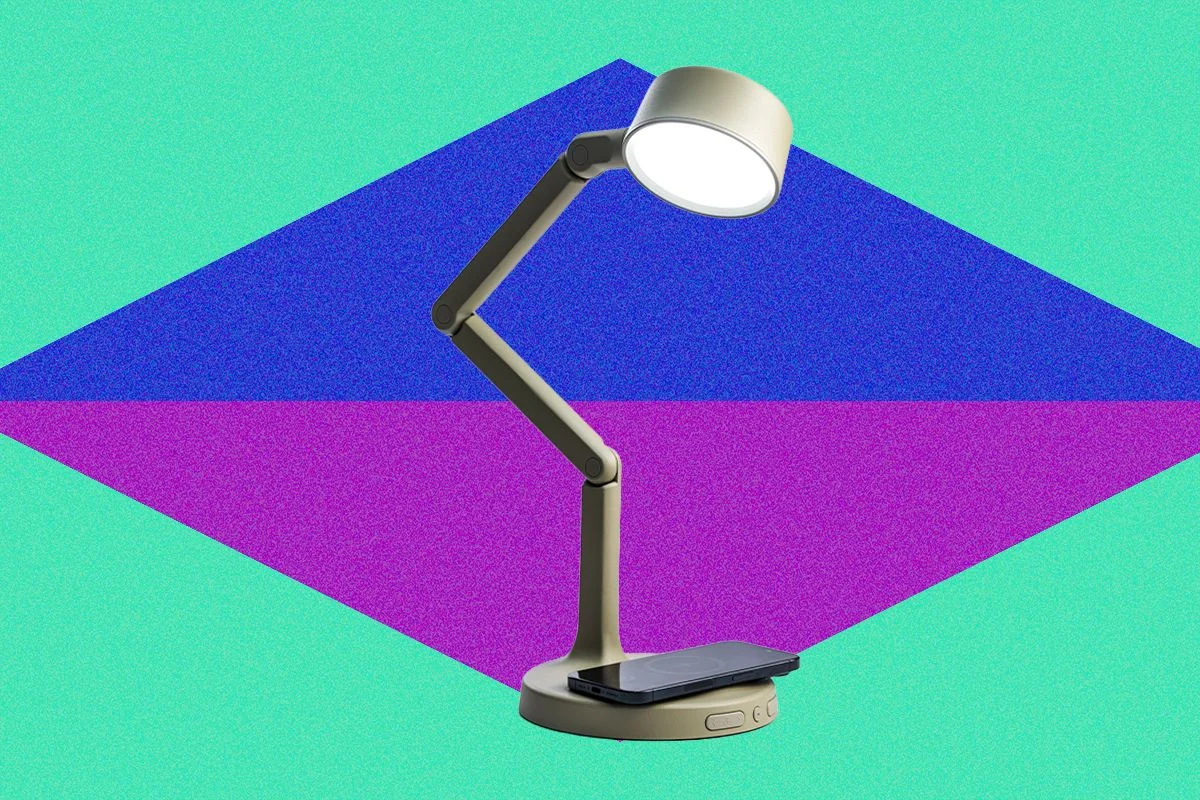
The portable lighting industry has seen a significant shift toward multi-functional devices that cater to both productivity and wellness, a trend exemplified by the recent release and field performance of the Lume Cube Edge Light Go. Designed as a versatile solution for professionals, readers, and content creators, the lamp integrates advanced LED technology with a focus on circadian rhythm preservation. The device features a minimalist base equipped with two primary tactile slider buttons that allow for granular control over both color temperature and light intensity. One toggle manages the warmth of the output, transitioning from a stark, cold white light to a deep red hue, while the second toggle adjusts the brightness from a high-intensity 1,000-lumen output down to a soft, glareless glow.
The user interface of the Edge Light Go employs a dual-interaction model. Hard taps on the capacitive buttons allow users to skip through preset increments, facilitating quick adjustments between common lighting profiles. Conversely, holding the toggle down results in a gradual transition, a design choice intended to provide precise control over the environment. Technical observations indicate that these transitions are calibrated for subtlety, occasionally moving at a pace that requires close observation to confirm the change. This precision is targeted at users who require specific Kelvin ratings for photography or those sensitive to sudden changes in ambient light.
Technical Specifications and Power Efficiency
From a technical standpoint, the Edge Light Go delivers a maximum output of 1,000 lumens. In the context of traditional lighting, this intensity is roughly equivalent to a 75-watt incandescent bulb, providing sufficient illumination for detailed task work, professional video conferencing, or ambient room lighting. The device is powered by an internal rechargeable battery, the performance of which is tied directly to the selected output levels. At its maximum 1,000-lumen brightness, the battery life is rated at approximately five hours. However, when the intensity is reduced to levels suitable for reading or background lighting, the operational window extends significantly, reaching up to twelve hours on a single charge.
This efficiency profile suggests a strategic balance between portability and power. By utilizing lithium-ion battery technology optimized for LED draw, the Edge Light Go addresses a common pain point in the portable lamp market: the trade-off between brightness and longevity. The inclusion of a USB-C charging port ensures compatibility with modern charging standards, allowing the device to be powered by laptops, portable power banks, or wall adapters.
The Integration of Red Light Technology and Circadian Science
A defining feature of the Edge Light Go is its dedicated red-light mode, a functional addition that aligns with emerging research into sleep hygiene and chronobiology. While recent discourse has debated the extent to which blue light from smartphone screens prevents sleep, the scientific community generally agrees on the impact of specific light wavelengths on the human body. Numerous clinical studies have demonstrated that blue light wavelengths—predominant in standard LED and fluorescent lighting—can suppress the production of melatonin, the hormone responsible for regulating the sleep-wake cycle.

By contrast, red light has a much higher wavelength and lower frequency, which does not interfere with the body’s circadian rhythm in the same manner. The inclusion of a red-light setting in the Edge Light Go is positioned as a tool for "liminal space" management—the transition period between active wakefulness and sleep. The light allows users to maintain visibility for reading or navigation in a dark environment without triggering the physiological alertness associated with daylight-spectrum lighting.
However, the application of red light is a subject of ongoing scientific and social debate. While red light therapy has gained significant traction on social media platforms like TikTok, where it is often touted for various health benefits, the scientific literature presents a more nuanced view. Some studies suggest that while red light is superior to blue light for melatonin preservation, certain spectral distributions of red light may be associated with "negative emotions" or psychological discomfort in some individuals before sleep. Despite these varied findings, the Edge Light Go provides the user with the agency to choose their spectral environment, a feature rarely found in standard bedside or task lamps.
Safety Features and User Experience
To mitigate the risk of battery depletion and unintended sleep disruption, Lume Cube has integrated an automatic 25-minute shut-off timer into the Edge Light Go. This feature serves a dual purpose: it preserves battery life for users who may fall asleep while reading and prevents the "startle response" associated with waking up in a fully illuminated room in the middle of the night. This automated safety measure reflects a growing consumer demand for "smart" features in "dumb" appliances, where the device anticipates human error or physiological needs.
In terms of physical design, the lamp is built for portability, featuring multiple hinges that allow for a wide range of motion. This adjustability is critical for its role as a "Go" device, intended to move from a desk to a bedside table or a lounge area. However, the pursuit of a lightweight, portable form factor has resulted in specific ergonomic trade-offs.
Structural Design and Stability Challenges
Despite its technological advancements, the Edge Light Go faces challenges regarding its physical equilibrium. The base of the lamp is relatively lightweight, which facilitates ease of transport but impacts the device’s center of gravity. Analysis of the lamp’s structural integrity reveals that if the arm is extended forward from its lowest hinge at a sharp angle, the unit has a tendency to tip over. This instability is most prevalent when the lamp is used as a focused reading light on soft surfaces, such as the arm of a couch, or when positioned at the edge of a bedside table.
This quirk highlights the ongoing engineering challenge in the portable electronics sector: balancing the desire for lightweight materials with the functional necessity of physical stability. For users who require extreme angles of illumination, the tipping hazard necessitates careful positioning or the use of a secondary weight on the base, which may detract from the minimalist aesthetic of the product.

Chronology of Lume Cube and the Portable Lighting Market
The development of the Edge Light Go is part of a broader evolution for Lume Cube, a company that initially gained prominence by producing high-intensity, compact lighting for GoPro users and outdoor photographers. Over the last decade, the company has successfully pivoted to address the "prosumer" market, driven largely by the surge in remote work and the professionalization of home-based content creation.
- Phase 1: The Creator Boom (2014-2018): Lume Cube establishes a foothold with rugged, waterproof LED cubes for action cameras.
- Phase 2: The Desktop Shift (2019-2021): Recognizing the shift toward video conferencing, the company launches the original Edge Desk Light, a clamped solution for home offices.
- Phase 3: Portability and Wellness (2022-Present): The introduction of the "Go" series and the integration of red-light features represent a move into the lifestyle and wellness sectors, acknowledging that the boundaries between work, rest, and play have become increasingly blurred.
Broader Impact and Market Implications
The release of the Edge Light Go reflects a maturing market for LED peripherals. Consumers are no longer satisfied with simple "on/off" functionality; there is a documented preference for devices that offer environmental customization. The global LED lighting market, valued at over $70 billion, is increasingly driven by "human-centric lighting" (HCL). HCL focuses on how lighting affects human performance, mood, and health, rather than just providing illumination.
Industry analysts suggest that products like the Edge Light Go are precursors to a more integrated home lighting ecosystem where "bio-adaptive" lighting becomes the standard. The ability to switch from a high-CRI (Color Rendering Index) white light for professional color grading to a melatonin-friendly red light for evening relaxation addresses a specific niche of high-end users who view their environment as a tool for optimization.
Furthermore, the portable nature of the device taps into the "digital nomad" and "flexible housing" trends. As more professionals work from non-traditional spaces, the demand for high-quality, battery-powered tools that can be easily packed and moved continues to grow. The Edge Light Go, despite its stability issues, serves as a high-performance alternative to traditional clip-on book lights or bulky desk lamps.
In conclusion, the Lume Cube Edge Light Go represents a sophisticated intersection of task lighting and wellness technology. While it maintains the high output and color accuracy required for professional use, its foray into circadian-friendly red lighting sets it apart from traditional competitors. The minor design flaws, specifically regarding the base weight, are characteristic of the current limitations in portable product engineering. However, for the demographic of users who prioritize spectral control and portability, the device offers a unique value proposition that bridges the gap between the office and the bedroom.







