Muhammad Hendra
Accessing real happiness when we are struggling can feel impossible—but it’s also a key to our recovery, healing, and well-being. The human experience often presents a paradox: the periods of greatest difficulty, marked by personal hardship or empathetic witnessing of others’ pain, frequently coincide with a profound disconnect from genuine joy. This disconnect can manifest as a sense of happiness being unreachable, or even as a betrayal of the struggle, fostering a belief that one does not "deserve" positive emotions during arduous times. However, contemporary psychological and neuroscientific research increasingly underscores the profound fortifying effect of consciously acknowledging and internalizing moments of beauty, tenderness, connection, and gratitude. This deliberate cultivation of positive experiences, far from diminishing the gravity of struggle, actively builds resilience, replenishes emotional reserves, and crucially, empowers individuals to engage in their own healing journeys while simultaneously enabling them to offer meaningful support to others.
The Psychological Imperative: Why Happiness Isn’t a Luxury in Hardship
The notion that happiness is a mere luxury, attainable only after all fundamental needs are met and all struggles resolved, is a pervasive misconception that impedes recovery and well-being. Historically, psychological frameworks often emphasized problem-focused coping, where the primary objective was to eliminate stressors. While essential, this approach sometimes overlooked the critical role of emotional regulation and the cultivation of positive affect during ongoing adversity. The challenge lies in reconciling the natural human inclination to focus on threats and deficits during times of stress—a survival mechanism—with the equally vital need for psychological nourishment.
When individuals face personal crises, such as illness, loss, financial instability, or systemic injustices, the immediate emotional landscape is often dominated by grief, anxiety, anger, or despair. In such states, the brain’s default mode network, coupled with increased activity in the amygdala (the brain’s fear center), can make it difficult to perceive or process positive stimuli. This cognitive bias towards negative information, while protective in acute threats, can become maladaptive in prolonged struggles, contributing to cycles of rumination and exacerbating feelings of hopelessness. The idea of "allowing" happiness, as proposed by mindfulness educators like Wendy O’Leary, is not about denying or suppressing pain, but rather about expanding one’s capacity to hold both difficult emotions and moments of uplift simultaneously. This dual awareness is central to developing robust emotional resilience.
A Shifting Paradigm: From Problem-Solving to Resource-Building
The evolution of psychological thought, particularly with the rise of positive psychology in the late 20th and early 21st centuries, has brought a nuanced understanding to this dynamic. Researchers such as Martin Seligman and Barbara Fredrickson have championed the study of human strengths and optimal functioning, even in the face of adversity. Fredrickson’s "Broaden-and-Build" theory, for instance, posits that positive emotions broaden an individual’s momentary thought-action repertoire, leading to the discovery of novel and creative actions, ideas, and social bonds. Over time, these broadened repertoires build enduring personal resources, ranging from intellectual and physical resources to social and psychological resources. In the context of struggle, this means that even small moments of joy or contentment can initiate an upward spiral, counteracting the narrowing effects of negative emotions and fostering adaptive coping strategies.
This shift in perspective highlights that happiness is not merely an outcome of overcoming challenges but can be a powerful resource for navigating them. It is an active ingredient in the process of healing and growth, enabling individuals to maintain perspective, sustain effort, and connect with sources of support.
The Neuroscience of Noticing the Good: Building Brain Resilience
The practice of intentionally "taking in the good," a concept popularized by neuroscientist and psychologist Rick Hanson, is deeply rooted in our understanding of brain plasticity. Our brains have a natural "negativity bias," an evolutionary leftover that makes us more attuned to threats and negative experiences. This bias means that while negative experiences are readily "downloaded" into our neural structures, positive ones often require conscious effort to be fully integrated.
Hanson’s "HEAL" steps (Have a positive experience, Enrich it, Absorb it, Link it) provide a structured approach to counteracting this bias. When we consciously "have" a positive experience—be it a beautiful sunset, a kind word, a moment of gratitude, or a sense of accomplishment—and then "enrich" it by savoring it for 10-20 seconds, we activate neural circuits associated with reward and pleasure. By "absorbing" this feeling, allowing it to sink into our body and mind, we strengthen these neural pathways. Finally, "linking" it to a negative experience (by gently bringing the positive feeling to mind while acknowledging a difficult one) can help to gradually soften the impact of the negative experience, integrating it into a broader, more resilient emotional landscape.
Neuroimaging studies support these principles. Engaging in practices like gratitude journaling or mindfulness meditation has been shown to increase activity in the prefrontal cortex, a region associated with executive functions, emotional regulation, and decision-making. These practices can also help to modulate the activity of the amygdala, reducing its hyper-responsiveness to stress. Furthermore, cultivating positive emotions can lead to increased vagal tone, a measure of the activity of the vagus nerve, which plays a crucial role in regulating the body’s internal organs and is linked to better emotional regulation, empathy, and overall well-being. The consistent practice of noticing and savoring positive moments literally rewires the brain, building thicker neural pathways for joy, contentment, and resilience, much like regular physical exercise builds muscle.
Wendy O’Leary’s Guided Practice: A Gentle Invitation to Presence
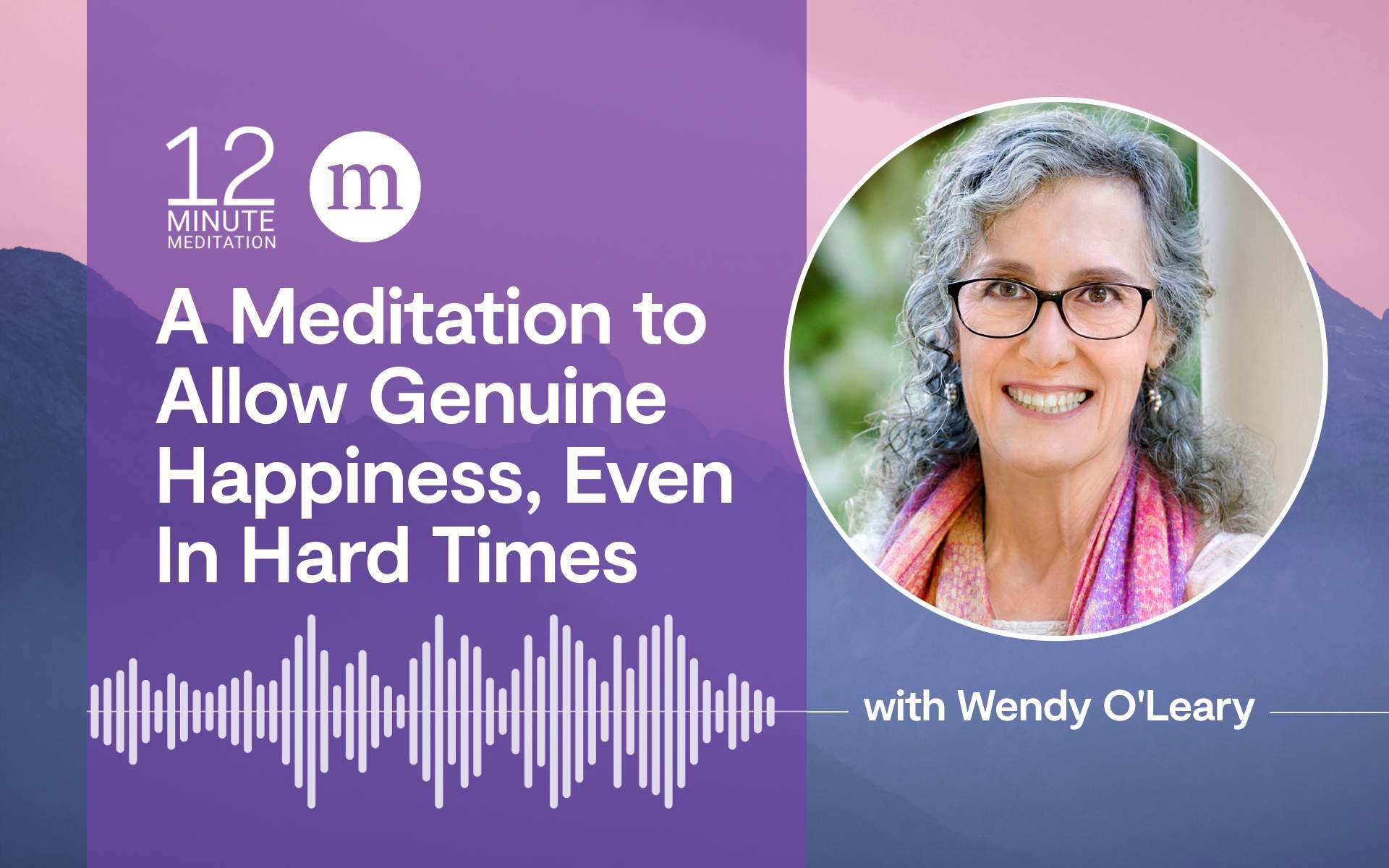
Against this rich psychological and neuroscientific backdrop, mindfulness educators like Wendy O’Leary offer practical tools to integrate these concepts into daily life. O’Leary, a certified mindfulness teacher and author specializing in emotional resilience, guides individuals toward a practice of "allowing genuine happiness, even in hard times." Her approach, adapted from Rick Hanson’s work, is not prescriptive but invitational, recognizing that forcing happiness is counterproductive. Instead, it encourages a gentle shift in attention, acknowledging the reality of struggle while simultaneously tuning into the "shimmer" of positive experiences that coexist.
The practice typically involves a meditative script that prompts self-reflection: "How can I even think about being happy when I’m having such a hard time right now?" or "How can I be happy when there is so much suffering in the world?" These questions validate the common internal conflict before gently guiding the practitioner to consider that both truths can coexist. The core of the practice lies in consciously making "a little space for the good" as one is able, enhancing capacity and well-being without diminishing the reality of hardship. This nuanced approach aligns with the principles of self-compassion, where one acknowledges pain with kindness while also recognizing common humanity and personal resources.
Chronology of Mindfulness and Its Integration into Well-being Practices
The integration of such practices into mainstream wellness is a relatively recent development, though its roots are ancient.
- Ancient Origins (c. 5th century BCE onwards): Mindfulness and compassion practices originate in Eastern contemplative traditions, particularly Buddhism.
- Mid-20th Century: Western scholars and practitioners begin to explore these traditions, often within academic and spiritual contexts.
- Late 1970s – Early 1980s: Jon Kabat-Zinn establishes the Mindfulness-Based Stress Reduction (MBSR) program at the University of Massachusetts Medical School. This marks a pivotal moment, secularizing mindfulness and integrating it into clinical settings for chronic pain and stress.
- 1990s: Research on MBSR and other mindfulness-based interventions begins to proliferate, demonstrating efficacy for various mental and physical health conditions. Psychologists like Daniel Siegel start exploring the neuroscience of mindfulness and attachment.
- Early 2000s: The Rise of Positive Psychology. Martin Seligman’s work brings focus to strengths, well-being, and flourishing, complementing the stress-reduction aspects of mindfulness with an emphasis on cultivating positive emotions. Rick Hanson’s work on "taking in the good" emerges, explicitly linking neuroplasticity with positive experience.
- 2010s: Mindfulness and self-compassion gain widespread acceptance in education, corporate wellness, and public health. Educators like Wendy O’Leary begin to develop specialized programs and resources for different demographics, including children and families, emphasizing emotional resilience.
- Present Day: The field continues to expand, with ongoing research into the precise mechanisms and applications of mindfulness, self-compassion, and positive psychology practices for individual and societal well-being. This includes integrating these practices into therapeutic modalities, educational curricula, and workplace environments globally.
Wendy O’Leary’s contributions, including her children’s books and upcoming card deck "Let’s Grow Happiness," exemplify this contemporary phase, translating complex psychological principles into accessible tools for fostering emotional resilience from an early age.
Expert Perspectives and Broader Endorsements
The scientific community and mental health organizations increasingly endorse the principles underlying O’Leary’s work. Dr. Kristin Neff, a leading researcher in self-compassion, frequently highlights how acknowledging pain with kindness creates a supportive inner environment that paradoxically allows for more positive emotions to emerge. "Self-compassion isn’t about ignoring our suffering; it’s about being present with it in a kinder, more balanced way," Neff states. "And when we do that, we create space for joy, even amidst our difficulties."
Similarly, organizations like the American Psychological Association (APA) and the National Alliance on Mental Illness (NAMI) emphasize holistic approaches to mental health that include fostering positive coping mechanisms and emotional regulation skills. While not explicitly endorsing specific individuals, their guidelines for promoting resilience often align with the concepts of mindfulness, gratitude, and cultivating positive affect. Research published in journals like Emotion and Journal of Personality and Social Psychology consistently provides empirical evidence for the benefits of these practices, from reducing symptoms of depression and anxiety to enhancing overall life satisfaction and physical health outcomes.
The growing body of evidence has led to the integration of mindfulness and positive psychology interventions into various therapeutic settings. Cognitive Behavioral Therapy (CBT) and Dialectical Behavior Therapy (DBT), for instance, often incorporate mindfulness techniques to help clients manage distressing emotions and cultivate a more balanced perspective. Healthcare providers are increasingly recommending mindfulness-based interventions as complementary therapies for chronic pain, stress-related conditions, and mood disorders.
Broader Societal Implications: Cultivating Collective Well-being
The implications of cultivating genuine happiness amidst adversity extend far beyond individual well-being. In an era marked by global challenges—from pandemics and climate change to socio-political unrest—the collective capacity for resilience is paramount. Societies composed of individuals who can navigate personal and collective struggles while maintaining a connection to positive emotions are inherently more adaptable, empathetic, and capable of constructive action.
- Public Health: Promoting these practices at a population level can contribute to better mental health outcomes, potentially reducing the burden on healthcare systems by fostering proactive self-care and stress management. Educational campaigns and accessible resources can empower communities to build their emotional resilience.
- Education: Integrating emotional literacy and mindfulness practices into school curricula, as Wendy O’Leary’s work for children suggests, can equip younger generations with essential life skills. Teaching children to "take in the good" from an early age can lay a foundation for greater emotional intelligence, empathy, and resilience throughout their lives, potentially mitigating the rise of mental health issues in adolescence.
- Workplaces: High-stress work environments often lead to burnout and decreased productivity. Organizations that encourage mindfulness and well-being practices report higher employee engagement, lower turnover rates, and improved team dynamics. Promoting moments of gratitude and connection can transform workplace culture, making it more supportive and humane.
- Social Cohesion: When individuals are better equipped to manage their own emotional landscapes, they are often more available to connect with and support others. This fosters stronger social bonds, enhances empathy, and builds more compassionate communities capable of addressing shared challenges with greater unity and understanding.
The practice of allowing happiness, even when life is undeniably hard, is not a superficial pursuit of fleeting pleasure. Instead, it is a profound act of self-preservation and a strategic investment in one’s capacity for sustained well-being and compassionate engagement with the world. It acknowledges the complexity of human experience—that both joy and sorrow can coexist—and offers a scientifically supported pathway to navigate adversity with greater strength, grace, and an enduring sense of hope. By embracing this approach, individuals can not only foster their own healing but also become powerful agents of healing and resilience for those around them, contributing to a more emotionally robust and interconnected society.