Muhammad Hendra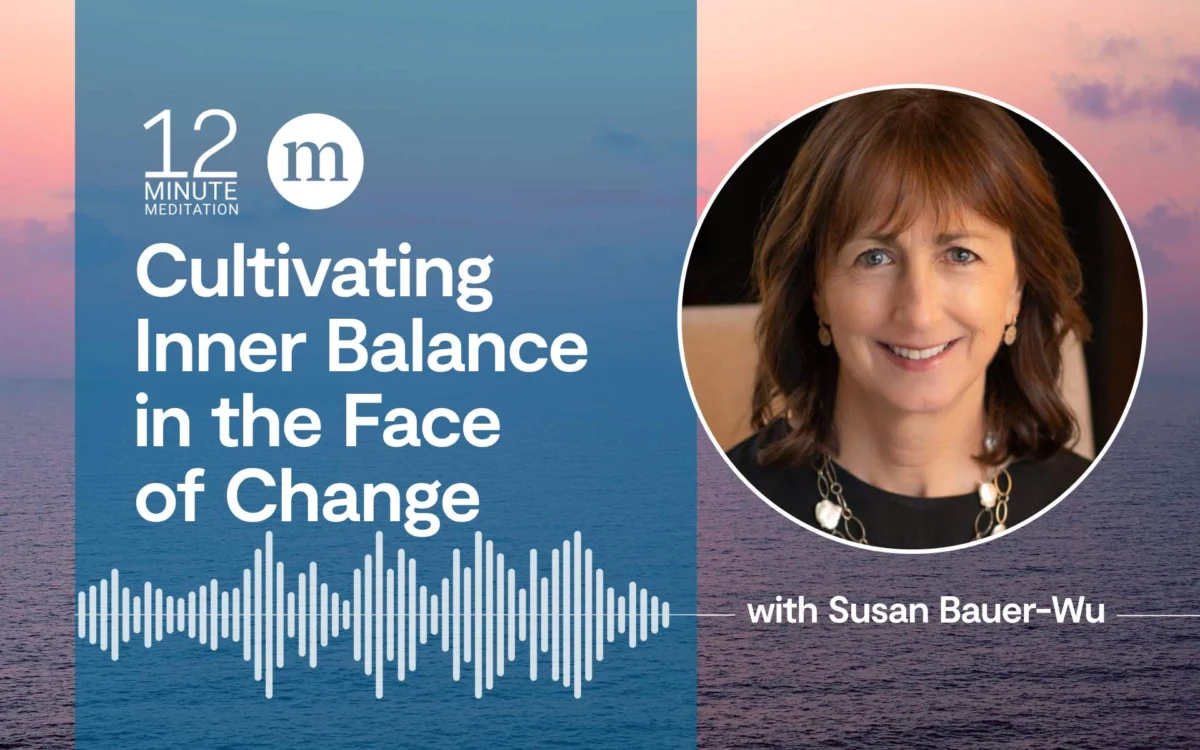
Life is characterized by perpetual flux, presenting individuals with the ongoing challenge of maintaining equilibrium amidst ceaseless transformation. In response to this universal human experience, Susan Bauer-Wu, a distinguished figure in contemplative science and practice, has provided a guided meditation specifically designed to anchor individuals in the present moment and foster a profound sense of equanimity. This practice is presented as a crucial tool for navigating the inherent "ups and downs" of existence, offering a stable and receptive inner state that stands in stark contrast to reactive responses often triggered by external circumstances.
Equanimity, derived from the Latin aequus (even, level) and animus (mind, spirit), signifies a mental calmness, composure, and evenness of temper, especially in a difficult situation. It is more than mere tranquility; it embodies a profound balance and an understanding mind coupled with a compassionate heart. Far from indicating indifference or a lack of care, equanimity allows for an open engagement with life as it unfolds, free from attachment to specific outcomes or the tendency to personalize events. It enables individuals to be fully present to both suffering and joy, cultivating a feeling of ease and allowing as they navigate the waves of change. This quality represents a foundational pillar of mental well-being, fostering resilience and emotional intelligence in a world increasingly defined by uncertainty.
The Foundational Role of Equanimity in Modern Life
The concept of equanimity, while deeply rooted in ancient philosophical and spiritual traditions such as Buddhism and Stoicism, has gained significant traction in contemporary psychology and neuroscience. In an era marked by rapid technological advancement, global connectivity, and often overwhelming information flow, the capacity to remain balanced and non-reactive is more critical than ever. Research indicates that chronic stress, anxiety, and burnout are prevalent issues globally, impacting public health and productivity. The World Health Organization (WHO) has recognized stress-related conditions as a leading cause of disability worldwide, underscoring the urgent need for effective coping mechanisms. Equanimity offers such a mechanism, providing an internal compass that helps individuals remain centered irrespective of external turbulence.
Psychologically, equanimity is linked to enhanced emotional regulation, improved decision-making, and greater cognitive flexibility. Individuals who cultivate this quality are often better equipped to manage adversity, exhibit higher levels of empathy, and maintain healthier interpersonal relationships. Neuroscientific studies, particularly those employing functional magnetic resonance imaging (fMRI), have shown that regular mindfulness and meditation practices associated with equanimity can lead to measurable changes in brain structure and function. These changes include increased grey matter density in areas related to attention, emotion regulation, and self-awareness (such as the prefrontal cortex and insula), and decreased activity in the amygdala, the brain’s fear center. This physiological evidence lends strong support to the practical benefits of practices like those advocated by Bauer-Wu.
Susan Bauer-Wu: A Bridge Between Science and Contemplative Practice
Susan Bauer-Wu, with her extensive background as a registered nurse and nursing educator, a mindfulness teacher, and a researcher, embodies the interdisciplinary approach necessary to bridge ancient wisdom with modern scientific understanding. Her academic and clinical expertise provides a unique lens through which to teach and research the practical applications of mindfulness and equanimity, particularly in high-stakes environments such as healthcare. Her dual qualifications as a PhD and RN highlight her commitment to evidence-based practices, ensuring that her teachings are not only spiritually enriching but also scientifically sound and clinically relevant.
As the President of the Mind & Life Institute, Bauer-Wu leads an organization dedicated to exploring the intersection of science and contemplative wisdom to foster a flourishing world. Founded in 1987, the Mind & Life Institute facilitates dialogues and research collaborations between scientists, scholars, and contemplative practitioners, including His Holiness the Dalai Lama. Under Bauer-Wu’s leadership, the Institute champions rigorous scientific inquiry into the benefits of contemplative practices, disseminating knowledge that can inform public health, education, and social policy. Her role at such a prominent institution underscores her influence in shaping the discourse around mindfulness, compassion, and equanimity on a global scale.
Bauer-Wu’s authorship of "Leaves Falling Gently: Living Fully with Serious & Life-Limiting Illness through Mindfulness, Compassion & Connectedness" further illustrates her practical application of equanimity. In this work, she addresses the profound challenges faced by individuals dealing with severe health conditions, offering mindfulness as a pathway to acceptance, peace, and meaningful living even in the face of suffering. The book’s themes resonate deeply with the core principles of equanimity—allowing life to unfold without attachment, embracing presence, and cultivating a compassionate heart—demonstrating their applicability in some of life’s most arduous circumstances. Her work in this area provides a tangible example of how equanimity can transform the experience of illness, not by denying pain, but by changing one’s relationship to it.
The Evolution of Mindfulness and Its Mainstreaming
The journey of mindfulness from ancient contemplative traditions to a widely recognized practice in Western society is a relatively recent phenomenon, accelerating significantly in the late 20th and early 21st centuries. A pivotal moment in this timeline was the establishment of the Mindfulness-Based Stress Reduction (MBSR) program by Jon Kabat-Zinn at the University of Massachusetts Medical School in 1979. Kabat-Zinn, a molecular biologist, secularized traditional Buddhist meditation practices, stripping them of religious dogma and presenting them as a systematic approach to stress reduction and pain management. This scientific framing was crucial for its acceptance within the medical and psychological communities.
Following MBSR’s initial success, the 1990s and 2000s saw a burgeoning interest in mindfulness research. Universities across the globe began establishing mindfulness centers and conducting studies on its efficacy for a range of conditions, including anxiety disorders, depression, chronic pain, and even addiction. The proliferation of scientific articles, books, and public programs led to a significant increase in public awareness and adoption. By the 2010s, mindfulness had permeated various sectors:
- Healthcare: Integrated into patient care plans, particularly in palliative care, oncology, and mental health services. Major hospitals and clinics now offer mindfulness programs.
- Corporate Sector: Companies like Google, Apple, and Goldman Sachs have implemented mindfulness training for employees to improve focus, reduce stress, and enhance leadership skills.
- Education: Mindfulness programs are being introduced in schools from kindergarten to university level to help students manage stress, improve concentration, and foster emotional intelligence.
- Military: The U.S. military has explored mindfulness training to enhance resilience and reduce post-traumatic stress disorder (PTSD) among service members.
This widespread adoption is supported by a growing body of evidence. A meta-analysis published in JAMA Internal Medicine in 2014, for instance, reviewed 47 trials involving over 3,500 participants, concluding that mindfulness meditation programs showed moderate evidence of improving anxiety, depression, and pain. Further research continues to explore its benefits for various populations and conditions, solidifying its place as a legitimate and effective intervention for mental and physical well-being. The rise of digital mindfulness applications and online platforms has also made practices like Bauer-Wu’s guided meditation more accessible to a global audience, democratizing access to these powerful tools.
The Mechanics of Cultivating Inner Balance
Bauer-Wu’s guided meditation on equanimity, while not fully detailed in its script, would typically involve several key components common to mindfulness practices aimed at fostering this quality. These practices are designed to systematically train the mind to observe internal and external experiences without immediate judgment or reactive engagement, thereby cultivating a sense of spaciousness and non-attachment.
- Anchoring in the Present Moment: The meditation would likely begin with instructions to bring attention to the breath or bodily sensations, serving as an anchor to the present. This initial step helps to ground the practitioner, drawing their awareness away from distracting thoughts about the past or future.
- Observing Thoughts and Emotions: A crucial element of cultivating equanimity involves observing thoughts and emotions as they arise, without getting entangled in their narratives or emotional charge. The practice encourages acknowledging these internal experiences as transient phenomena, like "clouds passing in the sky," rather than definitive truths or personal attacks.
- Non-Identification and Non-Attachment: The meditation would guide practitioners to recognize that they are not their thoughts or emotions. This distinction is vital for equanimity, allowing for the experience of feelings without being overwhelmed or defined by them. It involves releasing the habitual tendency to cling to pleasant experiences or resist unpleasant ones, fostering an attitude of acceptance.
- Cultivating an Open and Receptive Awareness: The practice aims to broaden awareness to encompass all experiences—pleasant, unpleasant, and neutral—with an attitude of openness and gentleness. This receptive stance is key to equanimity, allowing life to unfold without resistance.
- Compassionate Intention: While not indifference, equanimity is often cultivated alongside compassion. The meditation might include phrases or intentions that extend kindness and understanding not only to oneself but also to others, recognizing the shared human experience of change and impermanence. This compassionate lens helps prevent equanimity from becoming cold or detached.
Through consistent practice of these elements, individuals gradually develop the capacity to "ride the waves of change" with a greater sense of stability and ease. The goal is not to eliminate challenges or difficult emotions, but to transform one’s relationship to them, fostering an inner resilience that allows for peace even amidst chaos.
Implications and Broader Impact of Equanimity
The cultivation of equanimity, as promoted by experts like Susan Bauer-Wu, carries profound implications across individual, societal, and global scales.
At the individual level, the consistent practice of equanimity leads to enhanced psychological well-being. Individuals report reduced levels of stress, anxiety, and depression, alongside improved emotional regulation and cognitive function. This translates into greater resilience in the face of personal crises, a stronger sense of self-awareness, and an increased capacity for joy and contentment. It empowers individuals to respond thoughtfully rather than react impulsively, fostering personal growth and inner freedom.
Societally, a widespread embrace of equanimity could contribute to more compassionate and understanding communities. When individuals are less reactive and more accepting of differences, interpersonal conflicts may diminish, and collaborative efforts can flourish. In leadership roles, equanimous individuals are likely to make more measured and ethical decisions, less swayed by immediate pressures or personal biases. This could lead to more stable and just institutions, from government to education to business. The ability to hold differing perspectives with an open mind, a hallmark of equanimity, is essential for constructive dialogue and societal progress in an increasingly polarized world.
In the healthcare context, Bauer-Wu’s work particularly highlights the transformative power of equanimity for both patients and caregivers. For those facing serious and life-limiting illnesses, equanimity offers a pathway to navigate fear, pain, and loss with greater grace and dignity. It helps patients accept their changing physical realities without being consumed by despair, fostering a sense of peace and presence in their remaining time. For healthcare professionals, who often experience high levels of burnout and emotional fatigue, cultivating equanimity can enhance their capacity for empathy without becoming emotionally overwhelmed, allowing them to provide care more sustainably and effectively.
Globally, fostering equanimity can contribute to a more peaceful and interconnected world. By reducing reactivity and increasing compassionate understanding at an individual level, there is a cumulative effect that can ripple outwards, potentially influencing international relations and global problem-solving. In an era of complex global challenges, from climate change to social inequality, the capacity to approach problems with a calm, understanding, and non-attached mind is invaluable for finding sustainable and equitable solutions.
In conclusion, Susan Bauer-Wu’s guided meditation on equanimity is more than a simple exercise; it represents an accessible entry point into a profound practice with far-reaching benefits. As life continues its relentless dance of change, the ability to remain balanced, receptive, and compassionate—to cultivate equanimity—emerges as an essential skill for personal well-being, societal harmony, and navigating the complexities of the modern world. Her work, grounded in both scientific rigor and contemplative wisdom, offers a vital resource for all seeking to find inner balance amidst external dynamism.