rifanmuazin
In an era where social media engagement is paramount for brand visibility and customer interaction, the ability to decipher digital performance metrics has transitioned from a niche skill to a fundamental business imperative. What once seemed like a bewildering array of likes, shares, and comments, varying wildly in impact, has, through the lens of robust analytics, become a clear pathway to understanding audience behavior, optimizing content strategies, and ultimately, driving measurable business growth. This shift underscores the critical need for sophisticated tools that move beyond rudimentary data presentation to offer actionable intelligence across diverse platforms.
The Evolution of Digital Measurement: From Guesswork to Data-Driven Decisions

The journey from inconsistent social media efforts to data-informed success is a common narrative among digital marketers and content creators. Early forays into social media often involved a trial-and-error approach, where the efficacy of posts was largely a matter of anecdotal observation. However, as platforms like LinkedIn, Facebook, Instagram, and X (formerly Twitter) matured and became central to marketing ecosystems, the demand for concrete performance insights skyrocketed. The initial offerings of native analytics dashboards, while providing a baseline understanding of post performance, quickly revealed their limitations. These built-in tools often present data in silos, lack comprehensive cross-platform aggregation, and omit crucial details—such as specific timestamps for past LinkedIn posts—making it challenging for strategists to identify optimal engagement periods or benchmark against competitors effectively.
This growing gap between basic native insights and the complex demands of multi-platform digital strategy spurred the rapid development of third-party social media analytics tools. These specialized solutions emerged to consolidate data, offer deeper dives into audience demographics, content performance, and competitive landscapes, and transform raw numbers into strategic recommendations. The global social media analytics market, reflecting this necessity, was valued at approximately $12 billion USD in 2023 and is projected to reach over $40 billion USD by 2030, demonstrating a Compound Annual Growth Rate (CAGR) exceeding 18%. This significant growth highlights the increasing reliance of businesses of all sizes on these advanced platforms to navigate the complexities of the digital realm.
Understanding the Core: What Are Social Media Analytics?

At its heart, social media analytics is the process of collecting, measuring, analyzing, and interpreting data from social media platforms to understand user behavior, measure content performance, and inform strategic decisions. Beyond simply tallying "likes" or "shares," these analytics aim to answer more profound questions: Which content formats resonate most effectively? What are the optimal times for audience engagement? How does a brand’s performance stack up against its competitors? And, critically, how do social media efforts contribute to overarching business objectives, such as lead generation, website traffic, or sales conversions?
The strategic imperative of leveraging social media analytics is widely acknowledged across the industry. Marketing professionals consistently report that data-driven social media strategies lead to significantly higher return on investment (ROI). Studies indicate that companies actively tracking and adjusting their social media approach based on analytics can see up to a 30% increase in campaign effectiveness and a substantial improvement in audience engagement metrics. Without these insights, businesses risk deploying resources inefficiently, missing crucial audience trends, and failing to adapt to the dynamic nature of social media algorithms and user preferences.
The Distinction: Analytics Versus Reporting
While often used interchangeably, "analytics" and "reporting" represent two distinct, albeit interconnected, phases of the data interpretation process. Analytics involves the raw collection, measurement, and initial interpretation of data, focusing on answering "what happened?" and "why did it happen?" It is the investigative phase, delving into the nuances of performance metrics. Reporting, conversely, is the structured presentation of these analytical findings in a clear, concise, and often visually compelling format for stakeholders, clients, or internal teams. Reporting distills the complex analytical data into actionable insights, providing a narrative that informs future strategy and justifies resource allocation.
Modern social media analytics tools are increasingly designed to handle both aspects seamlessly. They ingest vast quantities of raw data (analytics) and then facilitate its organization into customizable dashboards, automated PDF summaries, or branded presentations (reporting). The choice between a tool that leans heavily into raw analytics versus one optimized for comprehensive reporting often depends on the user’s specific role and needs. A solo content creator might prioritize an intuitive analytics dashboard for personal strategy adjustments, while a marketing agency managing multiple client accounts would heavily value automated, white-label reporting capabilities.
Navigating the Types of Social Media Analytics
Social media analytics can be broadly categorized into four types, each offering a progressively deeper level of insight:
- Descriptive Analytics: This is the most fundamental type, focusing on "what happened." It involves presenting raw data such as impressions, reach, engagement rates, clicks, and follower growth. Most native platform insights fall into this category, providing a basic overview of past performance.
- Diagnostic Analytics: Moving beyond mere observation, diagnostic analytics aims to explain "why it happened." This involves analyzing patterns, comparing different content types, identifying peak engagement times, and correlating specific actions with outcomes. For instance, understanding that video content performs better on Tuesdays at 2 PM is a diagnostic insight.
- Predictive Analytics: Utilizing historical data and statistical models, predictive analytics seeks to forecast "what will happen." This can involve identifying emerging trends, predicting audience behavior, or estimating the potential reach of future campaigns. Tools leveraging machine learning and AI often venture into this sophisticated territory.
- Prescriptive Analytics: The most advanced form, prescriptive analytics, not only predicts what will happen but also recommends "what you should do." These tools offer AI-powered suggestions for optimizing content, timing, or targeting to achieve specific goals, effectively providing strategic guidance.
While most social media analytics tools excel at descriptive and diagnostic analytics, which suffice for the majority of creators and marketers, premium solutions often integrate predictive and, increasingly, prescriptive capabilities, albeit at a higher cost.
Choosing the Right Tool: Dedicated Analytics vs. Social Media Management Suites
The market offers a spectrum of solutions, ranging from dedicated social media analytics platforms to comprehensive social media management software that includes analytics alongside features like content scheduling, community management, and content ideation. The decision between these two often hinges on the scope of a user’s social media responsibilities.
For individual creators, small businesses, or marketing teams managing their entire social media strategy, a social media management software with integrated analytics often proves most efficient. Consolidating scheduling, engagement, and performance tracking into a single interface streamlines workflows and reduces the administrative burden of switching between multiple tools.
Conversely, a dedicated social media analytics tool becomes indispensable when specific, in-depth insights are required that a broader management suite might not provide. This includes scenarios demanding robust competitive benchmarking, advanced sentiment analysis, historical data retrieval for market research, or highly specialized reporting for complex campaigns. While most users initially benefit from an all-in-one solution, the strategic addition of a dedicated analytics tool can significantly enhance competitive intelligence and specialized reporting capabilities.
Key Considerations When Selecting a Social Media Analytics Tool:
When evaluating the array of available solutions, several factors should guide the selection process:
- Supported Platforms: Ensure the tool integrates with all social media channels relevant to your strategy.
- Depth of Insights: Assess whether it provides the level of detail necessary for your goals, from basic engagement metrics to advanced sentiment or predictive analysis.
- Reporting Capabilities: Determine if it offers customizable, exportable, and potentially white-label reports for stakeholders.
- Ease of Use: An intuitive interface and minimal learning curve are crucial for efficient adoption and consistent use.
- Integration with Other Tools: Compatibility with existing marketing software (e.g., Google Analytics, CRM systems) can create a more holistic data ecosystem.
- Pricing and Scalability: Evaluate the cost-effectiveness across different tiers and ensure the tool can grow with your evolving needs.
- Specific Use Case Features: Look for features tailored to your unique requirements, such as influencer tracking, ad performance analysis, or review management.
Leading Solutions in the Social Media Analytics Landscape:
The market for social media analytics tools is robust and diverse, with solutions tailored to various needs and budgets. Here’s an overview of some prominent platforms and their unique strengths:
1. Buffer: The All-in-One for Creators and Small Teams
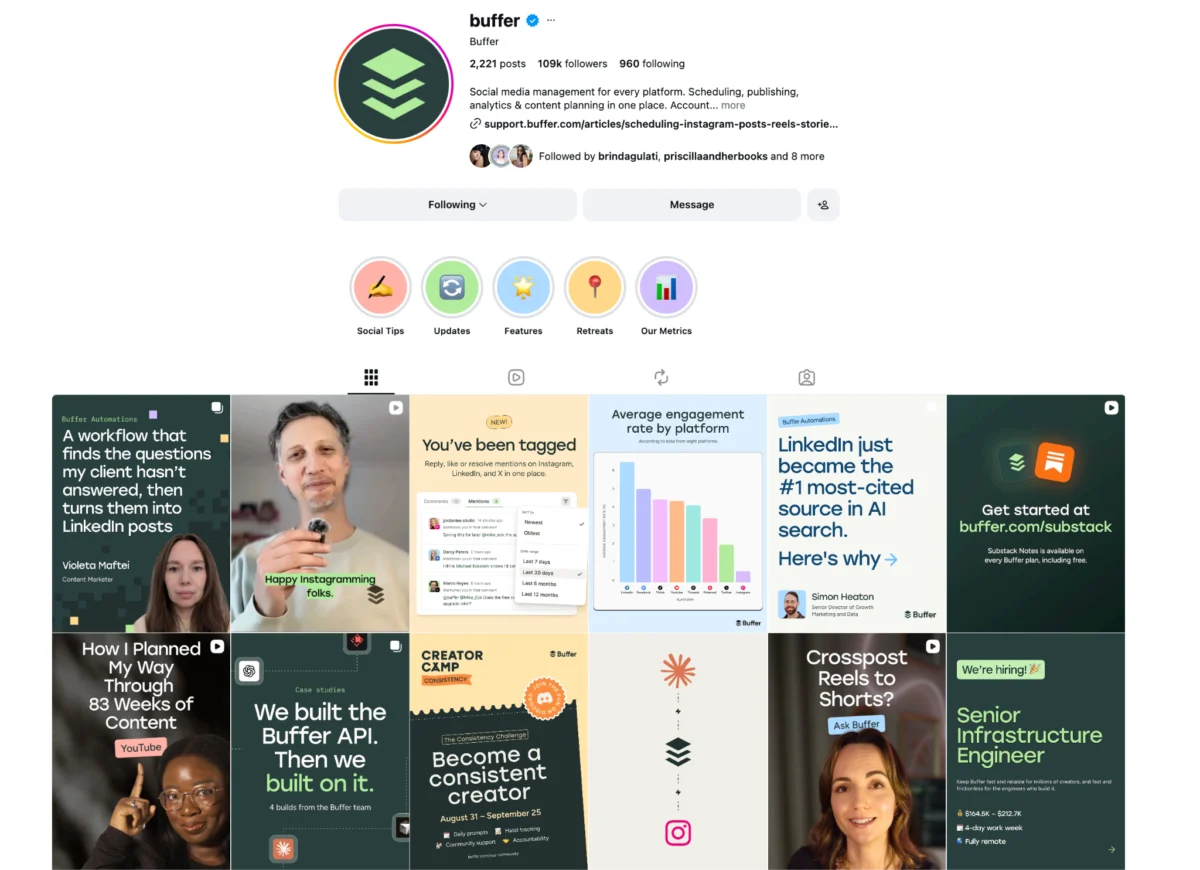
Buffer stands out as a highly intuitive social media management platform that offers a powerful analytics dashboard. Designed with content creators and small teams in mind, it simplifies complex data into actionable insights, highlighting best post types, optimal posting times, and effective content formats without extensive menu navigation. Buffer’s ability to generate branded reports with minimal effort streamlines reporting processes, making it a strong contender for those seeking an integrated scheduling and analytics solution. Its support for a wide array of platforms, including Bluesky, Facebook, Instagram, LinkedIn, Mastodon, Pinterest, Threads, TikTok, X, and YouTube, ensures comprehensive coverage. A free plan provides basic analytics, with advanced features available on paid tiers starting from $6/month.
2. Rival IQ: Competitive Intelligence for Large Agencies
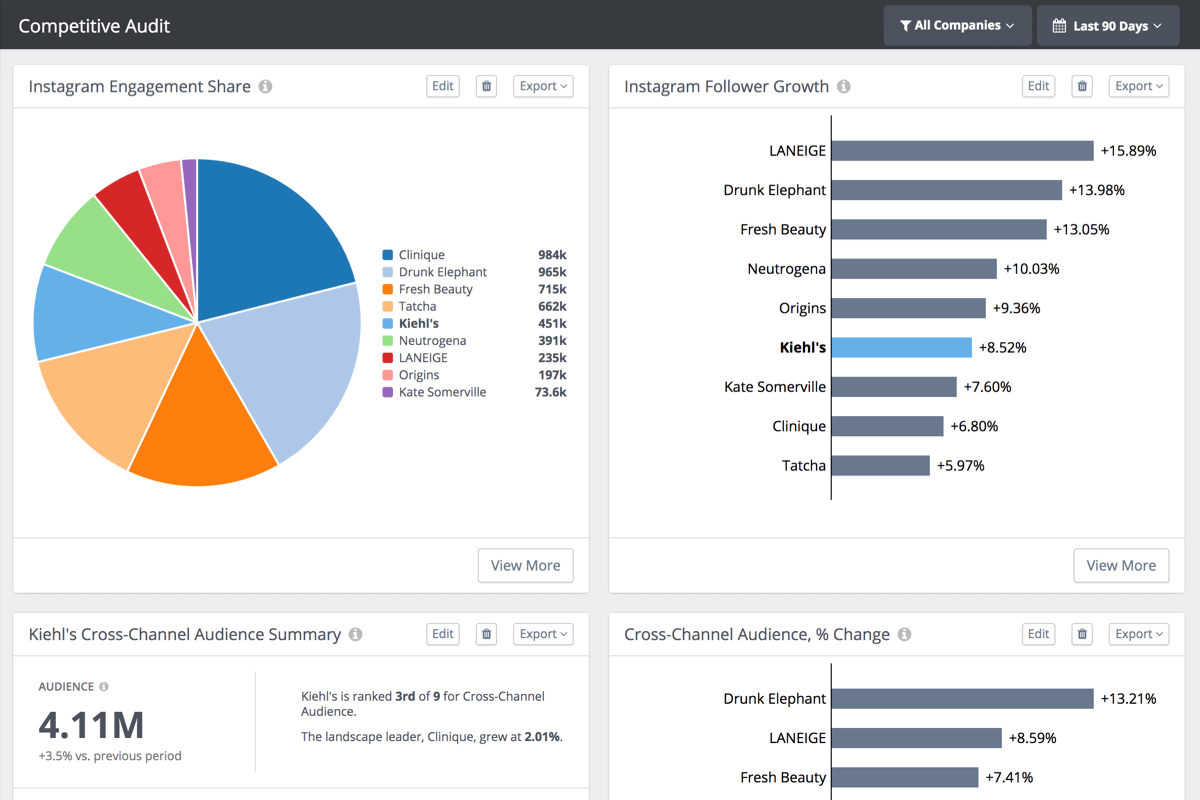
For large agencies requiring deep competitive benchmarking, Rival IQ offers a comprehensive suite that combines social media analytics with robust competitor analysis and social listening functionalities. It provides granular insights into competitor performance, identifies boosted posts, compares brand positioning across social media bios, and benchmarks performance within specific niches. This depth of competitive data is crucial for agencies crafting sophisticated strategies and client reports. With plans starting at $239/month, Rival IQ is positioned for professional agency use, supporting Facebook, Instagram, LinkedIn, TikTok, X, and YouTube.
3. Keyhole: Market Research and Historical Insights
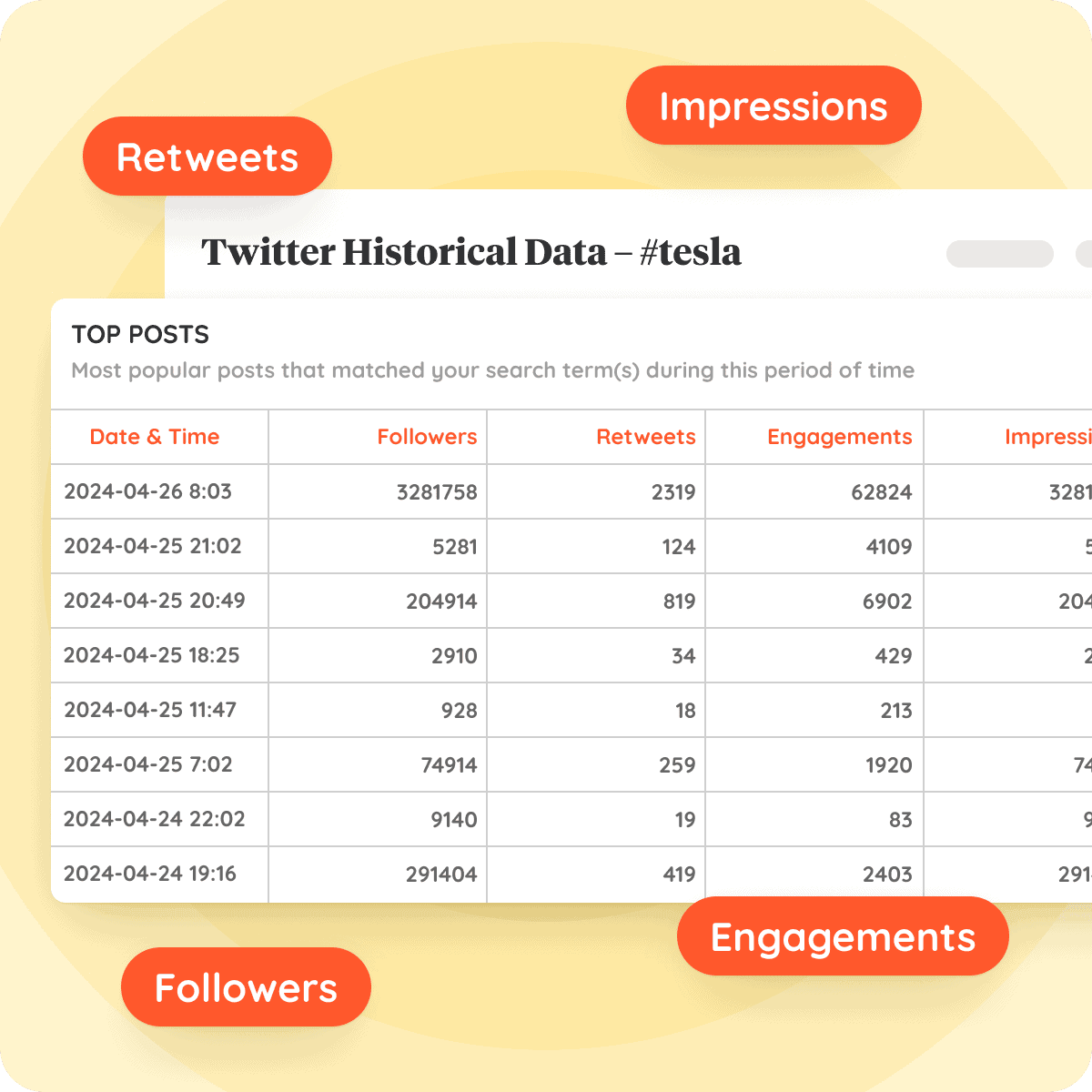
Keyhole specializes in historical insights and market research, making it invaluable for understanding the long-term evolution of conversations and trends. Its ability to unlock up to a decade of historical data, particularly for X (formerly Twitter), allows marketers to trace shifts in audience sentiment and identify enduring topics. The platform also leverages machine learning to identify emerging trends in real-time. While its historical data depth is primarily for X and comes at an additional cost, Keyhole’s market research capabilities offer powerful insights for product development and strategic planning, supporting Facebook, Instagram, LinkedIn, TikTok, X, and YouTube. Pricing is not publicly available, indicating a customized enterprise solution.
4. Social Status: Ads and Influencer Partnerships for Small Businesses
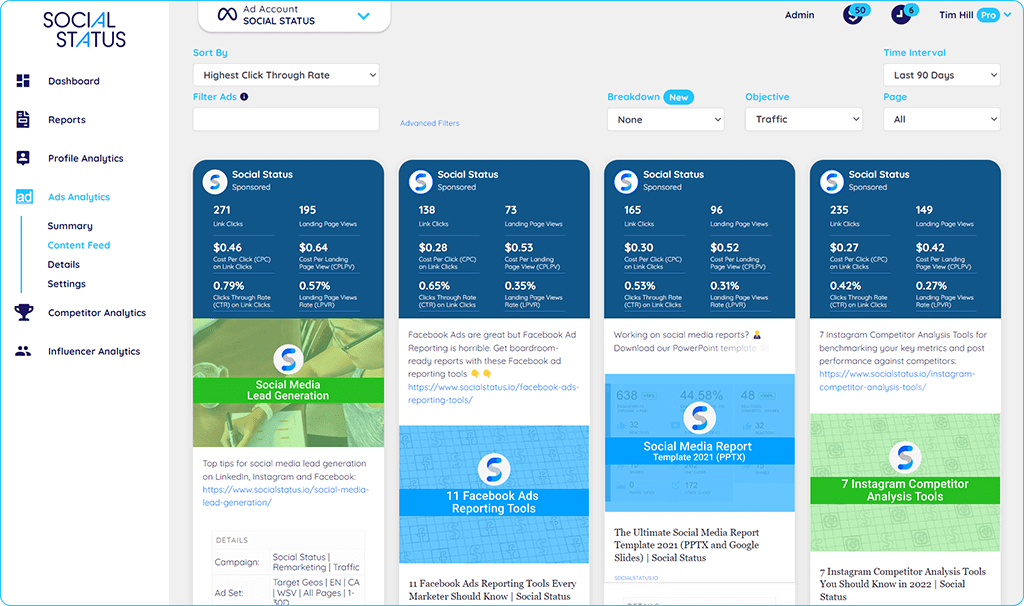
Social Status is tailored for small businesses engaged in both organic and paid social media strategies, particularly those running ad campaigns and influencer partnerships. It provides essential KPIs like impressions, engagement, and reach, alongside specialized features for tracking ad performance, managing influencer campaigns, and analyzing user-generated content. This consolidation of paid and organic insights into a single dashboard makes it an efficient tool for businesses looking to measure the holistic impact of their diverse social media efforts. A free plan is available, with paid plans starting at $9/month for small businesses, covering Facebook, Instagram, LinkedIn, TikTok, X, and YouTube.
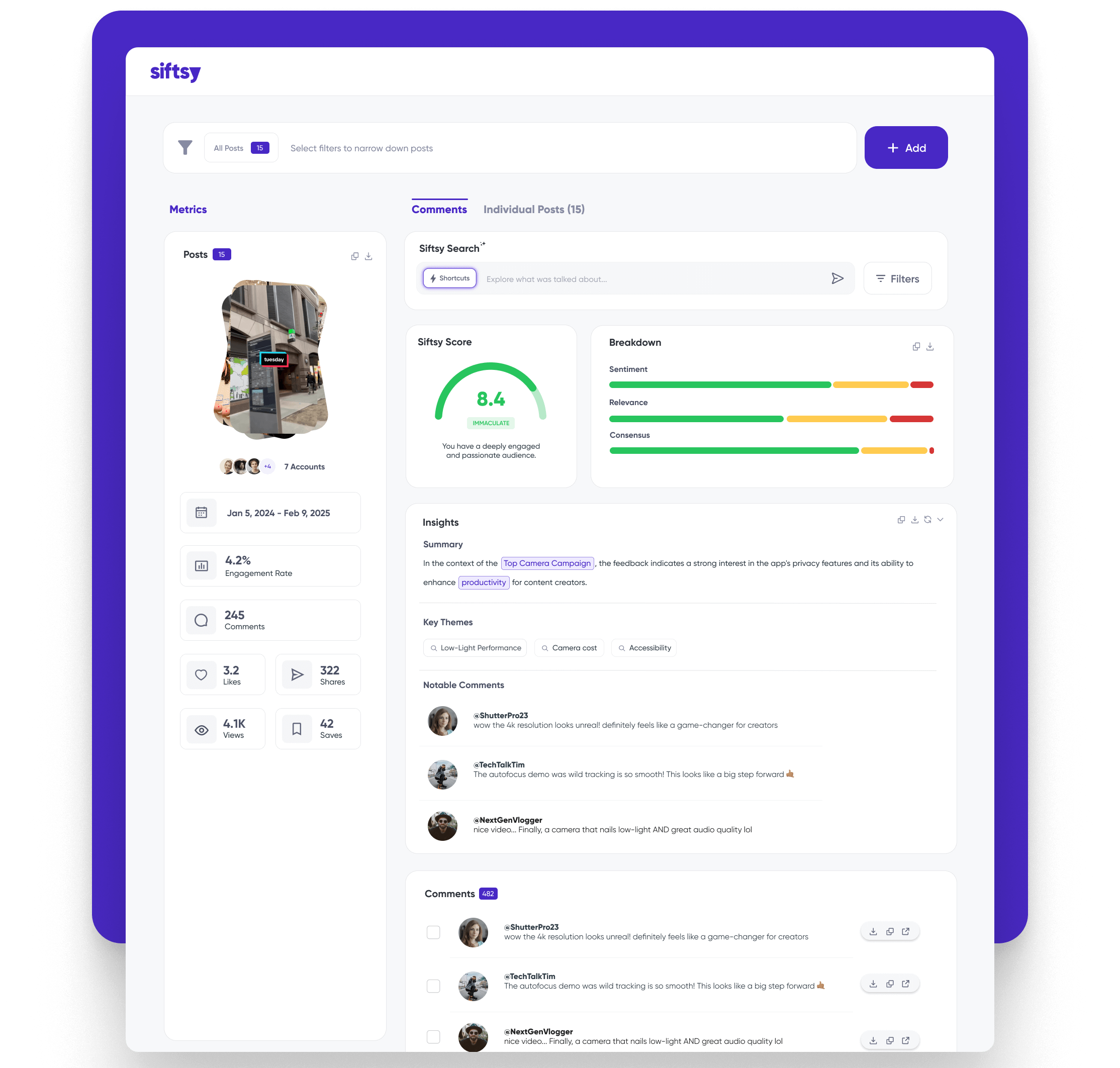
5. Siftsy: Deep Dive into Comment Sentiment
Understanding the "why" behind performance metrics often lies in qualitative data, and Siftsy excels at extracting sentiment from social media comments. By analyzing comments across multiple channels, Siftsy’s AI identifies key themes, emotional tones, and valuable insights, providing a deeper understanding of audience reactions to content, campaigns, and product launches. This tool is particularly useful for refining messaging, identifying customer pain points, and uncovering content ideas based on genuine audience feedback. Siftsy supports Instagram, LinkedIn, TikTok, X, and YouTube, with pricing available upon contact.
6. Vista Social: Comprehensive Review and Social Metric Tracking
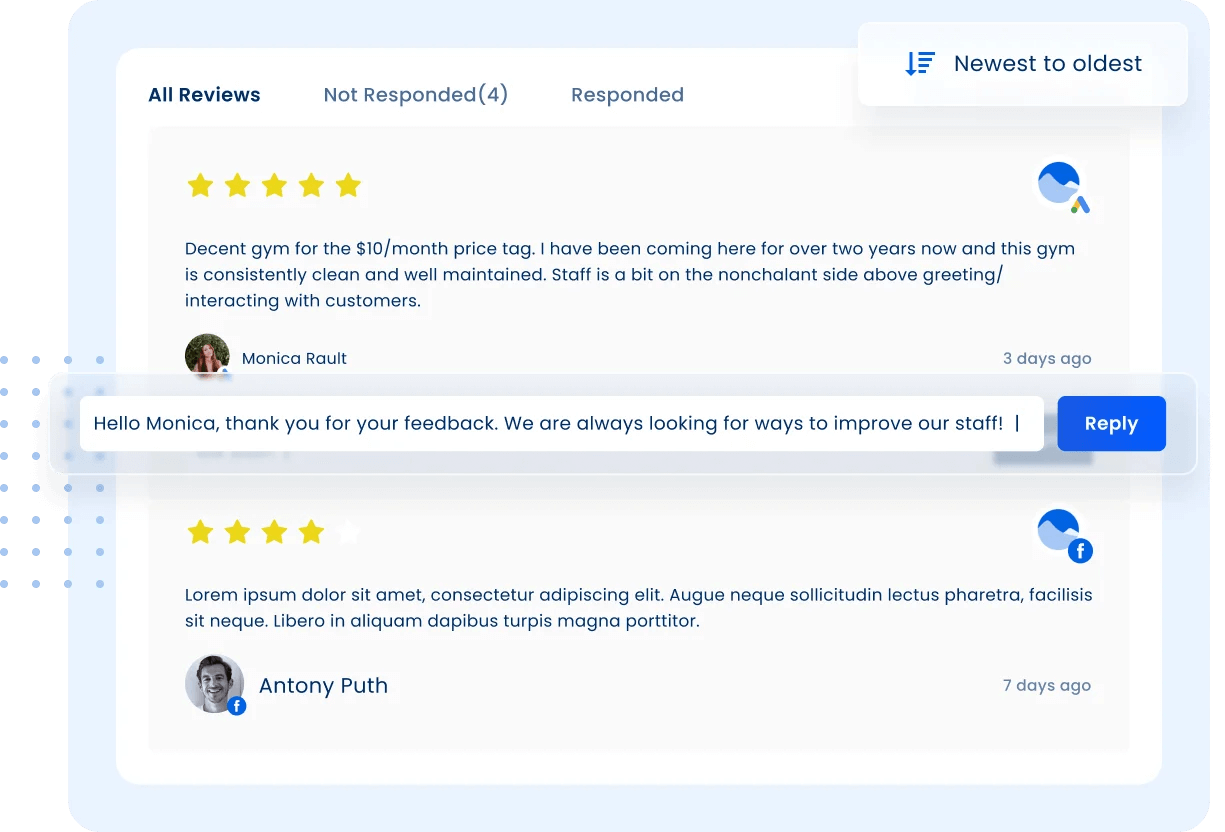
Vista Social expands beyond traditional social media analytics by integrating robust review management capabilities with broader social media management functions. It aggregates customer feedback from numerous review sites (including Yelp, TripAdvisor, and Google Business) alongside social media metrics, allowing businesses to monitor their online reputation comprehensively. Users can track star ratings, manage replies, and identify review trends, ensuring a proactive approach to customer feedback and brand perception. Its extensive platform support, including Bluesky, Facebook, Google Business, Instagram, LinkedIn, Pinterest, Reddit, Threads, TikTok, X, Yelp, and YouTube, makes it a powerful tool for holistic online presence management. Plans start at $79/month with a 14-day trial.
7. Typefully: X-Centric Analytics and Content Creation
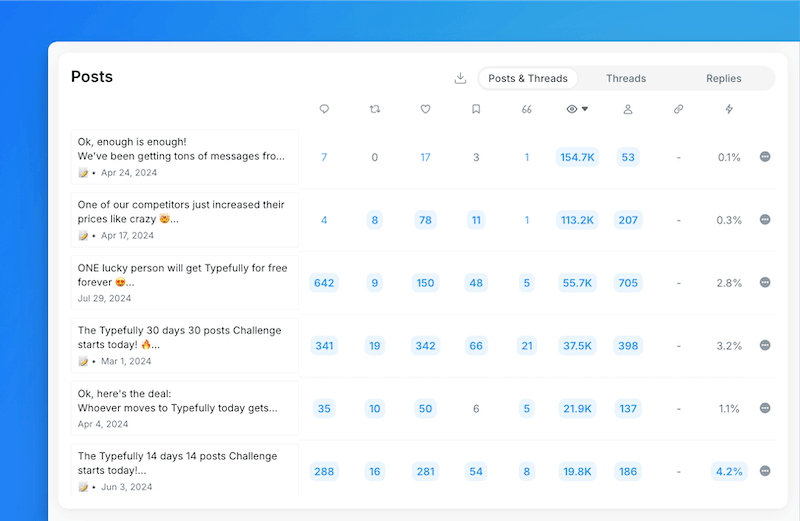
For users primarily focused on X (formerly Twitter), Typefully offers a specialized analytics experience. Beyond standard metrics, it provides unique insights such as "profile conversion rate," which measures how many profile visitors convert into followers. This metric is crucial for understanding the effectiveness of an X profile in attracting and retaining an audience. Typefully also enhances content creation for X, particularly for threads, with features like "viral thread hooks" examples. While supporting Bluesky, LinkedIn, Mastodon, and Threads, its deep integration and specialized metrics for X make it an indispensable tool for dedicated X users. A free plan allows 15 posts/month, with paid plans starting at $16/month (yearly billing).
8. Tailwind: Powering Pinterest and Instagram Traffic
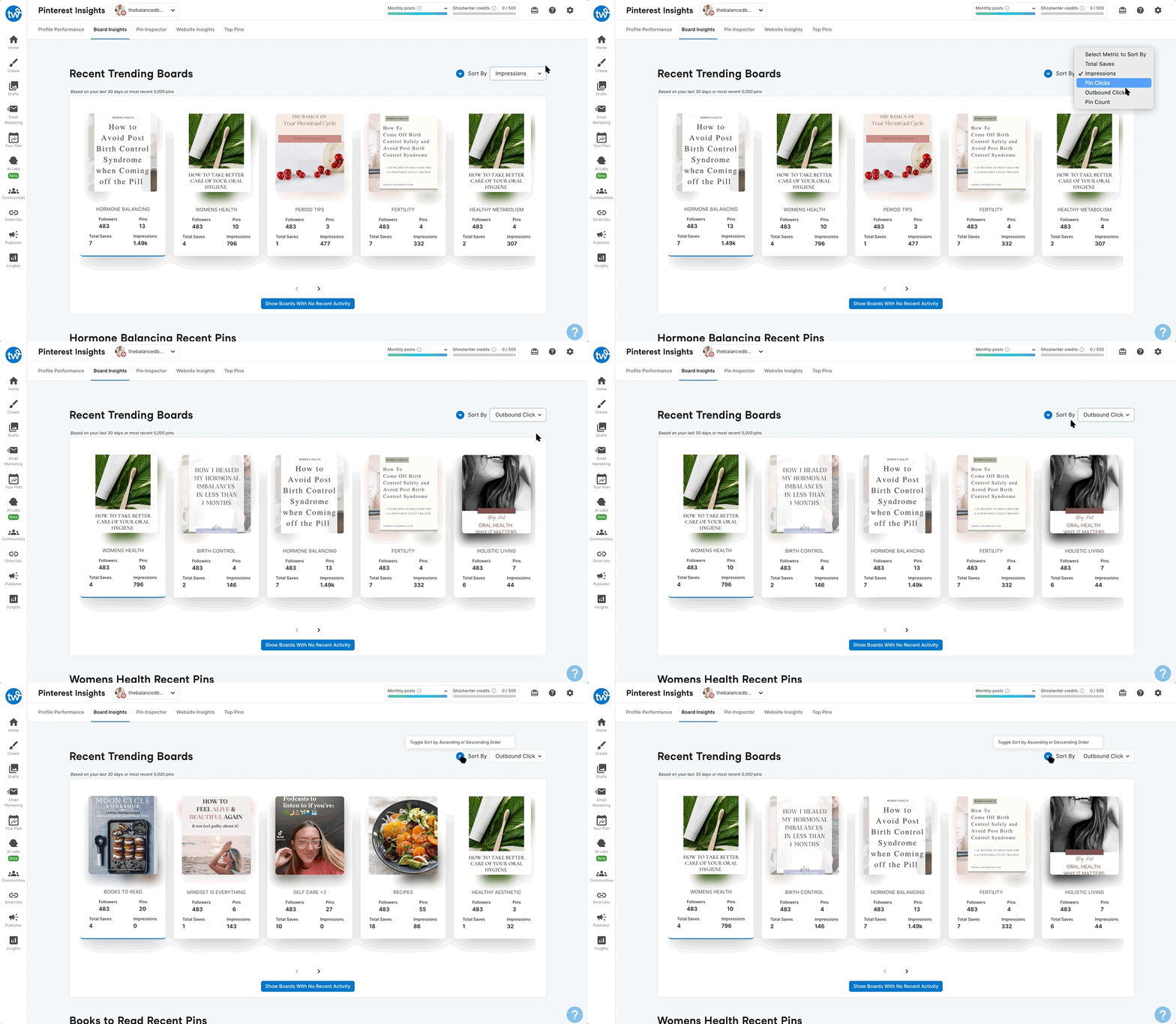
Tailwind is a leading social media analytics and management tool specifically designed for businesses leveraging Pinterest and Instagram for traffic generation. Recognizing Pinterest’s dual function as a social network and a search engine, Tailwind provides detailed analytics on pin performance, board engagement, and trending topics. Its unique Google Analytics integration helps users identify which pins drive the most website traffic, enabling data-driven content optimization. From high-level board insights to individual pin performance, Tailwind offers comprehensive metrics essential for maximizing visual content strategies. A free plan is available for five posts/month, with paid plans beginning at $29.99/month.
9. DashThis: The All-in-One Marketing Dashboard
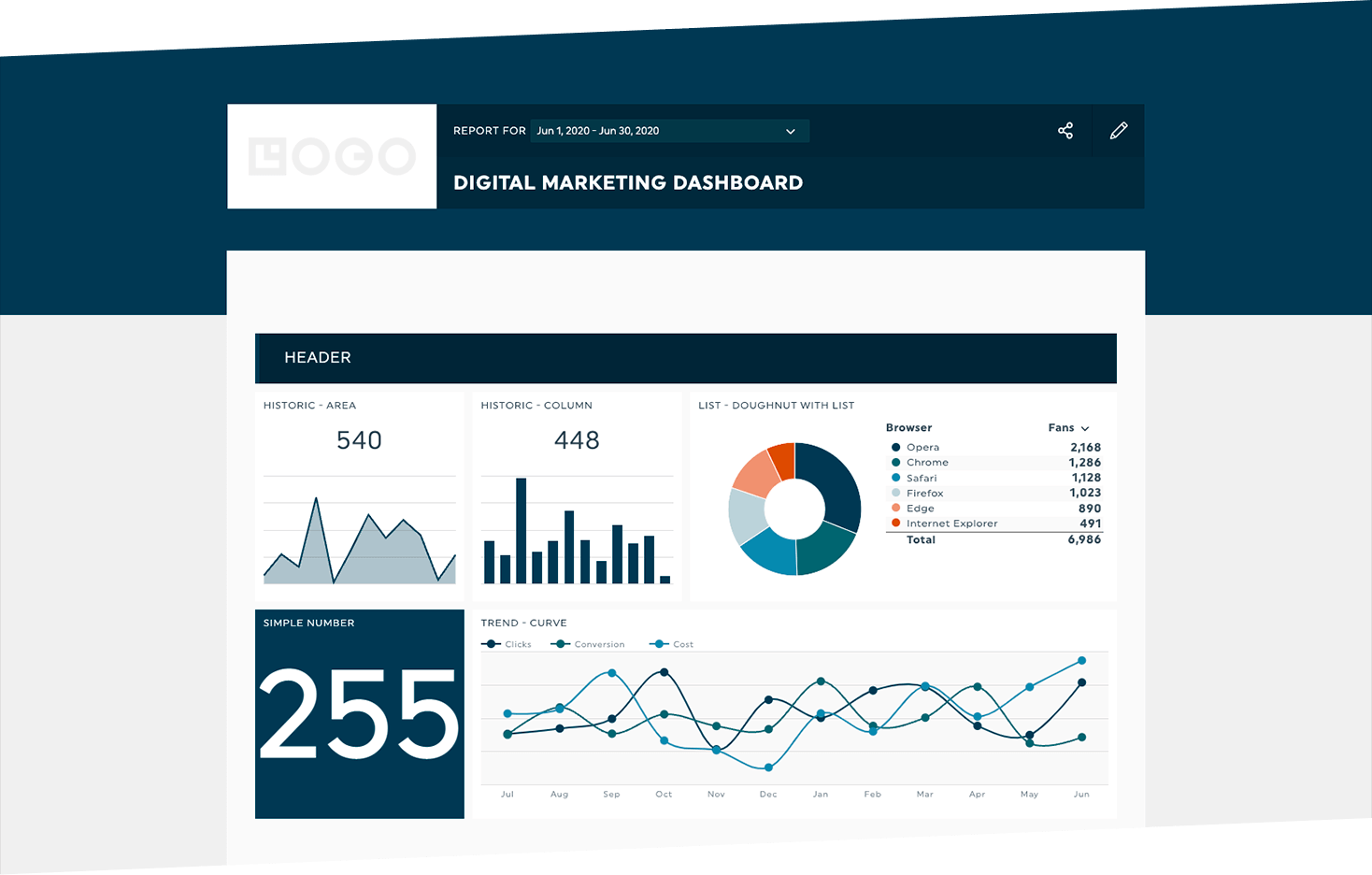
DashThis distinguishes itself not as a dedicated social media tool but as a comprehensive marketing dashboard that excels at integrating social data into a broader marketing context. It allows marketers to combine social media metrics with data from Google Analytics, ad platforms (e.g., TikTok Ads, Meta Business Suite, Google Ads), SEO tools, and CRM systems into a single, cohesive report. With over 30 integrations, unlimited users, and no cap on data sources, DashThis is ideal for large marketing teams needing to demonstrate social media’s contribution to overall marketing ROI to diverse stakeholders. While its social media insights are foundational, its strength lies in cross-channel data aggregation and reporting. Plans start at $54/month with a 15-day free trial.
10. Socialinsider: AI-Driven Content Pillar Insights
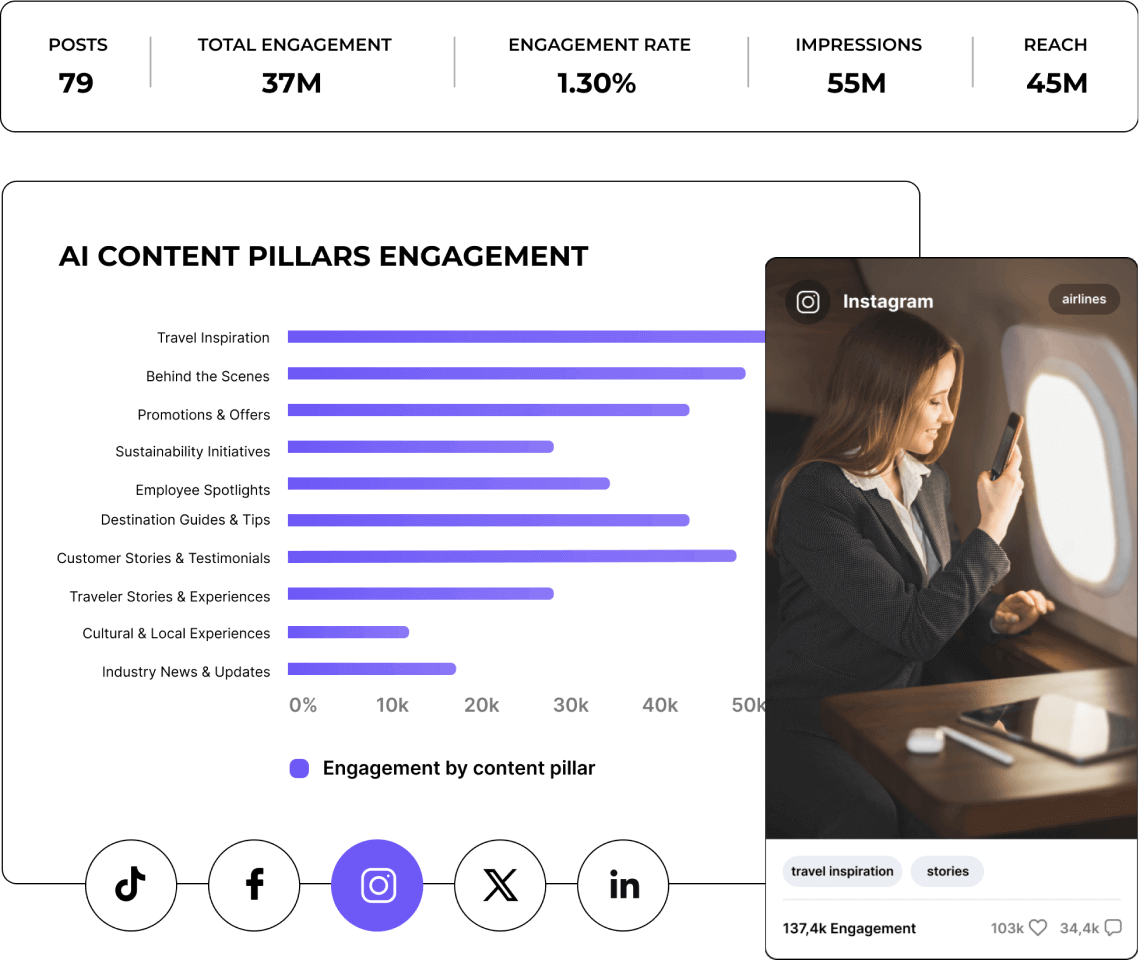
Socialinsider offers advanced social media analytics with a particular focus on AI-driven insights for content pillars. It enables users to tag and group social media posts to monitor the collective performance of different campaigns or content categories. Higher-tier plans include AI-driven competitor analysis, allowing businesses to assess the effectiveness of competitors’ content pillars and adapt their strategies accordingly. While its robust features provide deep analytical value, the pricing, starting at $99/month, positions it for more established teams and agencies. Socialinsider supports Facebook, Instagram, LinkedIn, TikTok, X, and YouTube.
11. Talkwalker: In-Depth Audience and Sentiment Insights
Now part of Hootsuite, Talkwalker is a powerful analytics tool renowned for its in-depth audience insights and social listening capabilities. It goes beyond basic demographics to pull insights from diverse sources like customer calls, support tickets, and online communities, providing a holistic understanding of audience sentiment and interests. Its advanced audience segmentation features allow for granular analysis of various demographic groups, which is particularly valuable for global brands. Talkwalker’s AI assistant, Yeti, further facilitates quick access to relevant insights. While its core features are comprehensive, they are often integrated into higher-tier Hootsuite plans, reflecting its premium positioning. Pricing is not publicly available, and supported platforms include Facebook, Instagram, X, YouTube, and Pinterest.
The Broader Implications and Future Outlook
The proliferation and increasing sophistication of social media analytics tools underscore a fundamental shift in how businesses approach digital engagement. These tools are no longer mere conveniences but strategic enablers, empowering organizations to make data-backed decisions that drive tangible results. By transforming raw social media data into actionable intelligence, they facilitate:
- Optimized Content Strategy: Identifying top-performing content, formats, and topics.
- Enhanced Audience Engagement: Understanding audience preferences and behaviors to foster deeper connections.
- Superior Competitive Positioning: Benchmarking against rivals to uncover opportunities and threats.
- Measurable ROI: Demonstrating the direct impact of social media efforts on business objectives.
- Proactive Crisis Management: Monitoring sentiment and identifying potential issues before they escalate.
Looking ahead, the social media analytics landscape is poised for further innovation. The integration of advanced Artificial Intelligence and Machine Learning will continue to deepen, offering more sophisticated predictive capabilities, hyper-personalized recommendations, and real-time anomaly detection. Ethical considerations surrounding data privacy and responsible AI use will also become increasingly prominent, shaping the development and deployment of future tools. As social media platforms continue to evolve and new channels emerge, the demand for versatile, insightful, and comprehensive analytics solutions will only grow, cementing their role as an indispensable component of modern digital strategy.