rifanmuazin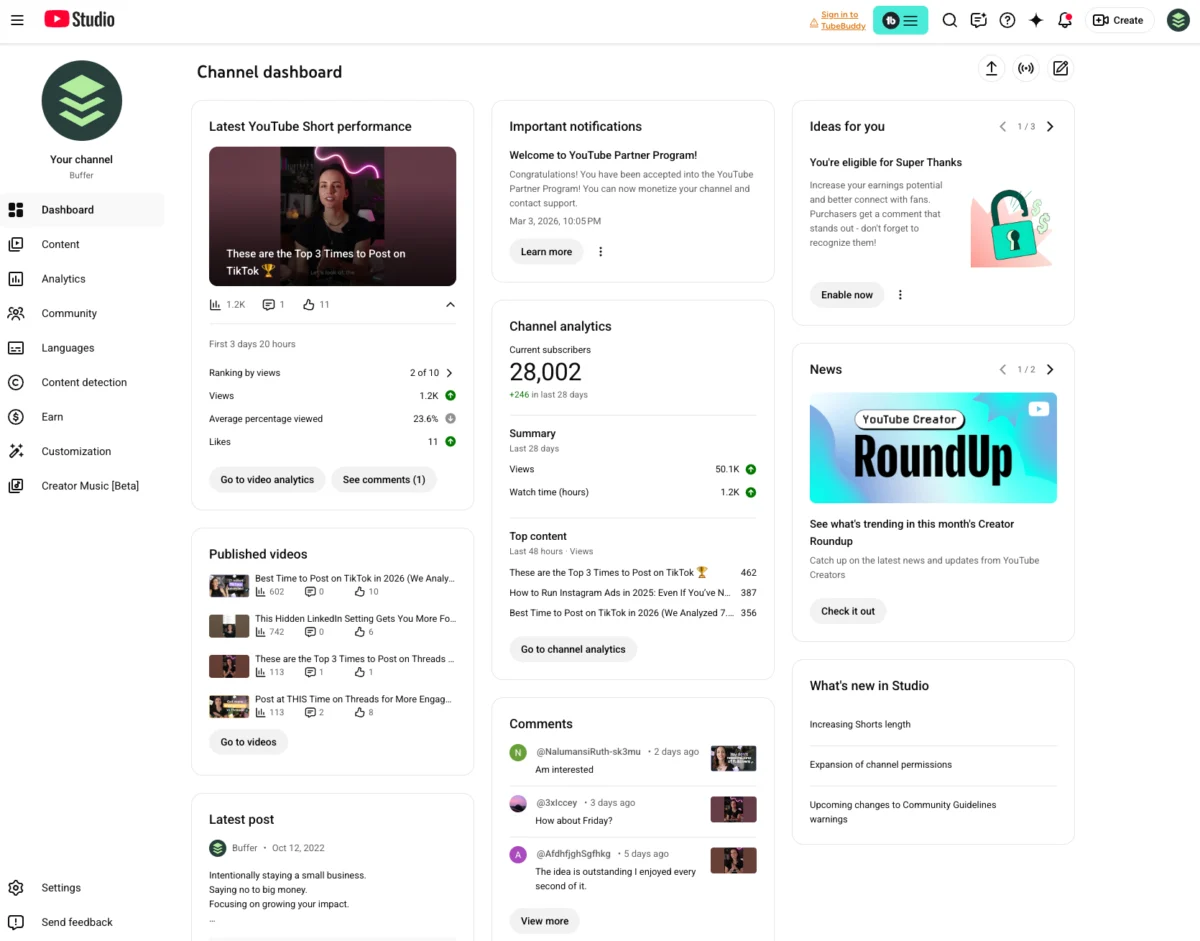
A groundbreaking analysis of nearly two million YouTube videos, encompassing both traditional long-form content and the increasingly popular YouTube Shorts, has provided creators and marketers with concrete, data-driven insights into the optimal times for posting to maximize audience engagement. Conducted by Buffer, a leading social media management platform renowned for its extensive data research, this study marks a significant evolution in understanding viewer behavior on the world’s largest video platform, revealing distinct peak engagement windows for different content formats and notable shifts from previous findings. The research underscores that while elements like compelling titles, captivating thumbnails, and, most critically, content quality remain paramount, strategically timed uploads offer an easily actionable lever to boost visibility and interaction, providing a crucial edge in a highly competitive digital landscape.
The Evolving Landscape of YouTube Engagement
For years, YouTube creators and digital marketers have grappled with the multifaceted algorithm, attempting to decipher the optimal strategies for growth. Factors such as video search engine optimization (SEO), compelling narratives, high production value, and community interaction all contribute to a video’s success. However, the seemingly simple question of "when to post" has often been shrouded in anecdotal evidence and generalized advice. Buffer’s latest analysis aims to demystify this aspect, providing a robust statistical foundation derived from a massive dataset. The sheer volume of videos analyzed – approximately 1.8 million – allows for granular insights into engagement patterns across every hour and day of the week, offering a universality that general observations often lack.
A significant methodological refinement in this latest study, distinguishing it from prior analyses, is the separation of data for long-form videos and YouTube Shorts. This distinction is critical given the divergent consumption patterns for these formats. Long-form content typically demands dedicated viewing time, often integrated into planned leisure, while Shorts, akin to other short-form vertical video platforms, thrive on spontaneous, on-the-go consumption. Recognizing this behavioral divergence, the study offers tailored recommendations, moving beyond a one-size-fits-all approach that has historically limited the precision of such guidance. Furthermore, the data has been mathematically adjusted by Buffer’s data scientists to ensure universal applicability, meaning the recommended times hold true regardless of the creator’s or audience’s specific time zone, simplifying implementation for a global audience.
Peak Performance for Long-Form YouTube Videos: A Weekend Morning Domination
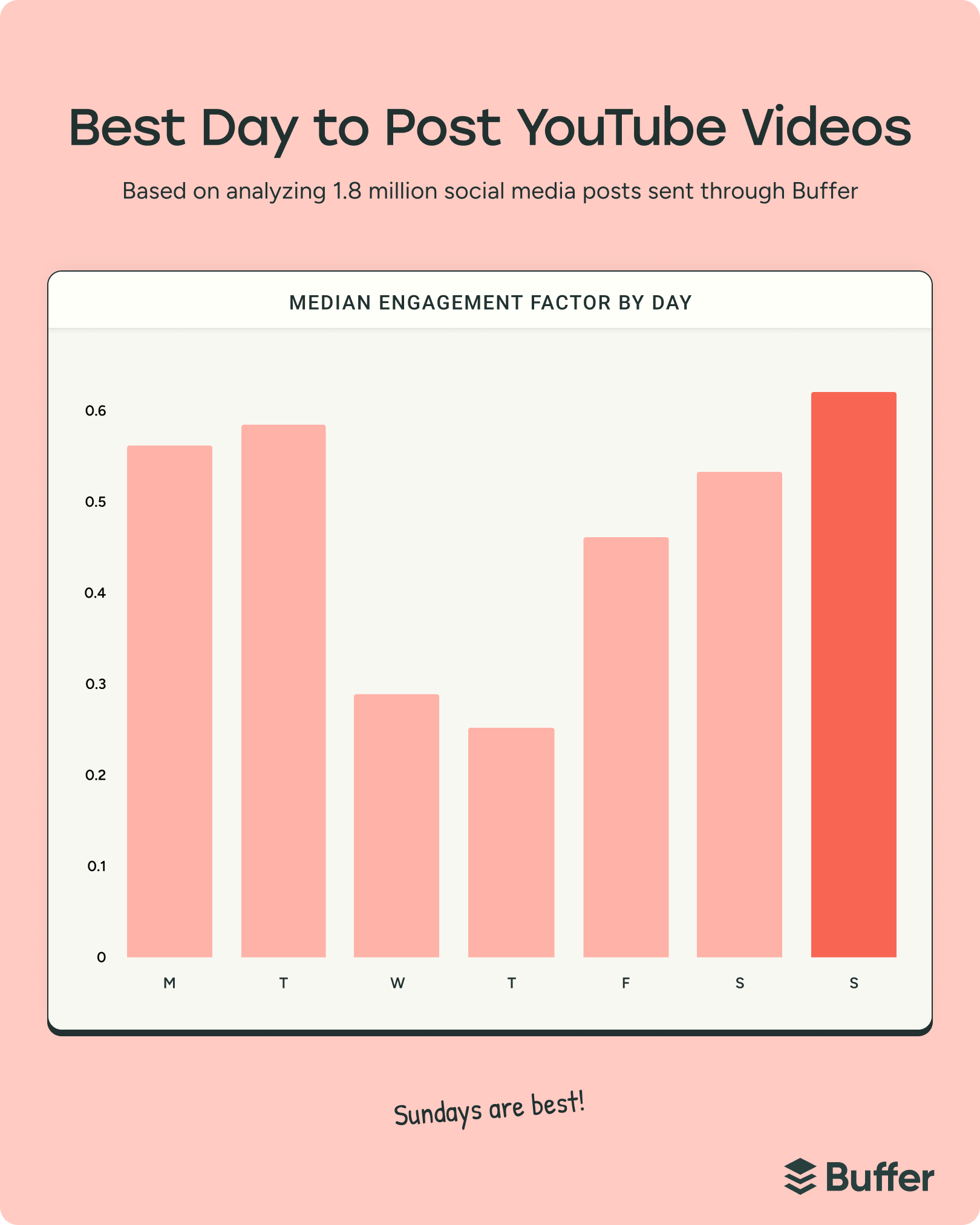
The study’s most striking revelation regarding long-form YouTube videos is the overwhelming prominence of Sunday mornings for peak engagement. Specifically, Sunday at 10 a.m. emerged as the unequivocal top-performing slot of the entire week, exhibiting an engagement factor significantly higher than any other period. Other highly effective times on Sunday included 9 a.m. and 12 p.m., solidifying the notion that the early part of the weekend is prime time for creators seeking maximum interaction with their extended content.
This finding represents a substantial shift from previous analyses, which often pointed towards late afternoon on weekdays as the "sweet spot." The current data indicates a strong migration of long-form viewership to weekend mornings, particularly Sundays, and to a lesser extent, weekday mornings. Generally, the period between 8 a.m. and 11 a.m. across most days showed higher engagement for long-form content. This shift could be attributed to evolving audience habits, potentially influenced by post-pandemic lifestyles where flexible work schedules or increased leisure time on weekends allow for more dedicated video consumption. Viewers may be using weekend mornings for relaxed browsing and in-depth content engagement, contrasting with the more fragmented attention available during busy weekdays.
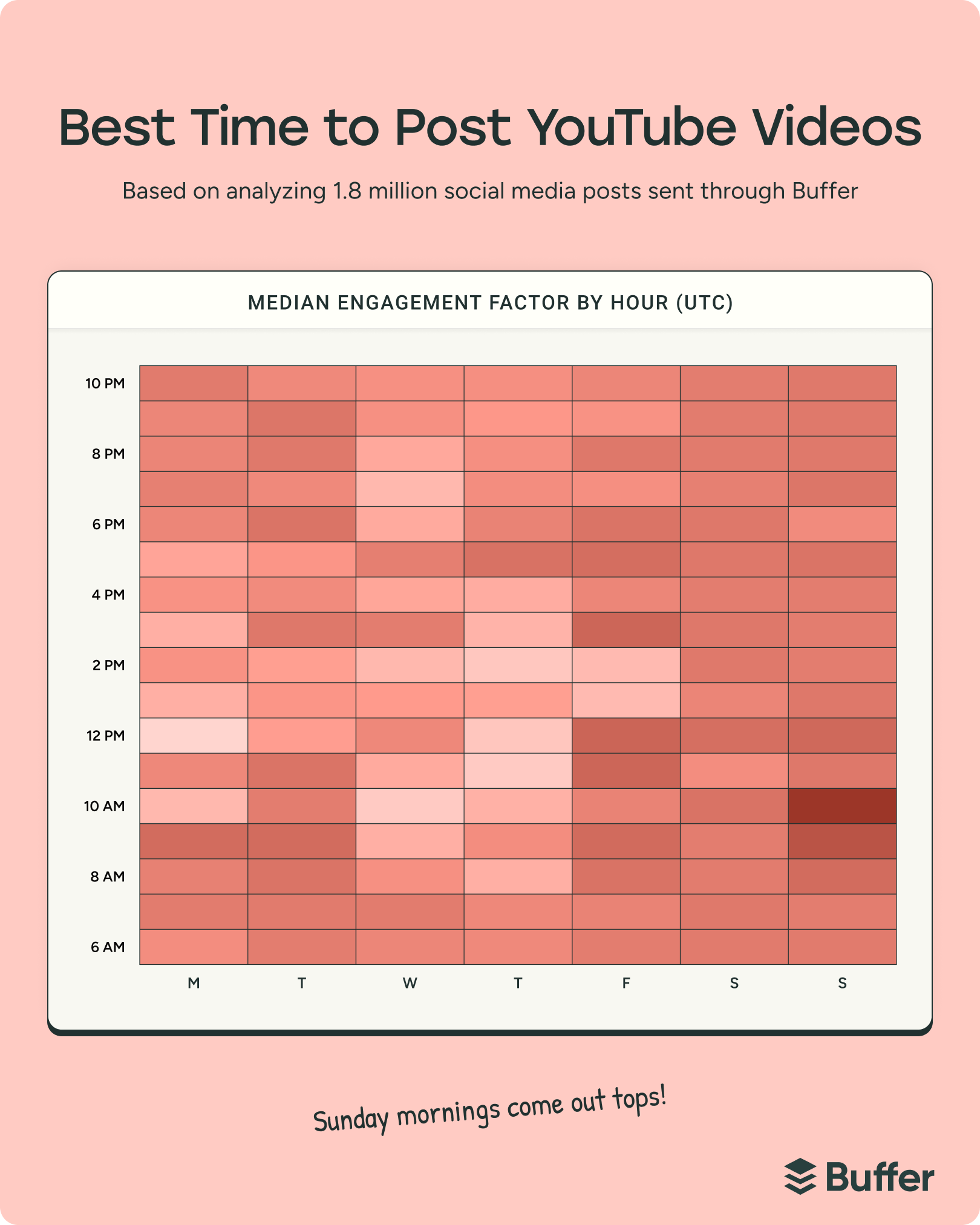
Conversely, the data clearly identifies the weakest periods for long-form video uploads. Early-to-mid afternoon on weekdays, particularly Wednesdays and Thursdays, registered the lowest engagement factors. Thursday at 2 p.m., for instance, recorded one of the week’s absolute lowest engagement scores. This suggests that during these times, audiences are likely engaged with work, school, or other commitments, leaving little room for longer video consumption. Creators planning their schedules are advised to either avoid these troughs or strategically place less critical content during these periods.
Delving into a day-by-day breakdown for long-form content:
- Monday: The best time to post is 9 a.m., followed by 10 p.m. and 7 a.m. Monday mornings suggest viewers starting their week with content, while a late-evening slot captures those winding down.
- Tuesday: An overall strong day, with 9 a.m. leading, followed by 11 a.m. and 8 a.m. The consistent morning performance makes Tuesday a reliable weekday option.
- Wednesday: Generally weaker, with 7 a.m. as the best slot, followed by 3 p.m. and 5 p.m. Expectations for engagement should be tempered on this day.
- Thursday: The weakest day for long-form engagement. 5 p.m. is the top slot, followed by 6 p.m. and 7 a.m., indicating evening uploads are preferable if posting on Thursday.
- Friday: Uniquely, midday outperforms morning, with 12 p.m. being the best time, followed by 11 a.m. and 3 p.m. Friday at noon stands out as a high-engagement slot, potentially catching viewers as they transition into the weekend.
- Saturday: Moderate and consistent engagement throughout the day, with 12 p.m. leading, followed by 10 a.m. and 3 p.m., suitable for audiences with weekend viewing habits.
- Sunday: As highlighted, 10 a.m. is the week’s peak, with 9 a.m. and 12 p.m. also performing exceptionally well. Sunday mornings are unequivocally the prime time for long-form content.
Overall, Sunday, Tuesday, and Monday emerged as the strongest days for long-form videos, categorized as "strong engagement territory." Saturday and Friday fall into the "moderate" range, still viable for posting. Wednesday and Thursday were identified as the weakest days, consistently performing below the neutral engagement threshold. This reversal of patterns from prior studies emphasizes the dynamic nature of online audience behavior and the necessity for creators to regularly re-evaluate their strategies based on current data.
The Evening Surge: Optimal Times for YouTube Shorts
In stark contrast to long-form videos, YouTube Shorts exhibit an entirely different engagement pattern, predominantly favoring evening hours. The analysis of 1.8 million Shorts revealed that Friday at 4 p.m. is the best time to post, closely followed by Friday at 6 p.m. and 7 p.m. This strong Friday evening dominance highlights a distinct consumption habit for short-form content.
Generally, YouTube Shorts engagement peaks in the evenings, typically between 6 p.m. and 11 p.m. This trend aligns logically with how users consume snackable, short-form content: it often serves as a means of unwinding, casual browsing, or quick entertainment at the end of a workday or during evening leisure time. The immediacy and brevity of Shorts make them ideal for quick scrolls, a behavior often observed during relaxed evening hours.
The least opportune times for posting YouTube Shorts are generally during the afternoon, specifically between 12 p.m. and 5 p.m., with Friday afternoon being a notable exception where it actually leads the week’s performance. This suggests that while most afternoons are slow, Friday afternoon acts as a precursor to the weekend unwind, with users potentially starting their casual browsing earlier.
A glance at the best times for YouTube Shorts by day:
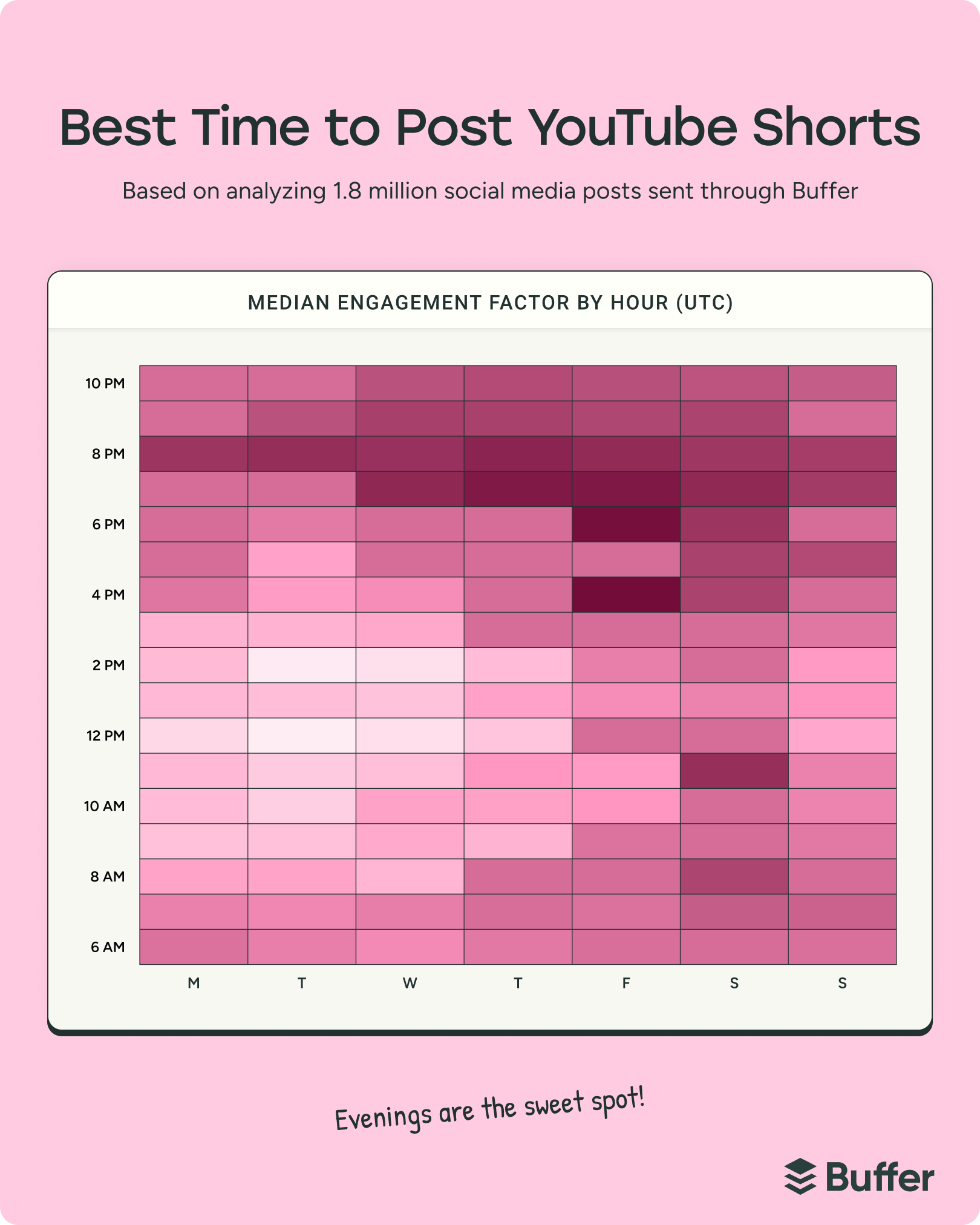
- Evenings overwhelmingly dominate the top slots for Shorts throughout the week.
- Saturday presents a unique anomaly, with 11 a.m. cracking the top three, suggesting a potential morning window for Shorts content on the weekend.
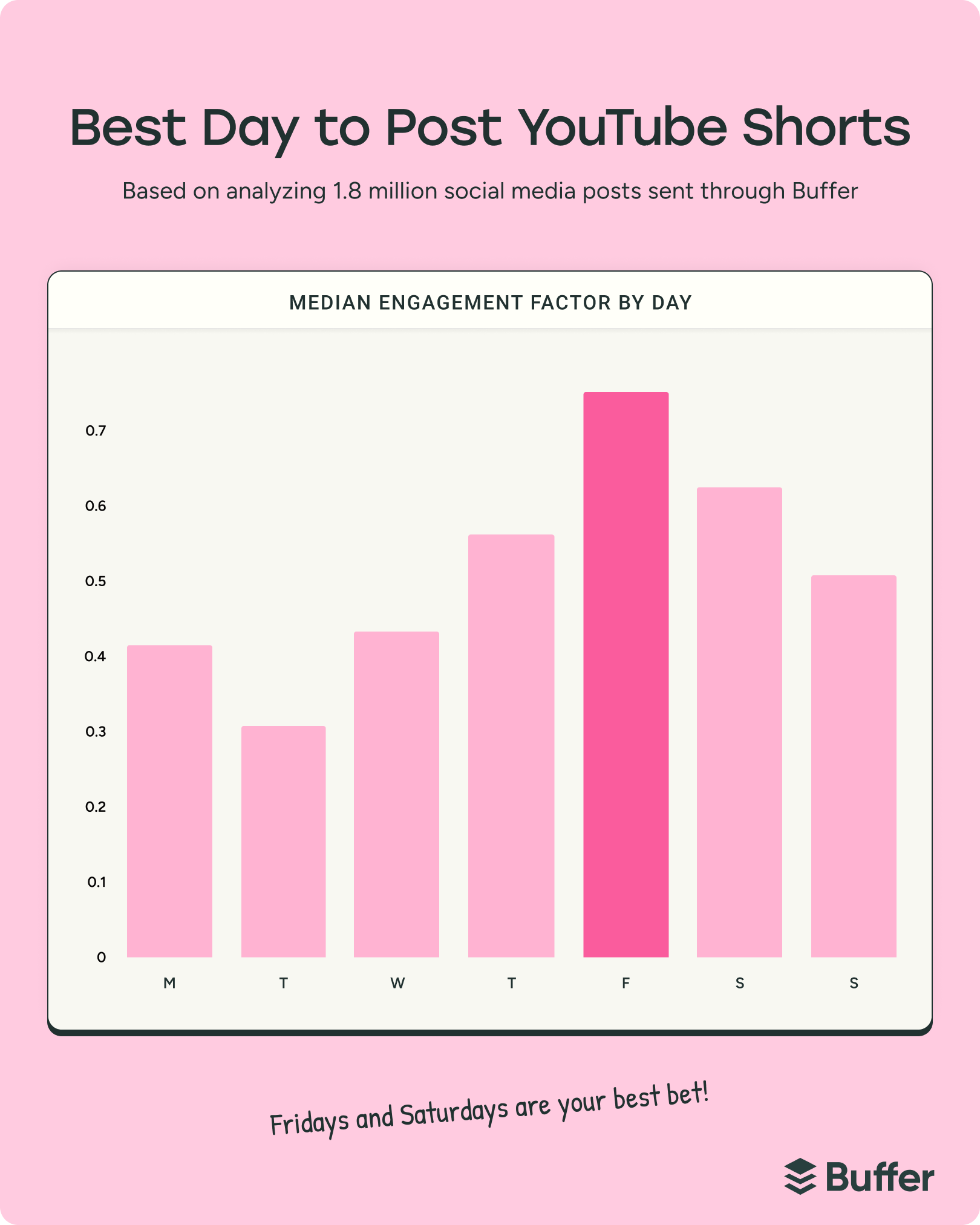
Regarding the best and worst days for Shorts, Friday stands out as the undisputed best day, followed by Saturday and then Thursday. Conversely, Tuesday and Monday were identified as the weakest days for Shorts engagement. For creators focusing heavily on short-form content, prioritizing the latter half of the week, from Thursday through Saturday, with Friday as the anchor, appears to be the most effective strategy.
Strategic Implications for a Dual-Format Creator Economy
The profound divergence in optimal posting times between long-form videos and YouTube Shorts carries significant implications for creators and content strategists. There is almost no overlap in peak engagement windows: long-form content thrives in weekend and weekday mornings, while Shorts dominate weekday and weekend evenings. This distinct separation is, in fact, advantageous for creators publishing both formats. It allows for a non-competitive scheduling strategy, where long-form videos can be uploaded during morning hours and Shorts can be released in the evenings, ensuring each format targets its respective peak audience without cannibalizing engagement from the other.
This finding underscores a broader trend in digital media consumption: platforms are increasingly catering to diverse attention spans and use cases. Long-form content continues to serve audiences seeking depth and immersion, often during dedicated leisure time. Short-form content, conversely, capitalizes on brief moments, offering quick entertainment or information snippets. Successful creators in this evolving landscape will be those who not only adapt their content to these formats but also strategically align their publishing schedules with documented audience behavior.
Beyond Generalities: Leveraging YouTube Analytics for Personalized Insights
While Buffer’s comprehensive analysis provides invaluable general recommendations, it is crucial for creators to recognize that these are broad patterns across millions of videos. Every channel cultivates a unique audience with specific viewing habits. Therefore, the ultimate "best time to post" for an individual channel will always reside within its own YouTube Analytics. The platform itself offers powerful, real-time metrics that empower creators to fine-tune their posting schedules.
The process for accessing these personalized insights is straightforward:
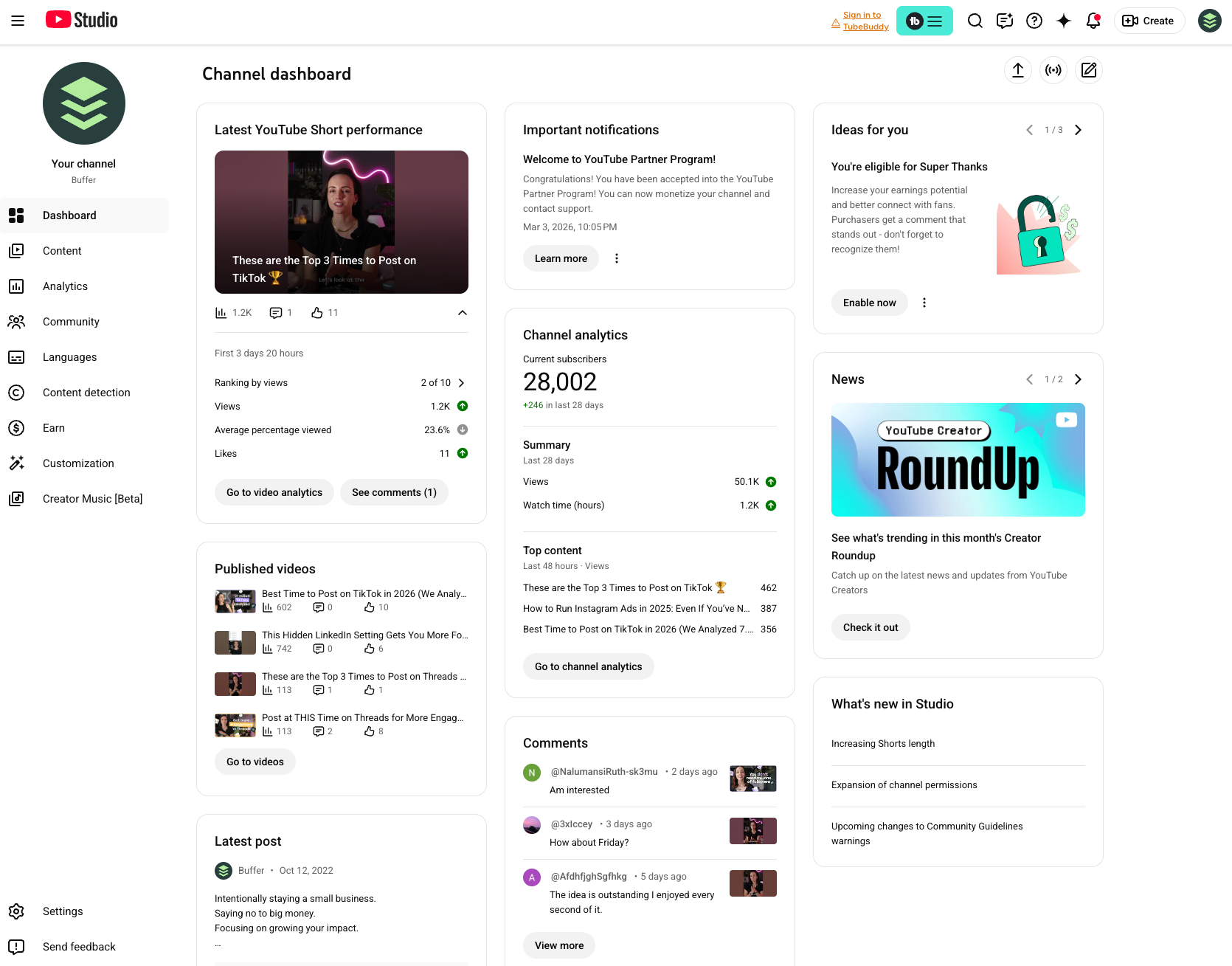
- Access YouTube Studio: Navigate to studio.youtube.com, the control center for any YouTube channel. This dashboard provides a holistic view of channel performance, subscriber activity, monetization, and content management.
- Navigate to Analytics: Within YouTube Studio, select the "Analytics" tab on the left-hand menu. This section offers a wealth of data on viewership, watch time, subscriber growth, and engagement metrics. Regularly reviewing this overview should be a standard practice for any serious creator.
- Explore the Audience Tab: Within the Analytics section, click on the "Audience" tab at the top of the screen. This area provides deep insights into the channel’s viewership, including demographics (location, age, gender), content preferences (Shorts, Live streams, long videos), and most importantly, audience activity patterns.
- Interpret "When your viewers are on YouTube": Scroll down on the Audience tab to locate a unique heatmap titled "When your viewers are on YouTube." This visual tool, presented in the creator’s local time zone, graphically displays audience activity throughout the week. Darker purple blocks indicate periods of highest viewer activity, while lighter shades represent lower activity. These darker slots are the most reliable indicators of when a specific channel’s audience is most engaged and receptive to new content. It is essential to check these analytics regularly, as audience behavior can shift over time, with the data reflecting activity over the past 28 days.
This personalized approach, combined with the broad industry trends identified by Buffer, forms a robust strategy for content distribution. It allows creators to ground their decisions in macro-level research while also ensuring those decisions are precisely tailored to their unique community.
A Holistic Approach to YouTube Success
It is imperative to reiterate that optimal posting times, while a valuable optimization tool, are not a "magic bullet" for YouTube success. They are one component of a comprehensive content strategy. The inherent quality, relevance, and entertainment value of the content itself remain the most critical drivers of engagement and growth. A video posted at the perfect time but lacking substance will still underperform.
A holistic checklist for high-performing YouTube content includes:
- Exceptional Content Quality: Delivering value, entertainment, or education that resonates deeply with the target audience.
- Strategic SEO: Utilizing relevant keywords in titles, descriptions, and tags to improve discoverability.
- Compelling Thumbnails and Titles: Crafting visually appealing thumbnails and engaging titles that accurately represent the content and entice clicks.
- Audience Engagement: Actively interacting with comments, fostering a community, and responding to viewer feedback.
- Cross-Promotion: Sharing content across other social media platforms and embedding videos on websites or blogs.
- Consistency: Maintaining a regular posting schedule, even if not always at peak times, to build audience expectation and loyalty.
The dynamic nature of the YouTube algorithm and evolving audience preferences necessitate continuous learning and adaptation. Studies like Buffer’s provide critical guideposts, enabling creators to make informed decisions and optimize their efforts. By combining robust data analysis with personalized audience insights and a commitment to quality content, creators can significantly enhance their chances of achieving sustained growth and engagement on YouTube. The era of guessing is over; the era of data-driven content strategy is firmly established.