rifanmuazin
In a significant move reflecting the dynamic challenges and evolving solutions within the social media management industry, Sapphire Social, a boutique agency based in Oregon, has fundamentally transformed its operational workflow and client service delivery by migrating to Buffer. For years, Alexandrea Browman, the agency’s founder and CEO, navigated a landscape fraught with inefficiencies, security vulnerabilities, and prohibitive costs associated with previous social media management tools. Her team faced the recurrent dilemma of either compromising client security by using their direct login credentials for social media platforms or enduring the time-consuming and often cumbersome interface of platforms like Meta Business Suite to manage client interactions. Neither option was sustainable for an agency where community management is not merely an auxiliary service but a core specialty. The strategic adoption of Buffer has not only resolved these long-standing operational bottlenecks but has also ushered in a new era of agility, cost-effectiveness, and enhanced quality control for Sapphire Social.
The Evolving Landscape: Challenges for Modern Social Media Agencies
The digital marketing ecosystem has grown exponentially complex over the past decade, placing immense pressure on social media agencies to deliver comprehensive, high-quality services across an ever-expanding array of platforms. Agencies like Sapphire Social, which manage upwards of 30 channels for diverse clients spanning Facebook, Instagram, LinkedIn, YouTube, and TikTok, face a myriad of operational hurdles daily. These include, but are not limited to, content scheduling and distribution, real-time community engagement, performance analytics, team collaboration, and ensuring brand consistency.
Industry reports consistently highlight that social media management can consume a substantial portion of an agency’s operational bandwidth. A 2023 survey by the Digital Marketing Institute, for instance, indicated that agencies often spend between 25-40% of their labor hours on manual content posting and direct platform navigation, particularly when lacking integrated tools. Moreover, security risks associated with sharing client credentials remain a persistent concern, with studies showing that over 60% of small to medium-sized businesses have experienced some form of cyber incident related to third-party access. The imperative for robust, secure, and efficient tools has never been greater, especially as clients demand greater transparency, faster response times, and demonstrable return on investment from their social media efforts. Community management, in particular, has emerged as a critical differentiator, with timely and authentic engagement directly impacting brand reputation and customer loyalty. According to a report by Sprout Social, 79% of consumers expect brands to respond to their social media comments within 24 hours, underscoring the necessity for streamlined communication tools.
A Chronology of Disruption: The Catalyst for Change
Alexandrea Browman, a veteran in social media with over a decade of experience and three years at the helm of Sapphire Social, had initially invested two years with a different social media management platform. While it served her agency’s nascent needs, the relationship took an abrupt turn with a series of pricing restructuring initiatives that proved untenable for Sapphire Social’s business model.
The critical turning point occurred when Alexandrea’s previous provider implemented a staggering price hike, increasing her monthly costs by over 600%. This dramatic surge was reportedly justified by the introduction of new "AI features" which, crucially, Alexandrea’s agency neither needed nor requested. Compounding the financial burden was an inflexible tiered pricing structure. Clients were forced to choose between a package offering 12 connected social accounts or a significantly larger tier accommodating 60 accounts. For Sapphire Social, which manages approximately 30 channels, this presented an impossible dilemma. The 12-account tier was woefully insufficient for her current client load, while the 60-account tier represented a substantial over-provisioning of services, leading to exorbitant, unutilized costs.
This lack of flexibility in pricing and feature sets is a common pain point for scaling agencies. As noted by a recent article in Agency Today, "Rigid SaaS pricing models can stifle agency growth, forcing them into unprofitable tiers or hindering their ability to scale services dynamically with client acquisition and attrition." The situation was exacerbated by a strained customer support experience, which, by Alexandrea’s account, made the decision to seek an alternative "feel easy" rather than a difficult transition. This confluence of prohibitive costs, irrelevant features, inflexible packaging, and unsatisfactory support created an undeniable imperative for change.
The Search for Scalability: Why Buffer Emerged as the Solution

The recommendation for Buffer arrived from two simultaneous and compelling sources: a trusted client who was already utilizing the platform, and the vibrant online social media agency communities where Buffer consistently garnered positive mentions. This dual validation underscored Buffer’s growing reputation as a reliable and agency-friendly solution.
Alexandrea’s initial assessment of Buffer highlighted its perceived power combined with an intuitive user interface. "I went to it and was like, okay, this seems powerful without having a huge learning curve," she recounted. This ease of adoption is a crucial factor for agencies, where team members must quickly integrate new tools into their workflows without extensive training downtime.
However, the decisive factor that truly distinguished Buffer was its innovative pricing model. Unlike the rigid tiers of her previous provider, Buffer charges on a per-channel basis. This granular approach resonated deeply with Sapphire Social’s operational realities. Alexandrea explains, "That’s why I went with you guys, the per-channel amount. It allows me to be flexible and save money if a client leaves. They’re never locked in indefinitely, and I don’t want to continue paying for their channel in Buffer when they’re no longer in contract." This flexibility means that as Sapphire Social onboards new clients, channels can be seamlessly added, and when a client’s contract concludes, their channels can be removed, with the monthly bill accurately reflecting the agency’s active usage at any given moment.
A quick financial analysis revealed the profound impact of this model. Even if Sapphire Social were to manage 60 channels—the upper limit of her previous provider’s unsuitable tier—Buffer would cost approximately $250 per month. This figure represented a substantial reduction compared to her previous expenditures, all while offering unparalleled flexibility and scalability. For agencies, where client rosters can fluctuate due to project-based work or seasonal demands, a per-channel pricing model offers critical cost predictability and helps maintain healthy profit margins. This model stands in stark contrast to the industry trend of increasing costs for feature bundles that may not align with an agency’s specific needs, especially for those serving a diverse client base.
Tangible Gains: Operational Efficiency and Enhanced Quality Control
Since implementing Buffer, Sapphire Social has witnessed significant improvements across two critical operational domains: time savings and quality control.
On the time efficiency front, the ability to post to multiple social media channels simultaneously from a single dashboard has been a game-changer. Alexandrea estimates that this feature alone saves Sapphire Social roughly an hour per week per client. For an agency managing approximately 30 channels, this translates into a staggering 30 hours saved per week. Over a month, this accumulates to 120 hours, and annually, a remarkable 1,440 hours. To put this into perspective, 1,440 hours is equivalent to approximately 36 full 40-hour workweeks, or nearly nine months of a single employee’s full-time work. This reclaimed time can be strategically reinvested into client strategy, creative development, business development, or simply reducing operational overhead. "Manually posting to Meta, LinkedIn, TikTok, YouTube, and others can take away much-needed time when you could instead post to all the platforms you need with the click of a button," Alexandrea affirmed, highlighting the profound impact on productivity.
Beyond mere time savings, Buffer’s robust approval workflow has introduced an invaluable layer of quality control. In agency environments, where multiple team members contribute to content creation and scheduling, the risk of human error—such as posting to the wrong account or duplicating content—is ever-present. Before Buffer, such mistakes were more prone to occur. Now, the agency’s designers and community managers draft and schedule content, which then enters an approval queue for Alexandrea’s final review before going live. This systematic review process significantly mitigates errors, safeguarding client brand reputation and ensuring content accuracy and consistency. "Now Buffer allows me to approve the post before it goes out, making sure there’s that extra layer of protection," she noted. This feature is particularly vital in an era where a single misstep on social media can quickly escalate into a public relations crisis.
The Feature That Redefined Engagement: Centralized Community Management
When asked about the single most impactful feature of Buffer, Alexandrea’s response is unequivocal: "Community management, hands down." This emphasis underscores the agency’s core specialization and the critical role of client interaction in their service offering.
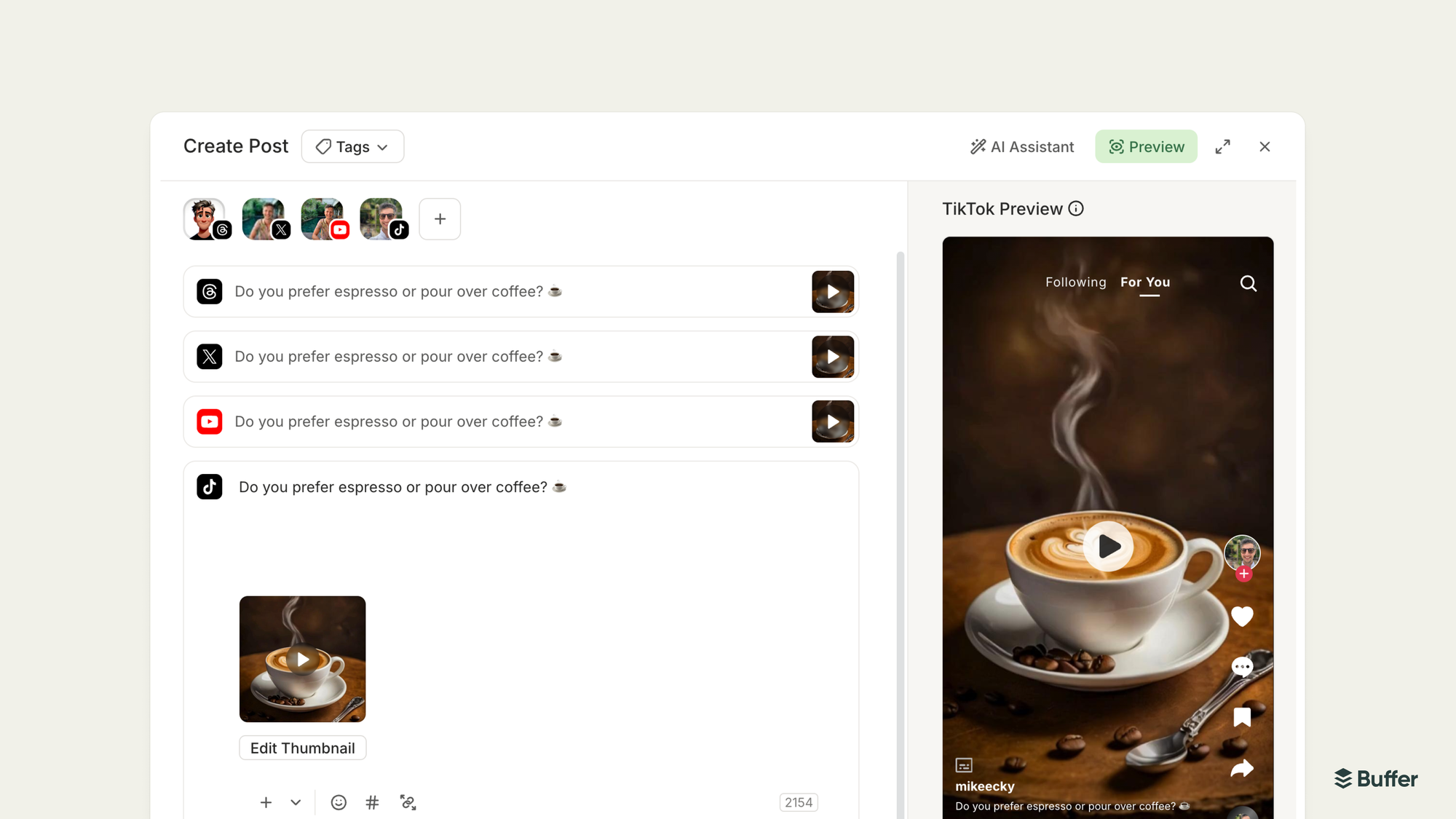
Historically, managing client comments and messages across disparate social platforms presented significant logistical challenges. It often necessitated logging into individual client accounts or navigating clunky native interfaces, consuming valuable time and increasing the risk of missed interactions. Buffer’s unified "Community" inbox has revolutionized this process, centralizing all social comments and messages from connected platforms into a single, intuitive dashboard. This consolidation has eliminated the need for constant toggling between various inboxes, drastically improving response times and ensuring no client interaction goes unnoticed.
The functionality extends beyond traditional social media comments. A groundbreaking addition for Sapphire Social has been Buffer’s integration with Google reviews. Previously, managing Google reviews meant yet another platform to monitor and respond to, adding to the digital juggle. With Buffer, Alexandrea’s team can now respond to Google reviews directly from the same centralized interface used for social media interactions. "Not only can we respond to people on social, but we can now respond to reviews on Google, which has been amazing," she stated. "We don’t have to toggle between inbox and comments."
This capability is particularly vital for clients whose businesses rely heavily on local search and online reputation. Data from BrightLocal indicates that 87% of consumers read online reviews for local businesses, and 73% trust a business more after reading positive reviews. Prompt, thoughtful responses to both positive and negative reviews are crucial for building trust and demonstrating attentiveness to customer feedback. By centralizing this function, Buffer has empowered Sapphire Social to deliver a more holistic and efficient community management service, enhancing client satisfaction and brand equity. For an agency whose identity is intrinsically linked to community management, having this core service streamlined and enhanced within a single, powerful tool is not just an advantage—it’s a competitive differentiator.
Strategic Implications: A Blueprint for Agency Success
Sapphire Social’s transition to Buffer offers valuable insights and a compelling blueprint for other social media agency owners navigating similar operational challenges. Alexandrea Browman’s advice to her peers is direct and unequivocal: "If you want a tool that handles scheduling, quality control, community management, and team management without the usual headaches, Buffer is it."
The experience highlights several critical considerations for agencies:
- Pricing Flexibility: The ability to scale services up or down based on actual client load, rather than being forced into rigid, often overpriced tiers, is paramount for maintaining profitability and agility in a fluctuating market.
- Integrated Workflow: Consolidating multiple functions—scheduling, approvals, and diverse community management (including Google reviews)—into a single platform drastically reduces operational complexity and saves invaluable time.
- Security and Control: Eliminating the need for direct client credential access and implementing robust approval workflows strengthens security posture and enhances quality assurance.
- Ease of Use: A powerful tool with a low learning curve ensures rapid team adoption and minimizes disruption during transitions.
Alexandrea’s concluding sentiment serves as a poignant reminder of the core issue that drove her away from her previous provider: "I would hate to have a social media scheduler where you’re forcing me to be in a certain tier. Please don’t do that." This plea underscores the enduring value of user-centric design and flexible business models in the competitive SaaS landscape.
Conclusion: A Future of Agility and Growth
Sapphire Social’s successful pivot to Buffer exemplifies how strategic technology choices can profoundly impact an agency’s efficiency, profitability, and capacity for growth. By addressing critical pain points related to cost, flexibility, and operational complexity, Alexandrea Browman has not only optimized her agency’s internal processes but also enhanced the value and quality of service delivered to her clients. In an industry defined by constant change and increasing demands, the ability to adapt with tools that genuinely support an agency’s unique business model is not just beneficial—it is essential for long-term success and sustainability. The story of Sapphire Social stands as a testament to the power of thoughtful platform selection in building a resilient and thriving digital agency.