Cintya Tara Annisa
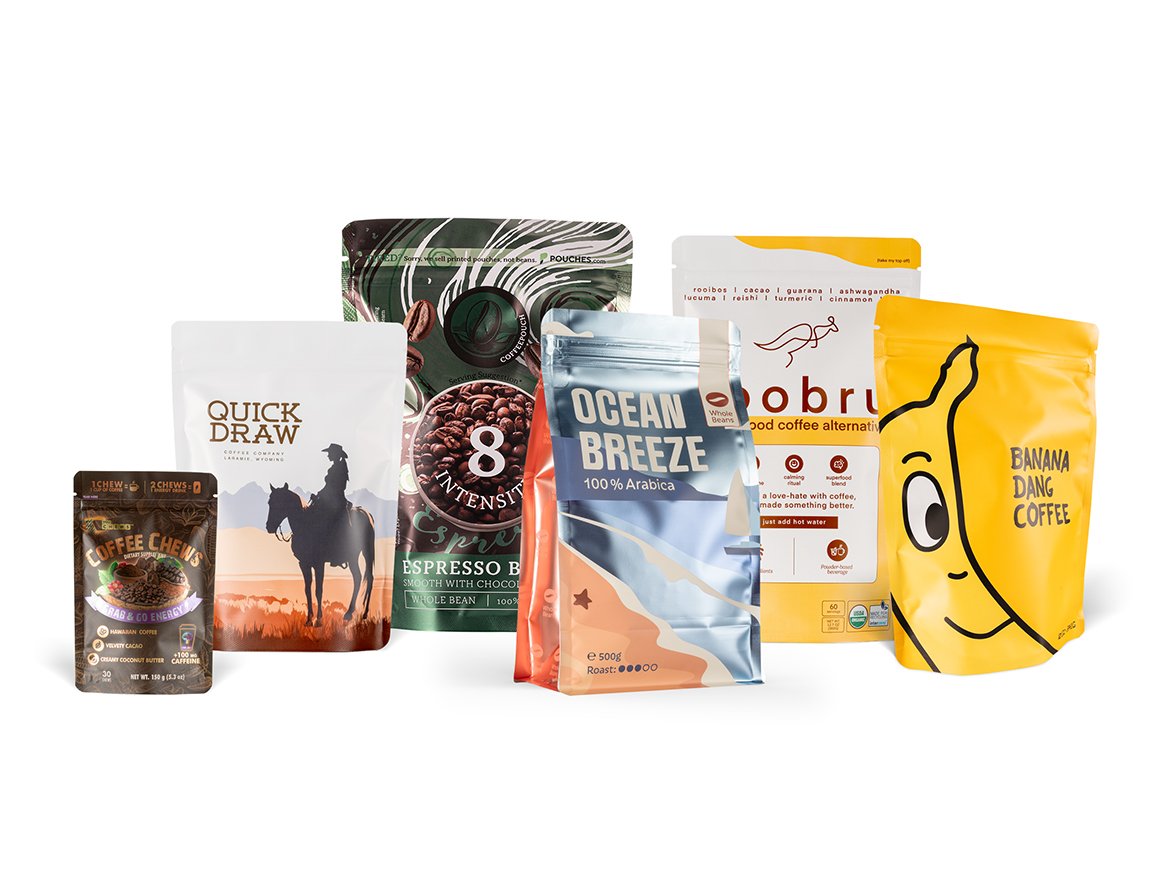
The landscape of the specialty coffee industry is undergoing a significant transformation as POUCHES.com announces a new service model designed to eliminate one of the most persistent hurdles for small and medium-sized enterprises (SMEs): high minimum order quantities (MOQs) for custom packaging. By leveraging advanced digital printing technology, the company now offers fully printed, professional-grade coffee pouches with no minimum order requirements, a move that is expected to democratize high-end branding for boutique roasters. This initiative is coupled with an expedited production timeline and a streamlined digital interface, addressing the industry’s growing need for agility, aesthetic differentiation, and financial efficiency.
The Evolution of Packaging Demands in the Specialty Coffee Sector
For decades, the coffee packaging industry was dominated by traditional printing methods such as rotogravure and flexography. While these methods offer high quality and low per-unit costs at scale, they require the creation of expensive physical plates for every design. Consequently, packaging manufacturers typically imposed MOQs ranging from 5,000 to 10,000 units per Stock Keeping Unit (SKU) to offset setup costs. For a small roastery producing a dozen different single-origin coffees or seasonal blends, these requirements often resulted in prohibitive upfront costs and the accumulation of thousands of unused bags that would eventually become obsolete.
As the specialty coffee market has shifted toward micro-lots, limited-edition releases, and hyper-seasonal offerings, the rigid nature of traditional packaging has become a logistical bottleneck. Roasteries today require the ability to pivot quickly, testing new flavor profiles and responding to market trends without the risk of over-extended inventory. The POUCHES.com model responds directly to this shift, allowing roasters to order exactly the number of bags needed for a specific roast profile, whether that number is five units or five hundred.
Technical Innovation: The Role of Digital Printing
The cornerstone of this service expansion is the integration of high-capacity digital printing technology. Unlike traditional methods, digital printing functions similarly to a high-end inkjet or laser process but on a commercial, industrial scale. Because it does not require the production of plates, the "setup" time is virtually eliminated, allowing for a seamless transition between different artwork files.
This technology enables "multi-SKU" production runs. In a single print job, a roastery can distribute their total volume across multiple designs. For example, a roaster ordering 500 bags can split that order into 100 bags for a Brazilian dark roast, 100 for an Ethiopian light roast, 200 for a signature espresso blend, and 100 for a seasonal holiday release. This level of flexibility was historically impossible without incurring massive surcharges or managing multiple separate orders.
Furthermore, digital printing ensures high-resolution graphics and vibrant color profiles that rival traditional methods. This ensures that smaller brands do not have to sacrifice visual appeal for the sake of lower quantities, allowing them to compete on grocery shelves and digital marketplaces alongside multi-national coffee conglomerates.
Chronology of the Shift Toward On-Demand Packaging
The move toward no-MOQ packaging is the culmination of several years of technological and market developments:
- 2015–2018: The Rise of Micro-Roasters. The global specialty coffee market saw a surge in independent roasteries, driven by consumer interest in transparency, sustainability, and unique flavor profiles.
- 2019: Digital Printing Maturation. Industrial digital presses became fast enough and high-quality enough to compete with traditional flexible packaging standards.
- 2020–2021: Pandemic-Driven E-commerce Boom. With coffee shops closed, roasteries shifted to direct-to-consumer (DTC) models. This increased the need for "shippable" branding and unique packaging for subscription services.
- 2022–2023: Supply Chain Volatility. Fluctuating shipping costs and material shortages made roasters wary of holding large amounts of inventory, increasing the demand for localized, fast-turnaround solutions.
- 2024: The POUCHES.com Initiative. Recognizing the permanent shift in buying habits, POUCHES.com finalized its no-MOQ infrastructure, integrating design support and express production to meet the "just-in-time" needs of the modern roaster.
Economic Implications and Financial Agility for Roasteries
The financial impact of removing MOQs is profound for small business owners. In a traditional model, a roaster might spend $5,000 to $10,000 on a single order of custom bags just to meet the minimum threshold for three or four SKUs. This ties up significant capital in physical inventory that may take months or even years to sell.
By utilizing the POUCHES.com model, a roastery can maintain a lean inventory. This "print-on-demand" approach frees up cash flow that can be reinvested into purchasing higher-quality green coffee, upgrading roasting equipment, or expanding marketing efforts. Additionally, it eliminates the "hidden costs" of inventory management, such as the warehouse space required to store thousands of empty bags and the waste associated with discarding bags when a roast profile is discontinued or a brand undergoes a logo refresh.
Market data suggests that specialty coffee roasters who utilize flexible, short-run packaging can increase their product variety by up to 40% because the barrier to entry for launching a new SKU is significantly lowered. This allows for greater experimentation and a more dynamic product catalog.
Streamlining the User Experience and Design Support
A common barrier for small business owners in the packaging space is the technical complexity of preparing print-ready files. POUCHES.com has addressed this by simplifying the ordering process through an intuitive digital configuration tool. Customers can select their pouch style, dimensions, and features—such as degassing valves, which are essential for fresh coffee to release carbon dioxide without letting oxygen in.
The platform allows for direct artwork uploads and provides a layer of professional oversight. For roasteries that lack an in-house graphic design team, the company offers design services to ensure that the final product meets commercial standards. This end-to-end support reduces the technical anxiety often associated with custom manufacturing and ensures that the transition from a digital concept to a physical product is seamless.
Product Specifications: Stand-Up Pouches vs. Flat Bottom Bags
The current offering distinguishes between two primary formats common in the coffee industry:
- Stand-Up and Flat Pouches: These are the flagship products for the no-MOQ range. Stand-up pouches (SUPs) are favored for their shelf stability and resealable zippers. They are the most versatile option for retail and home use.
- Flat Bottom Bags: Often referred to as "box bags," these are popular for premium, high-end coffee brands due to their sturdy, brick-like appearance. Because the manufacturing process for flat bottom bags is more complex, POUCHES.com offers these with a relatively low MOQ of 2,500 units. While not part of the "zero-minimum" range, this threshold remains significantly lower than the industry standard, making them accessible to growing brands that have scaled past the micro-roaster stage.
A critical advantage mentioned by the company is that even within the 2,500-unit minimum for flat bottom bags, the volume can be split across multiple designs. This allows a roaster to maintain a premium aesthetic across their entire product line without needing to order 2,500 units of every single variety.
Logistics and the One-Week Turnaround
In the modern economy, speed is often as valuable as cost. Traditional packaging lead times—especially when sourcing from overseas—can range from 8 to 14 weeks. Such delays make it nearly impossible for roasters to react to sudden surges in demand or to capitalize on limited-time coffee crops that may only be available for a short window.
POUCHES.com has optimized its production facility to offer express delivery within a single week. This rapid turnaround transforms packaging from a long-term forecasting challenge into a responsive operational tool. If a roaster discovers a popular new bean or receives a large wholesale order, they can have custom-branded packaging in hand before the beans have even finished their post-roast degassing period.
Environmental and Sustainability Considerations
While flexible packaging is often criticized for its plastic content, the "no-MOQ" model contributes to environmental sustainability through waste reduction. The traditional "over-ordering" necessitated by high MOQs is a major source of industrial waste. When brands rebrand or recipes change, thousands of plastic-lined bags are frequently sent to landfills.
By producing only what is needed, POUCHES.com helps reduce the carbon footprint associated with excess material production and long-distance shipping of heavy inventory. Furthermore, the efficiency of digital printing reduces chemical waste and ink consumption compared to traditional plate-based systems.
Future Outlook: The Democratization of the Coffee Shelf
The move by POUCHES.com is indicative of a broader trend toward mass customization. As consumer preferences continue to fragment, the ability for small brands to appear as professional and "established" as their larger competitors is vital.
Industry analysts suggest that the elimination of MOQs will lead to an even more vibrant and diverse coffee market. It allows local roasters to participate in regional collaborations, create commemorative bags for local events, and provide "white label" services for cafes and restaurants with ease. By removing the financial and logistical barriers to entry, POUCHES.com is not just selling bags; it is providing the infrastructure for the next generation of coffee entrepreneurs to scale their businesses with confidence.
As the specialty coffee sector continues to grow—projected to reach significant new heights by 2030—the role of flexible, responsive, and accessible packaging will remain a cornerstone of brand success. POUCHES.com’s commitment to speed, ease of use, and no minimum orders marks a pivotal moment in the supply chain, ensuring that the only limit for a coffee roaster is the quality of their beans, not the quantity of their bags.