rifanmuazin
Understanding the intricate dynamics of social media engagement is paramount for content creators and businesses navigating the ever-evolving digital landscape. While the allure of TikTok, with its short-form video content, ensures a constant stream of consumption, the strategic timing of posts remains a critical, albeit complex, factor in maximizing reach and impact. A comprehensive study conducted by Buffer, analyzing over 7.1 million TikTok videos, carousels, photos, and text posts, has shed light on discernible patterns, offering invaluable insights into when content is most likely to capture audience attention and achieve optimal engagement. This extensive analysis provides a data-backed roadmap for creators aiming to elevate their presence on the platform, pinpointing not just the best times, but also specific days and hours to either capitalize on or strategically avoid.
The Algorithm’s Influence: Why Timing on TikTok Matters
At the core of TikTok’s virality lies its sophisticated algorithm, a complex system designed to serve users highly personalized content on their "For You Page" (FYP). Unlike traditional social media platforms that might prioritize connections, TikTok’s algorithm emphasizes content relevance and initial engagement. When a creator publishes a video, the algorithm typically presents it to a small test group of users. The performance within this initial cohort—measured by watch-through rates, likes, comments, and shares—serves as a crucial signal. High engagement from this test group prompts the algorithm to push the content to a broader audience, dramatically increasing its visibility and potential for viral spread.
This mechanism underscores why posting time is not merely a suggestion but a strategic imperative. Publishing content when a significant portion of the target audience is actively scrolling significantly increases the chances of hitting that initial engagement threshold. Julian Winternheimer, Buffer’s data scientist who spearheaded this extensive research, highlighted that while there isn’t a single "magic" hour universally applicable to every creator, clear standout times emerge from aggregate data. "Our analysis of millions of posts reveals distinct peaks and troughs in engagement," Winternheimer stated, emphasizing that these patterns, while not definitive for every niche, provide an exceptional starting point for optimization.
The landscape of social media consumption has dramatically shifted with TikTok’s rise. The platform’s youthful demographic, with a significant portion of its global users aged between 18 and 24, exhibits different online behaviors compared to audiences on platforms like LinkedIn or even Instagram. This demographic often enjoys less rigid schedules, particularly on weekends, leading to unique engagement patterns that contrast sharply with more professionally oriented networks. This contextual understanding is vital for interpreting the data and formulating effective posting strategies.
Methodology Behind the Millions: Buffer’s Data Deep Dive
Buffer’s study stands out due to its sheer scale and rigorous methodology. By examining 7.1 million posts published through its platform, the research team was able to identify statistically significant trends in median engagement rates. The focus on "median engagement" helps to mitigate the impact of outlier viral posts, providing a more reliable indicator of general content performance. Crucially, the data science team applied mathematical normalization techniques to ensure the recommended times are universally applicable, removing the need for creators to convert times based on their specific time zones. This simplification ensures the insights are immediately actionable for a global audience.
The analysis specifically looked at various content formats—videos, carousels, photos, and text posts—to provide a holistic view of engagement across the platform. While the core findings offer broad recommendations, the study acknowledges that individual audience demographics, geographic locations, and specific content niches will always introduce unique variables. Therefore, the presented data serves as a powerful foundational layer upon which creators can build their personalized strategies.
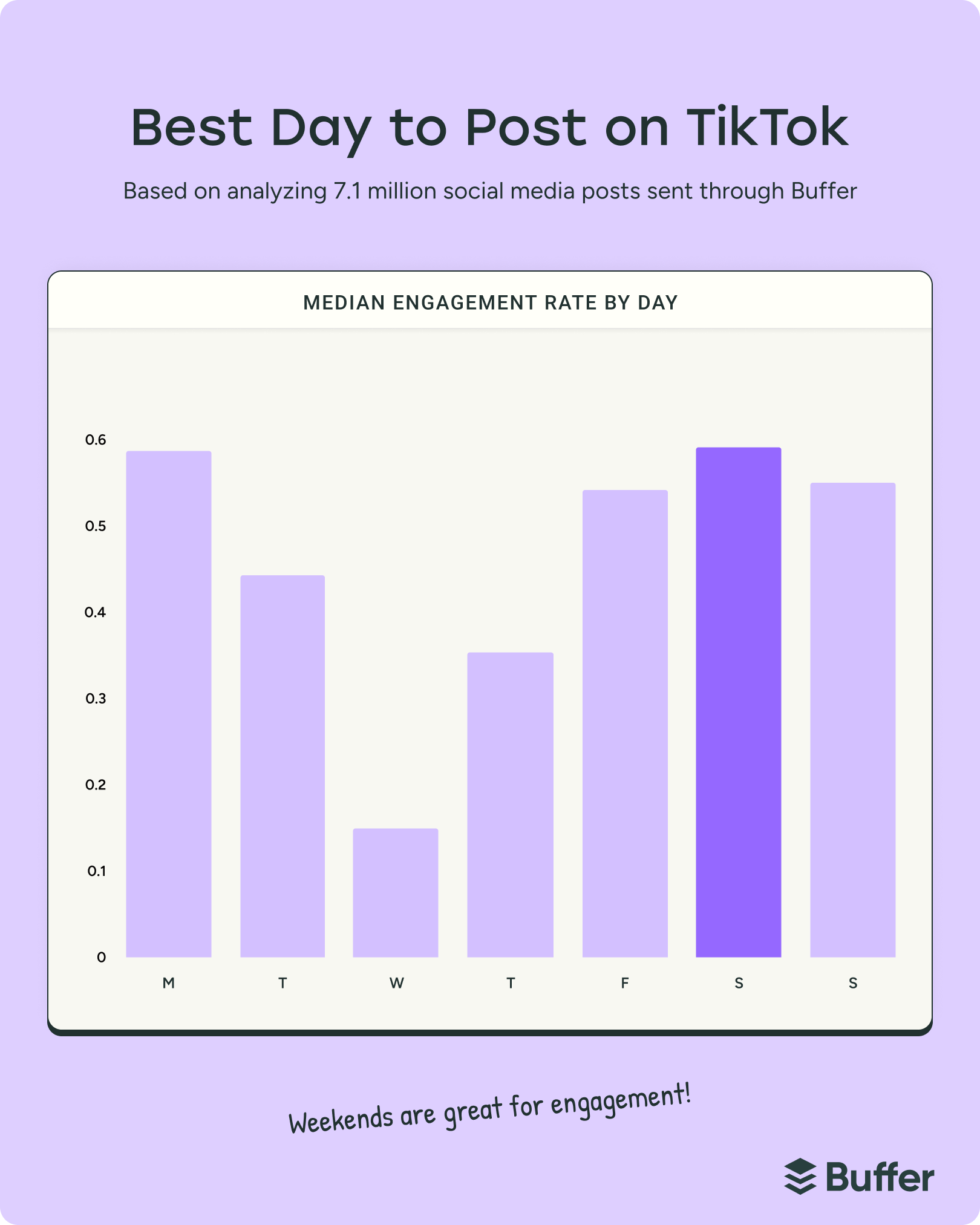
Overarching Trends: Weekend Dominance and Evening Peaks
One of the most striking findings from Buffer’s analysis is the exceptional performance of content posted on weekends, particularly Saturdays and Sundays. This contrasts sharply with engagement trends observed on other major platforms like Instagram or LinkedIn, where weekend activity often sees a noticeable decline. This phenomenon on TikTok is largely attributed to its younger user base, who tend to have more leisure time during weekends, leading to extended periods of scrolling and interaction.
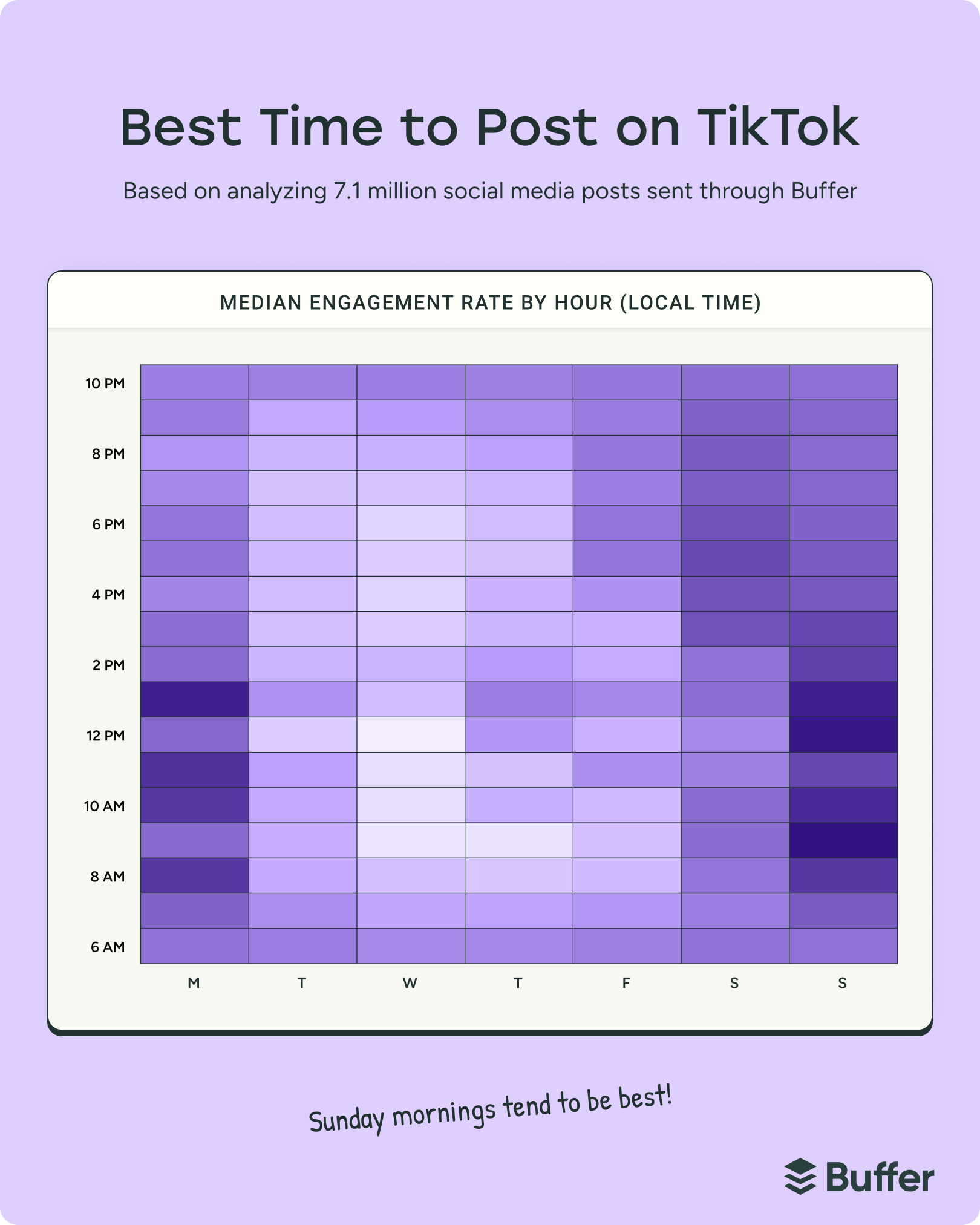
Generally speaking, the study revealed that engagement tends to pick up significantly in the evening hours, with peak time slots typically falling between 6 p.m. and 11 p.m. local time (as per the standardized data). Conversely, afternoons, specifically between 12 p.m. and 5 p.m., generally exhibit lower engagement across most days. These broad patterns offer a critical initial insight for creators planning their content distribution.
The visual representation of this data, often presented as a heatmap, clearly delineates the "hot zones" of engagement—darker blocks indicating higher views and lighter blocks signifying lower performance. This visual clarity underscores the strategic advantage of aligning posting schedules with these observed peaks.
Detailed Daily Breakdown: Optimal Hours for Maximum Impact
While Sunday at 9 a.m. emerged as the single best time to post throughout the entire week, followed closely by Monday at 1 p.m. and Sunday at 1 p.m., a deeper dive into each day reveals specific opportunities for content creators:
- Monday: The week kicks off strong with Monday at 1 p.m. as the primary optimal time, supported by secondary peaks at 11 a.m. and 8 a.m. Mondays prove to be one of the most robust days for TikTok engagement, suggesting that users are actively catching up on content or seeking entertainment during breaks and post-work hours.
- Tuesday: Early risers or those preparing for the day drive Tuesday’s peak at 6 a.m. Subsequent strong performance is observed late in the evening at 10 p.m. and again at 7 a.m. This dual-peak pattern suggests both pre-work/school engagement and late-night scrolling.
- Wednesday: Wednesdays present a somewhat quieter overall engagement profile. The best time to post is notably late, at 10 p.m., with secondary opportunities at 6 a.m. and 9 p.m. Creators might consider prioritizing other days if their content volume is limited, or focus on capturing the late-night audience.
- Thursday: Similar to Wednesday, Thursdays generally show lower engagement. The optimal posting time is 1 p.m., followed by 10 p.m. and 6 a.m. This mid-week dip suggests audiences might be more occupied with work or school commitments.
- Friday: As the week draws to a close, engagement picks up significantly. Friday’s prime time is 6 p.m., with strong secondary slots at 10 p.m. and 8 p.m. This reflects the start of the weekend mindset, with users winding down and seeking entertainment.
- Saturday: Saturday stands out as the strongest day for TikTok engagement overall. The afternoon-to-evening window is particularly potent, with 5 p.m. identified as the best time, closely followed by 4 p.m. and 3 p.m. This sustained afternoon engagement underscores the platform’s popularity during weekend leisure.
- Sunday: The week culminates with Sunday at 9 a.m. identified as the absolute best time for posting. Other highly effective times include 1 p.m. and 12 p.m. The early morning peak on Sunday suggests users are engaging with the app shortly after waking or during a relaxed start to their day, before afternoon activities commence.
Strategic Implications for Creators and Businesses
These findings carry significant implications for various stakeholders on TikTok:
- Small Business Owners: For SMBs aiming to reach potential customers, leveraging these peak times can drastically improve the visibility of product showcases, behind-the-scenes content, or promotional videos. Scheduling posts to align with weekend and evening peaks, particularly on Saturday and Sunday, can tap into a relaxed, receptive audience.
- Individual Content Creators and Influencers: Maximizing initial engagement is crucial for individual creators to break through the noise and land on more FYPs. Experimenting with the identified best times, especially on Mondays and weekends, can significantly boost organic reach and follower growth.
- Larger Brands: For established brands, consistent, data-driven posting at optimal times can reinforce brand presence, drive campaign awareness, and foster community engagement. The ability to schedule content strategically allows brands to maintain a steady flow of content without requiring constant manual posting.
Beyond General Data: Personalizing Your TikTok Strategy
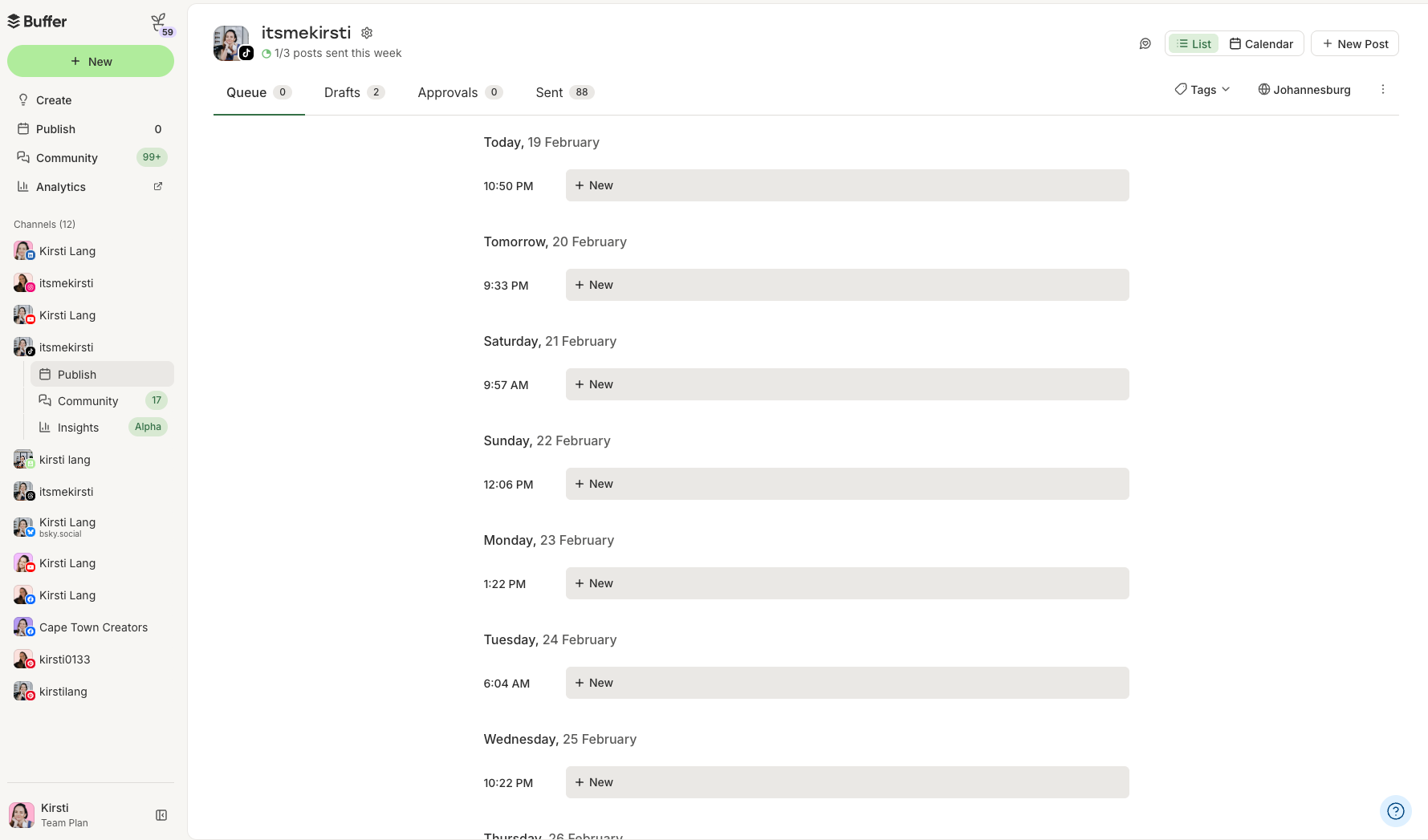
While Buffer’s aggregated data provides an excellent foundation, the nuances of individual audiences mean that a one-size-fits-all approach is rarely optimal. TikTok itself offers valuable built-in analytics that enable creators to fine-tune their strategies:
- Leveraging TikTok Analytics: Creators with a Business or Creator account can access their "Followers" tab within TikTok Analytics to view "Most active times." This feature provides a retrospective overview of when their specific followers have been most active on the app over the past seven days. While this shows follower activity, it’s a strong indicator of when broader target audiences might also be active, as potential new followers often exhibit similar scrolling behaviors.
- Identifying Personal Peaks: By consistently monitoring these analytics, creators can pinpoint patterns unique to their audience—whether spikes occur during weekdays, weekends, or specific hours. The recommendation is to post slightly before these identified peak times to allow the algorithm to process and start distributing the content as the audience becomes most active.
- Sustainable Scheduling: Consistency is a critical factor in algorithmic favorability. Creators must balance optimal posting times with a sustainable content creation schedule. Burnout is a genuine concern, and a well-planned social media calendar, incorporating batch creation and scheduling tools, can alleviate pressure and ensure a steady, high-quality content flow.
- Continuous Experimentation: The TikTok algorithm and user trends are dynamic. What works today might need adjustment tomorrow. Creators should continuously experiment with different posting times, even after identifying initial successful slots. A/B testing various times for similar content types can reveal evolving audience behaviors.
- Analyzing Content Performance: Post-publication analysis is non-negotiable. Tracking metrics like total play time, average watch time, follower growth, and comments for each video, in conjunction with its posting time, allows creators to objectively assess the effectiveness of their timing strategy. This data-driven feedback loop is essential for iterative improvement.
The Role of Social Media Management Tools
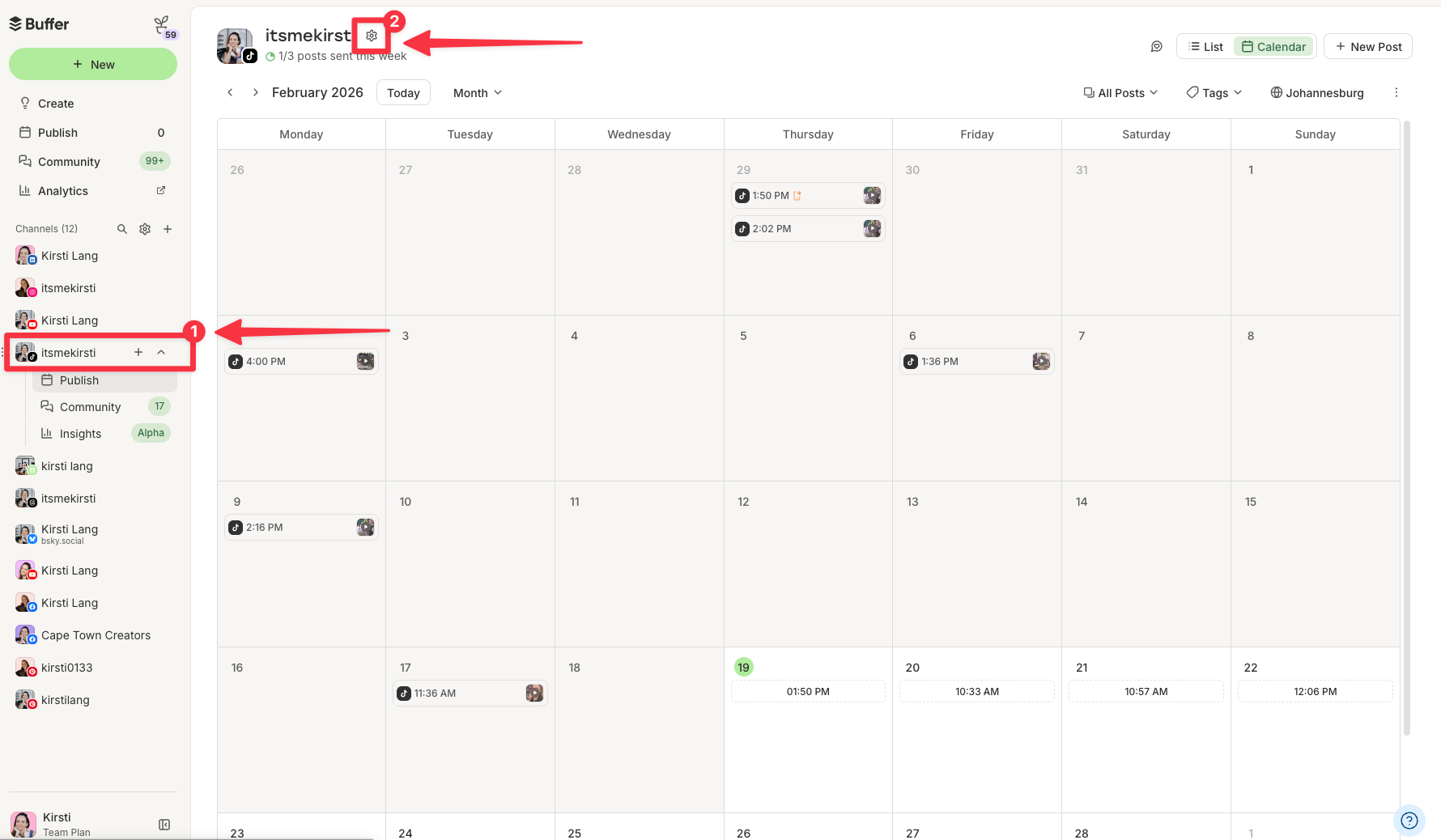
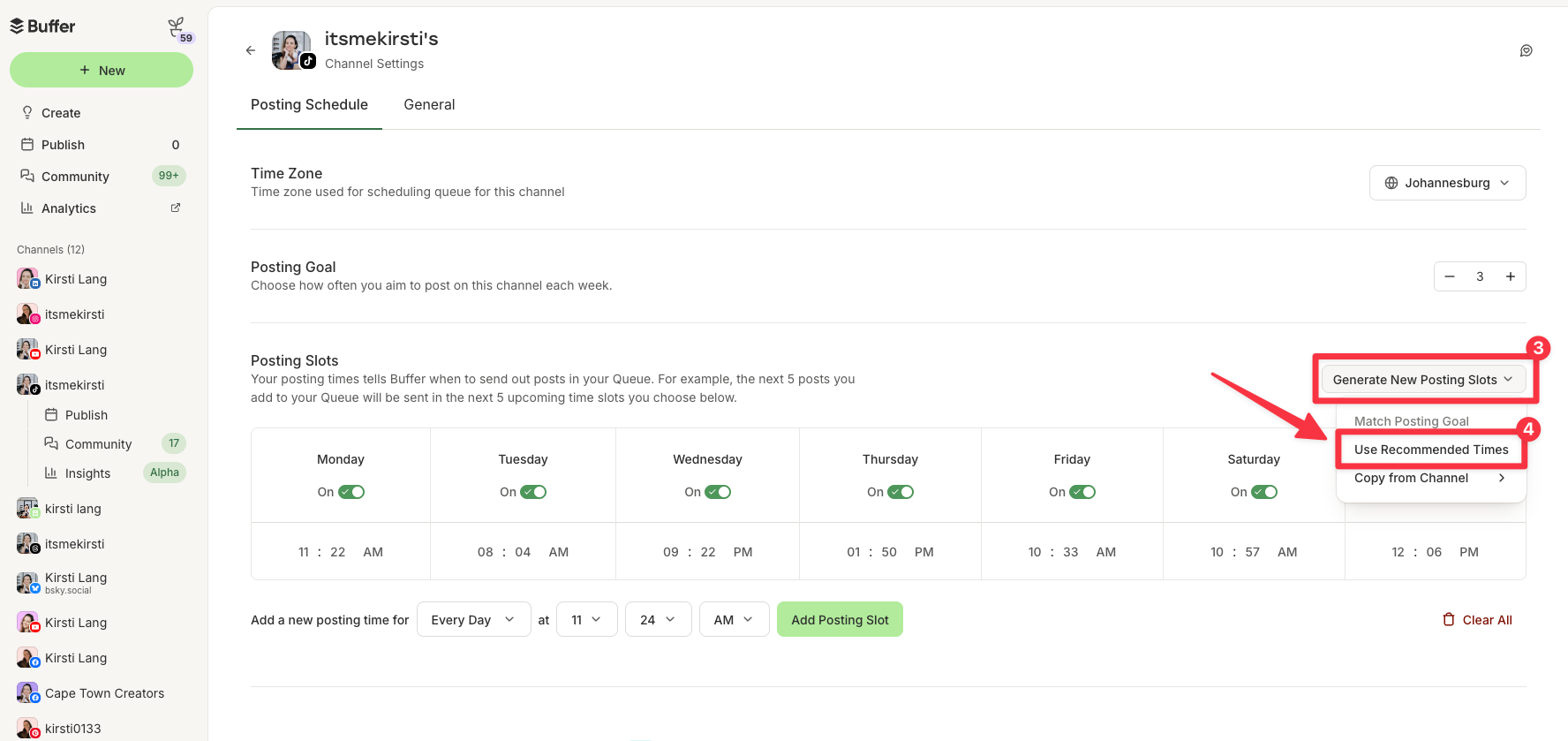
For creators and businesses operating across different time zones or managing multiple accounts, social media scheduling tools like Buffer become indispensable. These platforms allow users to pre-schedule TikTok posts at the precise moments identified as optimal, eliminating the need for manual posting at inconvenient hours. Many tools also offer notification-based posting, which is particularly useful for content that requires native TikTok features like trending audio. This functionality allows creators to compose their video and caption within the scheduling tool, receive a notification at the scheduled time, and then finalize the post directly in TikTok by adding audio or other real-time elements.
Conclusion: A Data-Driven Path to TikTok Success
In conclusion, while the quality and relevance of content remain paramount, strategic timing acts as a powerful amplifier on TikTok. Buffer’s extensive analysis of 7.1 million posts provides an invaluable, data-backed guide for creators and businesses in 2026, demystifying the optimal hours and days for maximizing engagement. The prominence of weekend and evening activity, alongside specific daily peaks, offers a clear starting point for content distribution strategies. However, the ultimate success lies in a hybrid approach: leveraging these general insights while diligently analyzing individual audience behavior through TikTok’s native analytics and committing to continuous experimentation and adaptation. By embracing a data-driven mindset and utilizing available tools, creators can significantly enhance their visibility, foster stronger communities, and achieve their strategic objectives on one of the world’s most dynamic social media platforms.