 Indra Kusuma
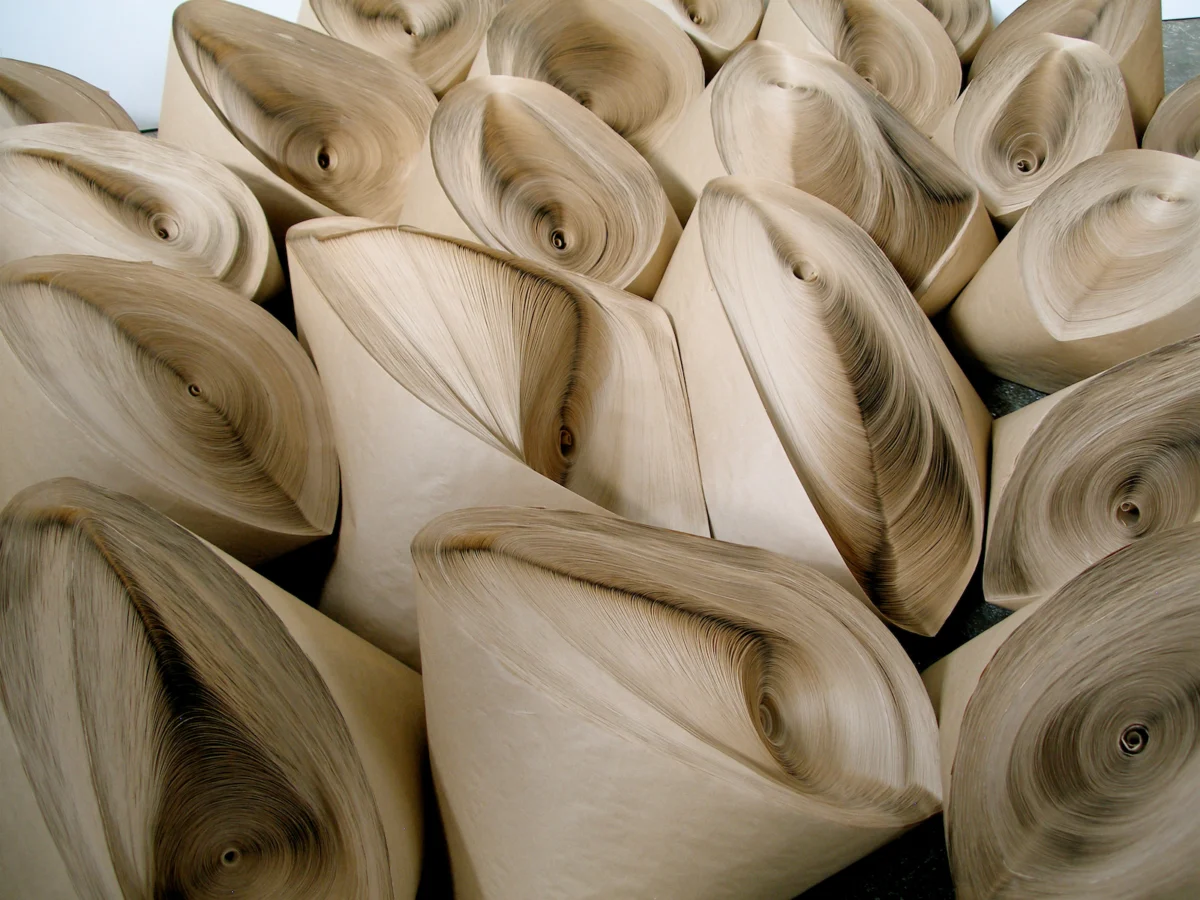
The intersection of industrial detritus and organic aesthetic finds its most compelling expression in the work of Korean-born artist Jae Ko, whose four-decade career has culminated in her inaugural solo exhibition in Belgium. Currently on view at the 22MUSE Gallery in Antwerp, the exhibition titled Striated presents a curated selection of works that challenge the traditional perceptions of paper as a two-dimensional medium. By transforming mundane office supplies, recycled kraft paper, and adding machine rolls into dense, gravity-defying sculptures, Ko occupies a unique space in contemporary art, bridging the gap between delicate craftsmanship and geological scale.
A Chronology of Material Innovation
Jae Ko’s artistic trajectory began in Seoul, where her early exposure to Eastern aesthetic traditions—specifically the discipline of calligraphy—laid the groundwork for her eventual focus on materiality and repetition. Following her education in Japan, which introduced her to the nuances of traditional sumi ink and paper manipulation, Ko relocated to the United States. It was here, amidst the quiet landscapes of Maryland’s Eastern Shore, that her practice underwent a significant evolution.

For over forty years, Ko has systematically refined her process. In the 1980s and 1990s, her work moved away from the canvas, favoring the sculptural volume offered by mass-produced paper. By the early 2000s, she had developed the proprietary techniques of coiling, folding, and compression that define her current signature style. Her ability to transition from small-scale wall reliefs to monumental, site-specific floor installations has established her as a pivotal figure in the use of recycled materials for high-art applications.
The Anatomy of Striated
The current exhibition at 22MUSE Gallery serves as a retrospective of this transformative process. The title, Striated, refers to the inherent linear quality of the paper rolls after they have been processed. Each sculpture is a testament to the artist’s physical endurance and the material’s structural potential.
The production process for a single monumental work can take months, involving:

- Sourcing: Acquisition of high-quality kraft or register paper, often salvaged from industrial sources.
- Manipulation: Unwinding, folding, and binding, often done by hand to maintain the integrity of the paper grain.
- Pigmentation: The application of traditional sumi ink or saturated synthetic dyes, which penetrate the paper to different depths depending on the density of the coil.
- Curing: The final stage, where pieces may be exposed to varying levels of humidity and pressure, allowing the paper to expand or contract, effectively "sculpting" itself through environmental interaction.
Critics and curators have noted that the resulting forms—which resemble sedimentary rock formations, tree rings, or even fluid glacial movements—serve as a physical archive of the time spent in their creation. The density achieved through compression gives these objects a weight that feels fundamentally at odds with the fragile nature of paper, a duality that is central to Ko’s thematic inquiry.
Data and Environmental Implications
The environmental context of Ko’s work cannot be ignored. In an era of increasing focus on sustainable art practices, Ko’s reliance on recycled paper and non-toxic, traditional inks positions her as a pioneer of circular creativity. By repurposing materials that are typically discarded—such as adding machine tape—she effectively redirects industrial waste into the cultural sphere.
According to industry standards in sustainable art, the carbon footprint of paper-based sculpture is significantly lower than that of bronze casting or marble quarrying. While exact lifecycle assessment data for individual sculptures remains proprietary, the use of water-based, carbon-neutral ink and locally sourced recycled materials highlights a commitment to minimizing environmental impact.

Furthermore, the longevity of these works challenges the misconception that paper is a fleeting medium. Through rigorous compression and chemical stabilization via the ink-soaking process, Ko’s sculptures have proven to be remarkably durable, suitable for permanent installation in both corporate and institutional environments, as evidenced by her past projects for organizations like Facebook and various major museums.
Perspectives from the Art Community
The 22MUSE Gallery’s decision to host Ko for her Belgian debut reflects a broader trend in European galleries to elevate artists who emphasize process-driven, tactile work. According to representatives from 22MUSE, the exhibition was conceived to highlight the "dialogue between the manufactured object and the natural world."
Art historians have often compared Ko’s methodology to the Land Art movement of the 1960s and 70s, though she distinguishes herself through her focus on the interiority of the object. "Her work is not merely representing nature; it is mimicking the temporal forces of nature," noted one independent curator during the exhibition’s opening week. "When you look at the striations, you aren’t seeing a drawing of a landscape; you are seeing the fossilization of a process."

Broader Impact and Global Significance
Jae Ko’s influence extends beyond the gallery wall. Her work provides a case study for the integration of traditional craft with modern installation art. By utilizing paper—a medium historically tied to the written word and bureaucratic record-keeping—and stripping it of its utilitarian function, she forces the viewer to confront the material in its raw, structural state.
The implications for contemporary sculpture are significant. As art institutions move away from traditional mediums toward more sustainable and conceptual approaches, Ko’s mastery of a common material provides a roadmap for future artists. Her work suggests that profound aesthetic experiences do not require rare or expensive substances, but rather a mastery of time, repetition, and structural physics.
As visitors move through the Antwerp exhibition, the interplay between the blue, green, and magenta hues of the saturated paper and the stark white gallery space creates a contemplative environment. The sculptures, which shift from tightly wound, defensive spirals to expansive, flowing ribbons, invite a sensory engagement that is rare in contemporary exhibitions.

Looking Toward the Future
Striated will remain on display at the 22MUSE Gallery until November 28, 2026. For collectors and enthusiasts of minimalist, process-heavy art, this exhibition offers a rare opportunity to view the evolution of an artist who has remained steadfast in her dedication to a single, humble medium.
The long-term impact of Ko’s career suggests that her contributions to the field of sculpture will be measured not just by the volume of her output, but by the intellectual depth she has brought to the use of recycled materials. As the art world continues to grapple with the tension between industrial production and ecological responsibility, Jae Ko’s work stands as a benchmark for how artistic intent can successfully marry the two.
Her ability to make paper appear as solid as stone, and as fluid as water, ensures that her works will continue to occupy a significant place in the narrative of 21st-century art. The exhibition at 22MUSE serves as both a celebration of this past success and a preview of the ongoing, iterative nature of her practice—a practice that, like the rings of a tree, continues to add layers of meaning with every passing year.