 Ali Ikhwan
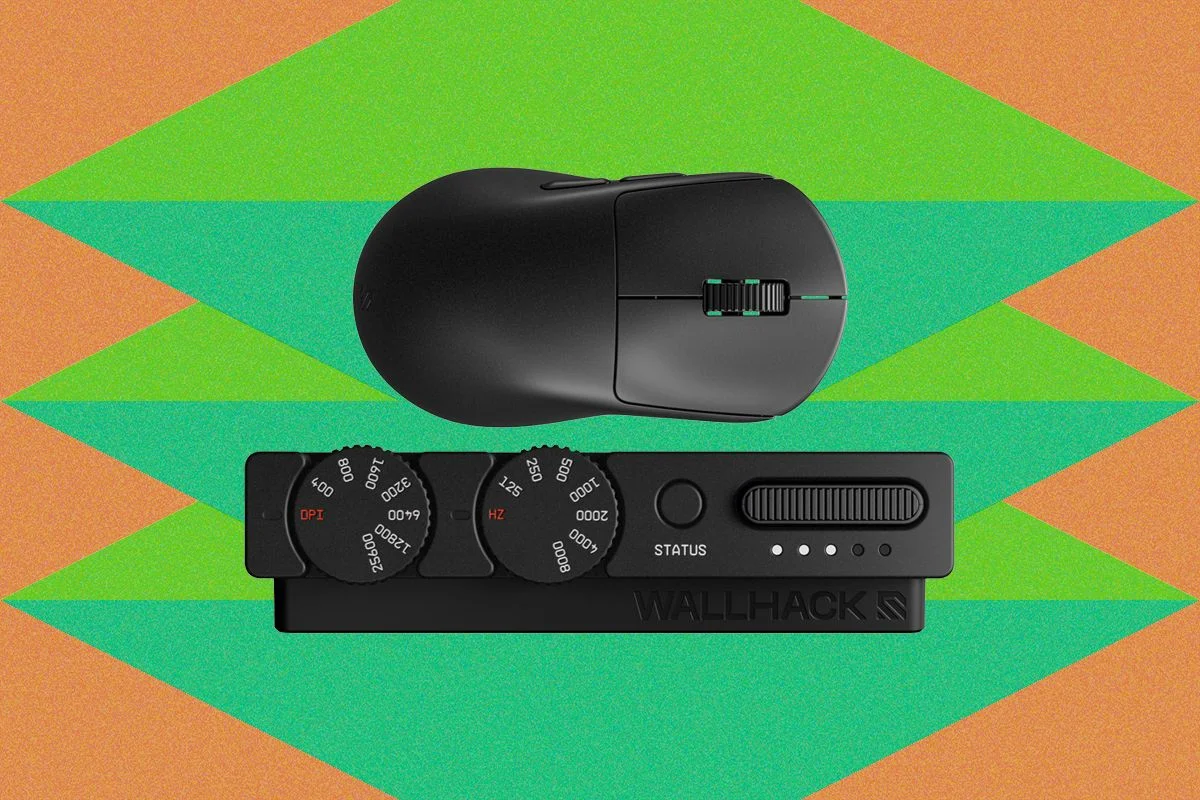
The gaming peripheral market has long been defined by the pursuit of weight reduction and the integration of high-performance sensors, often at the expense of modularity and tactile engagement. With the release of the Wallhack M-001, the industry sees a pivot toward industrial design that emphasizes structural integrity and user-serviceable components. Featuring a magnesium alloy chassis, a unique spring-loaded hot-swappable battery system, and an innovative multifunctional control dongle, the M-001 challenges the current trajectory of lightweight plastic-shell dominance.
Historical Context and Industry Evolution
Over the past five years, the "ultralight" trend has dominated the gaming mouse sector. Following the success of products like the Logitech G Pro X Superlight, manufacturers shifted toward honeycomb patterns and ultra-thin ABS plastics to reduce mass. While effective, these designs often introduced concerns regarding structural flex and long-term durability. Wallhack’s entry into the space signifies a return to metallic construction—a practice largely abandoned after the early 2010s—to achieve high rigidity without exceeding the 55-gram threshold that competitive players currently demand.

The integration of a hot-swappable battery is particularly noteworthy. While internal, non-removable lithium-ion batteries have become the industry standard to save space and weight, this design choice creates a "planned obsolescence" cycle. Once the battery reaches its charge-cycle limit, the entire device typically becomes redundant. By reintroducing a user-replaceable system, Wallhack aligns its product with broader "Right to Repair" initiatives, allowing the peripheral to remain operational for years beyond the lifespan of its internal power cell.
Technical Specifications and Engineering
The M-001 is built around a magnesium shell, which offers a superior strength-to-weight ratio compared to standard polymers. Weighing in at 53.6 grams, the device is structurally rigid, showing no signs of the "creak" often associated with thinner plastic shells.
The internal architecture utilizes the printed circuit board (PCB) as a load-bearing, structural member. This engineering technique, borrowed from automotive chassis design—specifically the "stressed-member" engine mounting seen in high-performance sports cars—allows for a reduction in chassis reinforcement weight. The lack of a full bottom shell further highlights this design philosophy, as the frame serves only to house the sensors and glide feet, leaving the PCB exposed to provide rigidity.

The device is powered by a Pixart PAW3950 sensor. While this sensor technology debuted several years ago, it remains a gold standard in the industry for its consistent tracking and minimal deviation during rapid acceleration. It supports a polling rate of 8,000 Hz, a feature that has become standard for high-end competitive play, ensuring lower click-to-motion latency.
The Innovation of the Control Dongle
Perhaps the most distinctive feature of the M-001 package is its desktop dongle. In standard gaming mice, the wireless receiver is often a utilitarian plastic dongle, frequently relegated to the back of a PC or a cable adapter. Wallhack has re-engineered this component into a dedicated desktop interface.
The dongle features physical rotary dials for DPI (Dots Per Inch) and polling rate adjustments, complete with a tactile ratcheting mechanism. This allows users to make granular adjustments on the fly, a significant departure from software-dependent configurations. The inclusion of an LED-backlit numbering system provides visual feedback, and the unit functions as a charging bay for the spare battery, ensuring that one cell is always ready for use. This "set-and-forget" workflow mitigates the primary disadvantage of the hot-swappable system: the requirement for manual battery management.

Performance Analysis and User Experience
In controlled testing, the M-001 demonstrated consistent performance across various genres, from high-speed tactical shooters to slower, precision-based titles. The shape—a symmetrical profile with an aggressive rear hump—favors a palm or claw grip, positioning the hand for efficient, rapid movements.
Data from the testing phase indicates that the mouse’s latency remains stable even under heavy 8,000 Hz polling loads. However, the absence of a direct USB-C connection is a critical point for power users. Because the mouse relies exclusively on 2.4G wireless connectivity, it lacks a "wired mode" backup. If the battery is depleted and no spare is charged, the device is rendered inert. While the convenience of the hot-swap system minimizes this risk, it represents a departure from the fail-safe redundant connectivity offered by most competitors.
Market Positioning and Competitive Landscape
The M-001 enters a crowded market occupied by established players like Razer, Logitech, and Corsair. Its primary differentiator is its build quality and modularity. Competitors such as the Razer Viper V4 Pro offer a more refined software ecosystem and a longer-standing pedigree of sensor optimization, but often utilize plastic shells that may feel less substantial than the Wallhack’s magnesium construction.

The price point of the M-001 places it in the premium tier, targeting enthusiasts and competitive gamers who prioritize build quality and customizability over cost-efficiency. Analysts note that while the sensor technology is not "bleeding edge," the integration of high-quality components—such as the Omron optical switches for primary clicks—ensures that the product satisfies the performance requirements of 99% of the gaming population.
Broader Implications for Peripheral Design
The release of the Wallhack M-001 highlights a shift in consumer demand. After years of chasing the lightest possible weight, the market is beginning to prioritize longevity and tactile satisfaction. The use of metal shells and serviceable batteries suggests that consumers are increasingly willing to pay a premium for hardware that can be maintained rather than replaced.
If the M-001 proves successful, it may force larger manufacturers to rethink their reliance on sealed-unit plastic designs. The success of the "stressed-member" PCB design could also lead to further weight reductions in metal-shelled devices, potentially bridging the gap between the sturdiness of metal and the lightness of plastic.

Official Stance and Future Outlook
While Wallhack has not released specific sales projections, the company has emphasized that the M-001 is designed to be the "final mouse" a user needs to purchase. By prioritizing modular components—such as the mechanical scroll wheel encoder and the hot-swappable battery—the manufacturer is effectively banking on a reputation for longevity.
Industry observers suggest that the next phase for the company will likely involve expanding the M-001’s software compatibility. The current web-based "Terminal" client, while stylistically distinct and lightweight, lacks the depth of integration found in major ecosystems like Razer Synapse or Logitech G Hub. Whether the company chooses to develop a more robust software suite or maintain its minimalist, text-based interface will be a key indicator of its long-term strategy for capturing the mass-market gaming demographic.
Conclusion
The Wallhack M-001 stands as a testament to the value of thoughtful industrial design. By successfully integrating a rigid magnesium chassis, a high-performance 8,000 Hz polling rate, and an innovative, user-friendly battery system, the device offers a compelling alternative to the standard plastic-molded gaming mice currently flooding the market. While it occupies a niche price bracket and requires a slight adjustment to the workflow of manual battery management, its construction and tactile performance set a new benchmark for what a high-end gaming peripheral can be. As the industry continues to evolve, the M-001 will likely be remembered as a catalyst for the return of durable, modular, and performance-oriented design.