
The modern digital landscape demands sophisticated coordination across digital channels, pushing businesses, creators, and agencies to adopt specialized social media management software. Selecting the optimal platform requires balancing distinct operational methodologies—specifically, whether an organization prioritizes rapid, fresh content generation and comprehensive community engagement or relies on automated evergreen content recycling and extensive video capabilities. A rigorous evaluation of two leading solutions, Buffer and RecurPost, illustrates how fundamentally different architectural philosophies cater to distinct operational scales, technical requirements, and financial constraints.
Background Context and Evolution of Social Media Management
The social media management software market emerged in the early 2010s to alleviate the operational friction of logging into multiple native applications. Over the past decade, platforms evolved from basic publishing queues into multifaceted digital ecosystems incorporating unified engagement inboxes, real-time analytics, artificial intelligence assistance, and developer APIs.
Buffer, established in 2010, initially popularized the concept of frictionless queue-based publishing. Over successive years, the company expanded its portfolio to include dedicated analytics suites, community management inboxes, and collaborative workspaces, anchoring its value proposition in ease of use and flexibility. Conversely, RecurPost entered the market positioning itself as an automation-first platform, emphasizing evergreen content recycling libraries, advanced Instagram direct message (DM) sequences, and robust visual reporting suited for client-facing agency environments.
Comparative Pricing Structures and Financial Implications

The financial architectures of Buffer and RecurPost diverge significantly, impacting long-term operational budgeting for solopreneurs, growing businesses, and enterprise agencies.
Buffer employs a tiered, per-channel pricing model coupled with volume discounts for organizations managing more than ten accounts. Its pricing tiers scale predictably: the Free plan accommodates three channels with ten scheduled posts per channel; the Essentials plan initiates at $6 per channel monthly; and the Team plan scales to $12 per channel monthly while incorporating unlimited user seats. This structure ensures that headcount expansion does not trigger marginal software costs.
In contrast, RecurPost relies on flat-rate tiered packages supplemented by à la carte add-ons for supplemental channels, user seats, and specialized capabilities. The Starter plan begins at $9 per month for two profiles, moving upward through the Personal and Agency tiers. Organizations requiring additional accounts can integrate them at a flat rate of $4 per profile monthly, whereas supplementary user seats on the Agency tier incur a $20 monthly fee per seat. Additional overhead costs may arise from specialized add-ons, such as Meta Ads Manager integrations for post boosting or supplementary artificial intelligence generation credits.

| Operational Scenario | Buffer Projected Monthly Cost | RecurPost Projected Monthly Cost |
|---|---|---|
| 1 User, 3 Channels | $0 (Free Tier) | $13 (Starter Tier) |
| 1 User, 4 Channels | $24 (Essentials Tier) | $25 (Personal Tier) |
| 3 Users, 8 Channels | $96 (Team Tier) | $79 (Agency Tier) |
| 5 Users, 20 Channels | $160 (Team Tier) | $119 (Agency Tier with additions) |
| 10 Users, 35 Channels | $210 (Team Tier) | $279 (Agency Tier with additions) |
Publishing Methodologies: Fresh Content Versus Evergreen Recycling
The foundational publishing workflows of both platforms reflect their target user bases. Buffer is engineered around the creation and rapid dissemination of unique, real-time material. Its user interface features a dedicated "Create" workspace structured as a kanban board, enabling teams to stage, categorize, and refine concepts before converting them into scheduled queue items. Buffer’s publishing calendar allows granular adjustments per platform, supported by algorithmic best-time-to-post recommendations derived from cross-platform empirical data.
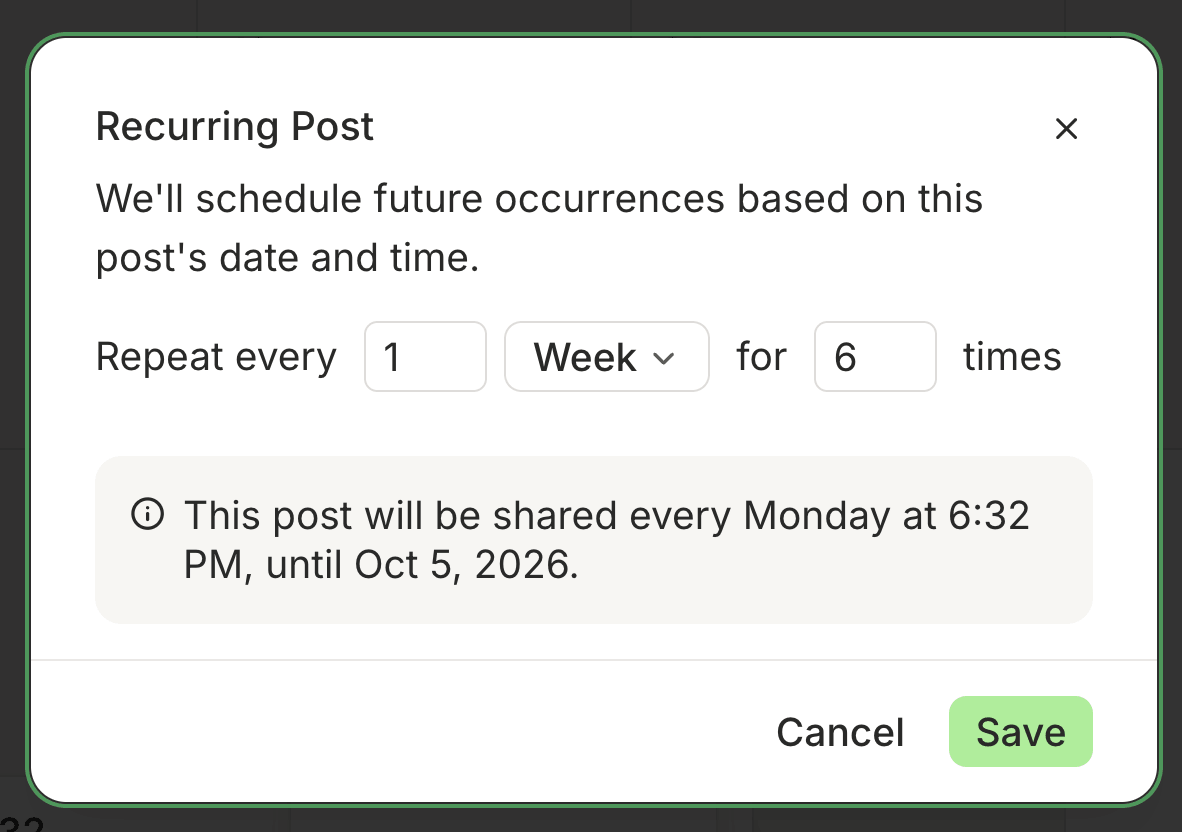
RecurPost approaches publishing through an evergreen lens. Rather than relying solely on linear queues, users construct categorized content libraries populated with recurring time slots across designated days and months. Articles cycle through automated loops, repeating indefinitely unless constrained by manually applied expiration dates. While this architecture minimizes repetitive manual entry for recurring promotional material, it introduces a steeper learning curve for users whose content strategies rely exclusively on fresh, non-repeating announcements.
Furthermore, RecurPost provides advanced native integrations for Instagram, supporting trial reels, licensed audio application via connected Facebook profiles, and tagging features for collaborators and products. Meta Ads Manager integration is available as a paid extension, allowing users to promote organic posts directly from the scheduling interface.
Engagement Inboxes and Audience Interaction
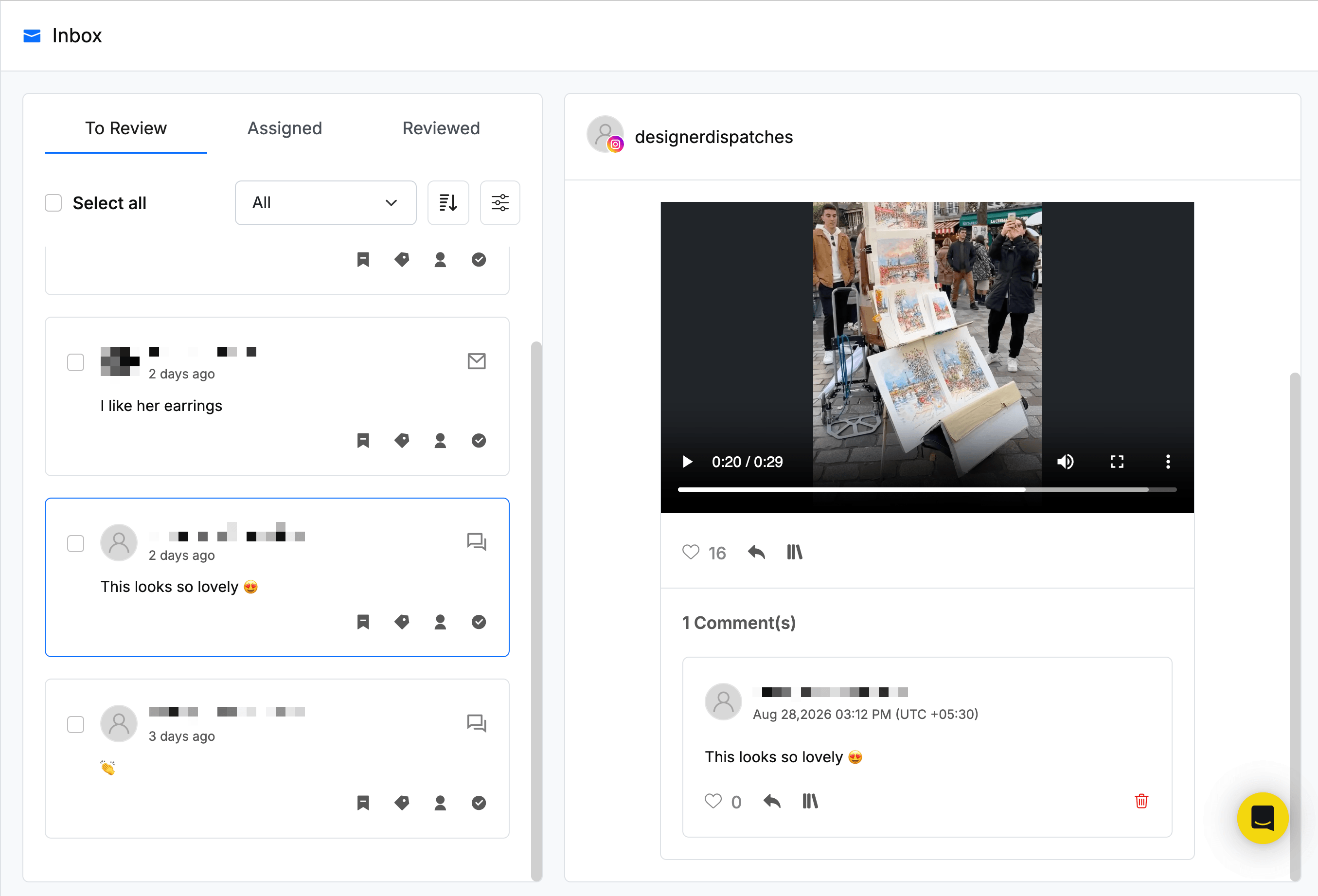
Maintaining responsiveness across disparate social channels remains a critical performance metric for modern brands. Buffer’s Community inbox aggregates comments and mentions across ten distinct platforms—including Instagram, LinkedIn, Facebook, X (formerly Twitter), TikTok, YouTube Shorts, Threads, Bluesky, Mastodon, and Google Business Profiles. The system evaluates response speed via individual channel Comment Scores and permits the deployment of organization-wide saved replies to address frequently asked questions efficiently.

RecurPost limits its unified inbox to a narrower group of four platforms: Instagram business profiles, Facebook pages, LinkedIn company pages, and Google Business Profiles. However, it compensates for this limitation by supporting direct messages (DMs) for Facebook and Instagram. RecurPost’s standout engagement feature is its keyword-triggered Instagram DM automation, which automatically dispatches links, promotional resources, or automated responses when users comment on designated posts or reels. While powerful for lead generation, testing indicates that automated threads occasionally remain flagged as pending in the central inbox, requiring careful team oversight to prevent redundant manual replies.
Analytics, Reporting, and Data Utilization
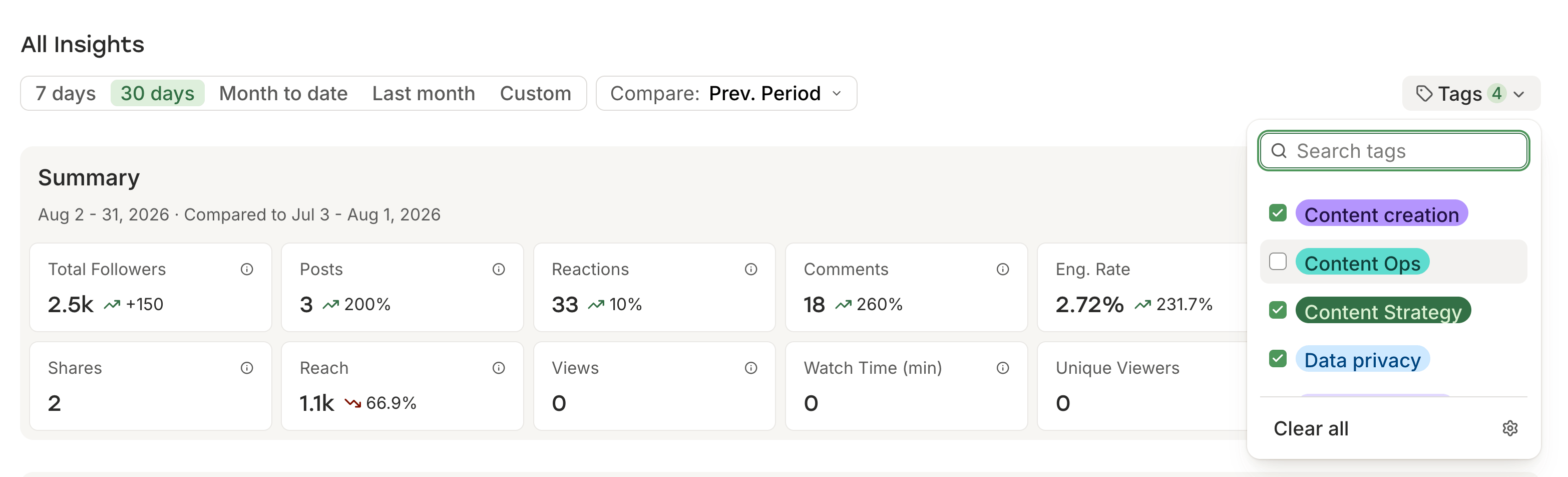
Data-driven decision-making constitutes a core pillar of modern digital strategy. Buffer’s analytics suite, titled Insights, consolidates cross-platform metrics into customizable dashboards. Users can filter performance data by custom tags—such as separating content strategy updates from product announcements—to evaluate thematic effectiveness. Insights incorporates AI-generated weekly takeaways that deliver actionable growth recommendations. Export options encompass PDF reports, CSV files, and Markdown formats suitable for secondary analysis in external large language models.

RecurPost adopts a granular reporting framework tailored to agency-client deliverables. Its analytics dashboards capture deep demographic breakdowns, including audience age, gender, geographic distribution, and link click-through metrics. The Agency tier unlocks a custom report builder that permits granular visualization adjustments (such as transitioning between line charts and raw numerical tables) and generates white-labeled PDF exports featuring bespoke agency branding. RecurPost also features a natural-language AI chat interface for querying performance data, though responses involving missing historical metrics may occasionally default to generalized marketing best practices.
Team Collaboration and Governance Frameworks
Organizational scaling requires robust permission controls and collaborative workflows. Buffer’s Team plan integrates unlimited user accounts without incremental license fees. Administrators can assign granular, channel-specific permissions, dividing operational responsibilities into full-access or view-only tiers for both publishing and community inbox management. Crucially, Buffer enforces mandatory approval workflows; team members without administrative clearance must submit posts for review, ensuring brand safety before content goes live.
RecurPost structures team collaboration around isolated workspaces. Channel allocations are distributed across workspaces rather than multiplied per user, meaning an agency managing twenty profiles must partition that limit among its client accounts. While workspaces effectively silo client data to maintain privacy, RecurPost lacks enforced pre-publication approval mechanics at the user-role level within workspaces. To facilitate client reviews without granting backend dashboard access, RecurPost provides password-free shareable calendars on its upper tiers.
Artificial Intelligence Integration and Developer Ecosystems
Both platforms incorporate artificial intelligence, though their implementation strategies differ. Buffer’s AI Assistant is embedded across all plans—including the free tier—offering limitless text generation, content repurposing, and automated image alt-text creation without credit consumption caps.
RecurPost caps its AI utility through monthly credit allocations (typically providing one hundred credits for text generation and ten for image creation). Notably, RecurPost offers native AI image generation based on descriptive prompts, brand color palettes, and stylistic parameters—a capability absent natively within Buffer.
Regarding developer extensibility, Buffer maintains a publicly documented application programming interface (API) available across all subscription tiers, including the free plan. Supported by robust documentation, a dedicated developer advocate, and an active Discord builder community, users can construct custom workflows, such as automated trend-mining engines. Furthermore, Buffer provides Model Context Protocol (MCP) integrations for connecting directly with external intelligence platforms like Claude and ChatGPT. RecurPost features an undocumented API and MCP infrastructure, but lacks official support documentation or active developer community resources, leaving technical implementers to operate largely independently.
Strategic Summary and Market Recommendations

Choosing between Buffer and RecurPost ultimately depends on an organization’s structural priorities:
- Solopreneurs and Small Teams: Buffer serves as the superior entry point due to its robust, non-expiring free tier and intuitive queue system. Organizations requiring perpetual evergreen content recycling will find RecurPost’s Personal plan a viable alternative starting at $25 monthly.
- Video-Centric Creators: RecurPost provides a superior toolkit for video-first publishers, featuring extensive YouTube video uploads, advanced TikTok controls, and native Instagram reel optimizations.
- Agencies and Enterprise Teams: Buffer offers greater economic predictability through its unlimited-user Team tier, robust cross-channel inbox coverage, and enforced approval governance. RecurPost remains attractive for agencies prioritizing deep client analytics and white-labeled PDF reporting despite its per-seat scaling costs.
Industry analysts emphasize that because both platforms offer trial mechanisms—Buffer via its permanent free tier and RecurPost via a 14-day evaluation period—prospective adopters should execute hands-on testing aligned with their specific publishing cadence, engagement volume, and reporting obligations before committing to long-term subscriptions.