Muhammad Hendra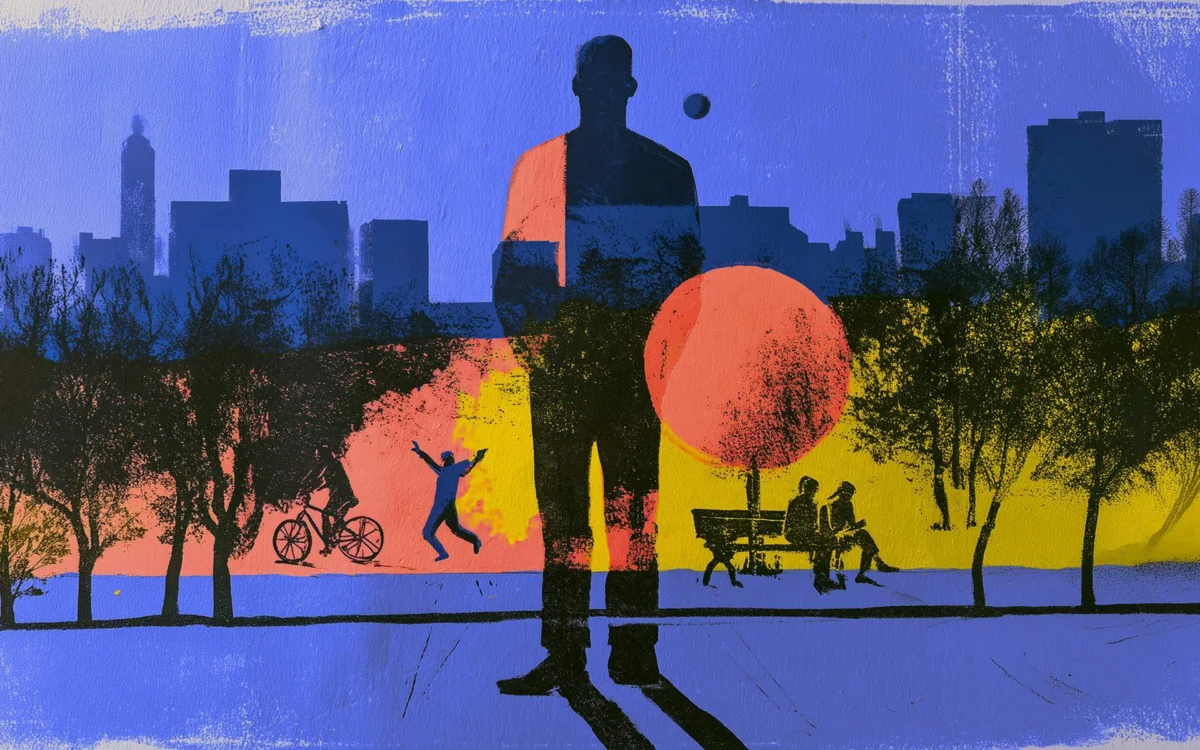
Urban centers across the globe have long been evaluated through the cold, efficient metrics of transit frequency, zoning compliance, density, and economic output. Yet beneath the asphalt, transit lines, and high-rise developments lies a more complex and frequently overlooked urban infrastructure: the human body. Across the intersecting disciplines of urban planning, environmental psychology, sociology, and public health, belonging is traditionally framed as an external validation—a universal human yearning for community, social safety, and institutional acceptance. However, this conventional framing frequently ignores a critical, underlying inquiry: What is the exact cost of belonging, and which marginalized populations are most frequently forced to pay a premium to secure it?
Recent sociological research and urban design critiques suggest that beneath the promise of social connection and safety lie deeply entrenched, uneven power dynamics. Institutional inclusion is frequently granted, withheld, or regulated by the entities that hold authority over physical environments, systemic infrastructure, social networks, and even familial structures. To dismantle these exclusionary frameworks, cultural theorists and urban advocates propose a paradigm shift: true belonging does not begin in a boardroom, a neighborhood association, or an exclusive social circle. It begins within the physical body.
The Anatomy of the Body as a Civic Site
The human body functions as an intricate landscape of somatic memory, sensory delight, and psychological imagination. Much like a municipal park, a public plaza, or a historic library, individual bodies serve as primary sites where civic life is enacted, and conversely, where systemic violations are absorbed. When these bodily landscapes are subjected to marginalization, microaggressions, or overt hostility, they retain a profound capacity to heal, adapt, and radically reimagine their own parameters.
By anchoring a sense of belonging within the self first, individuals can develop a heightened discernment regarding the external environments where they seek safety, authentic connection, and public joy. This internal grounding alters how citizens navigate public infrastructure, challenging the historical inequities built into urban design. To operationalize this transition from passive occupants to empowered civic participants, urbanists and somatic practitioners have outlined three core conceptual practices rooted in the body as a primary place of agency.
Cultivating Healthy Spatial Entitlement in the Built Environment
Spatial entitlement refers to the internal comprehension of how much physical and social space an individual deserves to occupy, the freedom with which they can traverse that space, and the volume and nature of the joy they are permitted to express publicly. This internal compass is not formed in a vacuum; it is continuously shaped by public policy, urban architecture, municipal design, prevailing social attitudes, and the explicit or implicit messages communicated within family structures during formative years.
Observational studies in developmental psychology indicate that human beings typically enter the world equipped with an innate, uninhibited sense of spatial entitlement. Infants vocalize their needs without hesitation, toddlers stumble repeatedly while learning to walk without self-consciousness, and young children grasp at objects that pique their curiosity free from social anxiety or preemptive apology.
However, as individuals age, this instinctive entitlement is systematically conditioned by restrictive social scripts. These messages are frequently codified along lines of race, gender, socioeconomic class, ability, and other identity markers. By the onset of adolescence, for instance, societal socialization often imposes divergent expectations on young men and women regarding adventurousness, acceptable physical footprint, and the level of hyper-vigilance required to navigate public thoroughfares safely.
These regulatory messages become so deeply internalized that adults carry them into civic spaces, inadvertently diminishing their spatial freedom, restricting their self-expression, and increasing physical tension. Sociological data underscores that marginalized populations—including racialized minorities, women, individuals with disabilities, and low-income residents—experience vastly elevated risks and restricted opportunities when attempting to occupy and enjoy public spaces. Mitigating these disparities begins with diagnosing the verbal, behavioral, and architectural messages that diminish individual and collective flourishing.
Practical Application: Redefining Spatial Scripts
Urban wellness practitioners recommend a targeted introspective exercise to counteract internalized restriction. Individuals are encouraged to recall an early socialization message regarding how they were expected to occupy physical space—such as behavioral boundaries for gender expression, approved zones for exploration, or acceptable decibel levels for laughter. By reflecting on how these historical directives manifest in contemporary posture, vocal tone, movement, and apprehension, citizens can deliberately construct a counter-message. Grounded in the inherent right to spatial entitlement, this new script is consciously deployed before entering environments where historical anxieties typically surface.
Reclaiming the Body as a Primary Site of Healing
Throughout history, public and private spaces have been sites where systemic hostilities, economic neglect, and social marginalization have been waged against vulnerable bodies. Yet, those same biological landscapes possess the inherent capacity to be reclaimed as epicenters of somatic healing and public joy. Acknowledging this potential does not invalidate the extensive, well-documented histories of harm faced by women, racialized communities, and low-income populations in civic spaces, nor does it dismiss daily instances of interpersonal hostility experienced on sidewalks and public transit. Rather, it establishes the body as an unassailable foundation for resilience.
Bodies are the primary medium through which individual identities are articulated via urban pageantry—encompassing gait, sartorial choices, cultural adornment, and gestural communication. Furthermore, physical forms serve as the site where radical self-acceptance is practiced, whether navigating visible aging, pregnancy, physical expansion, or the fundamental human requirement for rest. Reclaiming the body as a site of joy is not a passive denial of systemic violence or unsafety; it is a deliberate, political act of reclamation.
Practical Application: Waging Joy Over Adversity
To operationalize bodily reclamation, mental health and urban somatic experts suggest identifying a specific historical injury or marginalization—such as childhood bullying based on body type, adolescent hypersexualization, or racial profiling in commercial districts. By holding space for these memories without erasure, individuals are prompted to intentionally visualize and manifest bodily joy in the public realm. This expression might involve wearing garments that honor cultural heritage, sporting a favorite color, dancing in a municipal park, or cycling along a waterfront.
Transitioning from Transient Navigation to Intentional Lingering
Contemporary urban planning and public realm design have historically prioritized vehicular throughput and economic efficiency. From car-centric infrastructural expansions and narrow, obstructed sidewalks to a systemic lack of urban tree canopies, many cities have transformed public spaces into high-speed thoroughfares rather than destinations for human interaction. Intersecting with these design flaws are prevailing social anxieties that discourage citizens from pausing, observing, or simply existing in public without a transactional purpose.
This accelerated pace of urban life carries demonstrable negative externalities. When commuters and residents remain hyper-focused on reaching a destination, they forfeit the psychological and sensory benefits of the journey—such as observing public art, listening to street performers, or engaging with the immediate environment. More critically, transit-oriented haste extinguishes opportunities for spontaneous community connection.
Amid documented public health crises concerning widespread social isolation and community fragmentation, intentional lingering offers a vital antidote. Pausing in the public realm increases the probability of organic neighborhood acquaintance, fostering moments of eye contact, shared nods, and social recognition among passersby. Consequently, lingering transcends a passive leisure activity; it functions as a gentle yet radical assertion of civic presence and the fundamental human right to inhabit the commons.
Practical Application: The Lingering Journey Protocol
Urban designers recommend transforming routine commutes by deliberately reframing daily transit from point A to point B into an exploratory journey. Over a sustained four-to-six-week period, participants select specific tactics to linger in the public realm. Actionable steps include disembarking public transit three stops early to complete the journey on foot, engaging in a leisurely bicycle commute, exploring unfamiliar neighborhoods, or visiting cultural institutions with the explicit mandate to wander aimlessly through galleries rather than touring specific exhibits.
Chronology and Implementation of Civic Joy Frameworks
The integration of somatic self-awareness into municipal and personal life requires structured reflection. Urban sociologists suggest a methodical timeline for individuals seeking to dismantle internalized spatial restrictions:
- Weeks 1–2 (Audit and Recognition): Focus on identifying historical and environmental messages regarding spatial entitlement and bodily restriction. Maintain a reflective journal documenting physical posture, tension points, and environmental triggers while navigating public spaces.
- Weeks 3–4 (Internal Reclamation): Implement the "Waging Joy" practices, introducing intentional markers of cultural identity, comfort, and somatic freedom into daily routines.
- Weeks 5–6 (Spatial Integration): Execute the "Lingering Journey" protocol, actively reshaping commuting habits to reclaim public corridors as places of habitation rather than mere transit routes.
- Post-Implementation Review: Evaluate the reflection journal to determine which somatic practices yield sustained empowerment, discarding ineffective exercises and iterating personalized frameworks for ongoing civic engagement.
Broader Implications for Urban Policy and Public Health
The convergence of somatic practice and urban design holds significant implications for municipal policymakers, public health officials, and urban planners. Traditional approaches to urban equity have frequently focused strictly on macroeconomic investment, equitable transit distribution, and affordable housing development. While these structural interventions remain foundational, the framework of embodied belonging suggests that physical infrastructure must be paired with psychological and somatic agency.
When citizens feel a sense of healthy spatial entitlement and utilize public spaces for lingering and joy, cities experience measurable dividends in social cohesion, reduced loneliness indices, and heightened civic stewardship. Public spaces designed to accommodate lingering—characterized by adequate seating, inclusive restrooms, accessible pathways, and sensory-rich landscaping—directly support marginalized bodies in claiming their stake in the urban landscape.
Ultimately, the paradigm of embodied belonging posits that community safety and inclusion cannot be exclusively mandated by top-down governance or legislative enforcement. While systemic reform and equitable urban design are non-negotiable prerequisites for a just society, true belonging is simultaneously cultivated from within. By recognizing the body as the primary site of civic agency, individuals possess the innate power to transform both their internal relationship with space and the external realities of the cities they inhabit.