Michael Sholeh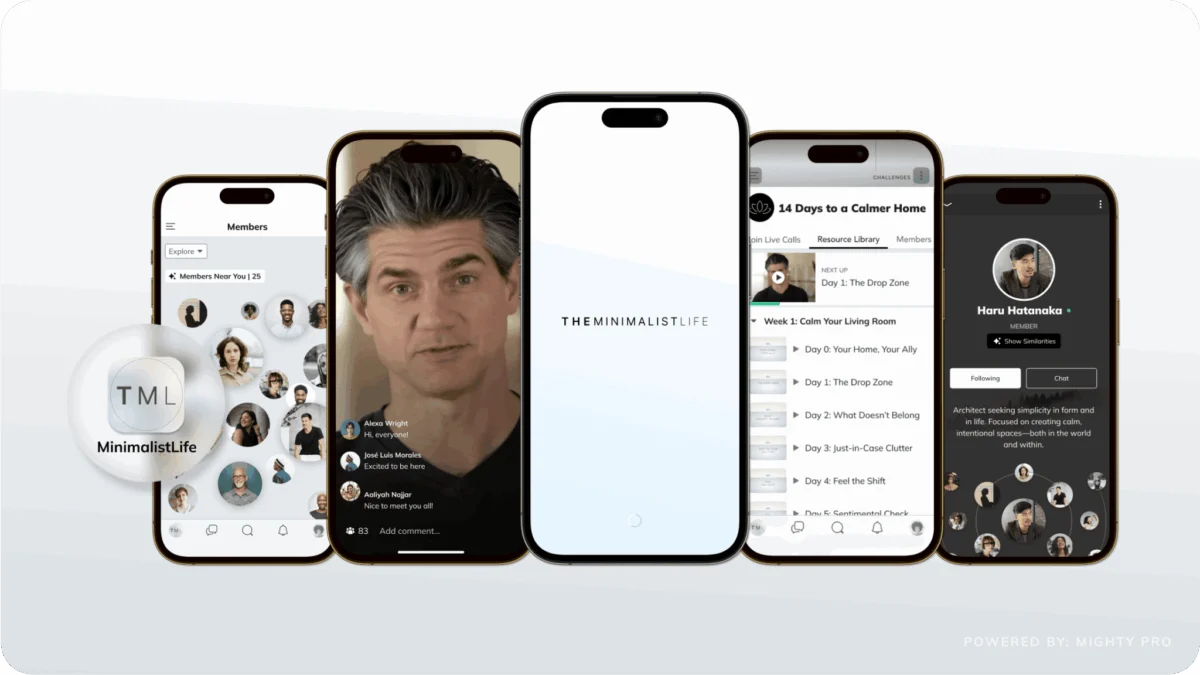
For nearly twenty years, the modern minimalism movement has grown from a niche counter-cultural lifestyle choice into a mainstream blueprint for personal wellness, intentional living, and environmental sustainability. At the forefront of this digital evolution has been author and public educator Joshua, the founder of the widely recognized platform Becoming Minimalist. Throughout his career, he has published more than 1,700 written articles, authored several bestselling books that have reached hundreds of thousands of households worldwide, and produced a vast library of roughly 400 educational videos. Furthermore, his signature multi-week digital education program, the Uncluttered Course, has successfully guided more than 90,000 participants through the physical process of clearing excess possessions from their homes room by room.
Despite these milestones, a recurring challenge has consistently emerged from his vast audience. While millions of individuals successfully initiate their journeys into voluntary simplicity, many report severe difficulty maintaining these habits over extended periods. In response to this widespread retention hurdle, Joshua has officially announced the launch of his first-ever interactive, subscription-based membership platform, titled The Minimalist Life. This brand-new initiative represents a significant strategic pivot from passive content consumption to active, long-term habit formation and communal support.
Background Context and the Evolution of Modern Minimalism
To understand the significance of this new venture, it is necessary to examine the broader historical and cultural trajectory of the minimalism movement over the past two decades. The contemporary push toward simple living accelerated significantly in the wake of the 2008 global financial crisis. Faced with economic uncertainty, widespread housing instability, and mounting consumer debt, a generation of adults began questioning the prevailing cultural narrative that tied personal success, happiness, and social status to material accumulation.
Concurrently, the rapid proliferation of smartphones, high-speed internet, and social media platforms created an environment of continuous digital connectivity. While this technological connectivity offered unprecedented access to information, it also ushered in an era of digital overload. Scholars and sociologists began noting a direct correlation between excessive media consumption, physical clutter, and heightened levels of anxiety, depression, and decision fatigue.
In this climate, digital creators and authors emerged to offer practical frameworks for reclaiming personal time and mental space. Platforms like Becoming Minimalist provided accessible, step-by-step methodologies for sorting through physical belongings, reducing household expenses, and prioritizing experiences over material goods. However, early methodologies predominantly focused on acute interventions—such as weekend closet cleanouts, moving to smaller apartments, or executing major donations. While these strategies yielded immediate psychological relief, psychological research on habit formation indicates that without continuous environmental reinforcement and social accountability, individuals frequently revert to prior patterns of consumerism once the initial enthusiasm wanes.
Chronology of Expansion: From Blogs to Community-Driven Platforms
The journey leading up to the establishment of The Minimalist Life spans nearly twenty years of digital publishing, community engagement, and product development:
- 2008–2012 (The Foundation Phase): Joshua launches Becoming Minimalist as a personal digital journal documenting his family’s transition from a consumer-driven lifestyle to one focused on intentional simplicity. The blog gains traction during the post-2008 economic downturn, attracting an initial core audience of readers seeking financial relief and stress reduction.
- 2013–2017 (Scaling Content and Publication): The platform expands its media footprint. The creator publishes several commercially successful books addressing the psychological barriers to owning less. The audience expands globally, driven by traditional media coverage and organic search engine optimization.
- 2018–2023 (Structured Digital Education): Recognizing that readers require more than philosophical essays, the platform introduces structured educational products. The Uncluttered Course launches and eventually scales to enroll over 90,000 participants worldwide through cohort-based digital programs.
- 2024–Present (Transition to Community Support): Ongoing feedback surveys and direct reader correspondence reveal a distinct market demand. Participants express a desire for ongoing, year-round accountability rather than isolated, project-based interventions. This insight directly informs the development of a private, continuous membership ecosystem, culminating in the official launch of The Minimalist Life.
Supporting Data and Industry Dynamics
The market for wellness, personal development, and intentional living tools has expanded exponentially over the last decade. According to market research reports, the global personal development market—which encompasses self-improvement books, digital courses, coaching, and mindfulness applications—is valued in the tens of billions of dollars, with digital and subscription-based formats experiencing the fastest year-over-year growth.

At the same time, consumer behavior within the digital education sector is undergoing a structural shift. Completion rates for traditional, self-paced online courses historically hover below 15%, primarily due to a lack of real-time peer support, instructor access, and ongoing accountability. Conversely, community-driven membership models that emphasize peer-to-peer interaction, monthly thematic focuses, and continuous engagement consistently demonstrate significantly higher retention and positive outcome metrics.
The Minimalist Life is specifically engineered to address these structural limitations in digital self-help. Rather than offering a static, pre-recorded curriculum that users navigate in isolation, the new private community provides a structured, month-by-month framework. This framework guides members through the systematic application of minimalist principles across multiple domains of daily life, extending far beyond physical closets and storage units. Designated areas of focus include personal finance management, daily scheduling and time allocation, digital footprint reduction, habit optimization, and the intentional cultivation of interpersonal relationships.
Structural Overview of The Minimalist Life
The newly launched platform is designed to function as an ongoing ecosystem for personal accountability and human connection. In an era where online spaces are increasingly saturated with automated, AI-generated content and superficial social media interactions, the platform places a deliberate emphasis on genuine human dialogue. Members gain direct access to structured guidance, interactive discussions, and collaborative challenges that foster a sense of shared purpose.
Industry observers note that expanding minimalism into non-physical domains represents a natural evolution for the philosophy. While decluttering physical spaces remains the primary entry point for most practitioners, the psychological benefits—such as reduced anxiety, increased focus, and greater financial freedom—frequently intersect with other areas of modern life. By providing a communal container for these broader lifestyle adjustments, the platform bridges the gap between theoretical aspiration and practical, daily execution.
Pricing Structure and Launch Details
The doors to The Minimalist Life officially opened to the public, accompanied by an introductory membership tier designed to encourage early adoption. Founding members can secure access through two primary subscription options: a monthly rate of $18 or an annual commitment of $180, which effectively provides two months of membership free of charge. Platform administrators have confirmed that this special founding member pricing structure will remain open to new applicants until June 30th, after which standard pricing terms will apply.
Broader Impact and Industry Implications
The introduction of this community-centric model highlights a broader maturation within the digital wellness and self-improvement industries. As consumers grow increasingly fatigued by transactional, one-off digital products, creators are pivoting toward relational, community-led business models that emphasize long-term personal development over short-term information delivery.
For the minimalism movement specifically, the transition from individual home organization projects to collective, lifestyle-oriented support networks may redefine how practitioners sustain their habits over the course of decades. By embedding simplicity into the rhythms of daily schedules, digital habits, and relational boundaries, advocates of the movement hope to demonstrate that intentional living is not a temporary aesthetic or a seasonal clean-up project, but a resilient, lifelong framework for navigating modern life.