 Angie Faith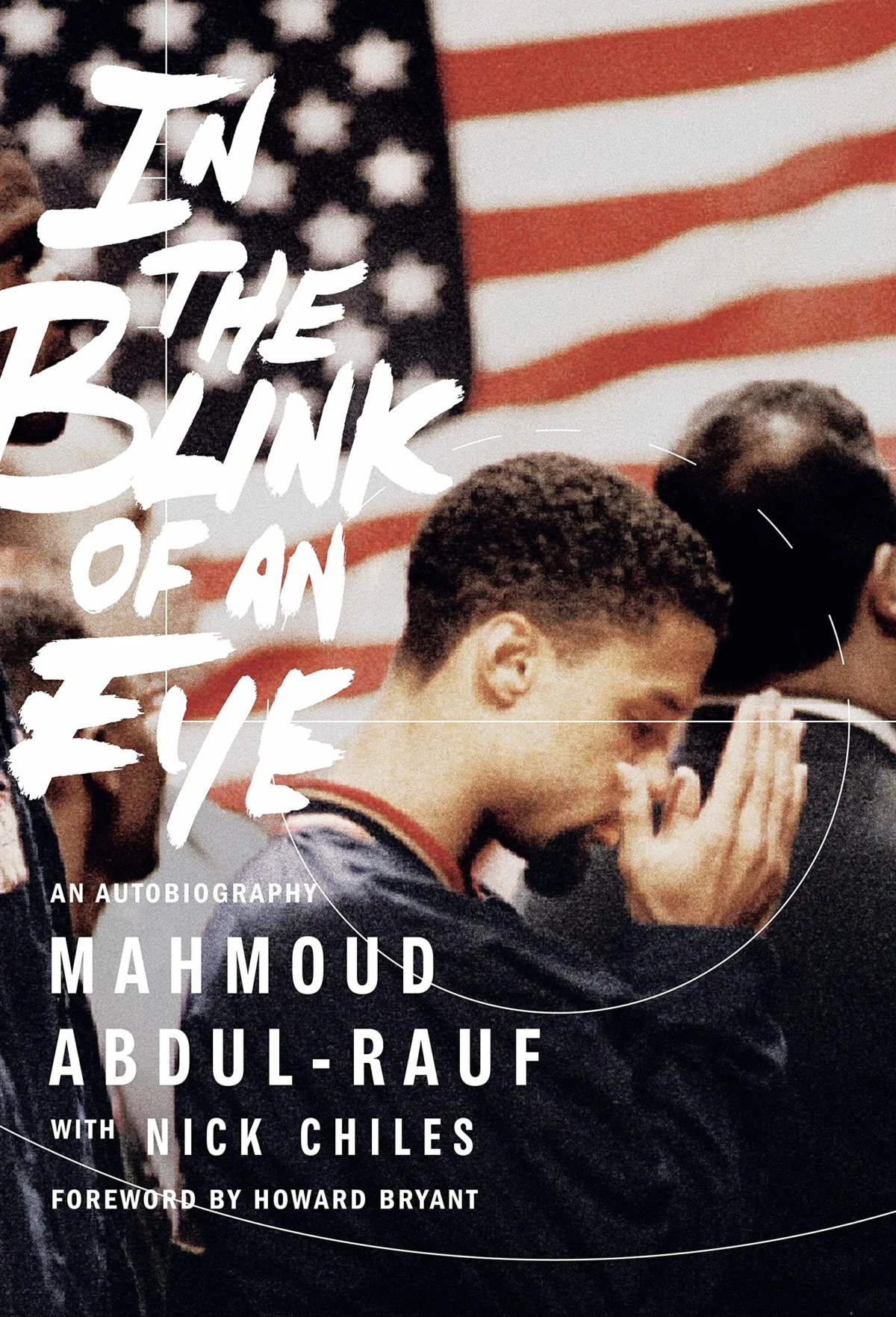
Colin Kaepernick, the former San Francisco 49ers quarterback whose decision to take a knee during the national anthem in 2016 ignited a global movement against racial injustice and police brutality, has released his highly anticipated memoir, The Perilous Fight, published by Legacy Lit. The book provides an intimate look into the personal, intellectual, and philosophical transformation that preceded his historic protests. Beyond recounting his days in the National Football League, Kaepernick’s new work details how a period of profound existential questioning and intensive reading reshaped his worldview, steering him away from mainstream indoctrination and toward a deep, uncompromising commitment to Black liberation and civil rights.
The Foundations of an Awakening: Books That Changed a Quarterback
Long before he became a polarizing figure at the center of cultural and political debates across the United States, Kaepernick was navigating the complexities of identity while immersed predominantly in white spaces. Raised in Turlock, California, and later starring as a student-athlete at the University of Nevada—where the African American student population hovered below five percent—his early education offered little exposure to critical Black history or anti-colonial literature. His perspective, by his own admission, remained bound by a Eurocentric framework that subtly equated Blackness with negativity.
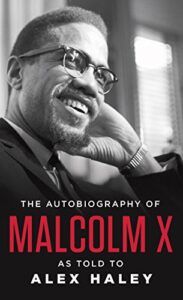
The catalyst for his intellectual shift arrived in 2015, facilitated largely by his partner, Nessa, who grew up in a politically conscious, pro-Black household. Recognizing the disconnect between the compassionate, thoughtful person she knew and the distorted media narratives painting him as indifferent to the game, she introduced him to The Autobiography of Malcolm X.
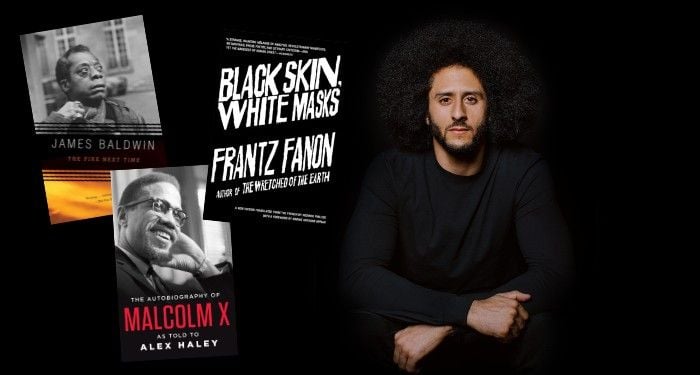
The reading of Malcolm X’s life story opened a floodgate. It provided Kaepernick with the necessary vocabulary, historical context, and ideological framework to process his own life experiences and recognize the pervasive nature of systemic racism. This initial text sparked an extensive literary journey. Kaepernick began devouring seminal works of political and social theory, including Frantz Fanon’s The Wretched of the Earth and Black Skin, White Masks; Huey P. Newton’s Revolutionary Suicide; and James Baldwin’s The Fire Next Time. To aid his education, Nessa even reached out to former professors from the University of California, Berkeley, to curate a reading list designed to feed his evolving consciousness.
The 2015 Existential Crisis and Complete Lifestyle Transformation
The timing of this intellectual awakening coincided with a critical juncture in Kaepernick’s professional and personal life. During the spring of 2015, the quarterback found himself trapped in a grueling routine of off-season training at Exos in Scottsdale, Arizona, followed by solitary evenings in his rental apartment. At age twenty-seven, having already reached the pinnacle of his profession by starting in the Super Bowl, Kaepernick experienced a severe existential crisis.
He began questioning the fundamental purpose of his existence, moving past surface-level athletic goals to confront deeper philosophical questions. Pondering whether his life was defined merely by football and sustenance, he sought a higher calling and evaluated every aspect of his daily habits. Believing that any activity failing to propel him forward spiritually or intellectually needed to be excised, he abruptly stopped consuming alcohol entirely—a lifestyle change he has maintained ever since.
As the 2015 NFL season commenced, Kaepernick carried this newfound focus onto team flights and locker rooms, quietly replacing casual entertainment with rigorous political and sociological reading. However, this visible intellectual pursuit did not go unnoticed by his peers.
Locker Room Tensions and the Echoes of Mahmoud Abdul-Rauf
As Kaepernick immersed himself in radical literature, his reading habits began to cause subtle friction within the hyper-masculine, insular environment of professional sports. Teammates frequently responded with insecurity and passive-aggressive remarks, implying through subtext that his pursuit of knowledge was an arrogant assertion of intellectual superiority.
This dynamic bore a striking resemblance to the experiences of former NBA star Mahmoud Abdul-Rauf during the 1990s. Abdul-Rauf faced severe backlash from his Denver Nuggets teammates and the sports establishment for engaging with political texts and later choosing not to stand for the national anthem—a parallel that profoundly resonated with Kaepernick. Recognizing the historical precedent of athletes penalized for intellectual independence, Kaepernick’s company, Kaepernick Publishing, later published Abdul-Rauf’s memoir, In the Blink of an Eye.
Empowered by his reading, Kaepernick also began challenging everyday microaggressions and internalize racial degradation among his peers. He intentionally stopped using derogatory racial slurs in casual conversation with friends and began gently but firmly questioning teammates who casually disparaged natural Black features, such as dismissing their hair as "nappy." Rather than engaging in explosive confrontations, Kaepernick adopted a tactful approach rooted in inquiry, prompting those around him to critically examine the origins of internalized anti-Blackness.
Broader Impact, Legacy, and Historical Context

The release of The Perilous Fight arrives nearly a decade after Kaepernick’s peaceful protests transformed the intersection of sports, politics, and civil rights in America. What began as sitting on the bench during the preseason in August 2016—before transitioning to taking a knee at the suggestion of former Green Beret and NFL player Nate Boyer—quickly escalated into a national flashpoint involving debates over patriotism, free speech, and police accountability.
While Kaepernick has not played in the NFL since the conclusion of the 2016 season, his actions permanently altered the landscape of athletic activism. Modern sports leagues, once strictly averse to player demonstrations, have since faced mounting pressure to support social justice initiatives, largely catalyzed by the institutional fallout from Kaepernick’s exile.
Sociologists and sports historians view Kaepernick’s trajectory as part of a long lineage of Black athletic activism, drawing direct lines from Paul Robeson, Muhammad Ali, and Tommie Smith to contemporary figures who leverage their platforms for systemic change. By detailing the literary foundation of his convictions in his new memoir, Kaepernick reframes his activism not as an impulsive reaction to a single event, but as the calculated outcome of rigorous self-education, ideological evolution, and uncompromising personal integrity. As The Perilous Fight reaches readers, it offers an inside look at the intellectual armor required to withstand the immense pressures of challenging the status quo.