
 Ali Ikhwan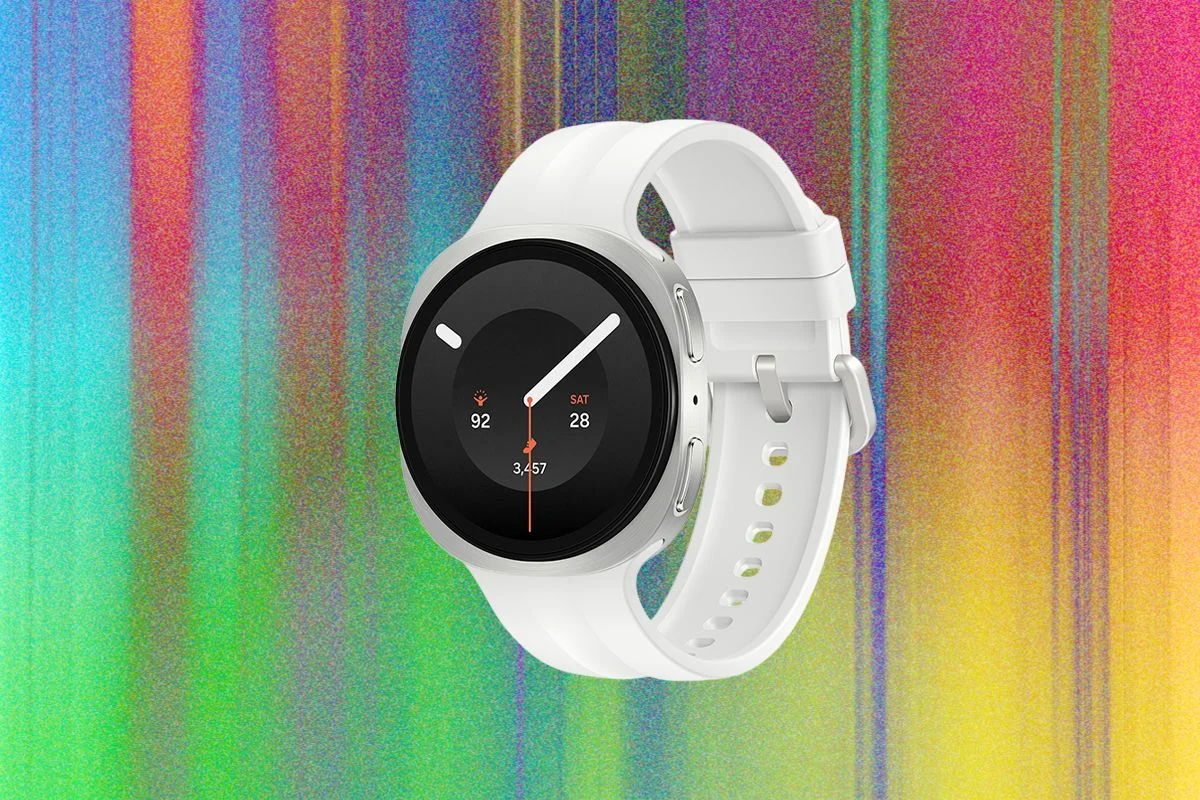
This past summer, Samsung expanded its wearable portfolio with the launch of the Galaxy Watch9, accompanied by the rugged, adventure-focused Galaxy Watch Ultra2. Positioned as the primary everyday offering for the broader consumer market, the Galaxy Watch9 arrives as a sophisticated iteration of Samsung’s design philosophy, balancing refined aesthetics with an increasingly complex array of health-tracking sensors. While it retains the iconic circular—yet subtly squircle-influenced—aesthetic that has defined the series, the internal architecture represents a calculated step forward in performance and integration.
The Galaxy Watch9 is available in two distinct size configurations: a 40-mm model, offered in cream and graphite, and a 44-mm variant, available in graphite and silver. Starting at an entry-level price point of $80—a figure that underscores Samsung’s aggressive strategy to maintain market share against competitors—the device aims to bridge the gap between casual fitness tracking and professional-grade health monitoring. However, for those already utilizing the previous iteration, the Galaxy Watch8, the transition represents a modest update rather than a revolutionary departure, marked by incremental enhancements to processing speed, power density, and wellness analytics.
A Chronology of the Galaxy Watch Series
The release of the Watch9 is the latest milestone in a product line that has consistently defined the Android-based smartwatch market since its inception. Samsung’s trajectory in the wearable space began in earnest with the Galaxy Gear in 2013, a device that established the company’s intent to lead in mobile integration. Over the following decade, the evolution transitioned through the Tizen OS era, culminating in the 2021 pivot to Wear OS, a strategic partnership with Google that unified the Android ecosystem.
The Galaxy Watch8, released last year, was lauded for its stability and integration with the Samsung Health suite, yet it faced criticism regarding the plateauing of its hardware capabilities. The Watch9 release serves as the response to this feedback, focusing on the integration of the Snapdragon Wear Elite platform. By transitioning to this architecture, Samsung is signaling a long-term commitment to silicon efficiency, a necessary move as wearable sensors demand higher computational overhead for real-time data processing.
Technical Specifications and Hardware Analysis
At the heart of the Galaxy Watch9 lies the Qualcomm Snapdragon Wear Elite platform, a significant shift from the previous internal chipsets. Technical analysis indicates that this platform provides a measurable boost in both CPU and GPU performance. In practical application, this manifests as reduced latency when navigating the Wear OS 7 interface, quicker application load times, and more responsive notification management. For users who rely on their watch as a secondary interface for their smartphone, these improvements reduce the "micro-stutter" often associated with complex wearable operating systems.
The integration of Wear OS 7 provides a more granular approach to customization. The platform now supports a wider array of widgets, allowing users to prioritize biometric data, calendar updates, or communication logs directly on the watch face. Furthermore, the introduction of "raise-to-talk" functionality for Google’s Gemini AI represents a notable leap in hands-free interaction. By enabling a gesture-based trigger, Samsung has aligned the Watch9 with the capabilities of the Google Pixel Watch series, effectively closing a parity gap that had persisted for two generations. This feature allows for natural language processing on the wrist, enabling users to set reminders, query information, or control smart home devices without physical interaction.
Battery Capacity and Power Management
One of the most scrutinized aspects of the Galaxy Watch9 is its power management system. The 40-mm model features a 390-mAh battery, an increase from the 325-mAh capacity found in its predecessor. Similarly, the 44-mm model has been upgraded to a 445-mAh cell from the previous 435-mAh unit. Despite these hardware-level improvements, total battery endurance has not seen a proportional increase.
Industry analysts suggest that the increased power capacity is being offset by the higher energy demands of the watch’s expanded health-tracking sensors and the background processes required by the new AI integration. Samsung maintains an estimate of up to 30 hours of battery life under normal usage conditions. However, empirical testing indicates that with the Always-On Display (AOD) enabled, the device averages closer to 25 hours. This creates a functional constraint for users who wish to utilize sleep tracking overnight, as the watch requires a charging cycle during the waking day.
Charging speed also remains a point of divergence from the broader market. The Watch9 requires approximately 100 minutes for a full recharge. When compared to the Google Pixel Watch 5, which achieves a full charge in roughly 45 minutes, the Galaxy Watch9’s charging infrastructure feels dated. For the average user, this necessitates a structured charging routine, preventing the "forget-and-charge" convenience that many consumers now expect from premium wearable technology.
Health Metrics and Wellness Ecosystem
Samsung has expanded the health suite significantly, emphasizing preventative wellness metrics. The Watch9 includes advanced heart rate variability (HRV) monitoring, blood oxygen sensing, and an improved bioelectrical impedance analysis (BIA) sensor for body composition tracking. These features are supported by the Samsung Health app, which has undergone a UI overhaul to better visualize long-term trends rather than just daily snapshots.
The implications for the healthcare sector are significant. As smartwatches move closer to medical-grade diagnostic tools, the reliability of data becomes paramount. Samsung’s focus on integrating these metrics with clinical-grade analytics—though not yet FDA-cleared for diagnosing specific conditions—provides users with a baseline of health data that can be shared with healthcare providers. This move reflects a broader industry trend where wearables are becoming essential components of the "quantified self" movement, shifting the focus from simple step counting to comprehensive metabolic and cardiovascular monitoring.
Market Positioning and Strategic Implications
The decision to offer the Watch9 alongside the more robust Galaxy Watch Ultra2 demonstrates a tiered market strategy. Samsung is effectively segmenting its user base: the Ultra2 is marketed toward outdoor enthusiasts and extreme athletes, while the Watch9 is positioned as the versatile, aesthetic-focused companion for the general public.
From an economic perspective, the $80 entry point for the base model serves as a strategic "anchor" price. It lowers the barrier to entry for users who are currently within the Samsung ecosystem—specifically those using Galaxy S-series smartphones—to adopt a wearable device. This "walled garden" approach is designed to increase user retention. Once a user integrates their health data, communication preferences, and smart home controls into the Samsung ecosystem, the likelihood of switching to a competitor diminishes significantly.
Conclusion and Future Outlook
For the current Galaxy Watch8 user, the Watch9 does not offer a compelling reason for an immediate upgrade. The improvements are evolutionary rather than transformative. However, for those utilizing older hardware or individuals entering the ecosystem for the first time, the Watch9 stands as the most coherent and feature-rich option currently available within the Android landscape.
As Samsung continues to refine its software-hardware synergy, the next iteration of the Galaxy Watch will likely need to address the plateauing of battery efficiency and the disparity in charging speeds. The integration of AI, while currently in its nascent stages on the wrist, suggests that the future of the wearable category will be defined not by the hardware itself, but by the ability of the device to anticipate user needs through context-aware intelligence. For now, the Galaxy Watch9 remains a testament to Samsung’s ability to maintain a steady, reliable, and highly functional presence in a competitive global market, providing a solid foundation for the next generation of wearable technology.