
Finding the ideal moment to publish content on short-form video platforms has long been a primary objective for content creators, digital marketers, and enterprise brands alike. While the production process demands significant creative and technical investment, the timing of publication frequently dictates whether a piece of media achieves viral distribution or remains buried in algorithmic obscurity. To address this persistent strategic challenge, social media management platform Buffer has released a comprehensive empirical study examining more than 7.1 million distinct content pieces—including standard videos, photo carousels, and text-based posts—published across its ecosystem.
The findings offer granular insight into algorithmic patterns, peak user activity windows, and optimal publication schedules for the 2026 digital landscape. Rather than relying on anecdotal observations, the research establishes concrete data benchmarks designed to maximize initial viewer engagement, a critical variable in algorithmic recommendation architectures.
The Mechanics of Algorithmic Distribution and Early Engagement
The fundamental importance of publication timing stems directly from how modern content recommendation systems operate. When a user publishes a video or carousel to TikTok, the platform’s underlying algorithm does not immediately distribute it to an entire follower base. Instead, it initiates a localized testing phase, serving the content to a small, targeted cohort of users.
During this initial distribution window—typically concentrated within the first sixty minutes following publication—the system closely monitors user interaction signals. Key performance indicators include average watch time, completion rates, shares, saves, comments, and immediate skips. If the initial test audience demonstrates robust engagement, the algorithm interprets these metrics as a signal of high content quality. Consequently, the system expands the distribution pool, pushing the asset onto the For You Page (FYP) of a broader, secondary audience.
Conversely, if content is published during periods when a creator’s core audience is inactive, sleeping, or occupied, it fails to capture this vital initial momentum. Even exceptionally high-quality productions can suffer from suppressed visibility if they enter the platform during troughs in user activity, as the lack of early interaction prevents the algorithm from recognizing their potential. While timing is not a substitute for compelling hooks, high production values, or strong viewer retention, it acts as a strategic amplifier that provides content with an optimal starting position.
Weekly Data Breakdown and Peak Performance Windows
Buffer’s extensive dataset reveals that engagement distribution is not uniform across the week. While evening hours generally outperform daytime slots due to the immersive, sound-on nature of short-form video consumption, specific days and hours exhibit distinct statistical advantages.
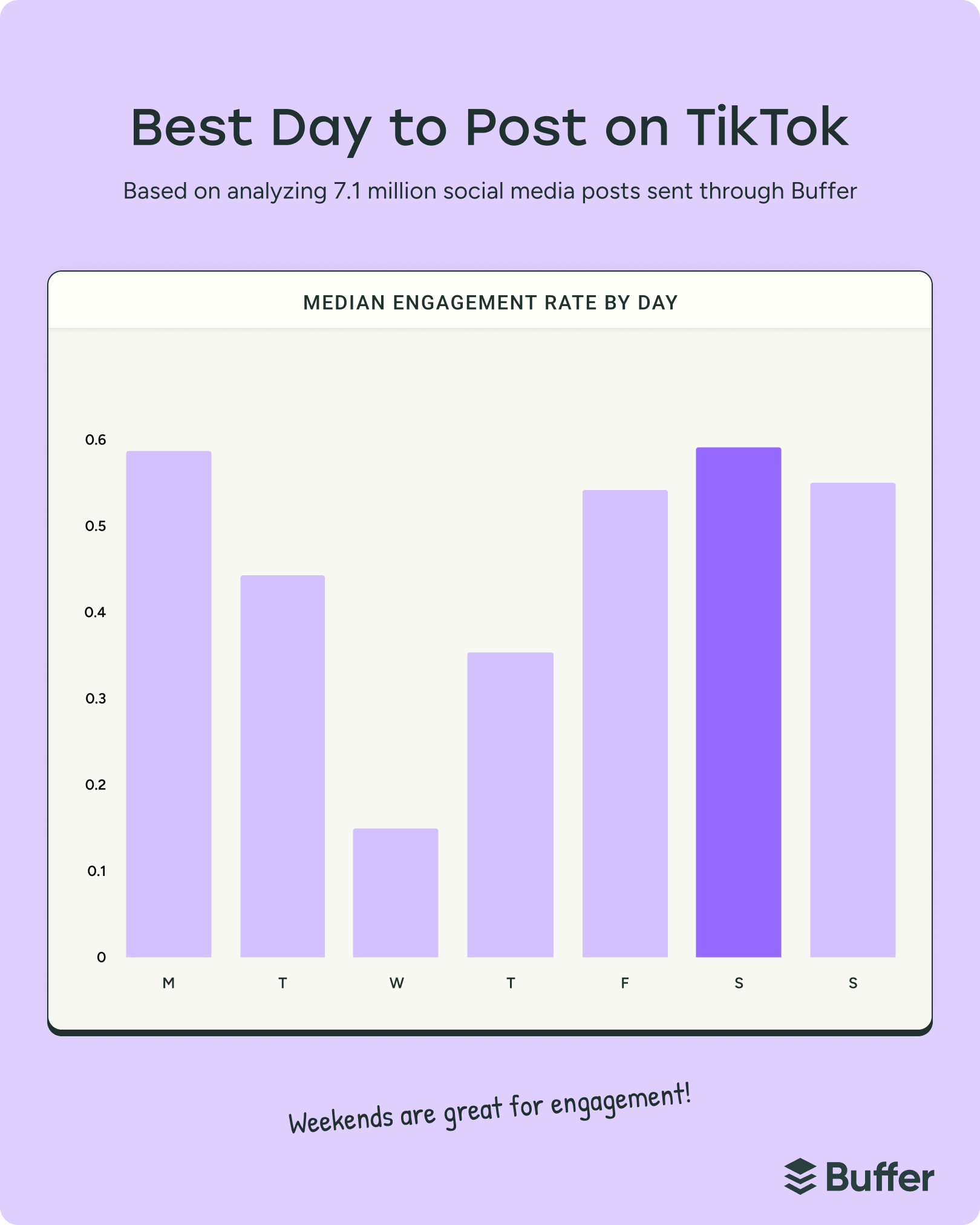
Across the 7.1 million analyzed posts, Saturday emerged as the single strongest day of the week for overall median engagement rates, driven heavily by afternoon and early evening activity. Monday secured the second position, closely followed by Sunday, which hosts the single highest-performing individual time slot of the entire week.
To assist creators and organizations in streamlining their publishing workflows, the aggregated data identifies primary and secondary optimal time slots for each day of the week, structured in descending order of median engagement:
- Monday: Primary peak at 1:00 p.m., followed by secondary windows at 11:00 a.m. and 8:00 a.m. Monday consistently proves to be one of the strongest weekdays for professional and creative content reach.
- Tuesday: Early morning activity dominates, with a primary peak at 6:00 a.m., followed by late-night engagement at 10:00 p.m. and an early slot at 7:00 a.m.
- Wednesday: Engagement shifts predominantly to late evening, recording a primary peak at 10:00 p.m., supported by earlier windows at 6:00 a.m. and 9:00 p.m.
- Thursday: Midday and late-night patterns mirror early-week trends, with a primary optimum at 1:00 p.m., followed by 10:00 p.m. and 6:00 a.m.
- Friday: Weekend winding-down behavior increases engagement during evening hours, establishing a primary peak at 6:00 p.m., alongside late windows at 10:00 p.m. and 8:00 p.m.
- Saturday: Recognized as the highest-performing day overall, Saturday afternoon yields exceptional results, led by a primary peak at 5:00 p.m., preceded by 4:00 p.m. and 3:00 p.m.
- Sunday: Sunday morning delivers the single highest engagement peak across the entire seven-day cycle at 9:00 a.m., with secondary afternoon performance observed at 1:00 p.m. and 12:00 p.m.
Macro Patterns: Mornings, Afternoons, and Evenings
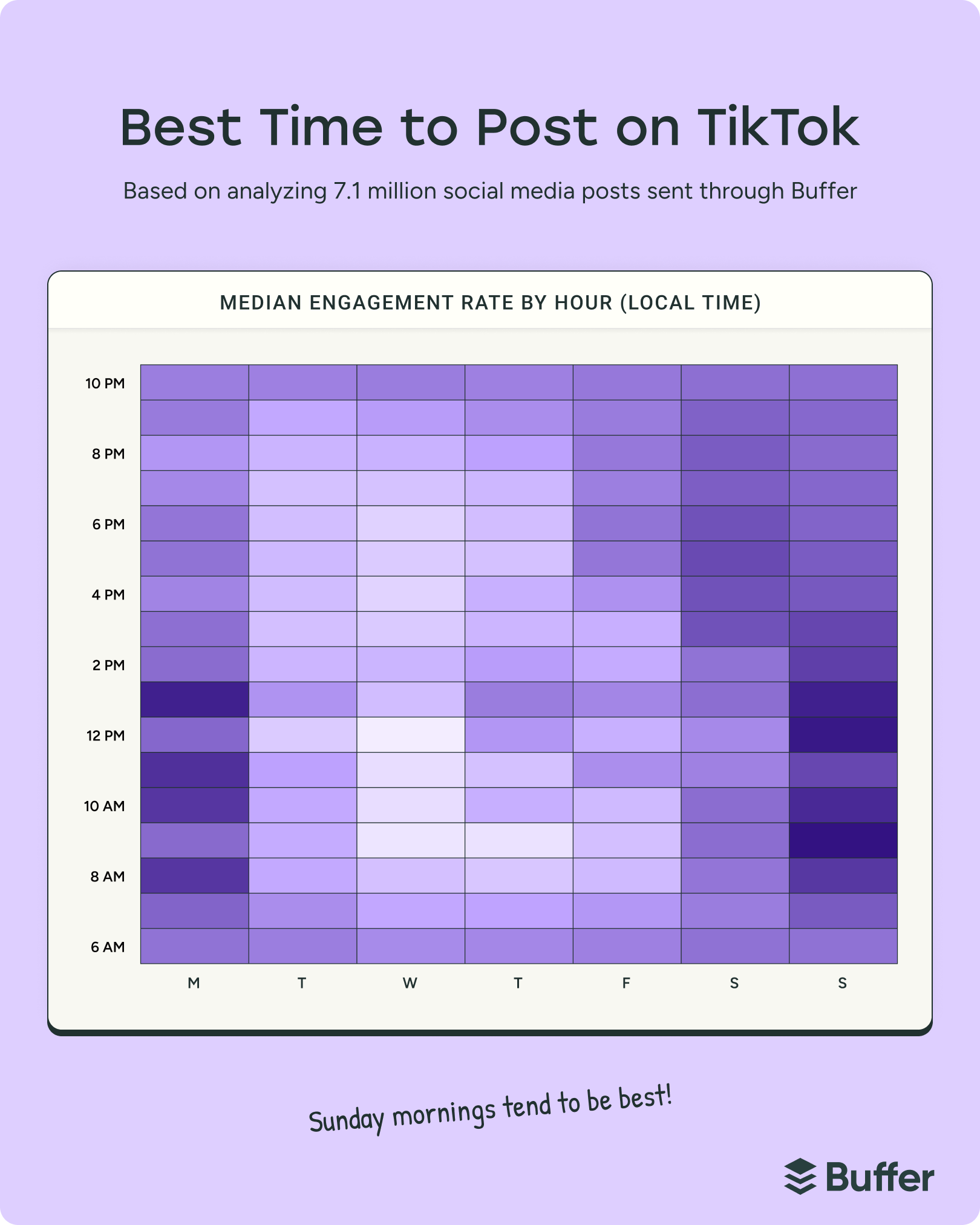
Analyzing the broader temporal heatmap reveals clear behavioral trends among global audiences. Traditional working and academic hours—specifically afternoons between 12:00 p.m. and 5:00 p.m.—frequently display lower median engagement across most weekdays. This dip aligns with the nature of TikTok as a platform that demands dedicated, sound-on attention, making it less compatible with the quick-scan habits often associated with professional environments or mid-day obligations.
In contrast, evening blocks spanning from 6:00 p.m. to 11:00 p.m. consistently generate elevated user activity. These hours coincide with leisure time, commutes, and domestic relaxation, during which users possess the cognitive bandwidth required for immersive video consumption.
However, notable exceptions exist, such as Sunday morning at 9:00 a.m. and Tuesday at 6:00 a.m. These morning peaks suggest that early weekend routines and pre-commute mobile checks represent valuable windows for capturing audience attention before daily distractions accumulate.
Methodological Considerations and Tailoring Strategy
Industry analysts emphasize that generalized data sets serve primarily as foundational baselines rather than immutable rules. Content performance is inherently tied to niche-specific variables, target demographic behavior, and geographic distribution. For instance, educational content creators often report strong performance during morning hours when users are in a receptive learning mindset, whereas entertainment and lifestyle channels frequently maximize reach during evening and weekend leisure periods.
Furthermore, creators managing international audiences must account for timezone variances. While automated scheduling tools can normalize publishing queues against global activity patterns, native platform analytics offer the most precise diagnostic data for individual accounts.
Industry experts recommend a systematic approach to channel optimization:
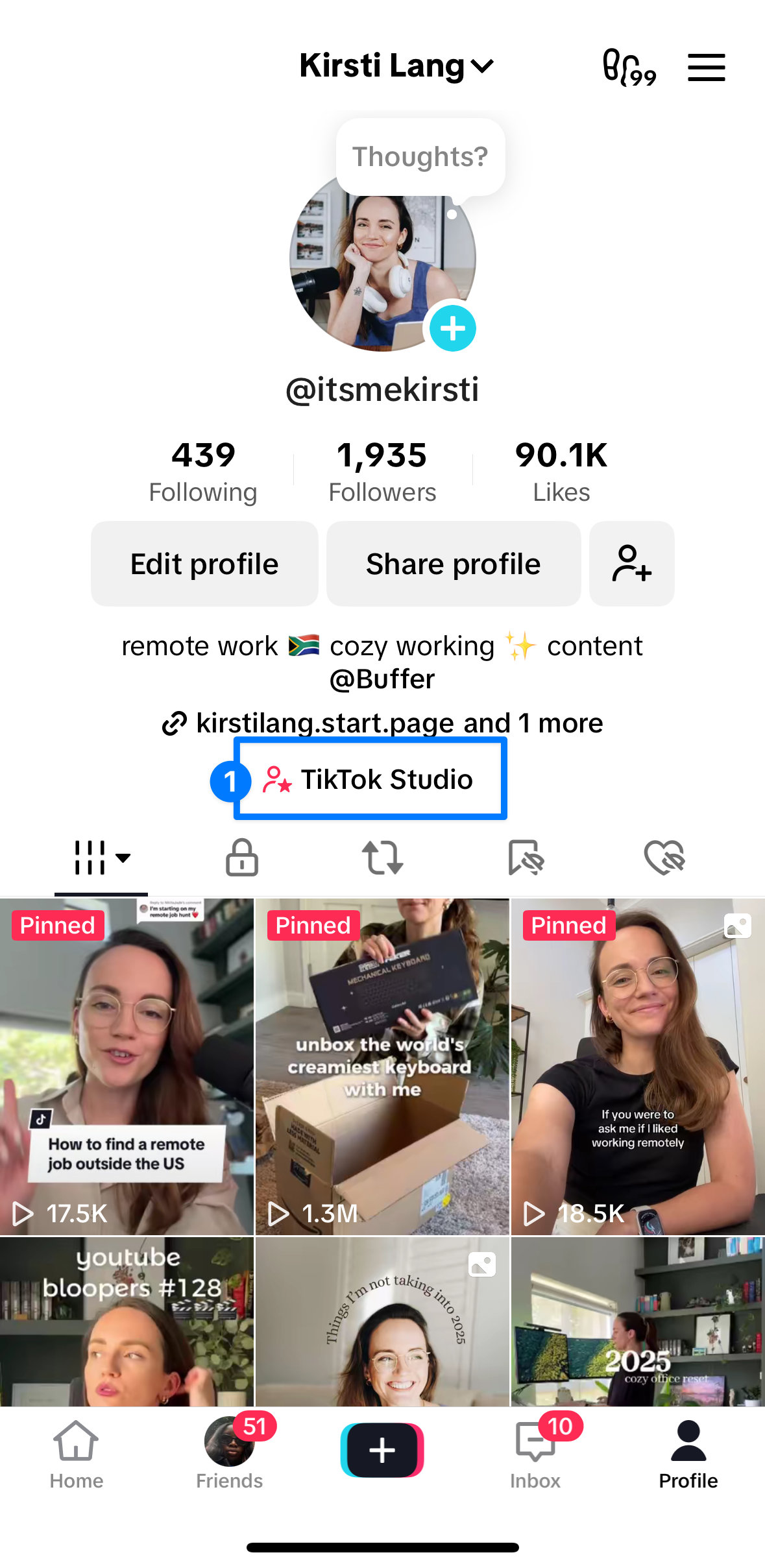
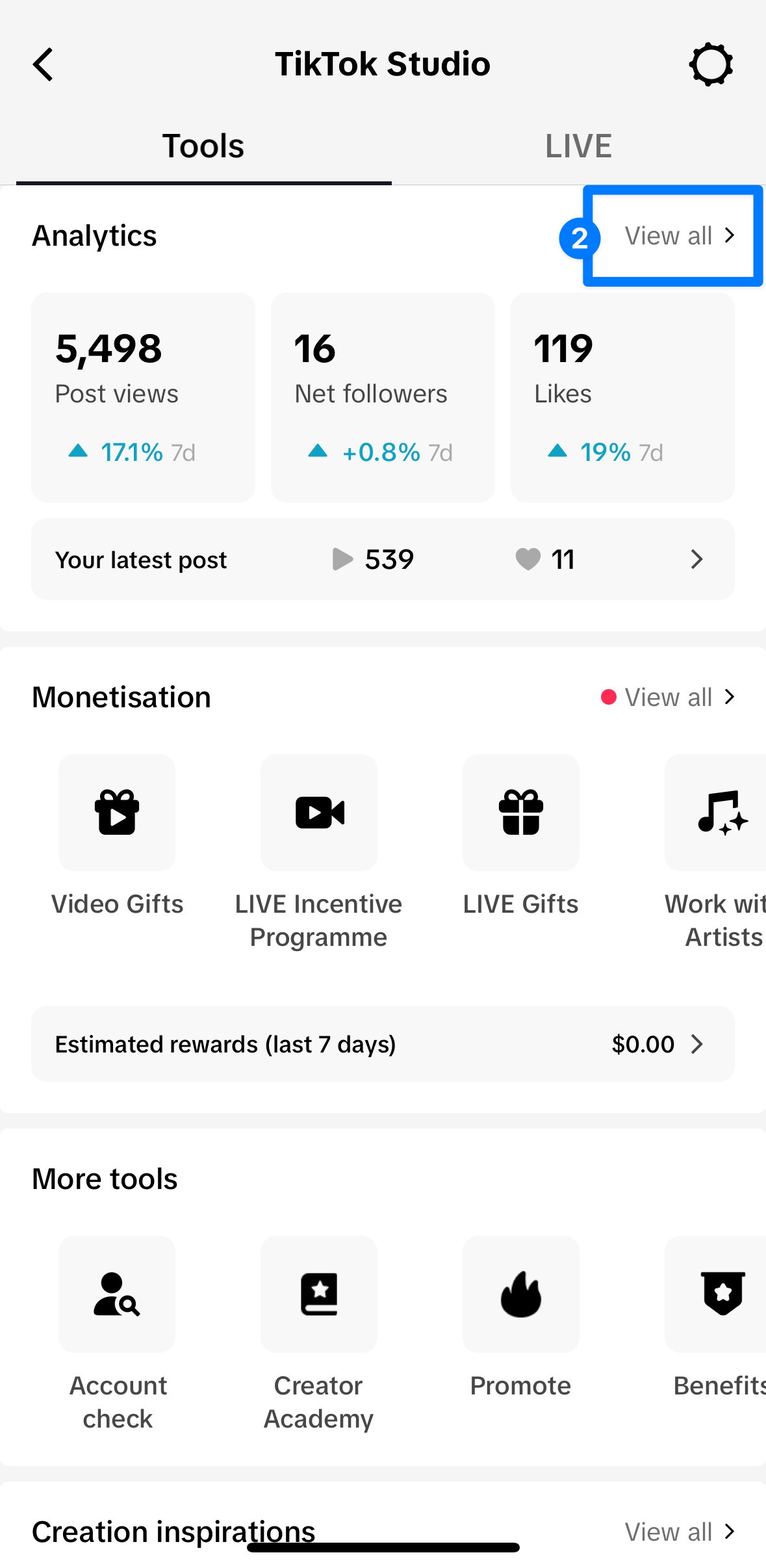
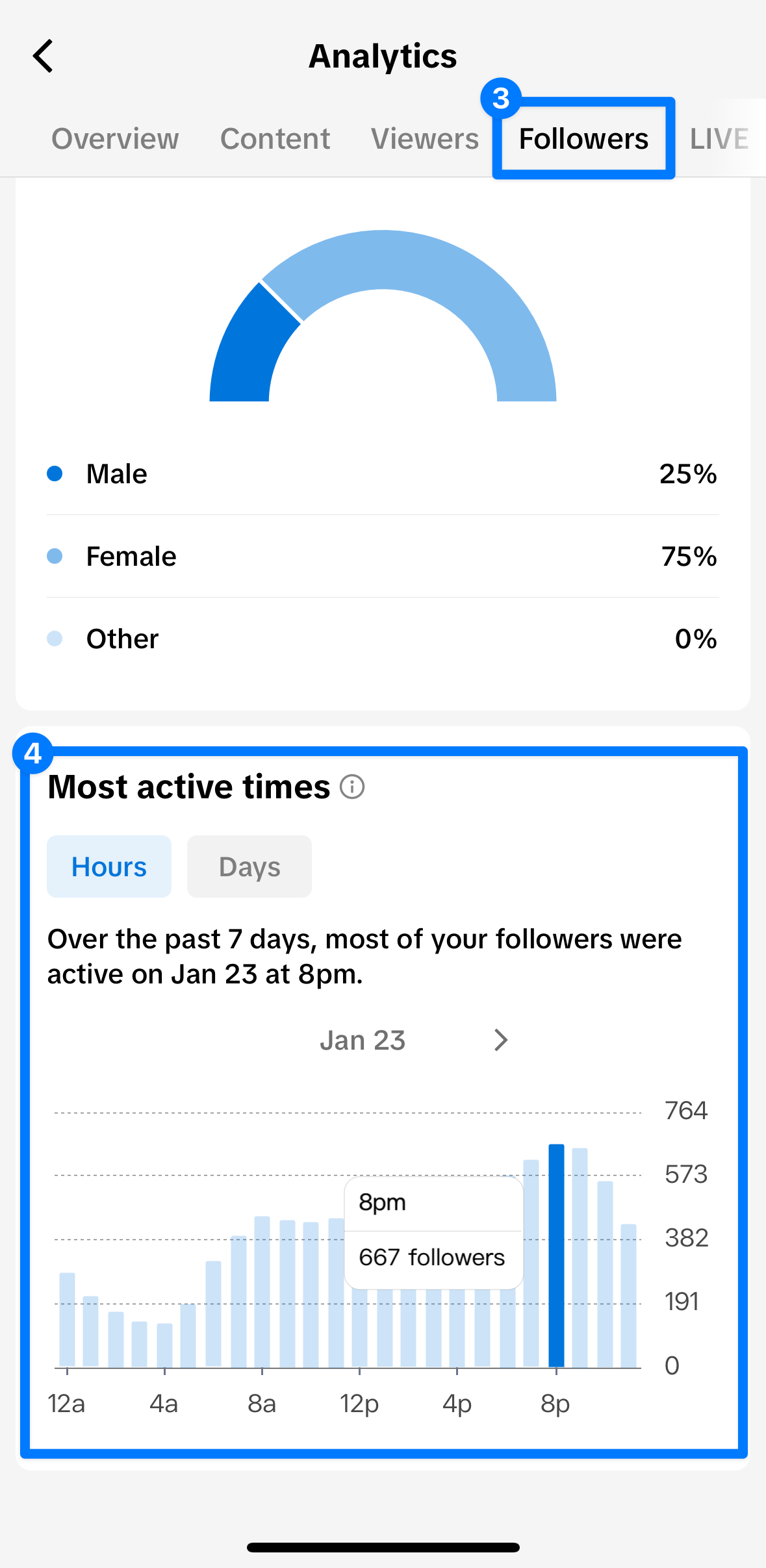
- Audit Native Analytics: Review the follower activity metrics within platform analytics dashboards to identify distinct surges in local user presence.
- Execute Controlled Experiments: Systematically test alternative publishing windows over a multi-week period, ensuring that content quality remains consistent across test iterations.
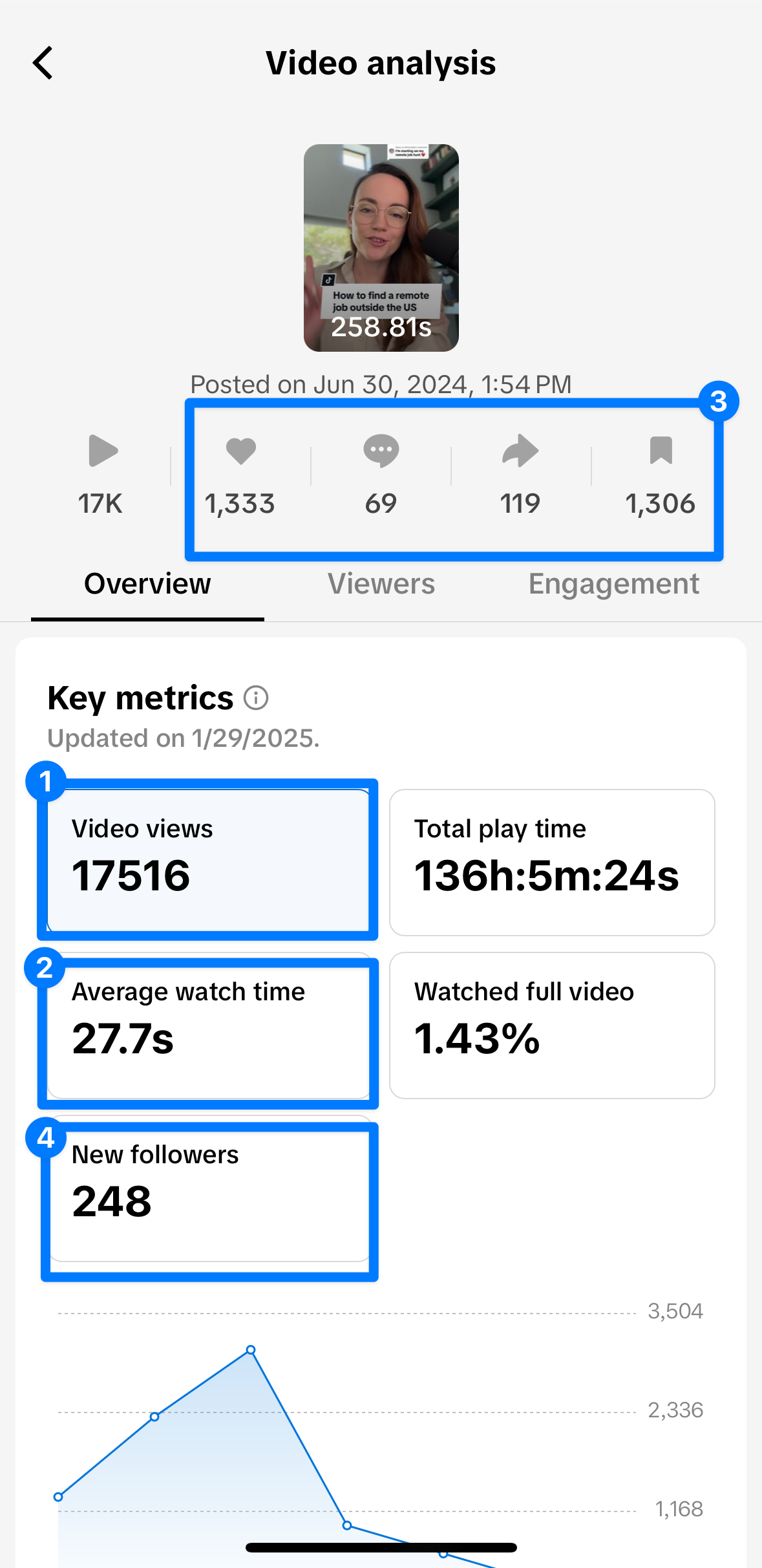
- Evaluate Retention Metrics: Monitor average watch time and completion rates alongside raw view counts to determine whether timing adjustments successfully generate early algorithmic momentum.
- Maintain Consistent Cadence: Prioritize sustainable publishing schedules over erratic bursts, allowing algorithmic systems to build reliable predictive models for audience delivery.
Implications for Digital Marketing and Content Operations
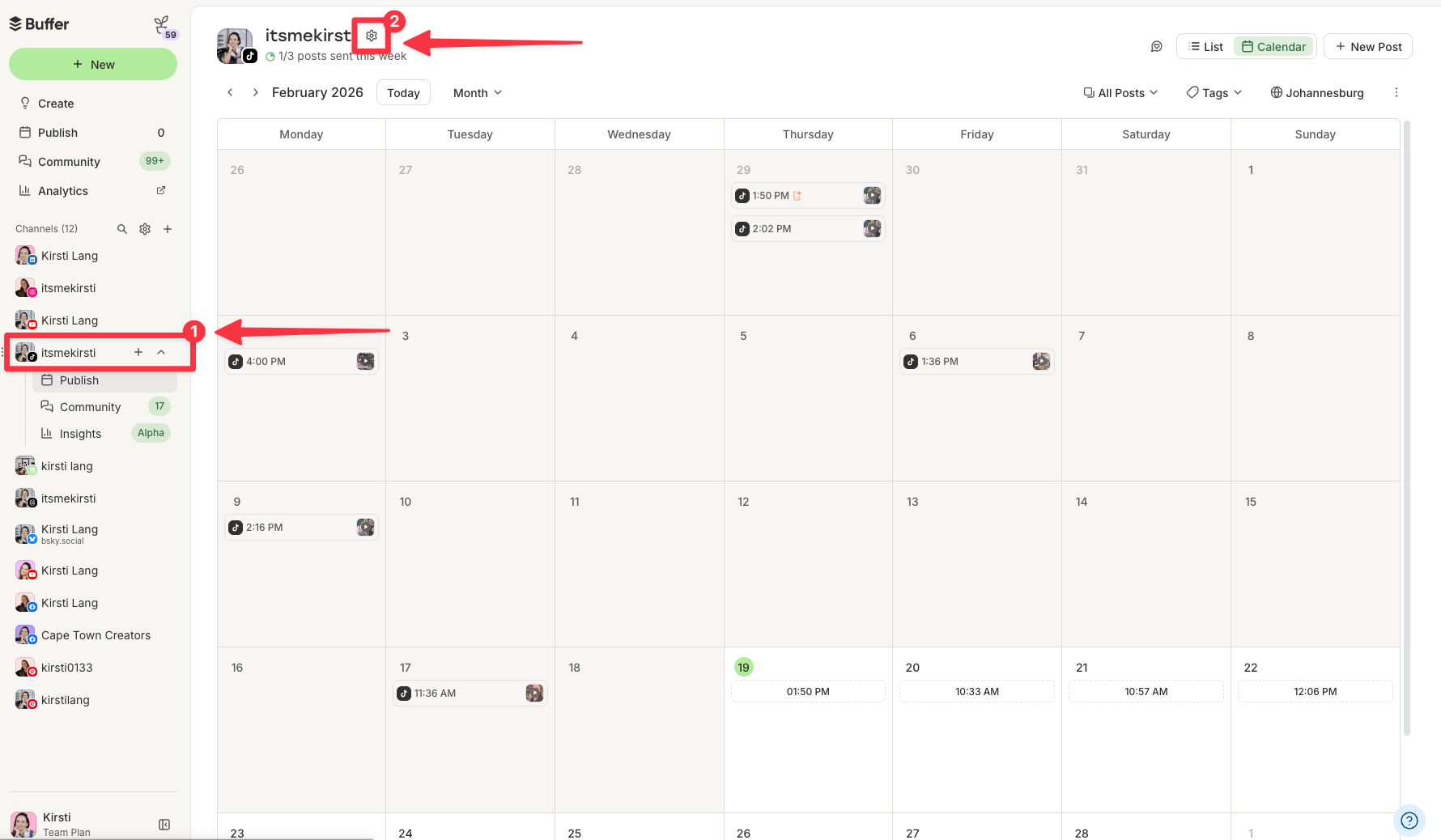
The integration of empirical timing data into enterprise marketing strategies reflects the ongoing professionalization of social media management. By leveraging automated scheduling infrastructure—such as native queue generation and calendar-based distribution tools—marketing teams can decouple content creation from real-time operational constraints. This operational efficiency enables brands to maintain a consistent market presence during high-engagement windows without requiring round-the-clock manual oversight from social media personnel.
As algorithmic platforms continue to refine their recommendation models, the interplay between content relevance, viewer retention, and strategic timing will remain a cornerstone of digital visibility. While optimization tools cannot compensate for fundamental deficiencies in creative execution, empirical scheduling insights provide a measurable structural advantage for creators seeking to maximize their operational impact in an increasingly competitive digital environment.