
 Ali Ikhwan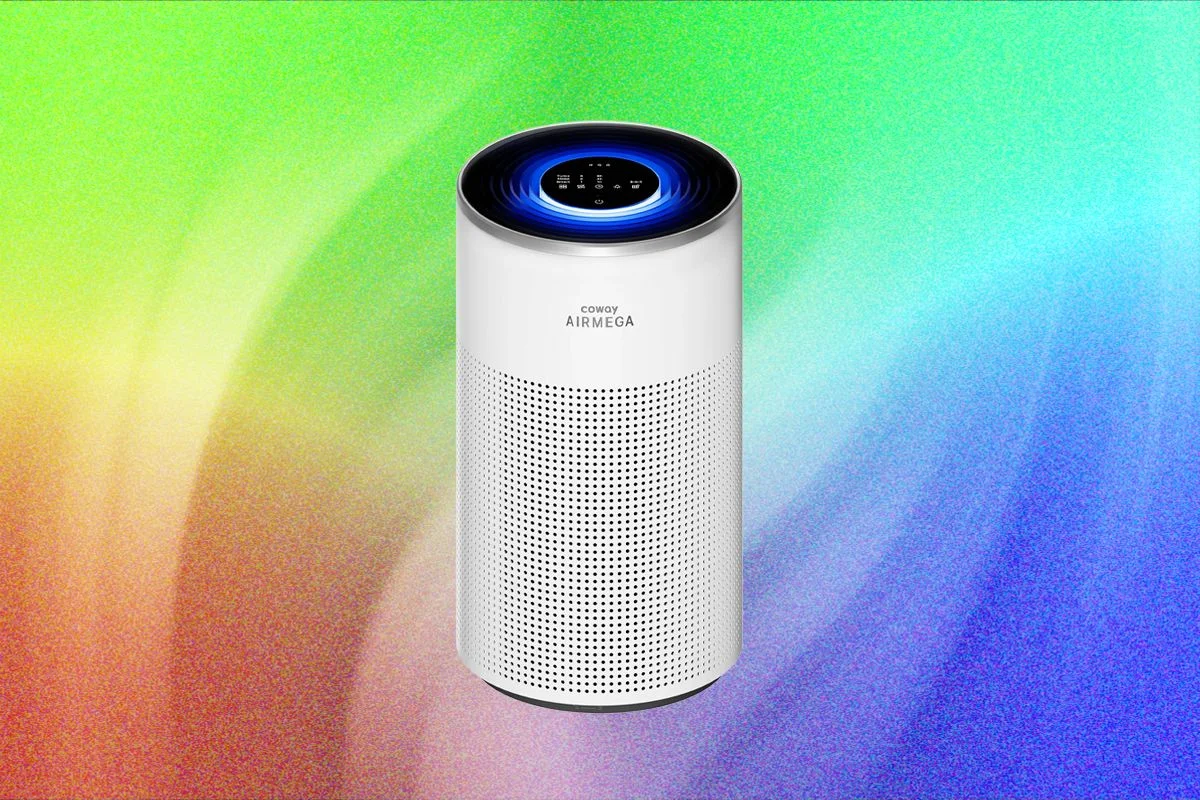
The Coway Airmega Halo represents a significant evolution in residential air quality management, integrating high-efficiency particulate air (HEPA) filtration with real-time, sensor-driven automation. As indoor air quality (IAQ) becomes an increasing priority for public health, manufacturers have pivoted toward technologies that address the specific threat of fine particulate matter, or PM2.5. These particles, which measure 2.5 micrometers or less in diameter, pose a substantial health risk due to their ability to penetrate deep into the human respiratory system and enter the bloodstream. The Airmega Halo’s architecture, centered around an IEST-certified three-stage HEPA filtration system, is designed to capture 99.97 percent of particles down to 0.3 microns, positioning it as a primary line of defense against domestic pollutants.
The Engineering of Air Purification
At the core of the Airmega Halo is a cylindrical filter configuration that optimizes airflow while maximizing surface area. The HEPA filter serves as the final barrier in a three-stage system, capturing the microscopic allergens, smoke, and dust that characterize hazardous indoor environments. The inclusion of the MegaScan Particle Sensor marks a departure from static air purifiers of the previous decade. This sensor continuously samples ambient air, providing a real-time data stream that dictates the machine’s operational intensity.
PM2.5 particles are the industry standard for measuring air quality, as they are often byproducts of combustion—such as cooking, tobacco smoke, or vehicle exhaust infiltrating from outside. Exposure to high concentrations of PM2.5 has been linked by health organizations, including the Environmental Protection Agency (EPA), to chronic conditions such as asthma, reduced lung function, cardiovascular disease, and lung cancer. By automating the response to these pollutants, the Airmega Halo seeks to reduce the cognitive burden on users, ensuring that air purification is not merely an occasional activity but a continuous state of operation.
Performance and Acoustic Benchmarking
Effective air purification requires a delicate balance between high-volume airflow and noise suppression. In testing, the Airmega Halo exhibits a wide acoustic profile depending on its mode of operation. In its "sleep" mode, the unit operates at approximately 17 decibels. This level is effectively below the threshold of human perception in a standard quiet room, where ambient noise typically fluctuates between 20 and 30 decibels.
Conversely, the device’s "turbo" setting creates a significant increase in air turnover, reaching approximately 75 decibels. This output is functionally comparable to the noise generated by a standard household dishwasher or a vacuum cleaner. While this level of noise may be disruptive for sustained use in common living areas, the rapid air exchange rate is intended for short-term mitigation during high-pollution events, such as heavy cooking or the introduction of significant allergens into the home.
Chronology of Smart Operation
The Airmega Halo utilizes a sophisticated logic controller to transition between power states. When the unit is set to "smart mode," it monitors environmental conditions with a three-minute buffer. If the air quality is classified as "good"—a state typically determined by the absence of elevated PM2.5 levels—the fan will cease operation to minimize energy consumption. This mechanism serves as a power-saving feature that prevents unnecessary wear on the motor and fan assembly.
Should the sensors detect an increase in pollutants exceeding the established "good" threshold, the device automatically initiates a restart, ramping up the fan speed relative to the detected concentration of particulates. This cycle of monitoring and remediation allows the device to function autonomously, a critical feature for residential settings where manual adjustment is often overlooked. The transition is supported by a light sensor that monitors ambient illumination, triggering a sleep state if the room is dark for more than three minutes, which simultaneously dims the device’s status lights and limits fan speed to ensure minimal disruption.
Challenges in Standardized Communication
A point of friction in the user experience of the Airmega Halo is its visual indicator system. The device features a halo of light around its top panel that shifts colors to communicate air quality: blue for good, green for moderate, yellow for unhealthy, and red for very unhealthy. While this provides an intuitive at-a-glance status, it creates a discrepancy with the standard Air Quality Index (AQI) established by the U.S. government.
The U.S. AQI uses a specific spectrum: green for good, yellow for moderate, red for unhealthy, purple for very unhealthy, and maroon for hazardous. Because the Airmega Halo’s color-coding does not align with federal guidelines, users accustomed to official AQI reporting may experience confusion when interpreting the device’s status lights. This lack of standardization highlights a broader issue in the consumer appliance industry, where proprietary user interface designs often override the established color-coding conventions used by public health agencies.
Real-World Testing and Implications
To evaluate the practical efficacy of the Airmega Halo, the unit was subjected to various high-stress scenarios over a 30-day period. These tests included exposure to combustion byproducts from an unventilated gas stove, proximity to exhaust-heavy living room windows, and placement near localized odor and dander sources, such as pet litter boxes. Throughout these tests, the device was monitored alongside a calibrated, independent indoor air quality monitor to verify that the internal sensor readings matched external environmental data.
The findings suggest that while the machine is highly responsive, there is a distinct difference between "sensor detection" and "room-wide remediation." While the machine is quick to register a change in particle count, the time required to lower those levels depends heavily on room size and airflow circulation. The data suggests that for larger environments, users must ensure the unit is placed in a central location, as the "smart" sensors are limited by the air volume immediately surrounding the chassis.
The Broader Context of Indoor Air Quality
The rise of devices like the Coway Airmega Halo is a direct response to a growing public awareness of the dangers of indoor air pollution. For decades, environmental regulations focused primarily on outdoor air quality; however, recent studies have indicated that people spend approximately 90 percent of their time indoors, where pollutant concentrations can sometimes be two to five times higher than those found outdoors.
The industry response to this data has been a rapid advancement in filtration technology. The shift from basic charcoal filters to complex, sensor-integrated, HEPA-certified systems reflects a transition toward "active" purification. Industry analysts note that as climate change increases the frequency of wildfire smoke events—which introduce significant amounts of fine particulate matter into residential areas—the demand for high-performance air purifiers is expected to continue its upward trajectory.
Conclusion and Future Outlook
The Coway Airmega Halo demonstrates a high level of technical proficiency, particularly in its integration of IEST-certified filtration and real-time monitoring. By automating the response to pollutants, it reduces the burden on the user and ensures consistent air quality maintenance. However, the misalignment between the device’s status indicators and national AQI standards serves as a reminder of the need for greater regulatory or industry-wide standardization in consumer technology.
Moving forward, the efficacy of these devices will likely depend on further integration with smart home ecosystems, allowing for more granular control and data reporting. As consumers become more data-literate, the expectation for transparency regarding how these devices measure and report air quality will grow. For the time being, the Airmega Halo stands as a robust tool for those looking to mitigate the health risks associated with PM2.5, provided they remain aware of the limitations of automated sensing and the importance of proper unit placement. The combination of quiet operation, intelligent power management, and rigorous filtration makes it a significant entry in the competitive market of residential air treatment solutions.