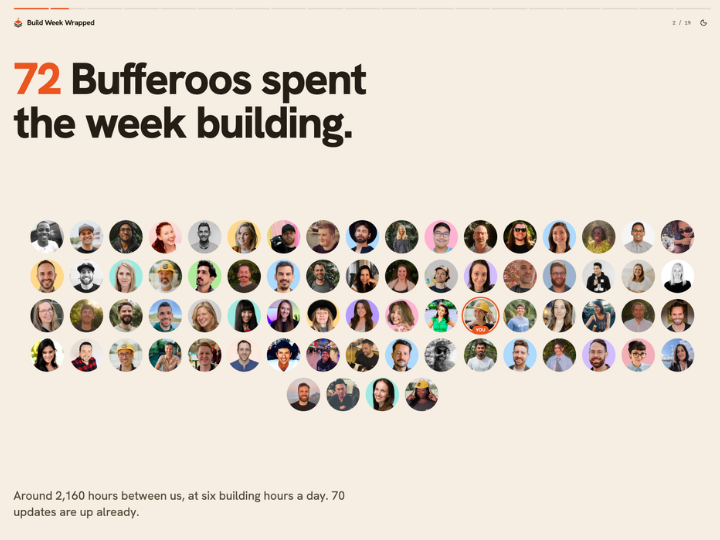
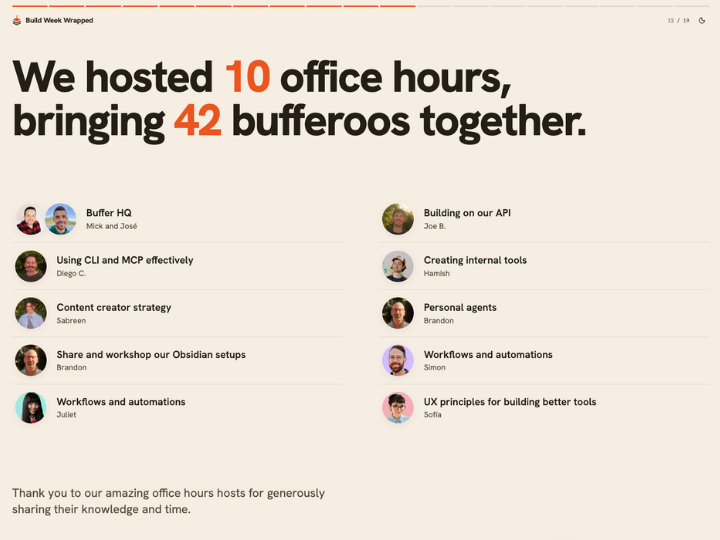
Social media management platform Buffer recently completed its third annual Build Week, marking a significant shift in how the company approaches internal innovation, software development, and employee autonomy. Over the course of five days, 72 employees temporarily paused their standard day-to-day responsibilities to focus entirely on designing, coding, and shipping independent technical projects. By the close of business on Friday, the team had achieved its most productive internal sprint to date, registering 112 completed projects, merging 1,083 pull requests across 26 distinct code repositories, and pushing 57 newly deployed internal tools live onto the company’s domain.

The scale of the output highlights a major evolution in corporate hackathon dynamics, driven largely by the integration of artificial intelligence tools. Unlike previous company sprints, which relied on rigid team structures and a narrow pool of pre-selected corporate projects, this year’s iteration introduced an individualized, AI-assisted paradigm. Employees across departments—ranging from seasoned engineering staff to customer support and marketing personnel—directed their own distinct projects with the help of AI coding assistants. This decentralized approach allowed participants to pursue personalized learning curves while drawing on the expertise of specialized engineering mentors across the organization.
Evolution of the Sprint: From Prescribed Teams to Individualized AI Empowerment
To understand the significance of Buffer’s latest Build Week, it is necessary to examine the trajectory of the company’s internal development initiatives. In earlier iterations of the event, management utilized a top-down model where staff members were assigned to specific, pre-determined teams to tackle a handful of core corporate challenges. While effective for fostering cross-departmental collaboration, that model occasionally limited individual creativity and constrained the scope of exploration to what could be accomplished within rigid team parameters.
For the third installment, leadership pivoted to a fully decentralized, individual-led model. Every participant acted as a project director, leveraging modern artificial intelligence tools to bridge technical gaps. For non-technical team members, AI lowered the barrier to entry for software development, enabling them to construct functional applications tailored to their daily workflows. For experienced developers, AI served as an accelerator, allowing them to rapidly prototype complex systems that would typically require weeks of scoping and resource allocation.
This strategic pivot yielded immediate, measurable outcomes. A total of 41 individual contributors successfully pushed 57 new internal tools live onto the company network. Furthermore, the collaborative environment inspired six employees with little to no prior coding experience to successfully merge their first-ever pull requests into live repositories. Additionally, the team successfully integrated 15 production changes directly into Buffer’s core admin product, bridging the gap between experimental internal hacks and practical operational enhancements.
Categorizing the Output: Solving Recurring Operational Friction
The 112 completed projects spanned a wide array of categories, systematically targeting operational inefficiencies, informational silos, and personal productivity bottlenecks. Rather than focusing solely on external-facing product features, the participants concentrated heavily on optimizing the internal machinery of the remote-first company.
Automating Repetitive Workflows
One of the primary focal points for participants was the elimination of redundant weekly tasks. Several tools were developed to automate recurring data aggregation and reporting procedures that previously required manual oversight by various department heads. By writing custom scripts and leveraging internal APIs, employees effectively reclaimed hours of administrative time each week.
Centralizing Documentation and Knowledge Bases
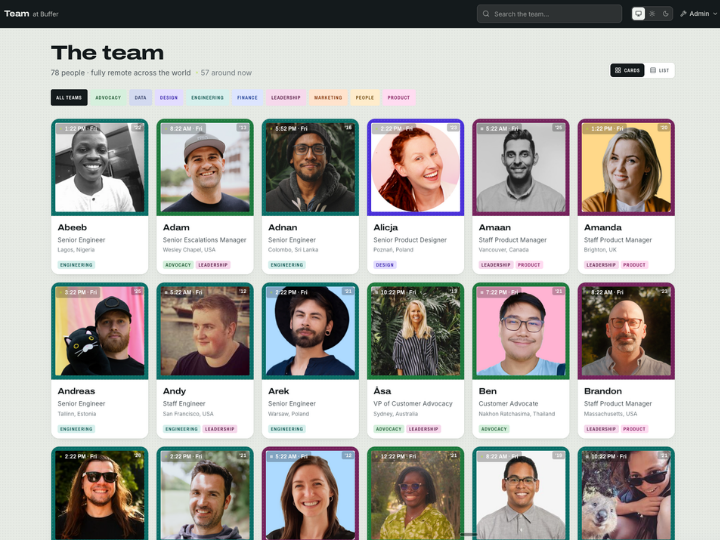
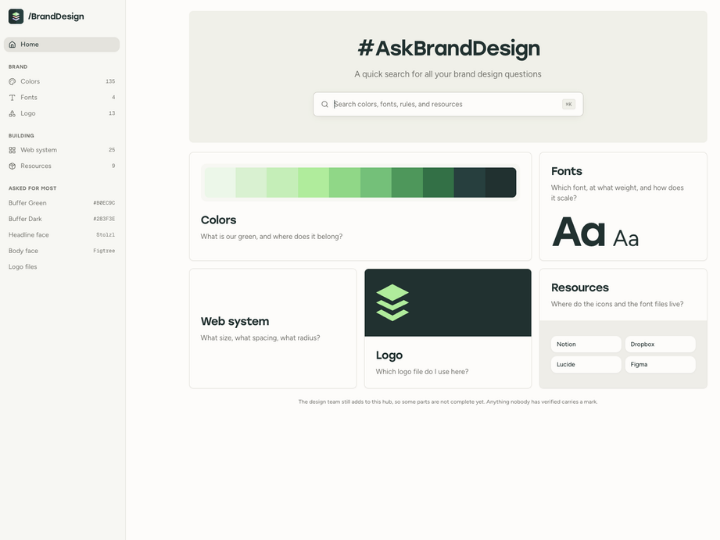
In a distributed work environment, institutional knowledge often becomes fragmented across disparate documents and communication channels. Projects such as Hamish’s team directory and Kate’s "Ask Design" initiative successfully centralized crucial company data. These applications streamlined internal onboarding and ensured that staff members could locate critical design resources and organizational charts without interrupting their colleagues.
Enhancing Financial and Operational Visibility
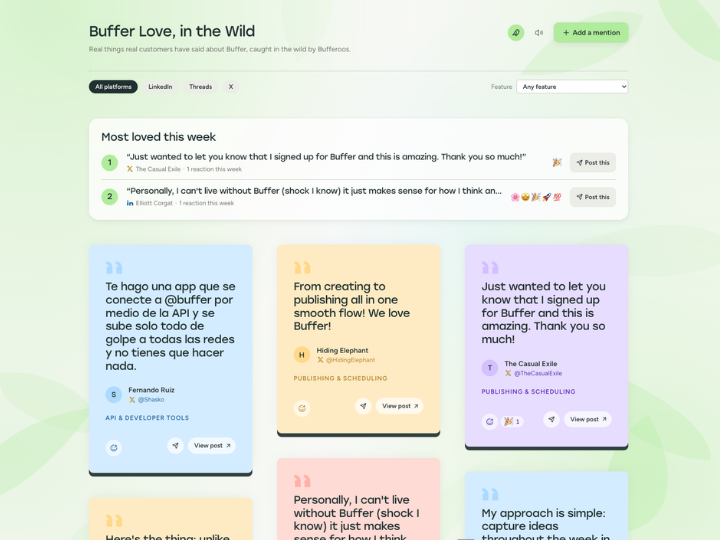
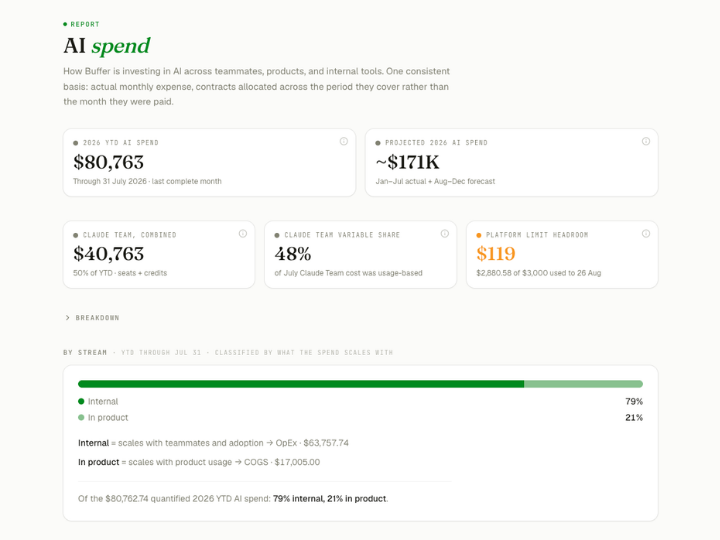
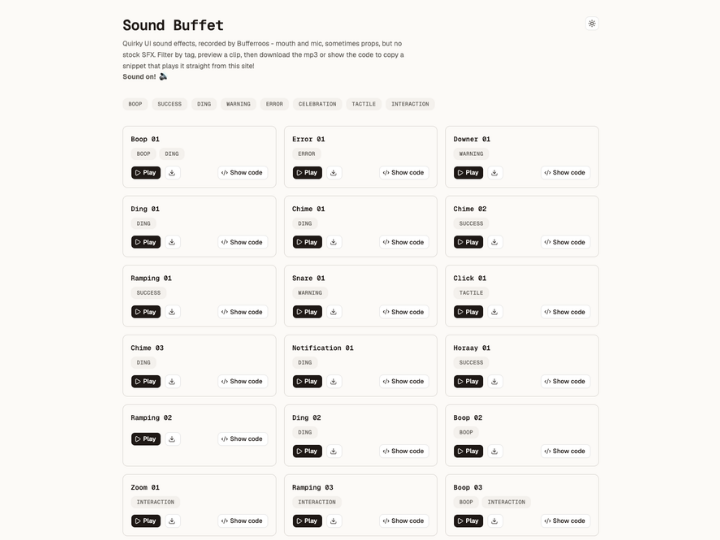
Transparency has long been a core tenet of Buffer’s corporate philosophy, yet tracking complex data streams—such as API consumption costs and infrastructure spending—remains challenging. Jenny’s AI spend dashboard introduced real-time tracking mechanisms for the company’s artificial intelligence expenditures, providing clear financial visibility. Similarly, Andreas developed "Sound Buffet" to offer novel insights into product usage patterns, while Pierre engineered "Houseswap" to optimize internal resource management.
Addressing Customer Pain Points and Technical Debt
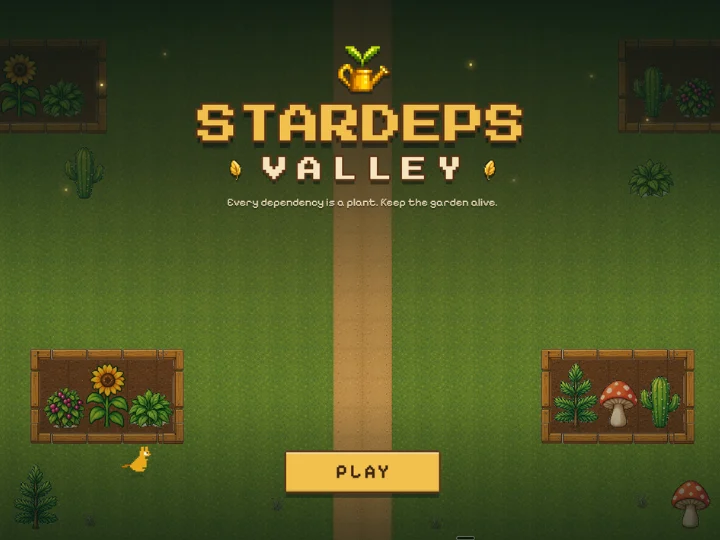
Engineering infrastructure also received substantial attention during the week. Bruno’s project, "StarDeps Valley," tackled dependency management friction, directly addressing the technical limitations that developers encounter when maintaining Buffer’s codebase. Other projects focused on smoothing out edge cases that customers occasionally run into, ensuring that the underlying architecture remains scalable and resilient.
Personal Workflows and Cultural Engagement
Beyond utilitarian enterprise software, participants built tools to support individual productivity and reinforce company culture. Tami’s "Bufferverse" and Hailley’s "Guess the Pets of Buffer" provided interactive mediums for remote team bonding, highlighting the company’s emphasis on maintaining a connected and vibrant workplace culture despite geographical dispersion.
Industry Implications: The Future of Enterprise Hackathons
Buffer’s successful experiment offers a compelling case study for the broader technology sector regarding the integration of artificial intelligence into corporate culture. As generative AI and coding assistants mature, organizations are increasingly looking for ways to measure the ROI of these technologies beyond routine software development tasks.
By empowering non-technical personnel to build functional internal software, Buffer demonstrated that AI can democratize technical creation across an entire organization. The ability of 41 distinct individuals to independently ship 57 production-ready internal tools suggests that future enterprise innovation will likely rely less on large, centralized engineering squads and more on agile, AI-augmented domain experts who can directly build solutions for the problems they encounter daily.
Furthermore, the event underscores the viability of the remote-first Build Week model. By granting employees absolute autonomy over their projects for five consecutive days, Buffer fostered an environment of intrinsic motivation and rapid skill acquisition. The high volume of merged pull requests and shipped product updates indicates that structured downtime for independent creation does not detract from operational momentum; rather, it provides the necessary runway for systemic optimization and employee retention.
Conclusion and Future Outlook
As Buffer transitions back to its regular operational cadence, leadership plans to gradually integrate several of the successful Build Week tools into the company’s permanent production environment. While the immediate focus remains on evaluating the stability and utility of the deployed applications, the company has indicated that it will share more detailed technical breakdowns of specific projects in the coming weeks.
The resounding success of this year’s sprint sets a high benchmark for future internal initiatives. By combining employee autonomy with accessible artificial intelligence infrastructure, Buffer has outlined a scalable blueprint for how modern, distributed companies can drive internal innovation, reduce operational friction, and empower every member of their workforce to become a creator.