Pranda Michaela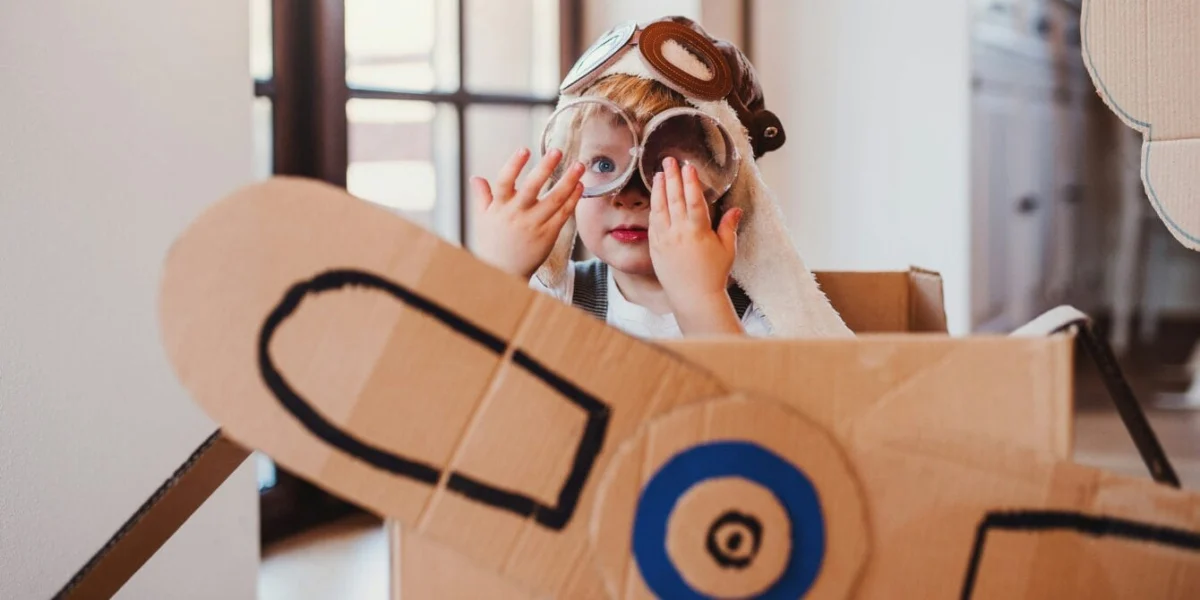
Unsplash
None of this is really about being a perfect parent. It’s about the small stuff.
By Sara Goldstein
Updated Jul. 16, 2026

Chelsea Anderson, a professional babysitter with a significant online following for her creative, low-cost activities for children, shared her insights on combating summer boredom and navigating bedtime challenges. Anderson, who has amassed a considerable audience for her inventive use of everyday materials, including cardboard tubes, to create engaging play, emphasizes that her approach is not rooted in parental experience but rather in her professional detachment. "Don’t forget, I don’t have kids," she stated, clarifying that her ability to devise such activities stems from not being burdened by the daily logistical demands of parenting. "I could come up with these ideas because I’m not in charge of any of the back-of-house decisions that take so much brainpower."

This perspective, Anderson suggests, allows her to function as an imaginative and unburdened figure, akin to a "fun aunt," rather than a parent juggling the multifaceted responsibilities of meals, homework, and laundry. When asked about common parental anxieties she encounters, Anderson’s response was direct: parents often set their expectations too high. Her core advice for parents, particularly those with young children, is to "lower the bar."

This philosophy underpins Anderson’s collaboration with Pirate’s Booty on "Captain Bob’s Summer Quest," a free, downloadable guide featuring low-effort activities designed to engage children. While the author admits to being a pre-existing fan of the brand, her endorsement of Anderson’s advice transcends the promotional aspect. Anderson observes that many parents are overwhelmed by the perceived need for elaborate, Pinterest-worthy summer experiences, believing that successful engagement requires extensive resources and a dedicated craft closet. She contends that this is an unnecessary burden.

The Dual Pillars of Engagement: Boredom and Access
Anderson identifies two critical factors in households where children are adept at entertaining themselves: unstructured time and open access to materials. She stresses the importance of providing children with "chunks of unstructured time," asserting that boredom is a crucial precursor to creativity. Children need to experience boredom before they can generate their own ideas, and then they require sufficient time to pursue those ideas.

Secondly, Anderson advocates for "open access to stuff." This means creating an environment where children can freely access materials for invention and play without needing constant adult permission or supervision. A designated "invention box" that a child can approach and utilize independently, without requiring an adult’s "green light," is central to this concept.

Crafting the "Invention Box"
Anderson offers specific suggestions for what constitutes an effective invention box. For older children, a low-temperature hot glue gun is recommended, as it can be a powerful tool for creative exploration, enabling them to join various materials. This aligns with the author’s own limited crafting abilities, finding the idea of gluing disparate items together appealing.

For younger children, high-quality tape, such as painter’s or masking tape that is easily removable, is essential. Lids, often overlooked, can be transformed into wheels, robot faces, or steering wheels, serving myriad imaginative purposes. Cardboard tubes, readily available from household recycling, are also highly valued for their potential in imaginative play, particularly for exploring concepts of scale. Anderson notes that "a big box beats a small one every time."

Spontaneous Play and Parental Involvement
When faced with a child experiencing immediate boredom and a lack of structured activity, Anderson advises against immediately presenting a complex craft project. Instead, she suggests parents "add to the story." This involves engaging in imaginative play with the child, such as pretending to be pirates hunting for treasure and drawing a map, or transforming into bears in a snowy forest. The specific activity is less important than the child’s role as a co-creator, rather than a passive observer of the adult’s lead.

The Power of Immersive Play
The author reflects on her own struggles with imaginative play, finding activities like playing with dolls or action figures less engaging than her children did. Anderson’s insights provide a framework for understanding this dynamic. She explains that playing with a single toy often feels restrictive due to an "invisible box" of predetermined actions. For example, Barbie dolls remain Barbie dolls, and wrestling figures remain wrestling figures.

In contrast, committing to an entire thematic world, such as a "dinosaur day" or a "princess day," allows for greater flexibility. Any event or object can be incorporated into the theme, fostering a sense of improvisation. This approach is less demanding for parents who may not consider themselves naturally inventive.

Furthermore, immersive play can streamline other aspects of the day, including mealtimes. A themed dinner, such as eating as pirates, can maintain the flow of the imaginative narrative. Anderson highlights that children notice and appreciate a parent’s genuine commitment to a theme, even to the point of adopting a "full dinosaur voice." Such efforts often transform simple moments into lasting memories.

Taming the Bedtime Battle
Anderson offers a practical strategy for addressing bedtime resistance: extending the narrative. Her theory is that conventional bedtime routines often signal the definitive end of fun, which is precisely why children resist them. If a day has been spent as pirates, the pirate theme can seamlessly transition into bedtime. Children can "walk the plank" into bed, improvise eye patches from toilet paper, or brush their teeth like pirates. This "small reframe" is effective because it doesn’t require exhausted parents to invent something entirely new; they simply need to sustain the existing theme for a brief period.

The Enduring Impact of Small Gestures
Anderson’s overarching message is that effective parenting is not about achieving perfection but about cherishing the "small stuff." She emphasizes that memories are often forged through simple moments like catching lightning bugs or creating an aged-looking pirate map with tea bags. Her assertion that children remember these seemingly minor experiences over elaborate endeavors resonates deeply. Anderson concludes by encouraging parents to "lower the bar considerably" to ensure they can fully embrace and enjoy the remainder of the summer.