Hanik Kholidah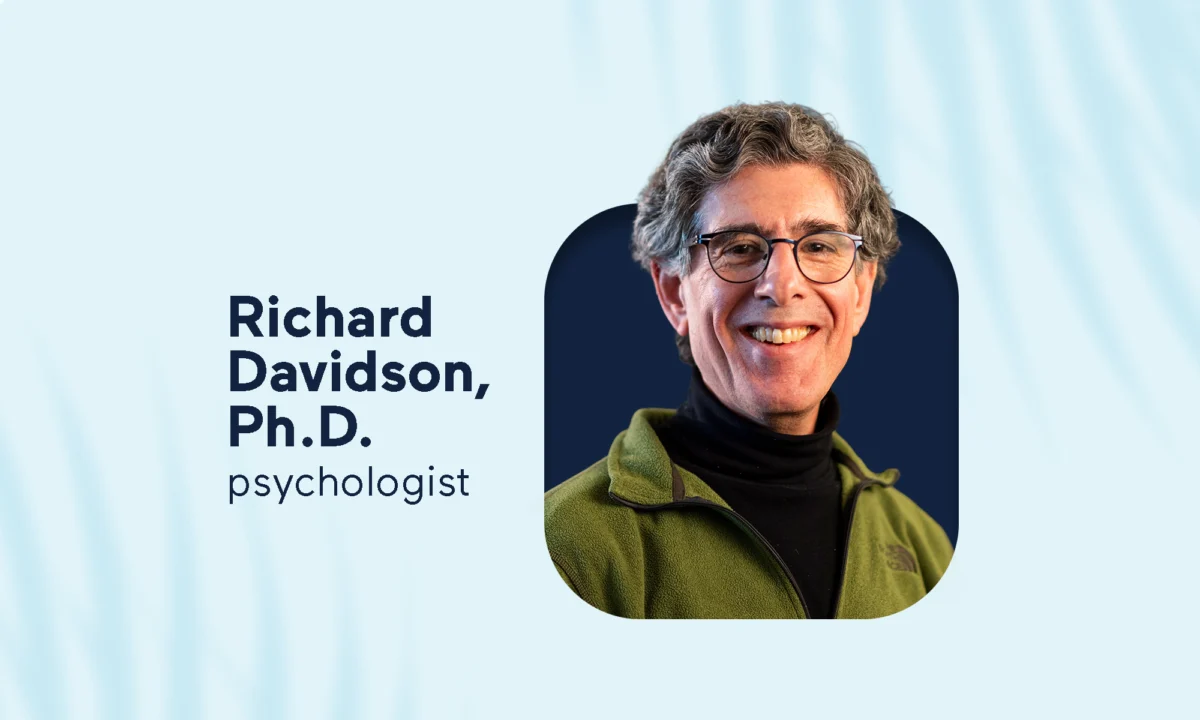
The concept of human well-being has long been relegated to the realms of philosophy, self-help, and abstract psychology, often viewed as a byproduct of circumstance, genetics, or luck. However, a growing body of neuroscientific research led by Dr. Richard Davidson, Ph.D., a renowned psychologist and the founder of the Center for Healthy Minds at the University of Wisconsin-Madison, is fundamentally shifting this paradigm. In his latest work, Born to Flourish, Davidson posits that well-being is not a static state or a stroke of fortune but a trainable skill that can be developed through intentional practice. By synthesizing decades of longitudinal data and brain-imaging studies, Davidson has identified four specific pillars—awareness, connection, insight, and purpose—that form the biological and psychological foundation of what he terms "flourishing."
The Shift from Pathology to Flourishing: A New Scientific Framework
For much of the 20th century, clinical psychology and neuroscience were primarily concerned with the study of dysfunction. Research focused on the mechanics of depression, anxiety, and trauma, seeking to understand how the brain breaks down. Dr. Davidson’s work represents a pivotal shift toward "positive neuroscience," investigating how the brain thrives. This transition is rooted in the principle of neuroplasticity—the brain’s ability to reorganize itself by forming new neural connections throughout life.
Davidson’s framework suggests that a flourishing individual is characterized by a "quiet confidence" and the internal resources necessary to navigate life’s inevitable stressors. Unlike traditional happiness, which is often fleeting and dependent on external events, flourishing is an enduring capacity for resilience. The Center for Healthy Minds has demonstrated that mental training can produce measurable changes in the brain’s structure and function, specifically in areas related to emotion regulation and stress response.
The Chronology of Discovery: From the Dalai Lama to Modern Neuroscience
The evolution of Davidson’s research can be traced back to a seminal moment in 1992 when he met with the 14th Dalai Lama. During this encounter, the spiritual leader challenged Davidson to apply the tools of modern neuroscience—which at the time were focused on stress, fear, and depression—to the study of kindness, compassion, and well-being. This challenge sparked a multi-decade research program that included brain-imaging studies of long-term meditation practitioners as well as novices.
By 2008, Davidson founded the Center for Healthy Minds with the mission of cultivating well-being and relieving suffering through a scientific understanding of the mind. Over the subsequent 15 years, his team developed the "Healthy Minds Framework," a data-driven model that identifies the four pillars of flourishing. This model has been tested in diverse settings, from schools and healthcare systems to corporate environments, providing a robust evidence base for the claim that well-being can be taught.
Pillar I: Awareness and the Meta-Awareness of Presence
The first pillar, awareness, is defined as a heightened state of presence and an attentiveness to the environment as well as internal cues, such as bodily sensations and thoughts. In a world characterized by the "attention economy," where digital distractions are ubiquitous, the ability to maintain focus is increasingly compromised. Davidson’s research indicates that a lack of awareness is closely linked to increased activity in the Default Mode Network (DMN), a brain circuit associated with mind-wandering and rumination.
To cultivate awareness, Davidson advocates for "meta-awareness"—the ability to notice that one is distracted. This is not about achieving an altered state of consciousness but about a grounded, non-judgmental observation of the present moment. Practical applications include simple exercises like pausing before a high-stakes meeting to assess one’s emotional state or practicing "wishing well" exercises in crowded public spaces like airports. These practices are designed to dampen the amygdala’s reactivity and strengthen the prefrontal cortex, the area of the brain responsible for executive function and emotional regulation.
Pillar II: Connection and the Public Health Crisis of Loneliness
The second pillar, connection, focuses on the qualities that foster healthy social relationships, including appreciation, kindness, and gratitude. The scientific urgency of this pillar was underscored in 2023 when U.S. Surgeon General Dr. Vivek Murthy issued an official advisory on the "Epidemic of Loneliness and Isolation." The advisory cited data showing that social disconnection is associated with a 29% increase in the risk of heart disease and a 32% increase in the risk of stroke.
Davidson’s research aligns with these public health findings, noting that loneliness is a biological stressor. His studies show that even brief interventions—such as spending three minutes reflecting on the positive attributes of colleagues before a meeting—can activate the brain’s reward circuits and social bonding centers. By consciously practicing gratitude and appreciation, individuals can mitigate the physiological effects of social isolation, which has been famously compared to the health risks of smoking 15 cigarettes a day.
Pillar III: Insight and the Deconstruction of Self-Narrative
Insight, the third pillar, involves gaining a deeper understanding of how one’s own mind works, specifically regarding the "self-narrative." Every individual carries a set of beliefs and stories about who they are. When these narratives become rigid or overly negative, they can lead to psychological "fusion," where the individual cannot distinguish between their thoughts and reality. This state is a significant risk factor for clinical depression and chronic anxiety.

The goal of insight is not necessarily to replace a negative story with a positive one, but to change one’s relationship with the narrative itself. Davidson’s research suggests that by recognizing thoughts as mere mental events rather than absolute truths, individuals gain "cognitive flexibility." This flexibility allows for a more resilient response to failure or criticism. A recommended practice involves imagining how a respected mentor or friend would view a personal challenge, thereby breaking the monopoly of the internal critic.
Pillar IV: Purpose and the Integration of Transcendent Values
The final pillar, purpose, is defined as the alignment of one’s daily activities with core values. Contrary to the popular belief that purpose requires a grand, life-altering mission, Davidson’s definition is more practical and accessible. It involves finding "transcendent value" in mundane tasks. For example, reframing household chores as an act of care for one’s family or viewing physical exercise as a means to be more present for others.
Neuroscientific data suggests that individuals with a strong sense of purpose exhibit greater resilience in the face of adversity and lower levels of the stress hormone cortisol. In longitudinal studies, a high sense of purpose has been correlated with a lower risk of cognitive decline and cardiovascular events. By consciously connecting small actions to a larger "why," individuals can transform routine behaviors into sources of psychological nourishment.
Supporting Data: The Five-Minute Threshold
One of the most significant findings from the Center for Healthy Minds is the accessibility of these brain changes. In controlled studies, researchers found that practicing these four pillars for just five minutes a day over a period of four weeks resulted in measurable changes in brain function and reported well-being.
Furthermore, Davidson’s research indicates that "informal practice"—weaving these exercises into existing daily routines like commuting, walking, or eating—is as effective as "formal practice" (seated meditation) for beginners. This finding lowers the barrier to entry for the general population, suggesting that mental hygiene can be integrated into daily life as easily as physical hygiene, such as brushing one’s teeth.
Official Responses and Expert Analysis
The scientific community has largely embraced Davidson’s findings, viewing them as a necessary evolution in the field of mental health. Dr. Vivek Murthy has frequently collaborated with Davidson, emphasizing that mental well-being is a "foundational element of public health." Academic peers have noted that Davidson’s work provides a rigorous biological basis for what were previously considered "soft" skills.
However, some analysts point out the challenges of scaling these interventions. While the "Healthy Minds" app provides a free tool for individual use, integrating these pillars into systemic structures—such as high-pressure corporate environments or underfunded school districts—requires significant policy shifts. There is also a call for further research into how cultural differences impact the manifestation of these four pillars, as much of the current data is based on Western populations.
Broader Impact and Future Implications
The implications of Davidson’s "Science of Flourishing" extend far beyond individual mental health. In the workplace, organizations that prioritize these pillars report higher levels of employee engagement and lower rates of burnout. In education, programs that teach awareness and connection to children are showing promise in reducing bullying and improving academic performance.
As the global community grapples with rising rates of mental health disorders and the social fragmentation caused by technological and political shifts, the shift toward a "skill-based" model of well-being offers a proactive solution. The transition from viewing mental health as the absence of disease to viewing it as the presence of flourishing marks a new era in human development.
In conclusion, Dr. Richard Davidson’s framework suggests that while we may be "born to flourish," the actualization of that potential requires consistent mental "reps." By treating awareness, connection, insight, and purpose as skills rather than traits, society can begin to address the roots of human suffering and build a more resilient, compassionate world. The science is clear: the brain is plastic, well-being is a skill, and the tools for transformation are accessible to everyone, five minutes at a time.