Angie Faith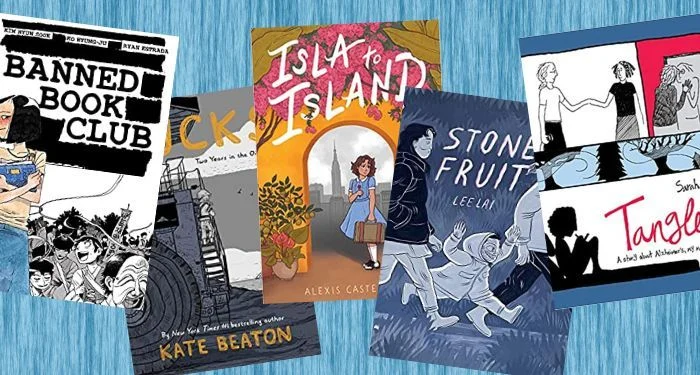
The landscape of contemporary literature has experienced a profound shift over the past two decades, with graphic novels firmly establishing themselves as a cornerstone of serious artistic and literary achievement. No longer confined to the margins of traditional publishing, the medium has garnered critical acclaim from mainstream literary institutions, including the Pulitzer Prize, the National Book Awards, and the Eisner Awards. This recognition reflects a growing appreciation for the unique capacity of sequential art to convey complex historical narratives, deeply personal memoirs, and intricate cultural critiques. As readers increasingly seek out dynamic storytelling formats that merge visual and textual artistry, award-winning graphic novels have emerged as vital contributions to global literature.

The Evolution and Recognition of Sequential Art
The historical trajectory of graphic novels moving from pulp entertainment to high literature is characterized by pivotal milestones. For decades, comics and illustrated works were largely dismissed as juvenile or ephemeral. However, the publication and subsequent critical success of foundational works demonstrated that the medium could handle heavy, mature subject matters with nuance and emotional resonance. Institutions that historically favored prose—such as the American Library Association, the National Book Critics Circle, and various international literary boards—began establishing specific categories or opening their premier prizes to graphic narratives.

This institutional validation has not only elevated the profile of cartoonists and illustrators but has also fundamentally altered how publishers invest in visual storytelling. Today, graphic memoirs and historical documentaries executed in comic format routinely top bestseller lists, proving that the synergy between illustration and prose offers a cognitive and emotional depth that resonates deeply with a diverse readership.

Spotlight on Acclaimed Memoirs and Historical Narratives
Among the most celebrated entries in the modern graphic novel canon are works that utilize personal experience to illuminate broader socio-political realities. Kate Beaton’s Ducks: Two Years in the Oil Sands stands as a stark exploration of economic desperation and industrial labor. Capturing her time working in the Canadian oil sands, Beaton illustrates the harsh realities faced by young adults navigating limited local economies. The memoir, which earned the Canada Reads 2023 title and garnered high praise from former President Barack Obama, addresses difficult themes including isolation, addiction, and systemic workplace harassment.

Similarly, historical trauma and political awakening form the bedrock of George Takei’s They Called Us Enemy, illustrated by Harmony Becker, Justin Eisinger, and Steve Scott. Capturing the Eisner Award for Best Reality-Based Work in 2020, Takei’s work recounts his childhood detained within the U.S. government’s forced incarceration of Japanese Americans following the 1941 attack on Pearl Harbor. By juxtaposing personal memory with historical documentation, the book serves as both an autobiographical account and an urgent reminder of civil liberties under threat.

In the realm of international political history, Banned Book Club by Kim Hyun Sook and Ryan Estrada chronicles the author’s turbulent introduction to university life in 1980s South Korea under an authoritarian regime. The narrative details a grassroots political awakening through participation in clandestine reading groups, capturing the human cost of fighting oppressive social systems.

Immigration, Displacement, and Cultural Identity
Displacement and the search for identity across borders represent another dominant theme among premier graphic novels. Shaun Tan’s wordless masterpiece The Arrival utilizes intricate, surreal illustrations to depict the universal immigrant experience. Without relying on traditional text, Tan captures the disorientation, loss, and eventual resilience required to forge a new life in an unfamiliar land, earning accolades such as the American Library Association’s Best Book for Young Adults.

Similarly, Thi Bui’s The Best We Could Do: An Illustrated Memoir explores the author’s family history against the backdrop of war-torn Vietnam and subsequent immigration to the United States. Winning the American Book Award in 2018 and selected as a National Endowment for the Arts Big Read title, Bui’s work examines generational trauma and the sacrifices made by parents seeking safety for their children.

In When Stars Are Scattered, creators Victoria Jamieson and Omar Mohamed draw upon Mohamed’s actual childhood spent growing up in a Kenyan refugee camp. Honored with the Walter Dean Myers Award in 2021, the book humanizes the statistics surrounding global displacement, offering a poignant look at education, endurance, and family bonds within the confines of a humanitarian crisis.

Navigating Marginalization and Personal Triumph
Graphic novels have also proven exceptionally effective at voicing marginalized perspectives and personal struggles with health, disability, and social integration. Cece Bell’s El Deafo translates the author’s childhood experiences with hearing loss into an accessible, empathetic narrative that earned the Judy Lopez Memorial Award. By visualizing her hearing aid as a literal superpower, Bell reframes disability not as a limitation, but as a unique lens on the world.

Medical narratives form another critical sector of the medium. In Kimiko Does Cancer: A Graphic Memoir, writer Kimiko Tobimatsu and illustrator Keet Geniza—winners of the 2022 Joe Shuster Award—document Tobimatsu’s navigation of a breast cancer diagnosis at age 25. The work critically examines the intersection of youth, queerness, and medical paternalism, offering an unvarnished look at the realities of aggressive medical treatments.

Domestic care and aging are explored with unflinching honesty in Roz Chast’s Can’t We Talk About Something More Pleasant?, which received the National Book Critics Circle Award in 2015. Chast balances humor and heartbreak in detailing the final years of her aging parents, capturing the bureaucratic and emotional labyrinths of eldercare. This theme is echoed in Sarah Leavitt’s Canadian Bookie Award-winning Tangles: A Story About Alzheimer’s, My Mother, and Me, which visually maps the cognitive decline of Alzheimer’s disease within a family structure.

Broader Implications and Market Trends
The sustained commercial and critical success of these works points to a permanent evolution in literary consumption. Publishers report steady year-over-year growth in graphic novel sales across adult, young adult, and middle-grade sectors. Librarians and educators increasingly rely on these illustrated texts to engage reluctant readers, foster visual literacy, and build empathy for lived experiences vastly different from their own.

Furthermore, the diversification of creators—spanning Indigenous perspectives, such as Katherena Vermette’s Pemmican Wars, to international translated works like Gengoroh Tagame’s My Brother’s Husband—ensures that the medium reflects a truly global spectrum of human experience. As award committees continue to honor these multifaceted narratives, the boundary between high literature and sequential art dissolves further, solidifying graphic novels as an essential vehicle for modern storytelling.