Cintya Tara Annisa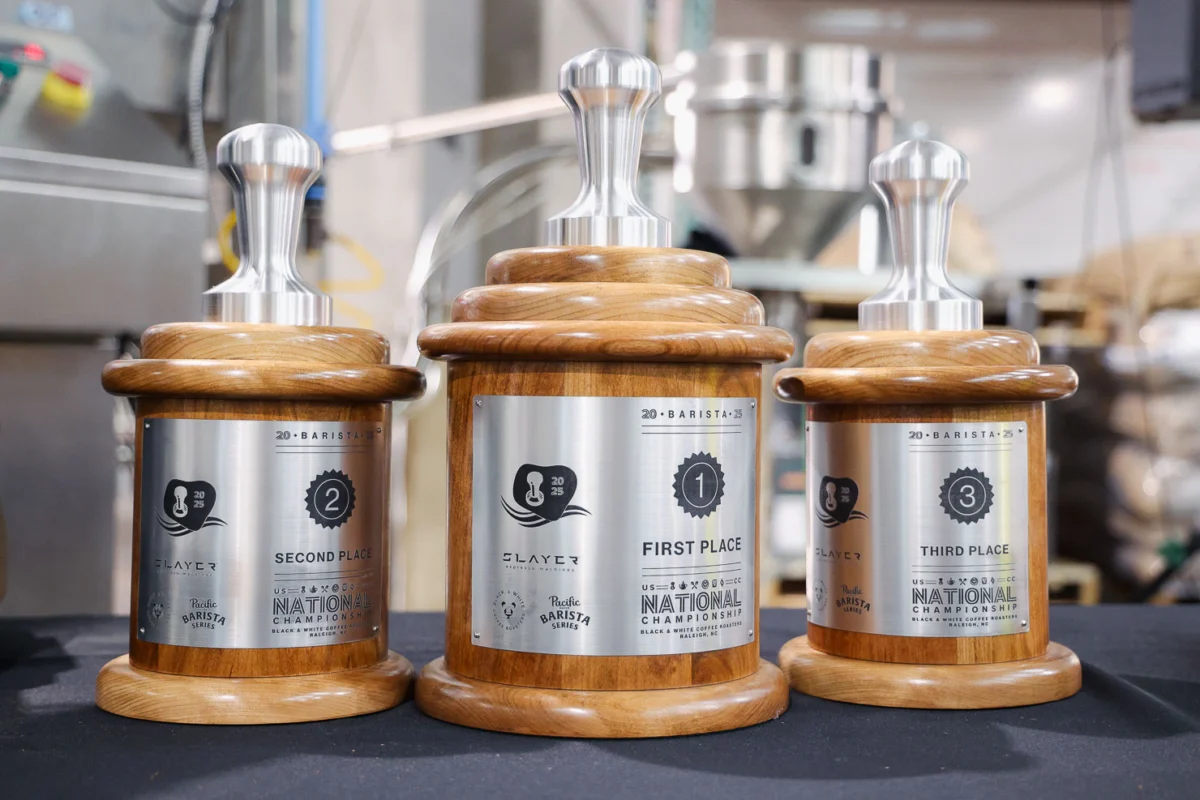
The intersection of specialty coffee and high-stakes culinary competition reached a new milestone during the tenth episode of Top Chef Season 23, titled Hook, Line, and Dinner, when contestant Chef Duyen Ha publicly identified as a barista champion. While specialty coffee has maintained a recurring presence throughout the history of the Bravo television franchise, this declaration represents the first instance in which a contestant has explicitly cited a background in competitive coffee preparation as a foundational element of their professional pedigree. The statement has prompted a broader investigation into the archives of specialty coffee competitions and the formalization of professional titles within the global coffee industry.
Chef Duyen Ha, the founder of the culinary studio The Cuisson and the French wine brand Bondle, made the claim during a segment highlighting her competitive nature. In her official biography provided by Food & Wine, Ha’s career trajectory is described as a transition from the technology sector to the coffee industry, followed by a pivot to the culinary arts. She is an alumna of the prestigious Ferrandi Paris culinary school, where she reportedly graduated at the top of her class. However, it was her assertion of being a "barista champion" that resonated most strongly with coffee industry professionals and historians, leading to an extensive search for the specific credentials associated with the title.
The Evolution of Specialty Coffee on Top Chef
The appearance of specialty coffee on Top Chef is not a recent phenomenon, though the depth of its integration has increased significantly in later seasons. In Season 18, the competition featured Portland-based Stumptown Coffee Roasters, and Season 21 highlighted Milwaukee’s Colectivo Coffee. The current season, Season 23, has demonstrated an even higher level of technical specificity, featuring home espresso sequences that included the use of a Weiss Distribution Technique (WDT) tool—a needle-based implement used to declump coffee grounds for more even extraction.
Despite these frequent cameos, the "barista champion" title carries a specific weight in the professional coffee world. Traditionally, the term refers to winners of sanctioned events under the World Coffee Events (WCE) umbrella, such as the United States Barista Championship (USBC) or the World Barista Championship (WBC). These competitions require months of preparation, rigorous sensory evaluation, and a technical proficiency that mirrors the intensity of the Top Chef kitchen.
Investigating the Pedigree of a Barista Champion
Following Ha’s proclamation, industry analysts and journalists from Sprudge Media Network, an organization that has documented coffee competitions for 15 years, conducted a comprehensive review of historical records. A search of the Sprudge and Sprudgelive archives—the most exhaustive databases of sanctioned US and international coffee competitions—yielded no results for a "Duyen Ha" in the finalists or winners circles of major regional or national championships.
The investigation expanded to include alternative competition formats, such as the Coffee Masters tournament, regional "Latte Art Throwdowns," and historical events hosted by Coffee Fest. Despite the thoroughness of the search, no public record of a sanctioned victory was found. This discrepancy highlighted a common reality within the specialty coffee industry: the existence of "internal" or "unofficial" competitions that, while prestigious within a specific organization, lack a centralized digital paper trail.
The Think Coffee Connection and Internal Competitions
The search for clarity eventually led to Ha’s professional history at Think Coffee, a prominent New York City-based specialty coffee roaster. According to her professional records, Ha was employed by Think Coffee between July 2012 and April 2013, following an internship in 2011. Her roles included Wholesale Account Manager and Farmer Relations Representative. During this tenure, she was responsible for leading weekly educational coffee tastings at the company’s Chelsea location in Manhattan.
The timeline of Ha’s employment at Think Coffee coincides with a pivotal era for the New York City coffee scene. In 2012, New York barista Katie Carguilo won the United States Barista Championship, an event that garnered significant mainstream media attention from outlets such as The New York Times and Slate. This era saw a surge in the popularity of barista competitions as a means of professional validation.
The definitive source of Ha’s "barista champion" title was eventually identified via the TV Chef Fantasy League podcast, hosted by Maximum Fun. During a discussion of Episode 10, Gabe Mara, the podcast’s engineer and a former colleague of Ha at Think Coffee, provided context regarding the claim. Mara clarified that Think Coffee, which operated several high-volume locations in Manhattan at the time, held internal barista competitions.
"We would have a barista competition every now and then held at the 14th street location," Mara stated during the broadcast. He recalled that Ha participated in an event involving approximately 40 competitors from within the company and described her performance as exceptionally successful. This internal victory at a respected multi-unit specialty roaster served as the basis for Ha’s professional claim on Top Chef.
Defining the Professional Barista Title
The revelation that Ha’s championship title originated from an internal corporate event rather than a sanctioned national tournament has sparked a debate regarding the democratization of professional titles. In the culinary world, "Chef" is a title often earned through a combination of education and experience in the brigade de cuisine. Similarly, "Barista Champion" has historically been reserved for a small elite who navigate the rigorous standards of the Specialty Coffee Association (SCA).
However, the industry is increasingly recognizing that the "official" competition circuit represents only a fraction of the talent within the global coffee community. Internal competitions, often referred to as "Sprodeos" or "Throwdowns," serve as critical training grounds for baristas. These events often mirror the technical requirements of national stages but are designed to foster community and skill development within a specific brand or local region.
The lack of a centralized record for these events has historically meant that many highly skilled professionals have no formal way to verify their achievements to the broader public or to casting directors for programs like Top Chef.
The Launch of the Barista Championship Database
In response to the interest generated by Chef Duyen Ha’s story, industry leaders have announced the launch of a new initiative: The Barista Championship Database. This user-driven compendium is intended to serve as a comprehensive record of coffee competition winners across all levels of the industry.
The database aims to bridge the gap between sanctioned international events and the grassroots competitions that define the daily lives of coffee professionals. By allowing individuals to register their victories in internal company competitions, local latte art throwdowns, and cupping trianguations, the initiative seeks to provide a formal structure for professional recognition.
"We’re all barista champions," the organizers stated in a release accompanying the database launch. The initiative acknowledges that the skills required to win a 40-person internal competition at a major New York City roaster are significant and deserve a place in the professional record. The database will provide digital "badges" to verify these achievements, offering a new level of transparency for the industry.
Broader Implications for Culinary and Beverage Professionals
The narrative of Duyen Ha’s "barista champion" claim highlights a broader trend in the culinary arts: the convergence of specialized beverage knowledge with traditional cooking. As Top Chef continues to evolve, the expectation for contestants to possess a multi-disciplinary understanding of flavor—ranging from viticulture to coffee extraction—has become more pronounced.
Ha’s background in tech, specialty coffee, and French culinary arts represents the modern archetype of a high-level chef. The verification of her coffee credentials, while initially elusive, underscores the importance of internal professional development programs within the service industry. For many professionals, these internal accolades are the stepping stones to successful careers in diverse fields.
The impact of this moment on the coffee industry is twofold. First, it validates the intensity and prestige of internal corporate competitions. Second, it highlights the need for better archival practices within the specialty coffee sector. As coffee continues to move into the mainstream culinary spotlight, the documentation of its history and its champions—whether on a world stage or in a Manhattan cafe—becomes essential for the professionalization of the craft.
Chronology of Events
- 2011: Duyen Ha begins an internship at Think Coffee in New York City.
- July 2012: Ha is hired as Wholesale Account Manager and Farmer Relations Representative at Think Coffee.
- Late 2012: Ha wins an internal barista competition at Think Coffee’s 14th Street location, competing against approximately 40 colleagues.
- April 2013: Ha departs Think Coffee to pursue culinary education in France.
- 2013-2023: Ha graduates from Ferrandi Paris and establishes The Cuisson and Bondle Wines.
- 2024: Top Chef Season 23 airs; Ha makes the "barista champion" claim in Episode 10.
- 2024: Industry investigation confirms the claim’s origin via the TV Chef Fantasy League podcast.
- Present: Launch of the Barista Championship Database to formalize non-sanctioned competition records.
The story of Chef Duyen Ha serves as a reminder that the path to professional excellence is rarely linear and that the titles held by culinary leaders are often forged in high-pressure environments that exist far beyond the view of television cameras or international judges.