Hanik Kholidah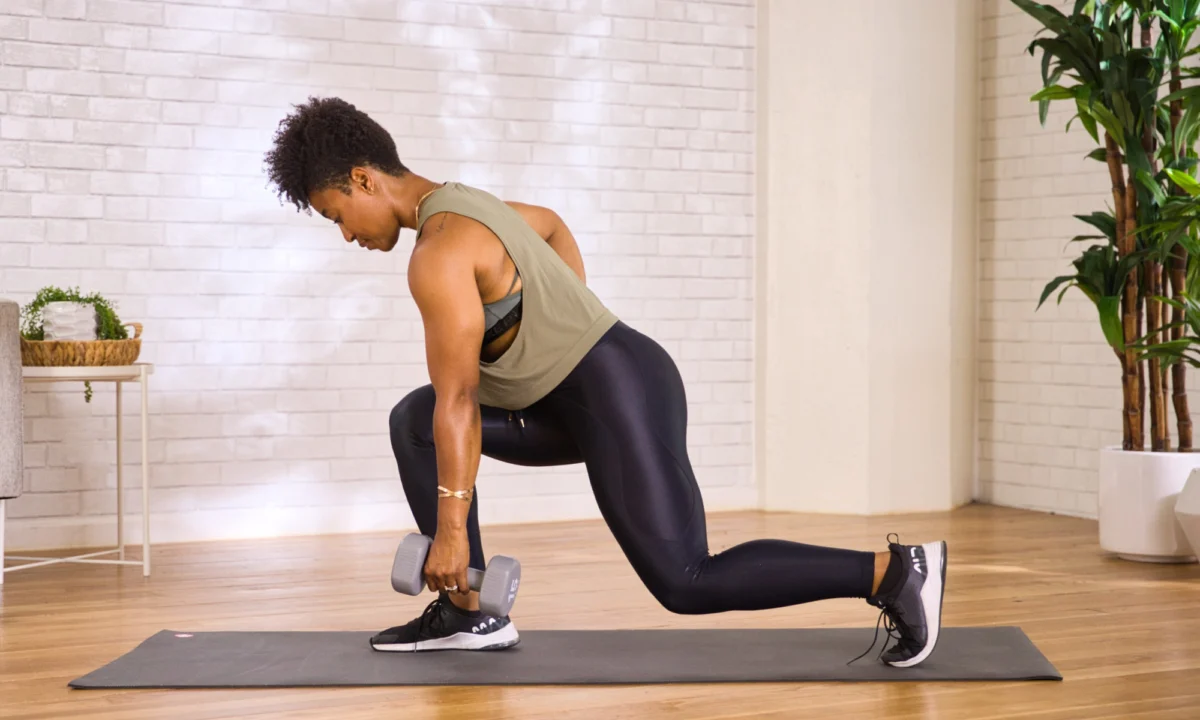
The Biomechanical Foundation of Unilateral Training
The reverse lunge is classified as a unilateral, closed-kinetic-chain exercise. Unlike the standard squat, which distributes weight across both legs simultaneously, unilateral movements force each limb to manage the load independently. This is critical for addressing muscle imbalances, which are common in both sedentary individuals and high-performance athletes. According to kinesiology experts, the reverse lunge is particularly effective because it facilitates a greater degree of hip flexion compared to the forward lunge.
When an individual steps backward into a lunge, the center of mass stays more centered over the stable front foot. This positioning allows for a deeper stretch of the gluteal muscles during the eccentric (lowering) phase of the movement. Research in the field of sports medicine suggests that this specific mechanics-set reduces the "braking force" often associated with forward lunges, where the momentum of the body is pushed onto the front knee, potentially leading to inflammation or injury over time.
A Chronological Evolution of Lower-Body Conditioning
The history of the lunge can be traced back to ancient martial arts and fencing, where the movement was used to close the distance between opponents while maintaining a stable base. However, its integration into general fitness and bodybuilding occurred much later, during the mid-20th century, as trainers began to recognize the limitations of purely bilateral training.
In the 1970s and 80s, the forward lunge was the standard variation taught in commercial gyms. It wasn’t until the rise of functional fitness and physical therapy-based strength training in the early 2000s that the reverse lunge gained mainstream prominence. Trainers began to notice that clients with chronic knee issues could perform reverse lunges with zero pain, whereas forward lunges often caused discomfort. By 2010, the reverse lunge had become a staple in "prehab" routines—exercises designed to prevent injury before it occurs.
Today, the exercise is championed by industry leaders like BB Arrington, a Certified Personal Trainer (CPT), who advocates for the move as a safer, more glute-centric alternative for practitioners of all levels. The move is now a cornerstone of high-intensity interval training (HIIT), powerlifting accessory work, and geriatric fitness programs aimed at maintaining balance and mobility.
Step-by-Step Methodology for Execution
To maximize the benefits of the reverse lunge and ensure safety, practitioners must adhere to a strict technical framework. The movement can be broken down into four distinct phases: the setup, the descent, the drive, and the reset.

1. The Setup
The exercise begins in a neutral standing position with feet hip-width apart. Maintaining a "soft" knee—avoiding total lockout—is essential for joint health. The core should be braced as if preparing for a minor impact, which stabilizes the spine and prevents the pelvis from tilting excessively during the movement.
2. The Step and Descent
The individual initiates the movement by stepping one foot back. The length of the step is crucial; a step that is too short will cramp the movement and put pressure on the toes, while a step that is too long may strain the hip flexors of the back leg. As the back foot makes contact with the floor (on the ball of the foot), the individual lowers their hips toward the ground. The goal is to create two 90-degree angles: one with the front leg and one with the back leg.
3. The Drive
This is the concentric phase of the exercise. To emphasize the glutes, the individual should drive through the heel of the front foot rather than pushing off the back toes. This "heel-drive" ensures that the posterior chain is doing the majority of the work to return the body to the starting position.
4. The Reset
The back foot returns to the original hip-width stance. Practitioners can either alternate legs or complete a full set on one side to increase the metabolic demand on a specific muscle group.
Expert Analysis and Comparative Data
Certified Personal Trainer BB Arrington highlights that the reverse lunge offers a "good stretch in the glutes," which is a primary driver for muscle hypertrophy (growth). Biomechanical data supports this, showing that the reverse lunge elicits high levels of electromyography (EMG) activity in the gluteus maximus.
In a comparison of lunge variations, data indicates that the forward lunge produces significantly higher peak patellofemoral joint stress. For individuals with a history of ACL (anterior cruciate ligament) or meniscus issues, the reverse lunge provides a way to build leg strength without the "jarring" sensation of a forward step. Furthermore, because the movement requires the practitioner to maintain balance on a narrower base of support, it heavily recruits the core and the gluteus medius, which acts as a stabilizer for the hips.
Modifications and Progressions for Diverse Populations
The versatility of the reverse lunge makes it accessible to a wide range of fitness levels. For beginners, the move can be performed while holding onto a wall or a sturdy chair for balance. This regression allows the individual to focus on the depth and mechanics of the lunge without the fear of falling.

For intermediate to advanced athletes, the move can be progressed in several ways:
- Weighted Reverse Lunges: Holding dumbbells at the sides or a kettlebell in a "goblet" position increases the resistance, further challenging the legs and core.
- Deficit Reverse Lunges: By standing on a small platform or weight plate, the individual increases the range of motion, forcing the glutes to work from an even deeper stretched position.
- Overhead Reverse Lunges: Holding a weight overhead adds a significant stability challenge, engaging the upper back and shoulders.
Official Responses and Professional Consensus
The fitness industry’s shift toward the reverse lunge is reflected in the curricula of major certifying bodies, such as the National Academy of Sports Medicine (NASM) and the American Council on Exercise (ACE). These organizations now emphasize the reverse lunge in their foundational modules due to its superior safety profile.
"In a reverse lunge, your quads and your hamstrings are helping you as well," Arrington notes, pointing to the synergistic nature of the movement. This "compound" effect is why many trainers prefer it over isolation machines like the leg extension, which only targets the quadriceps and can place undue stress on the knee ligaments.
Broader Impact on Functional Longevity
Beyond the aesthetics of a toned lower body, the reverse lunge has profound implications for functional longevity. As humans age, unilateral strength and balance are often the first physical attributes to decline, leading to an increased risk of falls and fractures. By incorporating reverse lunges into a regular routine, individuals can maintain the structural integrity of their hip and knee joints while preserving the neuromuscular pathways required for balance.
The exercise also translates directly to daily activities, such as climbing stairs, stepping over obstacles, or rising from a seated position. In a society where sedentary lifestyles have led to an epidemic of "gluteal amnesia"—a condition where the glutes become underactive due to prolonged sitting—the reverse lunge serves as a vital corrective tool.
In conclusion, the reverse lunge is more than just a leg exercise; it is a sophisticated movement pattern that balances the demands of muscle building with the necessity of joint preservation. Whether performed in a high-end athletic facility or a home living room, its ability to target the glutes while protecting the knees makes it an indispensable component of a modern, health-conscious fitness strategy. As the industry continues to move toward evidence-based training, the reverse lunge is expected to remain a gold standard for lower-body development.