Angie Faith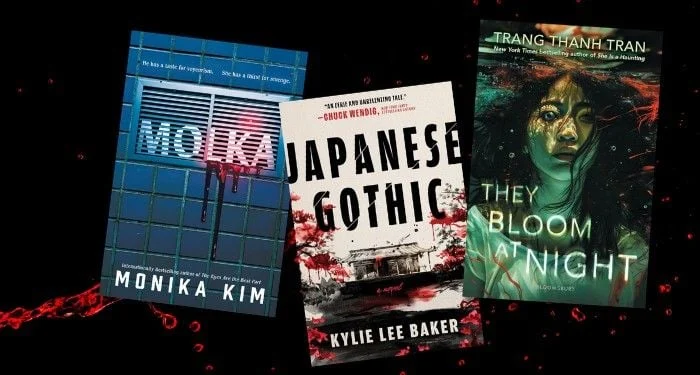
The genre of horror literature is experiencing a significant surge in popularity, with a particularly vibrant and innovative expansion occurring within the realm of Asian American horror. This burgeoning subgenre is not merely offering supernatural scares; it is delving into the profound anxieties, cultural nuances, and societal pressures that shape the Asian American experience, providing a richer and more multifaceted exploration of what truly frightens us. While mainstream horror cinema often relies on familiar tropes and casting, Asian American horror authors are consistently pushing boundaries, delivering narratives that are both viscerally terrifying and intellectually stimulating, offering a vital counterpoint to the often-limited representation of Asian American characters in popular culture.
The contemporary boom in horror fiction has provided a fertile ground for diverse voices and perspectives to emerge. Within this evolving landscape, Asian American authors are leveraging the genre’s capacity for social commentary to address issues ranging from generational trauma and assimilation to racial prejudice and the complexities of identity. This subgenre’s growing prominence signals a critical shift, moving beyond stereotypical portrayals and embracing the unique cultural heritage and lived experiences of Asian Americans as central to their chilling tales.
Challenging Tropes and Expanding Narratives
The call for greater diversity and originality in horror narratives is becoming increasingly vocal. As highlighted in Rena Mason’s insightful essay, "The H-Word: A Jaded Eye on Good Girls Gone Bad in Asian Cinema," published in Nightmare Magazine, there is a growing fatigue with overused cinematic clichés. Mason specifically calls for a departure from the "women with the long wet hair" and the pervasive "revenge wraith" trope prevalent in Asian cinema and its Western adaptations. This sentiment resonates deeply within the Asian American literary community, where authors are actively working to dismantle these tired representations and forge new pathways for storytelling.

The focus is shifting towards exploring the multifaceted experiences of Asian and Asian American women, moving beyond archetypes to depict characters with agency, complexity, and a wider range of emotional and psychological depth. This deliberate effort to break free from restrictive stereotypes is a hallmark of the current wave of Asian American horror, allowing for more authentic and resonant storytelling.
A Curated Exploration of Contemporary Asian American Horror
The following selection of Asian American horror works offers a glimpse into the creative and often unsettling worlds being crafted by talented authors. These books, while distinct in their approaches, share a common thread of engaging with fear through a distinctly Asian American lens, exploring themes that are both deeply personal and universally resonant.
"Japanese Gothic" by Kylie Lee Baker: A Dual-Timeline Descent into Violence and Mystery
Kylie Lee Baker’s "Japanese Gothic" stands out for its innovative use of a dual-timeline narrative, weaving together disparate eras and characters to create a suspenseful and haunting experience. The novel juxtaposes the story of a contemporary Japanese American college student grappling with the unsettling aftermath of his roommate’s death and his own fractured memory with the narrative of a determined female samurai from the late 1800s. This samurai is on a quest to understand the mysterious affliction plaguing her father, a situation fraught with its own dark secrets.
The brilliance of Baker’s novel lies in its seamless integration of these two timelines, allowing for thematic echoes and narrative parallels to emerge organically. The result is a story that is both spectacularly violent and beautifully rendered, characterized by captivating prose that draws the reader into its chilling atmosphere. The novel’s ability to shock and surprise, while maintaining a lyrical quality, makes it a standout work in recent horror literature, demonstrating a mastery of both visceral horror and compelling storytelling. The juxtaposition of historical and modern settings, coupled with the exploration of familial secrets and personal demons, underscores the enduring nature of fear and the ways in which it can transcend time.

"They Bloom at Night" by Trang Thanh Tran: Ecological Horror and Southern Gothic Unease
Following the success of her Young Adult horror debut, "She Is a Haunting," Trang Thanh Tran returns with "They Bloom at Night," a novel that plunges readers into the suffocating atmosphere of Mercy, Louisiana. The story unfolds in the wake of a devastating hurricane that leaves the small town grappling with a deadly algae bloom. Amidst this ecological catastrophe, teenager Noon struggles to survive a poisoned environment while being forced into an uneasy alliance with the daughter of a corrupt harbormaster. Their collaboration is a desperate attempt to protect Noon’s family from the encroaching danger.
Tran masterfully blends elements of body horror and Southern Gothic, creating a narrative that is as deeply unsettling as it is atmospheric. The novel explores the terrifying consequences of environmental devastation and the corruption that can fester in isolated communities. The encroaching, deadly algae bloom serves as a potent metaphor for societal decay and the unseen forces that can threaten lives. The characters’ struggle for survival against both natural and human-made threats highlights themes of resilience, desperation, and the dark undercurrents that can exist beneath the surface of seemingly idyllic settings. The novel’s chilling depiction of a community under siege by both nature and avarice offers a timely and potent commentary on the fragility of life and the pervasive nature of fear.
"Fiend" by Alma Katsu: A Departure into Contemporary Familial Darkness
Alma Katsu, known for her acclaimed historical horror, ventures into contemporary territory with "Fiend," a novel that explores the dark secrets lurking within a seemingly ambitious family. Maris, Dardan, and Nora are poised to inherit the family business, but their ascent is shadowed by a legacy far more sinister than they could have imagined. As the Berisha family unravels in spectacular fashion, the true nature of their success—a pact with a demon—is revealed, plunging them into a maelstrom of greed, betrayal, and supernatural terror.
"Fiend" marks a significant shift in Katsu’s oeuvre, showcasing her ability to imbue a modern setting with the same dread and psychological tension that characterized her historical works. The novel’s strength lies in its depiction of a dysfunctional family, a "next of vipers," where internal conflicts and Machiavellian schemes are as terrifying as the demonic presence. The introduction of a supernatural element into this already volatile dynamic amplifies the horror, creating a compelling narrative of moral decay and existential dread. Katsu’s exploration of ambition corrupted by otherworldly forces offers a chilling commentary on the lengths to which individuals will go to achieve power and the devastating consequences that follow. The unlikable nature of many of the characters, coupled with the pervasive sense of impending doom, makes for a truly unsettling reading experience.

"Molka" by Monika Kim: Voyeurism, Technology, and Psychological Terror
Monika Kim’s "Molka" delves into the chilling reality of a real-world issue, transforming it into a profoundly disturbing work of horror. The narrative centers on Dahye, a woman striving to build her dream life with her boyfriend, only to have her world shatter when she becomes entangled in a spy cam scandal. The novel intricately shifts between Dahye’s escalating psychological instability and the perspective of Junyoung, the perpetrator of the invasive surveillance.
"Molka" is a masterclass in psychological horror, exploiting the inherent terror of violated privacy and the erosion of trust. Kim’s unflinching portrayal of the voyeuristic impulse and its devastating impact on the victim is deeply unsettling. The novel raises critical questions about consent, the ethics of technology, and the pervasive nature of surveillance in contemporary society. The chilling realization that such intrusions can occur in seemingly safe spaces, and the subsequent psychological toll on the victim, creates a palpable sense of dread. The narrative’s dual perspective allows readers to witness the insidious nature of the crime from both the victim’s and the perpetrator’s viewpoint, amplifying the horror and underscoring the societal implications of unchecked technological intrusion. The novel’s ability to tap into contemporary anxieties surrounding digital privacy and the weaponization of personal information makes it a powerful and relevant piece of horror fiction.
"Issues with Authority" by Nadia Bulkin: A Trio of Novellas Exploring Power and Subversion
Nadia Bulkin’s "Issues with Authority" presents an ingenious collection of three distinct novellas, each offering a unique and unsettling exploration of power dynamics and societal control. The opening novella, "Cop Car," introduces a young psychic who finds herself pursued by a clandestine government agency—a scenario that, in the world of horror, portends inevitable dread. This story taps into primal fears of government overreach and the exploitation of unique abilities.
The second novella, "Your Next Best American Girl," centers on a beauty pageant, a setting that, on its surface, might seem innocuous. However, Bulkin imbues it with a palpable sense of unease, particularly through the moderate but effective body horror associated with the skin condition afflicting the character Veronica, making the narrative particularly unsettling. This novella cleverly subverts the glamorous façade of beauty pageants to expose underlying anxieties and physical discomfort.

The final novella, "Red Skies in the Morning," merges a pandemic scenario with horror, managing to revitalize a familiar trope by infusing it with fresh perspective and chilling execution. Bulkin’s ability to take a seemingly conventional horror concept and reimagine it demonstrates her skill in crafting narratives that are both familiar and surprising. Collectively, these novellas showcase Bulkin’s versatility and her keen insight into the ways in which authority, whether governmental, social, or biological, can become a source of profound terror. The collection’s strength lies in its thematic coherence, with each story exploring the subversion of power and the unsettling consequences of challenging established norms.
The Broader Impact and Future of Asian American Horror
The rise of Asian American horror literature is more than just a trend; it represents a significant evolution in the genre. It underscores the genre’s capacity to serve as a powerful vehicle for exploring complex social issues, cultural identities, and the deeply ingrained anxieties that resonate within marginalized communities. By drawing upon rich cultural heritage and lived experiences, these authors are not only creating terrifying narratives but also contributing to a broader cultural conversation about representation, trauma, and resilience.
The success of these authors and their works has significant implications for the literary landscape. It signals a growing demand for diverse voices and authentic storytelling within the horror genre, encouraging publishers and readers alike to seek out narratives that challenge conventions and offer fresh perspectives. As more Asian American authors continue to contribute to this vibrant subgenre, the future of horror promises to be more inclusive, innovative, and, undoubtedly, more terrifying. The ongoing exploration of themes such as intergenerational trauma, the immigrant experience, racial microaggressions, and the complexities of belonging, all filtered through the lens of horror, ensures that this subgenre will continue to captivate and disturb audiences for years to come. The increasing visibility of these narratives also serves as inspiration for emerging writers, fostering a new generation of storytellers eager to contribute their unique voices to the ever-expanding tapestry of horror.
For readers eager to explore further, additional resources include a list of "amazing horror books that aren’t getting the attention they should," a compilation of "AAPI horror authors to keep on your radar," and a selection of "queer horror books expected this summer." These curated lists provide further avenues for discovery within the broader horror community, highlighting the interconnectedness and richness of diverse voices within the genre.

This content contains affiliate links. When you buy through these links, we may earn an affiliate commission.