
 Ali Ikhwan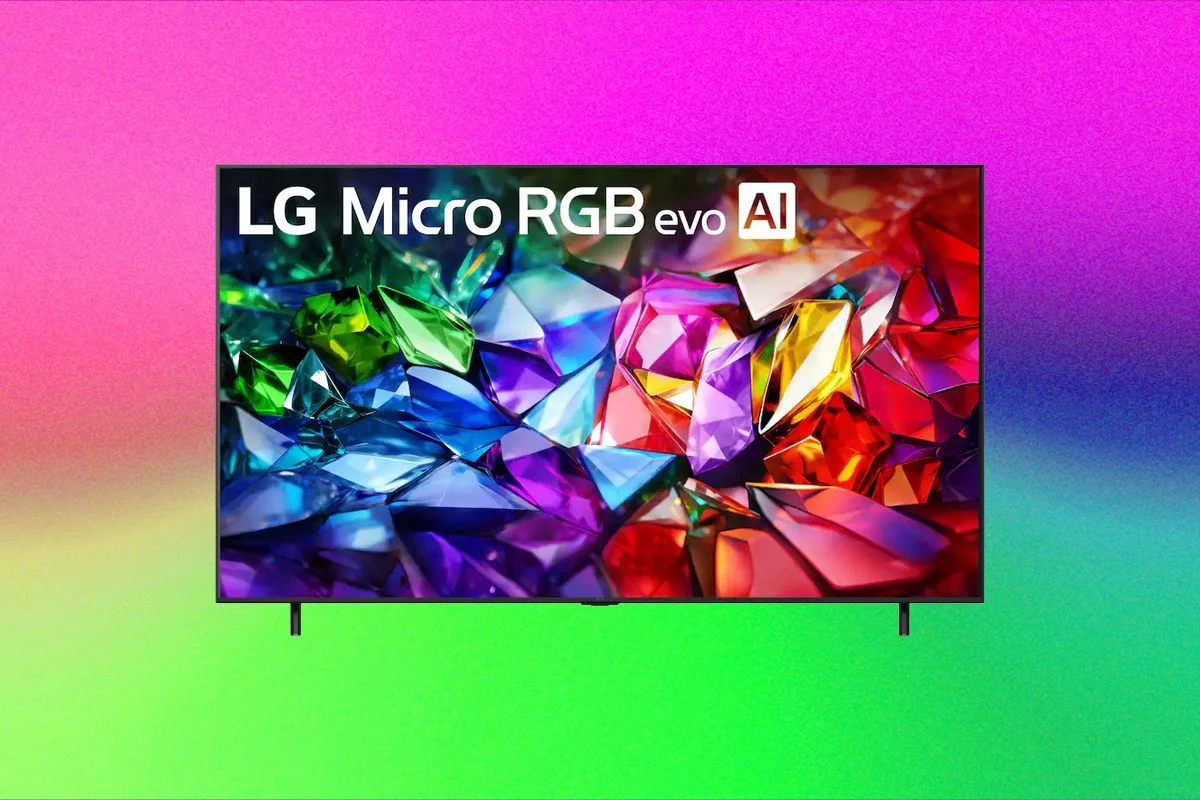
The global television industry has entered a significant transitional phase in 2026 as manufacturers pivot toward RGB LED backlighting, a technology designed to challenge the dominance of Organic Light Emitting Diode (OLED) displays in the premium segment. This new architecture, categorized under various marketing terms such as "mini RGB," "micro RGB," and "True RGB," represents a fundamental shift in how Liquid Crystal Display (LCD) panels are illuminated. By utilizing discrete red, green, and blue light sources at the backlighting stage rather than traditional white or blue LEDs, manufacturers claim to produce pure colors directly at the source, resulting in unprecedented levels of brightness, contrast, and color saturation for non-OLED panels.
Technical Foundation and the Shift to Discrete RGB Backlighting
For decades, the standard for LCD televisions involved a backlight—typically composed of white LEDs or blue LEDs coated with yellow phosphor—shining through a series of filters and liquid crystals to create an image. This process, while efficient, often resulted in "light bleed" and a limited color gamut because the light was being manipulated after its creation.
The 2026 generation of RGB LED televisions eliminates this filtration dependency. In a mini RGB system, the backlight module itself consists of clusters of red, green, and blue LEDs. This allows the television to modulate color at the sub-pixel level before the light even reaches the LCD layer. According to technical specifications released by industry leaders like Hisense and LG, this method allows for a much wider color volume. In practical application, this means that a crimson red or a deep sea blue is generated by the specific activation of red or blue LEDs, rather than filtering a white light source.
Industry analysts note that this technology is an attempt to merge the high-peak brightness of traditional LED-LCDs with the color precision and "infinite" contrast traditionally associated with OLED. While OLED pixels are self-emissive—meaning they can turn off entirely to achieve perfect blacks—RGB LED systems use sophisticated local dimming zones to approximate this effect while maintaining the high-nit output required for well-lit rooms and high dynamic range (HDR) content.
Chronology of the RGB LED Market Entry
The trajectory of RGB LED technology has moved rapidly from experimental laboratories to consumer living rooms over the last 24 months.
- Early 2025: Initial prototypes were showcased at major electronics trade shows. Hisense was among the first to announce a consumer-ready model, the UR9 RGB Mini-LED, signaling a move away from the "Quantum Dot" (QLED) focus of previous years.
- Late 2025: Sony and Samsung began integrating discrete RGB backlighting into their high-end professional monitors, testing the stability of the miniaturized LED modules.
- Early 2026: A coordinated launch across the four major manufacturers—LG, Samsung, TCL, and Sony—brought RGB LED technology to the mainstream market. This period saw the introduction of varying nomenclatures, with Samsung and LG opting for "micro RGB" to emphasize the decreased size of the LED diodes, while TCL and Hisense standardized on "mini RGB."
- Mid-2026: The technology achieved wider distribution across diverse screen sizes, ranging from 50-inch "desktop-friendly" models to massive 115-inch cinematic displays.
Market Analysis: Pricing and Consumer Segmentation
As of the second quarter of 2026, RGB LED televisions occupy a price bracket that sits significantly above standard QLED models and, in many cases, exceeds the cost of flagship OLEDs. The manufacturing complexity of mounting thousands of individual red, green, and blue diodes onto a single backplane remains high, contributing to the premium MSRPs seen across the board.

Current market data indicates the following pricing structures for 65-inch and 75-inch models:
- Entry-Level RGB: Models like the Hisense UR9 have disrupted the market with a starting price of approximately $1,999 for a 65-inch unit.
- Premium Micro RGB: LG and Samsung’s flagship offerings, such as the LG Micro RGB Evo, are currently retailing between $3,200 and $4,500.
- Large Format Displays: TCL has focused on the "home theater" segment, with its 85-inch RM9L series priced near $6,000, and its enthusiast-grade 115-inch model reaching $25,000.
Comparatively, high-end OLED models from the same brands typically retail for approximately $2,700 for a 65-inch size. This suggests that manufacturers are positioning RGB LED not as a budget alternative to OLED, but as a superior choice for specific environments—namely, bright rooms where OLED’s lower peak brightness might struggle against ambient light.
Comparative Performance and Manufacturer Strategies
Each major electronics firm has adopted a unique strategy to differentiate its RGB LED offerings in a crowded 2026 marketplace.
LG and the Customization Factor
LG’s entry, the Micro RGB Evo, focuses on software-driven image optimization. Testing of the 75-inch model reveals that the company has leveraged its WebOS platform to allow for granular control over white balance, saturation, and screen clarity. A notable feature of the 2026 LG line is the "Gallery+" mode, which utilizes the high color accuracy of the micro RGB backlight to display museum-curated artwork, competing directly with "lifestyle" televisions that prioritize aesthetics.
Hisense and the Gaming Integration
Hisense has positioned its UR9 RGB MiniLED as the primary choice for the gaming community. By including a DisplayPort USB-C connection—a rarity in the television market—the UR9 supports 180-Hz native refresh rates, extendable to 330-Hz under Variable Refresh Rate (VRR) conditions. This technical specification targets high-end PC gamers who require low latency and high motion clarity that exceeds the standard 120-Hz or 144-Hz limits of most modern consoles.
TCL and the "Size-First" Approach
TCL has made a strategic decision to restrict its RM9L RGB-Mini LED technology to large-format screens. By starting at 85 inches, TCL is banking on the "immersion factor." Technical evaluations of these large panels suggest that the massive surface area benefits significantly from RGB backlighting, as it reduces the "blotchiness" or "dirty screen effect" sometimes found in large-scale traditional LED panels.
Samsung and Sony: Specialized Enhancements
Samsung’s Micro RGB R95H has introduced AI-driven processing specifically for sports broadcasting. During the 2026 World Cup, Samsung’s "AI Soccer Mode" was utilized to isolate crowd noise from broadcaster commentary while simultaneously enhancing the green saturation of the pitch. Sony, conversely, has integrated its "Sony Pictures Core" app into the Bravia 7 II, allowing for "lossless" 4K streaming at bitrates between 30 and 80 Mbps, aiming to replicate the quality of physical UHD discs.

Installation and Structural Considerations
The shift to RGB LED technology has also necessitated changes in home installation practices. While standard LED TVs have become progressively lighter, the high-density backlighting modules in the 2026 RGB models have added significant weight to larger units.
For instance, the TCL 85-inch RM9L weighs approximately 114 pounds. Professional installers emphasize that for any RGB LED television exceeding 100 pounds, standard single-stud mounting is insufficient. These units require heavy-duty brackets capable of spanning multiple studs to ensure structural integrity. Conversely, smaller 50-inch to 65-inch models remain compatible with standard VESA mounts, though manufacturers still recommend the use of high-quality stud finders to avoid mounting directly into drywall or sheetrock.
Broader Impact and Future Implications
The emergence of RGB LED technology in 2026 signals a potential plateau in the "OLED vs. LED" debate. Instead of one technology replacing the other, the market is diversifying based on use-case scenarios. RGB LED provides a solution for "all-day" viewing in bright environments where the organic compounds in OLED might degrade faster under high-heat and high-brightness conditions.
Furthermore, the longevity of RGB LED panels is expected to exceed that of OLED, as inorganic LEDs are less susceptible to "burn-in" or permanent image retention. This makes the technology particularly attractive for commercial applications, digital signage, and users who frequently watch news channels with static banners.
As manufacturing processes scale throughout the latter half of 2026, industry experts predict a gradual price decline. If entry-level RGB LED models can reach the $1,200 to $1,500 range, they may eventually replace QLED as the standard for mid-to-high-range televisions. For now, however, RGB LED remains a premium evolution of the LCD platform, offering a sophisticated alternative for consumers who demand the highest possible brightness and color accuracy without the specific limitations of organic displays.







