Ali Ikhwan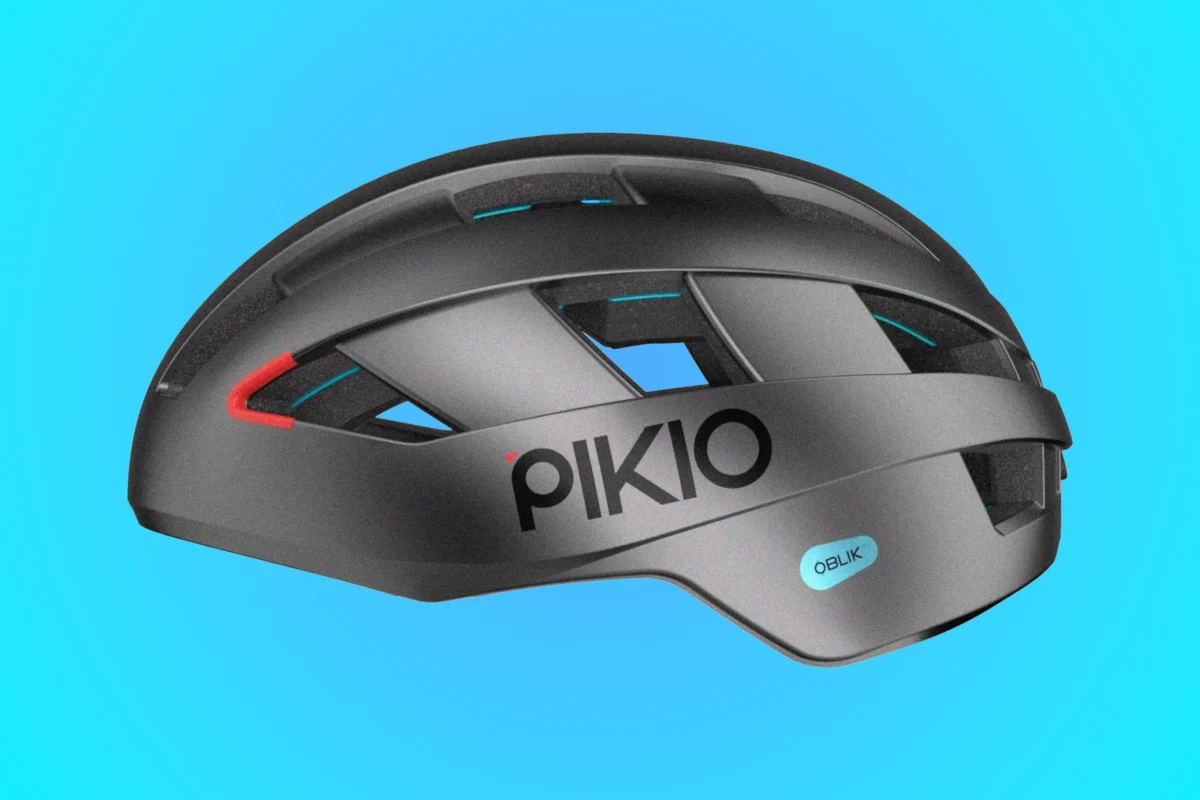
For decades, the standard for bicycle helmet safety was anchored in a singular, rudimentary metric: how well a helmet could withstand a direct, linear impact. The United States Consumer Product Safety Commission (CPSC) has long maintained these foundational standards, focusing on the ability of expanded polystyrene (EPS) foam to crush upon impact and dissipate energy. However, modern biomechanical research has shifted the focus toward a more insidious threat: rotational acceleration. When a cyclist falls, the head rarely strikes the ground at a perfect 90-degree angle. Instead, the oblique nature of most impacts causes the skull to twist violently, leading to brain deformation and stretching that can result in severe concussions and diffuse axonal injuries.
While the CPSC’s regulatory framework has been criticized for lagging behind current medical consensus, the private sector and academic institutions have moved to fill the void. The result is an ongoing arms race in helmet technology, characterized by sophisticated mechanical systems designed to decouple the helmet shell from the rider’s head during an impact.
A Chronology of Innovation and Oversight
The evolution of modern helmet safety can be traced back to 2007, when the Multidirectional Impact Protection System (MIPS) first entered the commercial market. By introducing a low-friction layer that allowed for 10 to 15 millimeters of movement during the critical first milliseconds of a collision, MIPS fundamentally changed the industry standard.
The movement gained significant institutional momentum in 2018 when Virginia Tech launched its helmet STAR (Summation of Tests for the Analysis of Risk) ratings. By testing helmets well beyond the legal minimums mandated by the CPSC, Virginia Tech created a transparent, competitive environment that prioritized injury prevention over mere regulatory compliance.
The impact of this ranking system was immediate. In the initial 2018 testing cycle, only four of the 30 evaluated helmets earned the coveted five-star rating. As manufacturers realized that a high STAR rating was a powerful market differentiator, investment in R&D spiked. By 2025, the landscape had shifted dramatically: 167 out of 272 helmets achieved five-star status. This success forced Virginia Tech to tighten its grading criteria, effectively pushing the industry toward a higher baseline of safety.
The Rise of the Pikio Si Oblik
Against this backdrop of rapid iteration, the Vancouver-based startup Pikio has emerged as a disruptive force. Its flagship road cycling helmet, the Si Oblik, recently achieved a score of 4.61 in Virginia Tech’s testing—a figure that is 32 percent lower than the previous record-holder, the Canyon Deflectr, which scored 6.82. In the context of the STAR rating system, where a lower score indicates superior protection, this represents a quantum leap in performance.
The technology behind this leap is the "Oblik" system. Unlike traditional helmets that utilize a continuous block of EPS foam, the Si Oblik breaks the structure into independently mounted segments. These segments are connected to the base liner via flexible, engineered joints. During an impact, these sections can deform, shift, or even detach independently, effectively managing both linear and rotational energy through complex mechanical displacement.
Daniel Abram, the founder of Pikio and a veteran of helmet research, notes that the design philosophy is rooted in biomimicry. "The system is inspired by the biomechanics of the woodpecker," Abram explains. "Rather than attempting to stop an impact through simple material compression, we are creating a structure that can deflect, rotate, and absorb energy dynamically based on the specific vectors of the collision."
Comparative Analysis of Current Technologies
The cycling industry currently employs several distinct approaches to mitigating rotational energy. MIPS, the market leader, utilizes a slip-plane liner. MIPS Spherical, a more advanced iteration, employs two nested, rotating liners. Meanwhile, 6D Helmets utilizes its Omni-Directional Suspension (ODS) system, which suspends one liner inside another via an array of elastomeric dampers. Another competitor, WaveCel, utilizes a collapsible cellular matrix that flexes and glides to redirect force.
The Pikio Si Oblik’s primary rival in the high-performance segment is the Release Layer System (RLS), found in the Canyon Deflectr and the 3D-printed Hexr Miden. The RLS functions by placing the rotational mechanism on the exterior shell, using polycarbonate ball bearings that allow the outer panels to slide independently. While the RLS has proven highly effective, Pikio’s segmented foam approach suggests that internal decoupling, when executed with high-precision components, may offer superior results in managing the transfer of force to the cranium.
Economic and Manufacturing Challenges
The primary barrier to widespread adoption of this high-end technology is cost. The Pikio Si Oblik retails for $379, a price point that reflects an extraordinarily complex manufacturing process. While a standard high-end cycling helmet typically consists of eight to 10 components, the Si Oblik is constructed from approximately 80 individual parts. Each foam segment requires precise calibration to ensure it reacts correctly under pressure, and the flexible connection points require durable, specialized materials.
This manufacturing complexity has significant implications for the industry. If, as in the case of MIPS, a startup’s proprietary safety technology proves to be the new "gold standard," it is likely that Pikio will move toward a licensing model. By providing their technology to larger, mass-market manufacturers, the company could potentially lower the cost of production and bring this elevated level of safety to a broader segment of the cycling population.
Real-World Performance and Consumer Trust
For the average cyclist, the trade-off between weight, comfort, and protection is a constant negotiation. The Si Oblik weighs 279 grams, which, while competitive, does not set a new weight record. Users have reported that the helmet’s cradle system is ergonomic and the 17-vent design provides adequate thermal regulation.
Pikio is also taking a proactive approach to data collection. Recognizing that laboratory testing is a proxy for, not a replacement for, real-world accidents, the company has implemented a crash-replacement program. For a 30 percent discount on a new unit, customers can return their damaged helmet for analysis. "We have received four helmets back so far," says Abram. "Each one provides us with data on how our technology performed in real-world conditions, which is invaluable for the development of our next generation of products."
The Road Ahead: Implications for Regulatory Standards
The success of the Pikio Si Oblik has placed renewed pressure on regulatory bodies like the CPSC. As independent testing labs demonstrate that helmets can be significantly safer than the current federal minimums, the debate over whether to mandate rotational protection in all helmets will likely intensify.
If the cycling industry follows the trajectory of the automotive industry—where safety features like seatbelts and airbags migrated from luxury vehicles to mass-market standards—the "Oblik" style of protection could eventually become the expected norm rather than an expensive exception. For now, the Si Oblik serves as a proof-of-concept for a new philosophy in head protection: one that treats the helmet not as a passive barrier, but as an active, mechanical system capable of managing the chaotic energy of a high-speed crash.
For a startup with no prior brand recognition, capturing the top spot in the Virginia Tech rankings is a significant milestone. However, the path to commercial viability will require navigating the inherent skepticism of consumers who prioritize established brands. With a second, potentially more accessible design slated for release in early 2026, the company is positioning itself to be more than a one-hit-wonder. Whether Pikio transforms into a household name or remains a high-end niche manufacturer, it has undoubtedly raised the bar for what the industry considers "safe," ensuring that the future of cycling helmet technology will be defined by rigorous data and innovative engineering.