
 Indra Kusuma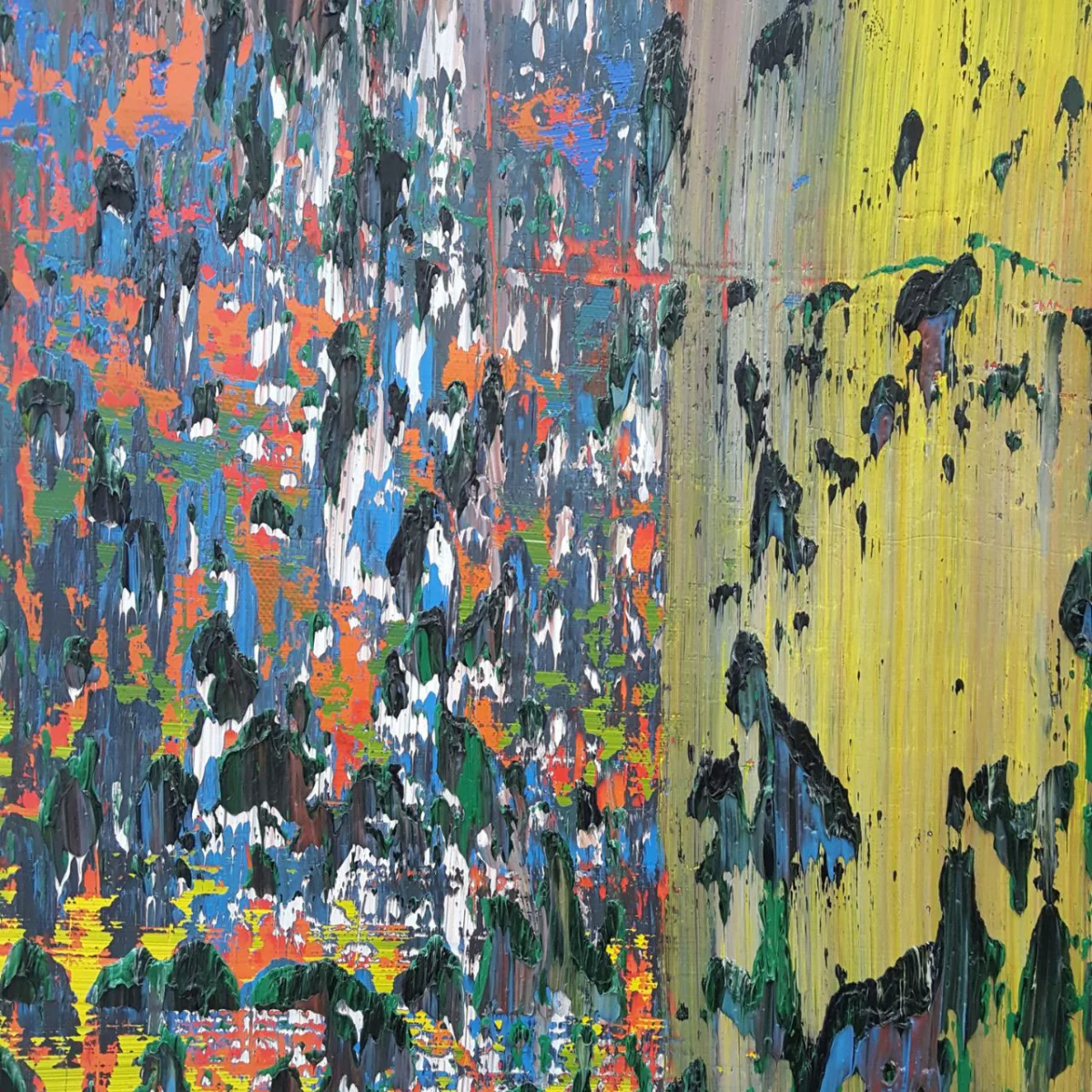
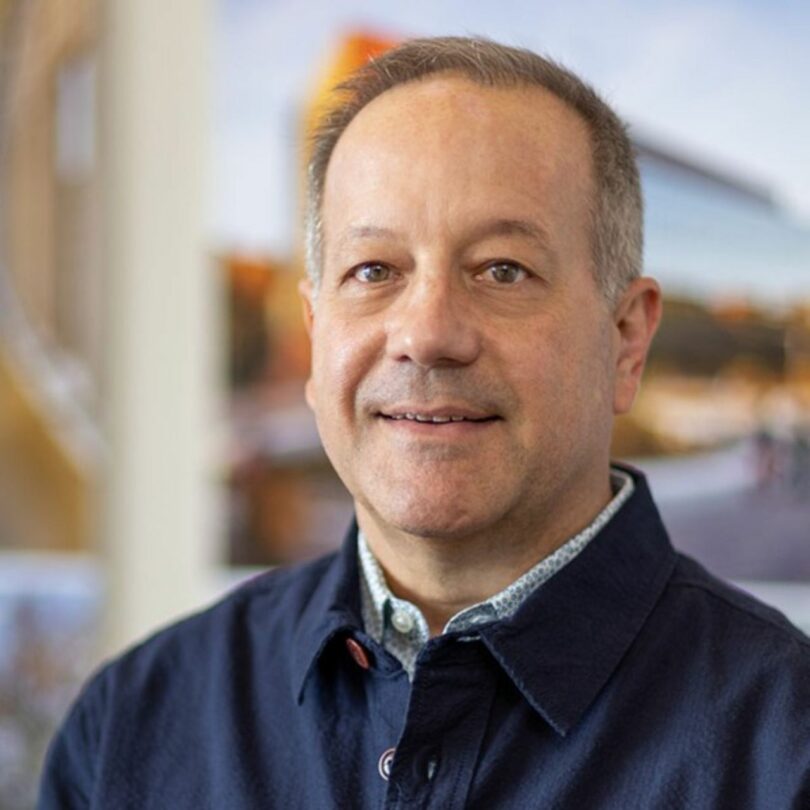
Pennsylvanian Barry Ginder, a distinguished figure whose career seamlessly interweaves the disciplines of architecture and fine art, has cultivated a unique artistic practice profoundly shaped by his academic foundations and an enduring fascination with the urban environment. A graduate of Temple University, Ginder’s architectural training instilled a rigorous understanding of structure, form, and space, while his art professor, Larry Spaid, imparted a pivotal methodology: "He taught me a method of working the full surface repeatedly, and then refining the work until a moment of balance is achieved," Ginder recounts. This iterative process of layered creation and meticulous refinement became a cornerstone of his approach, bridging his dual professional identities.
Ginder’s pursuit of both architecture and art is a natural extension of his desire to document and interpret the world around him. While his artistic output is deeply rooted in his comprehension of structural principles, his work deliberately transcends literal representation. Instead, he crafts abstract interpretations of urban landscapes, which he describes as "excerpts." These artistic expressions take on geometric forms that convey a palpable sense of movement and vitality, reflecting the dynamic essence of city life. This dual disciplinary engagement places Ginder within a rich tradition of architect-artists, from Le Corbusier’s paintings and sculptures to Zaha Hadid’s fluid architectural designs that often mirrored her early artistic sketches, demonstrating how an understanding of spatial dynamics and material forms can manifest across different creative outputs.
The Art of Space and Place: Philadelphia’s Enduring Influence
Unsurprisingly, Ginder’s artistic practice centers on the profound experience of space—how individuals navigate, interact with, and are connected by their environments. His work strives to encapsulate the inherent energy of the Mid-Atlantic region, with a particular affection for his native Philadelphia. The city, a vibrant tapestry of history and modernity, serves as an inexhaustible muse. Ginder employs a sophisticated interplay of color and layered surfaces in his paintings, creating a depth that mirrors the rich and varied textures found within Philadelphia’s urban fabric.
His distinctive technique involves applying acrylic paint to plexiglass, a medium chosen for its unique properties. Before painting, Ginder meticulously sands the plexiglass surface, transforming its inherent smoothness and creating a receptive ground for his layered compositions. This preparation allows for a nuanced interaction between light and pigment, enhancing the translucency and depth of the final piece. Vibrant colors are strategically paired with an array of lines, ranging from sharply defined to broadly gestural, contributing to the work’s energetic quality. These meticulously constructed layers are designed to shift and interact with the viewer’s changing perspective, producing an optical dynamism that further amplifies the sense of urban diversity and complexity. The use of plexiglass, often associated with architectural models or industrial design, also subtly reinforces the structural underpinnings of his artistic vision, allowing light to permeate and activate the multiple planes of color and form.
The Genesis of Form: From Sketchbook to Proposal
For Ginder, sketchbooks are indispensable tools in his creative continuum, serving as the fertile ground where nascent concepts are nurtured and developed through drawing. "Whether it’s a quote, song, or a building detail, I trace the idea and record it on paper," he explains. This practice of capturing transient inspirations and tangible observations allows for a period of gestation, where initial thoughts evolve into more fully formed ideas. "Over time, that process develops meaning and becomes a proposal," he notes, underscoring the iterative and analytical nature of his artistic and architectural inquiry. The sketchbook, therefore, functions as a critical bridge, translating raw sensory input and abstract notions into concrete visual language, a practice essential for both drafting architectural blueprints and conceptualizing a painting. This meticulous record-keeping and idea development echo the rigorous design process in architecture, where initial sketches and conceptual diagrams gradually coalesce into detailed plans.
Insights from "Friday Five": A Panorama of Influences
In a recent feature, Ginder offered a glimpse into the diverse wellsprings of his inspiration through the "Friday Five" series, revealing a curated selection of artists, designers, and personal moments that resonate deeply with his creative ethos.
-
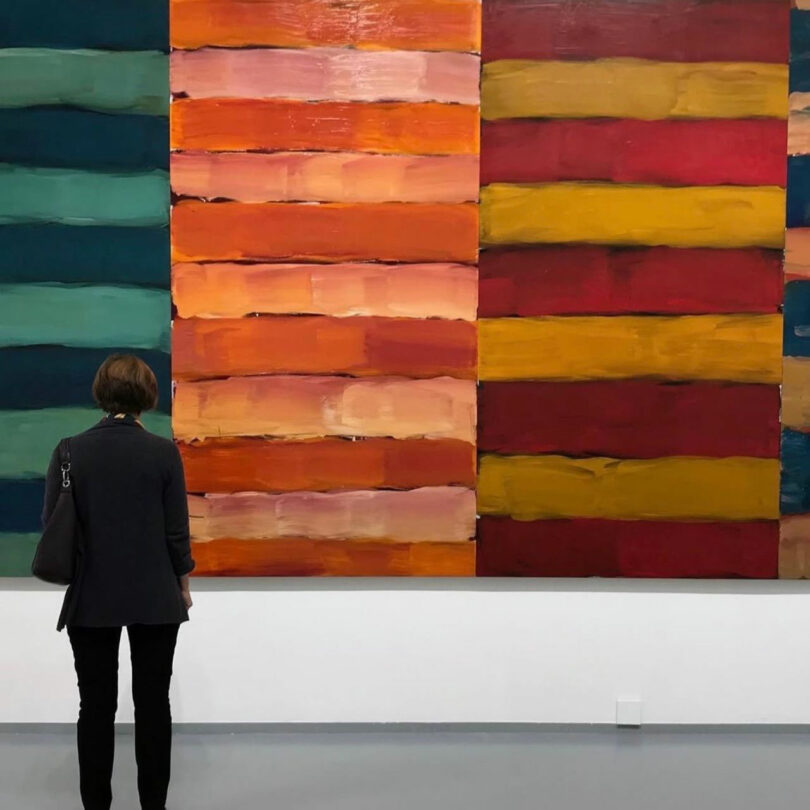
Sean Scully: Ginder expresses profound admiration for the "intense depth" of Scully’s paintings, the "power of painting the same image repeatedly," and the "strength of both large and small works." Sean Scully, an Irish-born American artist renowned for his abstract paintings, particularly his striped and block-like compositions, explores themes of structure, emotion, and the spiritual. His monumental scale and rigorous exploration of color and form, often through repetition, echo Ginder’s own dedication to layered surfaces and the pursuit of balance through iterative work. Scully’s ability to imbue simple geometric forms with profound emotional resonance and visual weight undoubtedly informs Ginder’s approach to abstract urban landscapes, where geometric excerpts pulse with life.
-
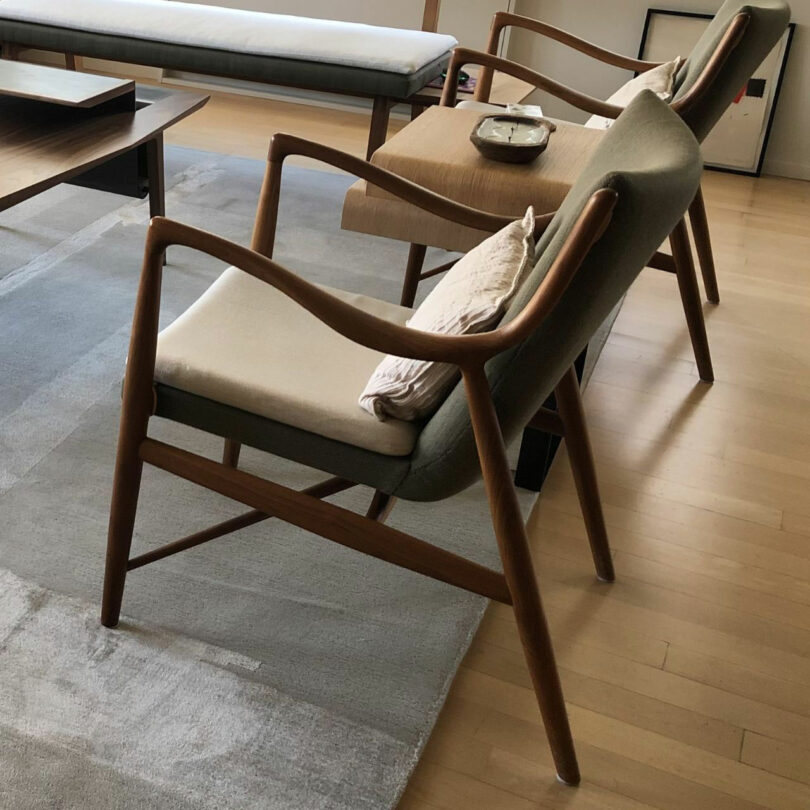
Finn Juhl – Chair 45: Ginder celebrates Finn Juhl’s Chair 45 as "a revolutionary chair design, one of the first to detach the backrest and seat from the frame, creating a floating effect." He lauds its "iconic organic form with meticulous joinery" and describes it as a "timeless design." Finn Juhl, a pioneer of Danish Modern design, introduced a sculptural sensibility to furniture that broke from the functionalist norms of his era. Chair 45, designed in 1945, is a seminal piece, showcasing exposed wooden frames and a visually ‘floating’ upholstery, emphasizing craftsmanship and organic contours. This appreciation for innovative structural solutions, material honesty, and the harmonious integration of form and function directly aligns with Ginder’s architectural principles and his artistic pursuit of geometric balance and refined surfaces.
-
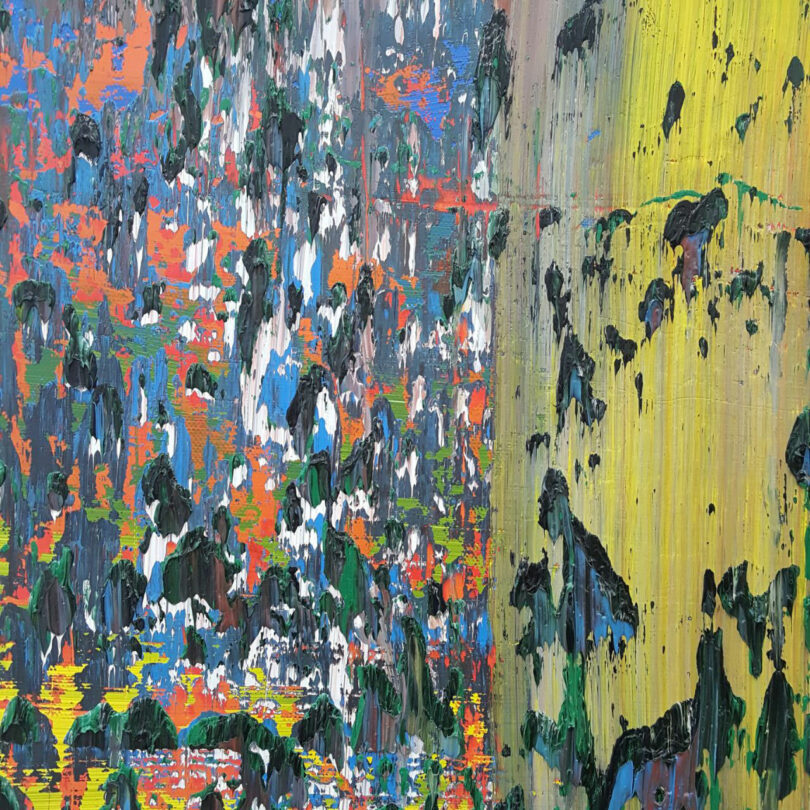
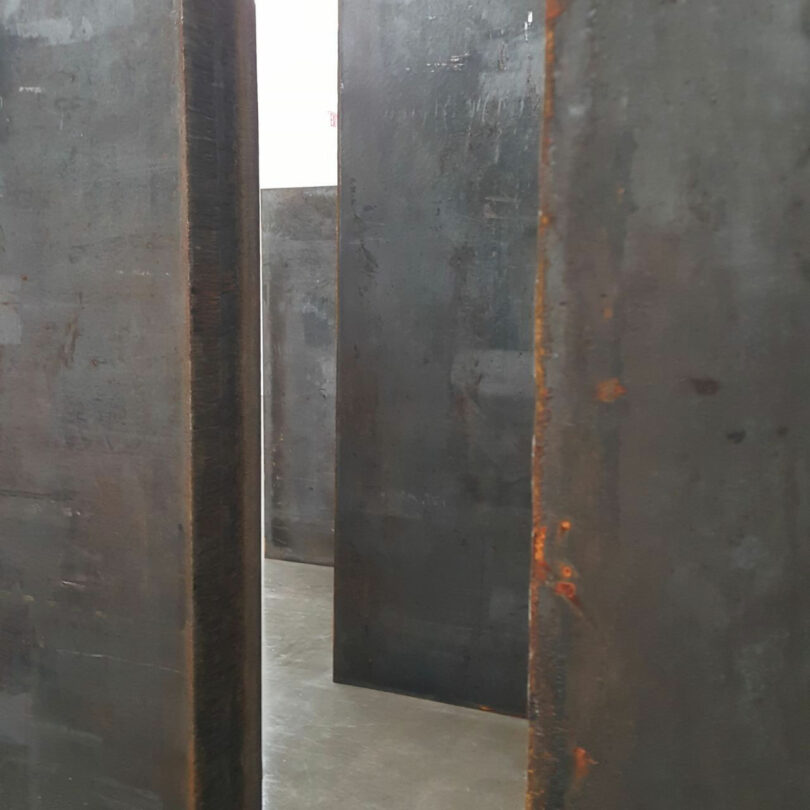
Gerhard Richter + Richard Serra (2016): Reflecting on a dual exhibition he witnessed in 2016 at the Marian Goodman Gallery and the Gagosian Gallery, Ginder describes a "strong resonance in the similarity of the work." He felt that "steel and stretched paint felt like parallel expressions of pure power and emotion." Gerhard Richter, a German artist, is celebrated for his diverse oeuvre, encompassing photorealistic paintings, abstract canvases created with squeegees, and glass installations. Richard Serra, an American minimalist sculptor, is famous for his large-scale, site-specific installations of rolled steel, which engage viewers in a visceral experience of space, mass, and gravity. The juxtaposition of Richter’s painterly abstractions, often characterized by layered, scraped surfaces, and Serra’s monumental steel forms, which manipulate perception and movement, speaks to Ginder’s fascination with material expression, the experience of space, and the emotional impact of scale and texture. The perceived "similarity" in their "pure power and emotion" across such disparate media underscores Ginder’s own interdisciplinary perspective.
-
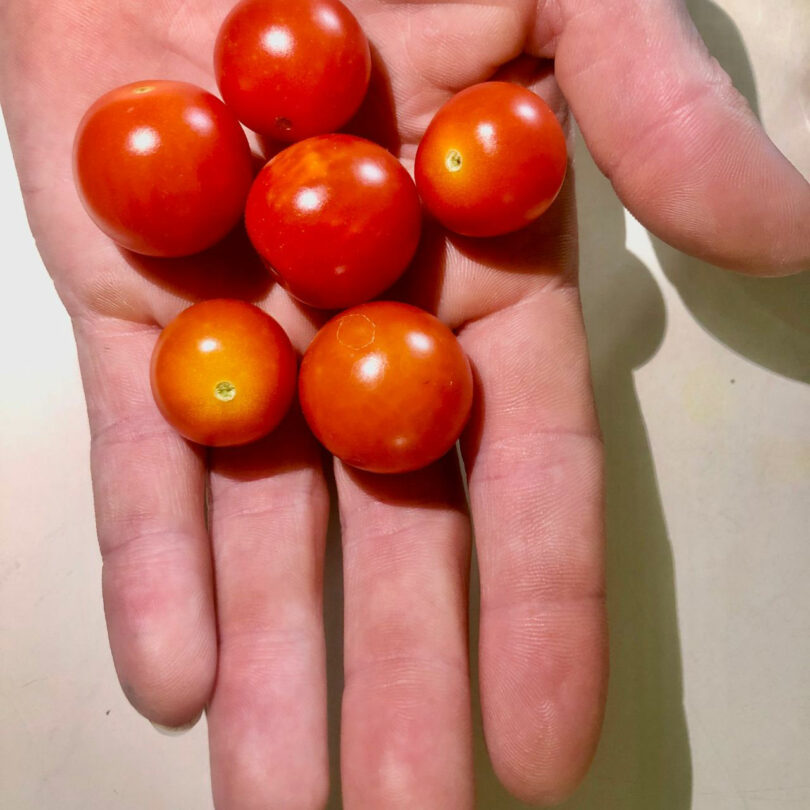
My Son’s Hands: On a deeply personal note, Ginder identifies his son as a profound source of inspiration. "Through his trials, he has risen to a level often only achieved by wise old souls," Ginder shares, highlighting the quiet strength and resilience he observes. This inspiration manifests "in simple, everyday ways, like the gathering of a daily harvest from his garden." This personal reflection grounds Ginder’s often abstract and urban-focused work in the tangible, human experience. It suggests that even the most abstract artistic endeavors are ultimately informed by personal relationships, empathy, and the quiet beauty found in domestic life and nature’s cycles. The hands, a universal symbol of creation and sustenance, offer a poignant counterpoint to the more intellectual or formal inspirations.
-
Sunlight on My Paintings: Light is identified as a "primary source of inspiration" for Ginder. He frequently finds his best source material in "cityscapes drenched in light." In his plexiglass work, the "continual layering of the surface captures subtleties of depth and transparency, resonating with surfaces saturated in light or shade." The ultimate creative moment for Ginder occurs "when sunlight falls onto a completed painting, creating another composition." This profound sensitivity to light is central to both his architectural and artistic practices. In architecture, light shapes spatial perception and mood; in painting, it transforms the artwork itself. The dynamic interplay of light with his layered plexiglass pieces creates an ephemeral, ever-changing dimension, where shadows and highlights reveal new forms and depths, mirroring the transient beauty of urban light. This echoes the Impressionist masters’ dedication to capturing the fleeting effects of light and atmosphere, but with a modernist, structural sensibility.
Architectural Portfolio: Integrating Form and Function
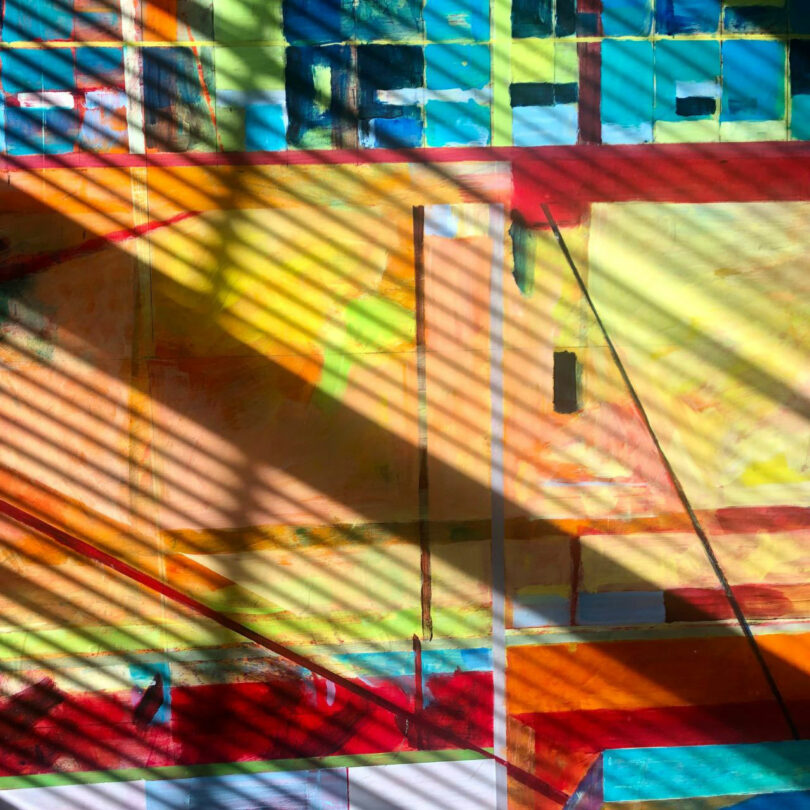
Ginder’s architectural endeavors, often in collaboration, exemplify the same meticulous attention to detail, material integrity, and experiential quality that characterize his art.
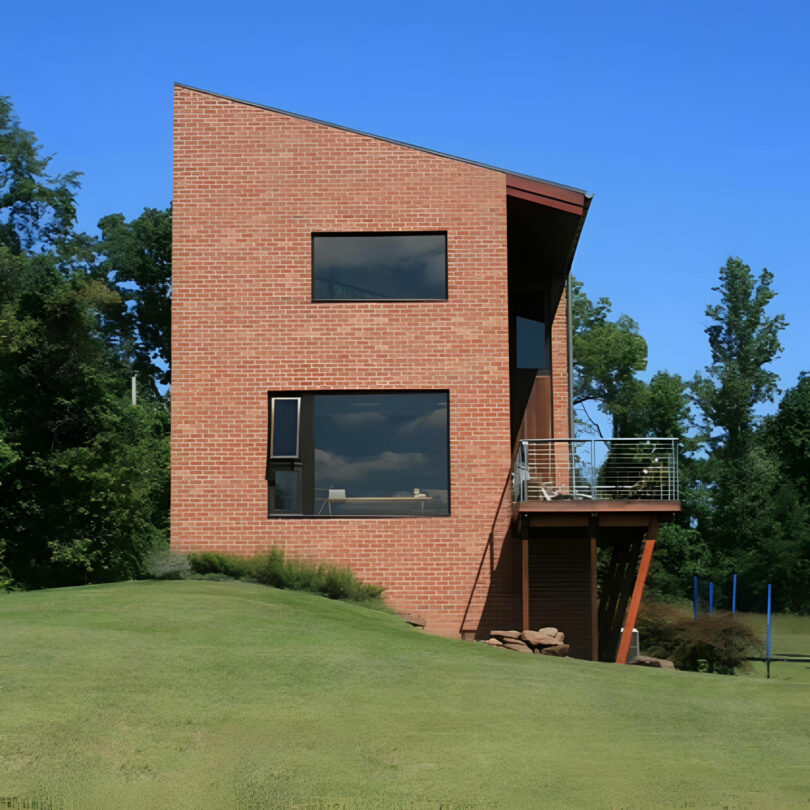
B+G Residence in Mechanicsburg, Pennsylvania: Designed with Suzanne Brandt as part of Brandt+Ginder Architecture, this residence stands as a testament to Ginder’s design philosophy. The house, situated on 2.5 acres, was conceived "not by style, but by the experience of light, wind, exterior views, and interior relationships." It embodies a "modern home designed with simplicity and rigor, constructed with traditional material detail in a modern aesthetic." The choice of materials—handmade brick, mahogany siding, a metal roof, and oversized windows—culminates in what Ginder describes as a "contemporary farmhouse." This dwelling is conceived as a "handmade object in the landscape," offering "vista-like views" of the surrounding terrain and "interior framed views toward the extended landscape." The design prioritizes a harmonious relationship with its environment, allowing natural elements to shape the inhabitants’ experience, a principle directly mirrored in his artistic preoccupation with light and urban vistas.
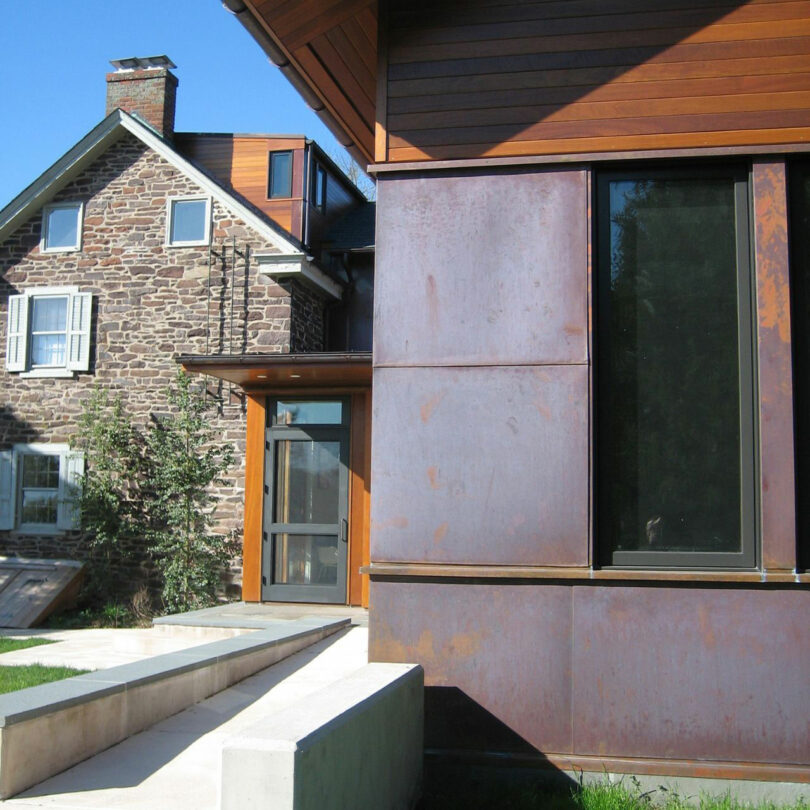
Private Residence (Renovation): This project involved the renovation of a historic stone building, notable for its reddish-purple coloration. The challenge and opportunity lay in designing an addition that would respectfully engage with the existing structure while introducing a contemporary element. Ginder’s solution was to clad the addition in copper, a material chosen for its unique ability to patinate over time, eventually developing a similar purplish tone to the original stone. This thoughtful material selection created a "modern interpretation of the original stone materiality," fostering a dialogue between past and present. The integration was further reinforced by carrying the copper aesthetic into the kitchen, ensuring a seamless connection between the new intervention and the venerable existing structure. This project exemplifies Ginder’s ability to synthesize historical context with modern design, prioritizing material honesty and an evolving aesthetic.
Artistic Portfolio: Urban Abstractions and Layered Narratives
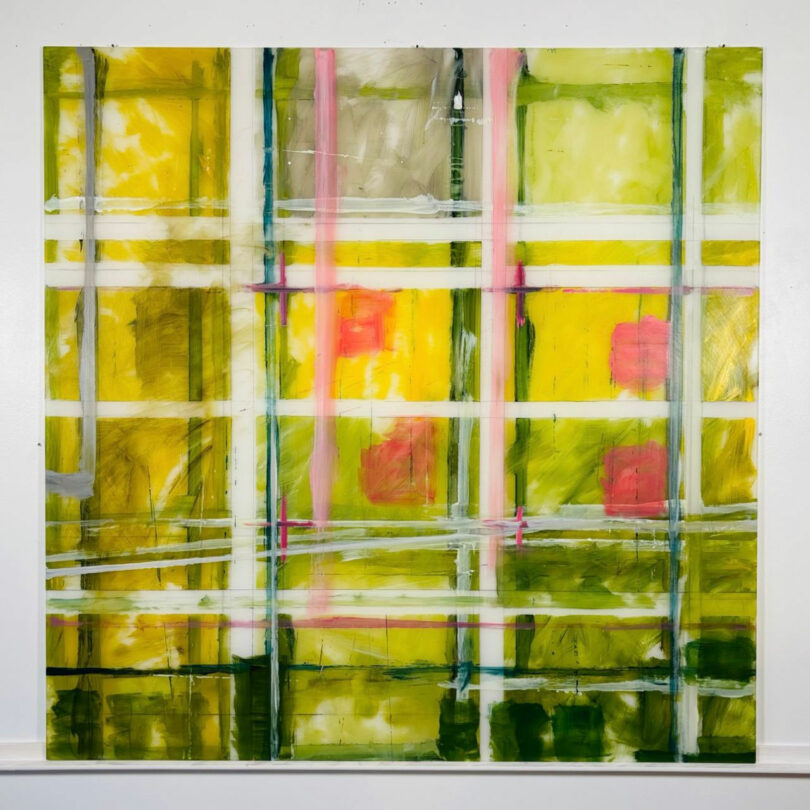
Ginder’s paintings are vibrant dialogues with the urban environment, translating its complexities into compelling abstract forms.
2026 View East no3: This painting represents a "zoomed-in detail from a continuing series of paintings based on a particular view of Philadelphia." The view, deeply personal to Ginder from his Temple University days, is observed from the 11th floor in West Philadelphia, looking east. He notes how "throughout the day, the scene changes, especially in the afternoon as the light shifts." This piece is one of many iterations exploring that same dynamic vista. The concept of a continuing series allows Ginder to meticulously dissect and reassemble the visual information of a single urban scene, much like an architect might study a site from multiple perspectives, revealing the transient nature of light and form within the fixed architectural grid of the city.
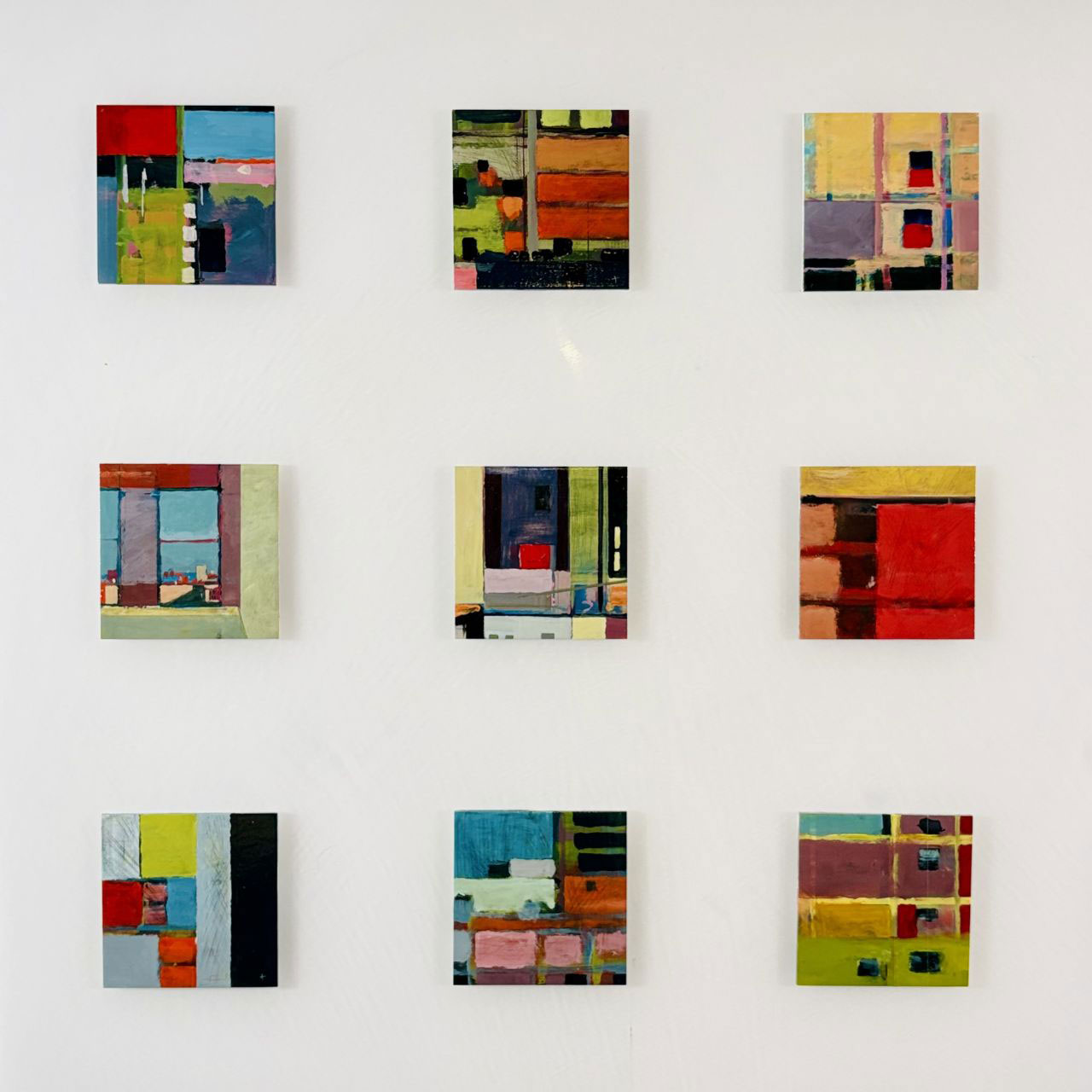
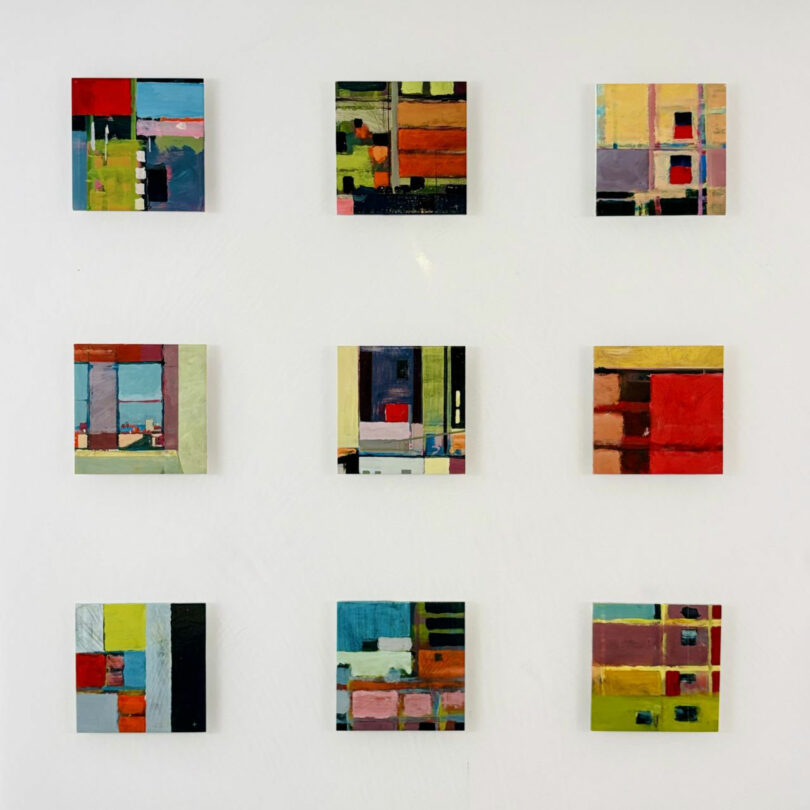
3 Squared Painting: Part of a larger cityscape series, this work is a "nine-squared composition based on the View East series." Unlike the zoomed-in focus of "2026 View East no3," this painting offers a "more zoomed out" perspective, presenting an "actual city view rather than a graphic interpretation." It utilizes the "same Philadelphia view that runs through the series," but with a broader scope. The grid format itself is a foundational element in both modern art and architectural planning, suggesting order and structure amidst the complexity of urban life. By presenting the view in a nine-square grid, Ginder explores how a comprehensive understanding of a cityscape can be built from multiple, interconnected fragments, blurring the lines between direct observation and abstract interpretation.
Favorite Bench: This piece of furniture design encapsulates Ginder’s philosophy of achieving maximum impact with minimal elements. He describes it as a bench designed with "elegant details and minimal parts to create the maximum outcome." The "simple leg structure is shaped and folded for support," showcasing an economical yet robust design. The cushions are intended for "comfort and perching, but not lounging," defining it as a "conversation bench." An "extended wood seat becomes a place for objects," adding functionality and an opportunity for personalization. Crafted from "two materials, walnut and textured cotton upholstery," this bench is a "handcrafted into a modern bench." It is a sculptural object that also serves a practical purpose, demonstrating Ginder’s mastery of form, material, and user experience, perfectly aligning his architectural precision with his artistic sensibility for balanced composition and tactile quality.
Conclusion: A Unified Vision of Space and Form
Barry Ginder’s remarkable career stands as a testament to the synergistic power of integrating architectural rigor with artistic expression. His work, whether an abstract painting pulsating with urban energy or a meticulously designed residence harmonizing with its landscape, consistently explores the profound relationship between humans and their built and natural environments. Through his unique approach to layered surfaces, vibrant color palettes, and a deep appreciation for the transformative power of light, Ginder not only documents the world but also reinterprets it, inviting viewers and inhabitants alike to experience space with renewed perception. His artistic journey, informed by a blend of academic discipline, personal inspiration, and an unwavering commitment to refinement, offers a compelling vision where the analytical mind of an architect and the intuitive spirit of an artist coalesce into a singular, powerful creative force, enriching both the art world and the discourse on contemporary design.







