rifanmuazin
The digital landscape, ever-evolving and increasingly competitive, has rendered sophisticated social media analytics indispensable for any entity aiming to thrive online. What once appeared as a perplexing dichotomy of wildly successful and unexpectedly flopped content, as observed by early consistent LinkedIn posters, has been systematically demystified through the diligent application of data analysis. The journey from posting with hope to strategizing with certainty marks a fundamental shift, powered by the granular insights derived from social media analytics. This critical evolution has illuminated crucial patterns: identifying the most effective content hooks, pinpointing optimal posting times for maximum engagement, and determining ideal post lengths. The era of guesswork has yielded to an era of data-driven precision, where every click, like, share, and comment provides actionable intelligence.
The Evolution of Social Media Analytics: From Vanity Metrics to Strategic Insights
The genesis of social media analytics can be traced back to the early 2000s, coinciding with the rise of platforms like MySpace and later, Facebook and Twitter. Initially, businesses and individuals alike focused on rudimentary "vanity metrics" – raw follower counts, likes, and basic shares. These early indicators, while providing a superficial sense of popularity, offered little in the way of strategic guidance. Marketers were often left wondering why certain content resonated and how to replicate success.
The mid-2010s saw a significant maturation in the field. As social media solidified its position as a primary marketing channel, the demand for deeper insights grew. Companies began to seek answers beyond mere engagement numbers, delving into audience demographics, sentiment analysis, and the customer journey influenced by social interactions. The sheer volume of data generated by billions of users necessitated more robust tools capable of processing, interpreting, and presenting this information in an understandable format. This period also witnessed the increasing integration of social media data with broader marketing objectives, linking social performance to website traffic, lead generation, and ultimately, sales.

Today, social media analytics has moved beyond descriptive reporting (what happened) to diagnostic (why it happened), and increasingly, into predictive (what will happen) and prescriptive (what to do) territories. This progression has been fueled by advancements in artificial intelligence (AI) and machine learning (ML), enabling tools to identify complex patterns, forecast trends, and even recommend optimal strategies. The market for social media analytics tools is projected to grow substantially, with reports estimating it to reach over $20 billion globally by 2030, underscoring its pivotal role in future business strategies.
The Limitations of Native Analytics and the Rise of Third-Party Solutions
While all major social media platforms furnish native analytics dashboards, their utility often falls short for serious marketers and businesses operating across multiple channels. These built-in insights, though free and readily accessible, present several critical drawbacks.
Firstly, native dashboards are inherently siloed. Managing a multi-platform strategy – common for most businesses today – necessitates a fragmented approach to data collection. Manually collating and cross-referencing insights from Instagram, LinkedIn, TikTok, X (formerly Twitter), and YouTube dashboards is a monumental, time-consuming task. This manual aggregation not only consumes valuable resources but also introduces the risk of human error and makes a holistic, cross-channel view nearly impossible.
Secondly, native analytics often suffer from frustrating "blind spots." For instance, LinkedIn’s native insights notably lack timestamps on past posts, severely impeding a marketer’s ability to precisely determine optimal posting times for their specific audience. Similarly, granular competitive analysis or deep audience sentiment tracking often remains outside the purview of platform-provided data. Industry experts frequently point out that while native insights provide a basic health check, they rarely offer the comprehensive diagnostic capabilities required for strategic optimization. "Relying solely on native analytics is akin to driving with only a speedometer and no rearview mirror," states a hypothetical industry analyst, emphasizing the limited perspective.

This inherent inadequacy of native tools has driven the rapid proliferation and sophistication of third-party social media analytics software. These dedicated solutions are engineered to consolidate data from diverse platforms into unified dashboards, offering a comprehensive, cross-channel perspective. They fill critical data gaps, provide advanced analytical capabilities, and streamline the reporting process, allowing marketers to transition from data collection to strategic action.
Demystifying Social Media Analytics: Definitions and Typologies
At its core, social media analytics refers to the process of collecting, measuring, analyzing, and interpreting data from social media platforms to understand user behavior, content performance, and overall social media impact. It moves beyond simple "how many likes?" to answer strategic questions such as: "Which content themes resonate most with my target audience?", "What are the optimal times to post for maximum reach and engagement?", "How does my performance compare to competitors?", and "What is the sentiment surrounding my brand online?"
Crucially, it’s important to distinguish between analytics and reporting, though these terms are often used interchangeably. Analytics is the investigative phase – the act of gathering and measuring data to answer "what happened?" and "why did it happen?" It involves digging into the raw numbers, identifying trends, and uncovering causal relationships. Reporting, conversely, is the presentation phase. It takes the insights gleaned from analytics and structures them into a clear, concise, and shareable format for stakeholders, clients, or internal teams. The best social media analytics tools seamlessly integrate both functions, pulling raw data and then organizing it into intuitive dashboards, customizable PDFs, or branded presentations.
Understanding the different types of analytics further refines the strategic application of these tools:
- Descriptive Analytics: This is the foundational level, answering "what happened?" It involves basic metrics like impressions, reach, likes, comments, shares, follower growth, and website clicks. Most native dashboards primarily offer descriptive analytics.
- Diagnostic Analytics: Moving a step deeper, diagnostic analytics addresses "why did it happen?" It examines the factors contributing to performance. For example, analyzing why a particular post went viral (e.g., content format, specific hook, posting time) or why another failed. This often involves segmenting data by content type, audience demographics, or campaign.
- Predictive Analytics: This advanced form seeks to answer "what will happen?" By analyzing historical data and identifying patterns, predictive analytics attempts to forecast future trends, audience behavior, or content performance. Tools leveraging AI and machine learning are key to this capability, helping marketers anticipate shifts and prepare proactive strategies.
- Prescriptive Analytics: The most sophisticated level, prescriptive analytics, answers "what should I do?" It not only predicts future outcomes but also recommends specific actions to achieve desired results. This often involves AI-driven recommendations for content creation, optimal posting schedules, or audience targeting. While less common in standard tools, premium solutions are increasingly incorporating prescriptive elements.
The majority of social media analytics tools available today excel in descriptive and diagnostic analytics, providing immense value to creators and marketers. Premium, enterprise-level solutions like Socialinsider and Talkwalker, however, venture into the predictive and prescriptive realms, albeit at a higher cost.
Navigating the Landscape: Dedicated Tools vs. Social Media Management Suites
The market offers two primary categories of social media analytics solutions: dedicated analytics tools and comprehensive social media management software (SMMS) that include analytics features. The choice between them hinges on an organization’s specific needs and operational scale.
Social Media Management Software (SMMS) integrates analytics with a broader suite of functionalities, such as post scheduling, content curation, audience engagement (social inbox), and team collaboration. These all-in-one platforms are typically ideal for:
- Solo Creators and Influencers: Who manage their entire social presence and benefit from a streamlined workflow.
- Small to Medium-Sized Businesses (SMBs): With limited resources, where consolidating tools reduces complexity and cost.
- Small Marketing Teams: Seeking efficiency by managing scheduling, engagement, and performance tracking from a single interface.
The primary advantage of SMMS is convenience. Having all social media operations under one roof simplifies workflows, reduces context switching, and often provides a more unified view of content performance in relation to publishing efforts.
Dedicated Social Media Analytics Tools, on the other hand, specialize purely in data measurement, analysis, and reporting. They are generally chosen when:
- Existing workflows already cover other aspects (e.g., scheduling is handled manually or by another tool).
- Highly specific, deep insights are required that management tools might not provide (e.g., advanced competitive benchmarking, in-depth sentiment analysis, hyper-specific market research).
- Large Agencies or Enterprises need robust reporting for diverse clients, extensive competitive intelligence, or sophisticated trend forecasting.
For many social media professionals, starting with an SMMS that includes solid analytics (like Buffer) is a pragmatic approach. This allows for testing the waters and establishing core workflows. Should the need for more specialized, in-depth analysis arise, a dedicated analytics tool can always be integrated as a supplementary solution. This phased adoption prevents over-investment in features that may not be immediately necessary.
Key Considerations for Selecting a Social Media Analytics Tool
Choosing the right social media analytics tool is a strategic decision that can significantly impact marketing effectiveness. Several factors warrant careful consideration:
- Supported Platforms: Ensure the tool integrates with all the social media channels relevant to your strategy (e.g., Facebook, Instagram, LinkedIn, TikTok, X, YouTube, Pinterest, Bluesky, Threads, Mastodon, Google Business, Yelp, Reddit).
- Ease of Use and Interface: An intuitive, user-friendly dashboard is crucial. The tool should present data clearly, making it easy to extract insights without a steep learning curve. Complex tools can become a barrier rather than an enabler.
- Depth of Analytics: Assess whether the tool offers the specific metrics and analytical capabilities you need. This includes basic descriptive metrics, diagnostic features like content type analysis, and potentially advanced predictive or prescriptive insights.
- Reporting Capabilities: Evaluate the flexibility and customization of reports. Can you create branded reports? Are they exportable in various formats (PDF, CSV)? Are there automated reporting options for recurring client or stakeholder updates?
- Integration with Other Tools: Consider its compatibility with your existing marketing tech stack, such as CRM systems, other analytics platforms (Google Analytics), or advertising dashboards. Seamless integration minimizes data silos and provides a holistic view.
- Competitive Analysis Features: If understanding competitor performance is critical, look for tools that offer robust competitive benchmarking, allowing you to track competitor content, engagement, and growth.
- Social Listening and Sentiment Analysis: For brands that need to monitor brand mentions, track public sentiment, or manage crises, features that analyze qualitative data from comments and conversations are vital.
- Pricing and Scalability: Align the tool’s cost with your budget and evaluate its scalability. Can it grow with your team and evolving needs? Many tools offer tiered pricing based on the number of profiles, users, or data volume.
- Customer Support: Responsive and knowledgeable customer support can be invaluable, especially when encountering technical issues or needing assistance with data interpretation.
Before committing, leverage free trials or free tiers to test 2-3 tools that best match your initial criteria. This hands-on experience will provide invaluable insight into their practical usability and feature relevance.
Spotlight on Leading Social Media Analytics Solutions
The market boasts a diverse array of social media analytics tools, each tailored to specific use cases and organizational sizes. Here’s a closer look at some prominent options:
-
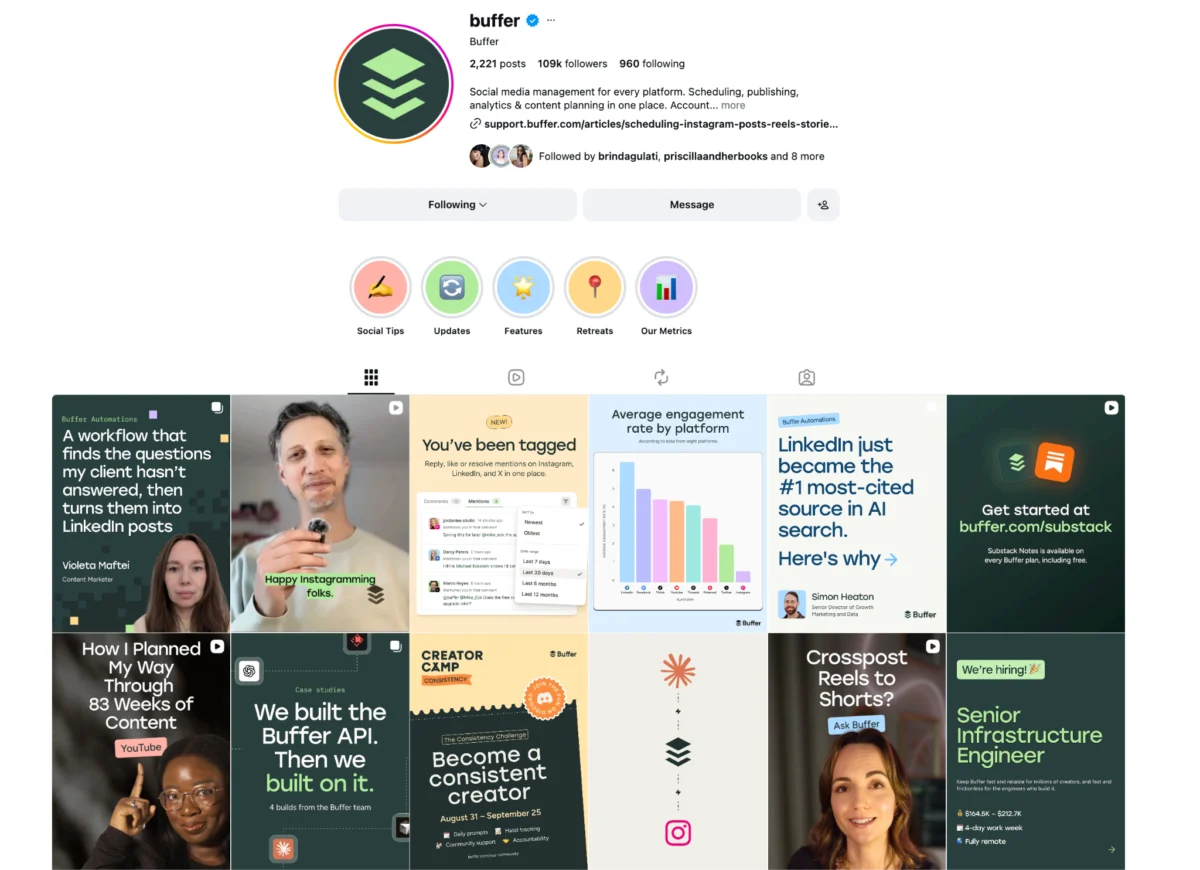
Buffer: The Go-To for Creators and Small Teams
Buffer stands out for its intuitive analytics dashboard, making it an excellent choice for creators and small marketing teams seeking actionable insights without extensive data analysis expertise. Its strength lies in immediately highlighting crucial metrics: identifying the best post types, optimal posting days, and most effective content formats. Instead of merely presenting raw numbers, Buffer helps users interpret the data, providing recommendations like "carousel posts perform best" or "Tuesdays yield highest engagement."
Beyond these strategic summaries, Buffer offers detailed breakdowns of reach, impressions, engagement rates, click-through rates, and audience growth. Its reporting feature allows for the creation of professional, branded reports with minimal effort, eliminating the tedious manual aggregation of data. The free plan provides basic analytics for up to three social media platforms, with advanced features accessible in paid plans starting at $6/month. Supported platforms are extensive, including Bluesky, Facebook, Google Business, Instagram, LinkedIn, Mastodon, Pinterest, Threads, TikTok, X, and YouTube. -
Rival IQ: In-Depth Competitive Intelligence for Large Agencies
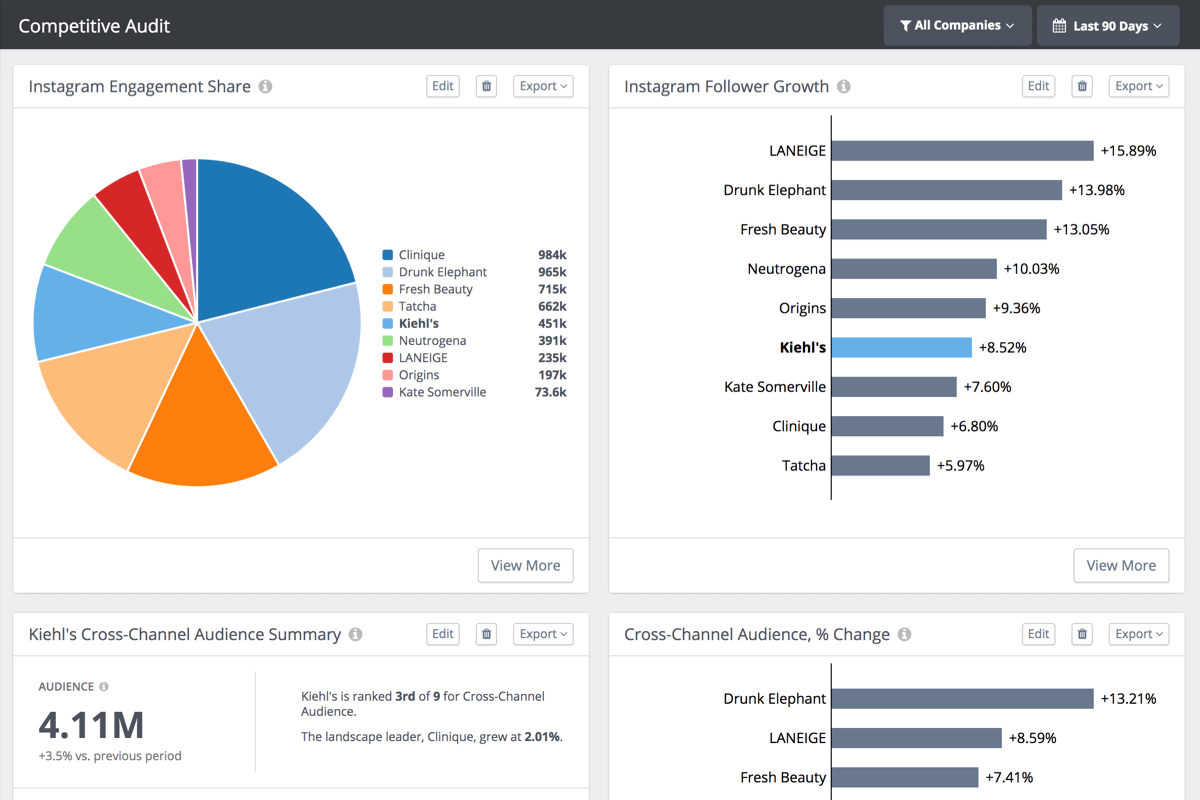
Designed with the complex needs of large social media agencies in mind, Rival IQ excels in comprehensive competitive benchmarking. It integrates deep social media analytics with robust competitor analysis and social listening functionalities. Agencies can track not only their clients’ performance but also benchmark it against industry peers and direct competitors.
Rival IQ’s competitive insights are granular, offering analyses of competitor content strategies, audience engagement patterns, and even identifying potentially boosted posts. It compares brand positioning elements like social media bios and profiles, providing a holistic view of the competitive landscape. This data is critical for agencies to inform client strategies, identify market gaps, and justify social media investments. Its pricing, starting at $239/month, reflects its enterprise-grade features, with a 14-day trial available. It supports Facebook, Instagram, LinkedIn, TikTok, X, and YouTube. -
Keyhole: Market Research and Historical Data Powerhouse
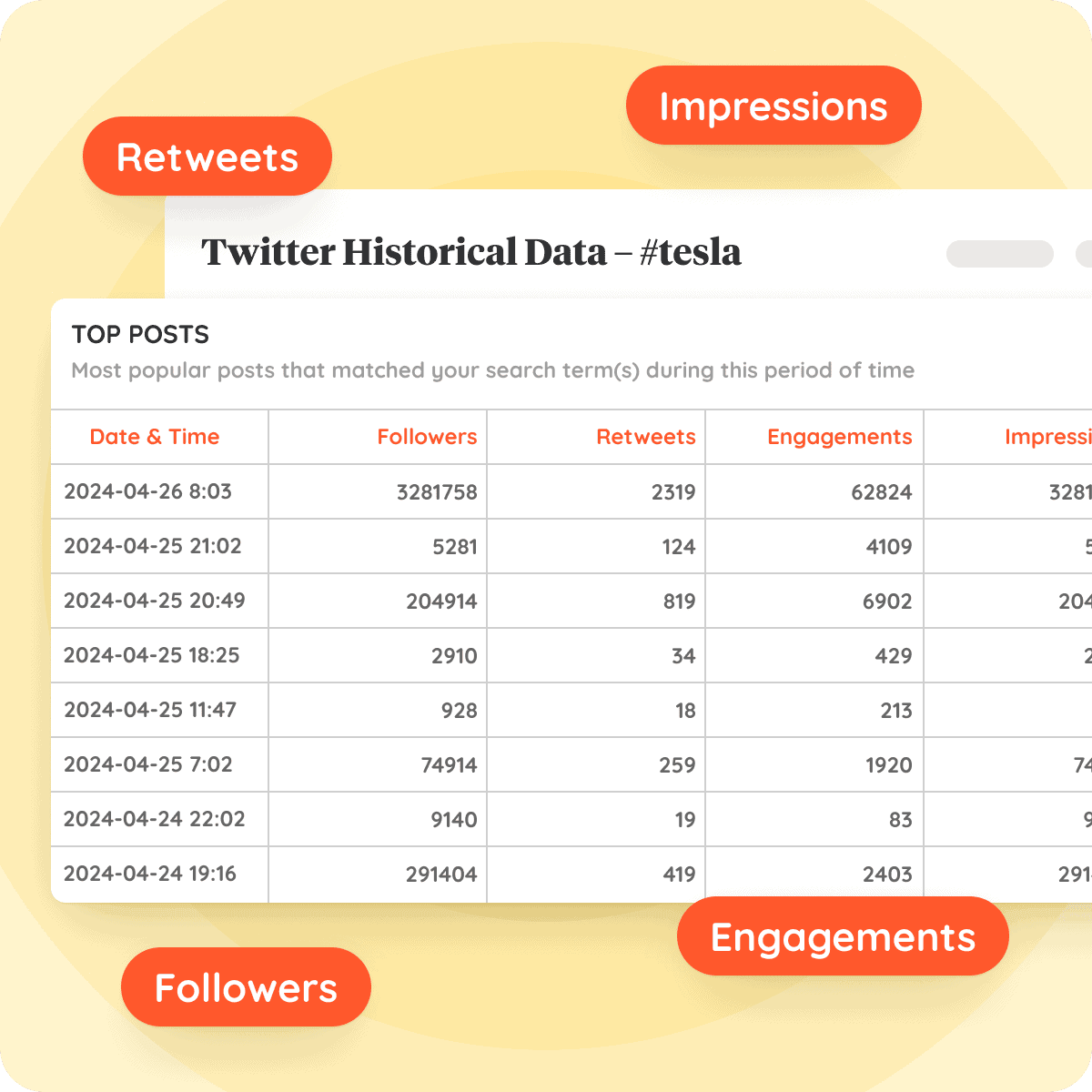
Keyhole specializes in historical insights and market research, making it invaluable for understanding long-term trends and conversation evolution. Its standout feature is the ability to unlock up to a decade of historical data, particularly for X (formerly Twitter). This allows marketers to analyze shifts in audience sentiment, identify enduring topics, and uncover past engaging content, providing a rich context for current strategy development.
Leveraging machine learning, Keyhole also identifies emerging trends in real-time, offering a dynamic view of how audience sentiments are evolving on specific subjects. While the historical depth for X is impressive, the limitation to this single platform for such extensive historical data is a notable constraint. Keyhole also offers competitive analysis and influencer marketing features, but its core strength remains in deep historical and market research data. Pricing is not publicly available, indicating a customized approach for clients, and historical reports for X incur additional costs. Supported platforms include Facebook, Instagram, LinkedIn, TikTok, X, and YouTube.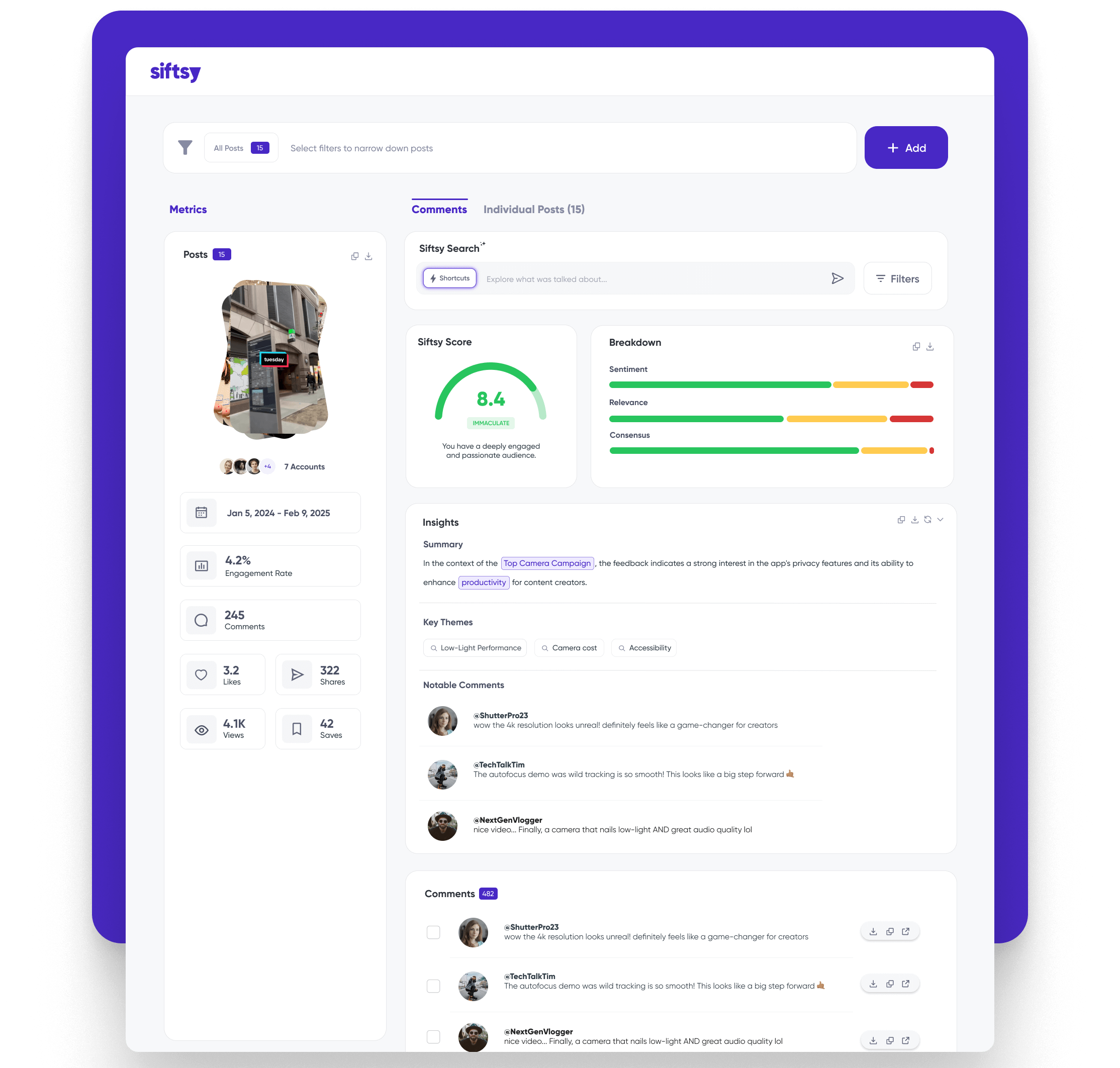
-
Social Status: Optimized for Small Businesses Running Ads and Influencer Campaigns
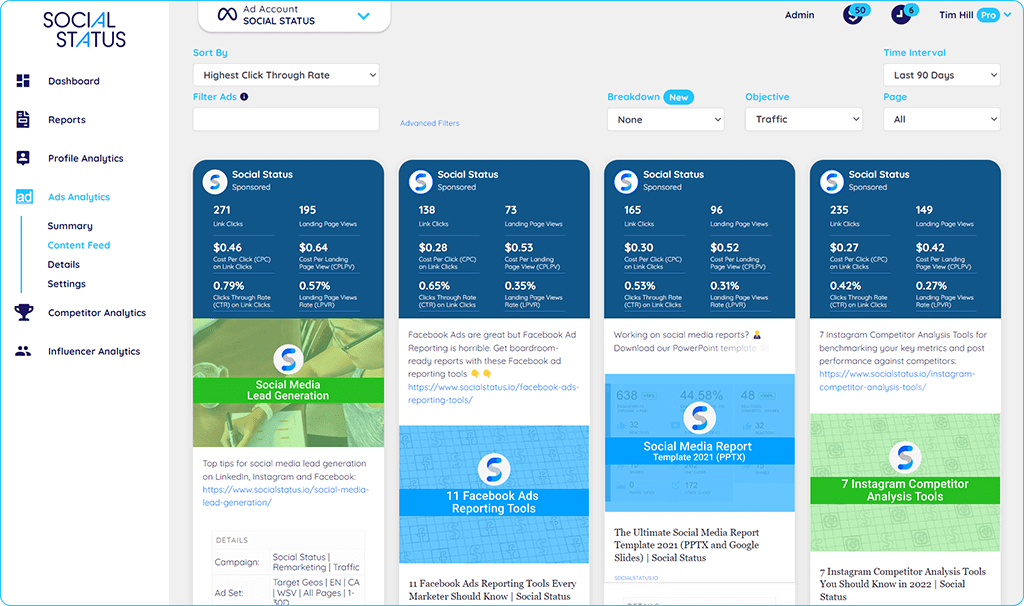
Social Status caters specifically to small businesses that integrate paid advertising and influencer partnerships into their social media strategies. It provides a unified dashboard to measure performance across both organic and paid social efforts. Key features include tracking ad campaign performance (impressions, clicks, conversions), monitoring influencer content, and analyzing user-generated content (UGC).
For small businesses juggling multiple marketing facets, Social Status simplifies performance measurement by offering a consolidated view of key performance indicators (KPIs) like likes, impressions, comments, and shares, alongside ad-specific metrics. It helps in evaluating influencer ROI and identifying top-performing UGC. A free plan is available, with paid plans starting at $9/month for small businesses, and $99/month for other users. It supports Facebook, Instagram, LinkedIn, TikTok, X, and YouTube. -
Siftsy: Unlocking Insights from Comments with AI
Siftsy uniquely focuses on the qualitative aspect of social media engagement: comments. Recognizing that comments often reveal the "why" behind quantitative data, Siftsy employs AI to pull sentiment from comments across various channels. Users can upload CSVs of post URLs, tag campaigns, and let the AI summarize key takeaways, highlight valuable insights, and provide a sentiment breakdown (positive, negative, neutral).
This tool is particularly useful for understanding customer feedback, gauging audience reception to new products, identifying content ideas based on audience questions, and even detecting early signs of potential PR issues. By converting unstructured comment data into actionable intelligence, Siftsy complements traditional numeric analytics, providing a richer, more nuanced understanding of audience engagement. Pricing is not publicly available. Supported platforms include Instagram, LinkedIn, TikTok, X, and YouTube. -
Vista Social: Comprehensive Review Management and Social Metrics
Vista Social extends beyond traditional social media analytics by integrating robust review management capabilities with a full suite of social media management tools. While it allows for scheduling posts, managing comments, and social listening, its distinct strength lies in consolidating customer feedback from various review sites (e.g., Google Business, Yelp, TripAdvisor, Apple/Google Play Store) into a single dashboard.
This enables businesses to track star ratings, monitor customer sentiment, respond to reviews efficiently, and analyze trends in customer feedback. For brands where online reputation and customer service are paramount, Vista Social offers a critical advantage. Plans start at $79/month, with a 14-day trial. Its extensive platform support includes Apple Play Store, Bluesky, Facebook, Google Business, Google Play Store, Instagram, LinkedIn, OpenTable, Pinterest, Reddit, Snapchat, Threads, TikTok, TripAdvisor, Trustpilot, Tumblr, X, Yelp, YouTube, and more. -
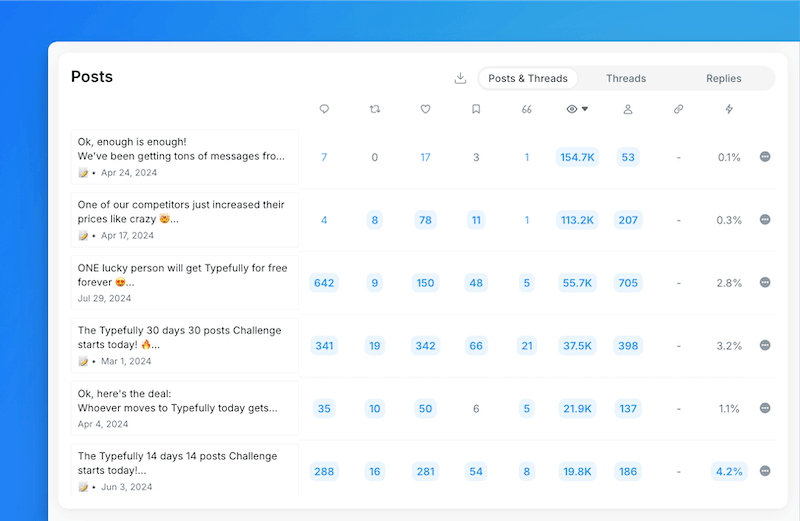
Typefully: The Definitive Tool for X (formerly Twitter) Analytics
Typefully is an exceptional tool for users primarily focused on X (formerly Twitter), though it supports other platforms like Bluesky, LinkedIn, Mastodon, and Threads. It excels in optimizing X content, particularly threads, offering features like "viral thread hooks" for inspiration.
What truly sets Typefully apart are its X-specific metrics, such as "profile conversion rate," which measures how many profile visitors convert into followers. This metric offers invaluable insights into the effectiveness of a profile’s bio, pinned tweets, and overall brand messaging on X. It also tracks essential metrics like impressions, follower growth, and replies (X’s term for comments). Typefully offers a free plan for up to 15 posts per month, with paid plans starting at $16/month (yearly billing). -
Tailwind: Essential for Pinterest-Centric Businesses
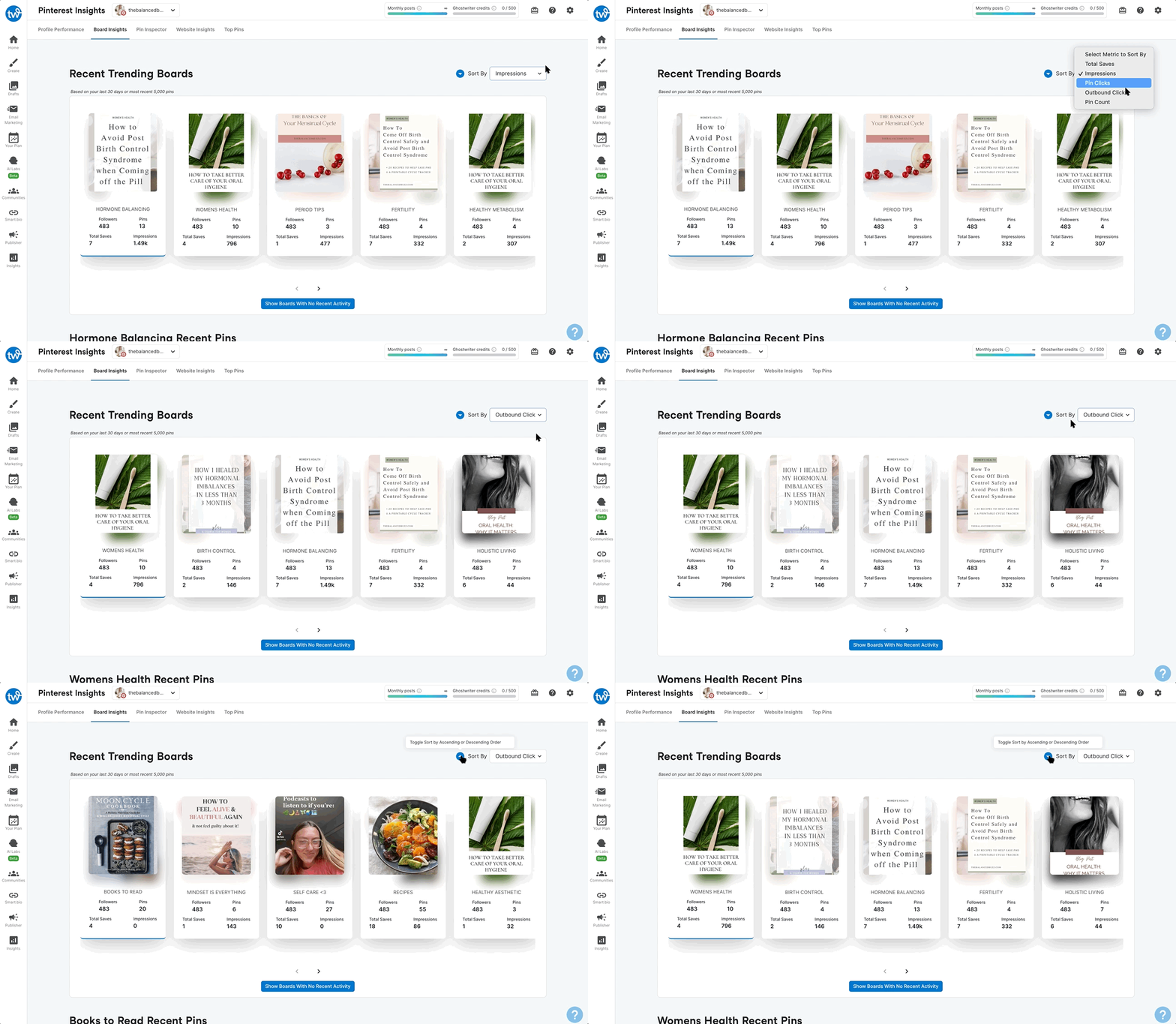
Tailwind is the leading social media analytics and management tool for businesses leveraging Pinterest (and Instagram) for traffic generation. Recognizing Pinterest’s dual nature as a social network and a visual search engine, Tailwind offers specialized analytics to maximize its potential.
A standout feature is its Google Analytics integration, which directly links Pinterest performance to website traffic and conversions, allowing users to identify and replicate their most effective pins. Tailwind provides granular data on Pinterest performance, from overall account health to individual pin and board statistics, including impressions, saves, repins, and trend analysis. This deep dive helps marketers optimize their visual content strategy and drive targeted traffic. A free plan is available for five posts per month, with paid plans starting at $29.99/month. It supports Facebook, Instagram, and Pinterest.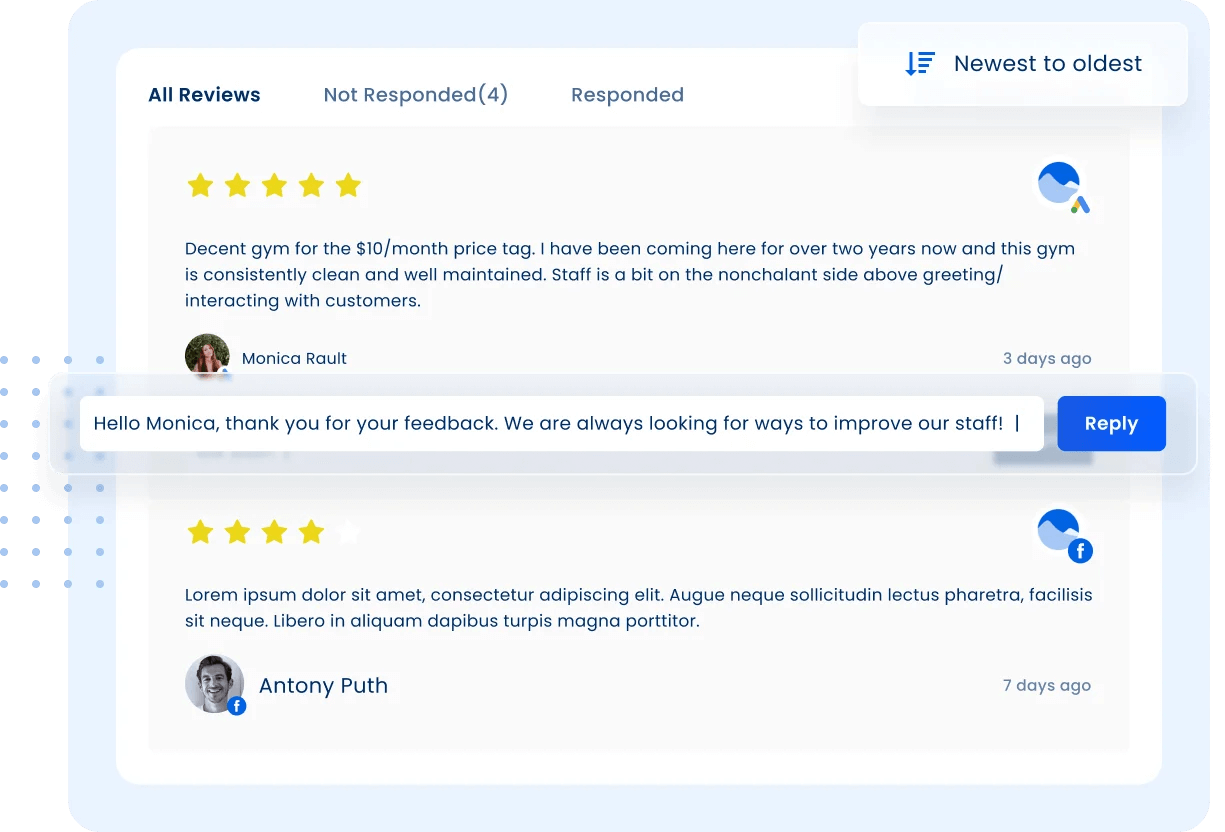
-
DashThis: The All-in-One Marketing Dashboard for Integrated Reporting
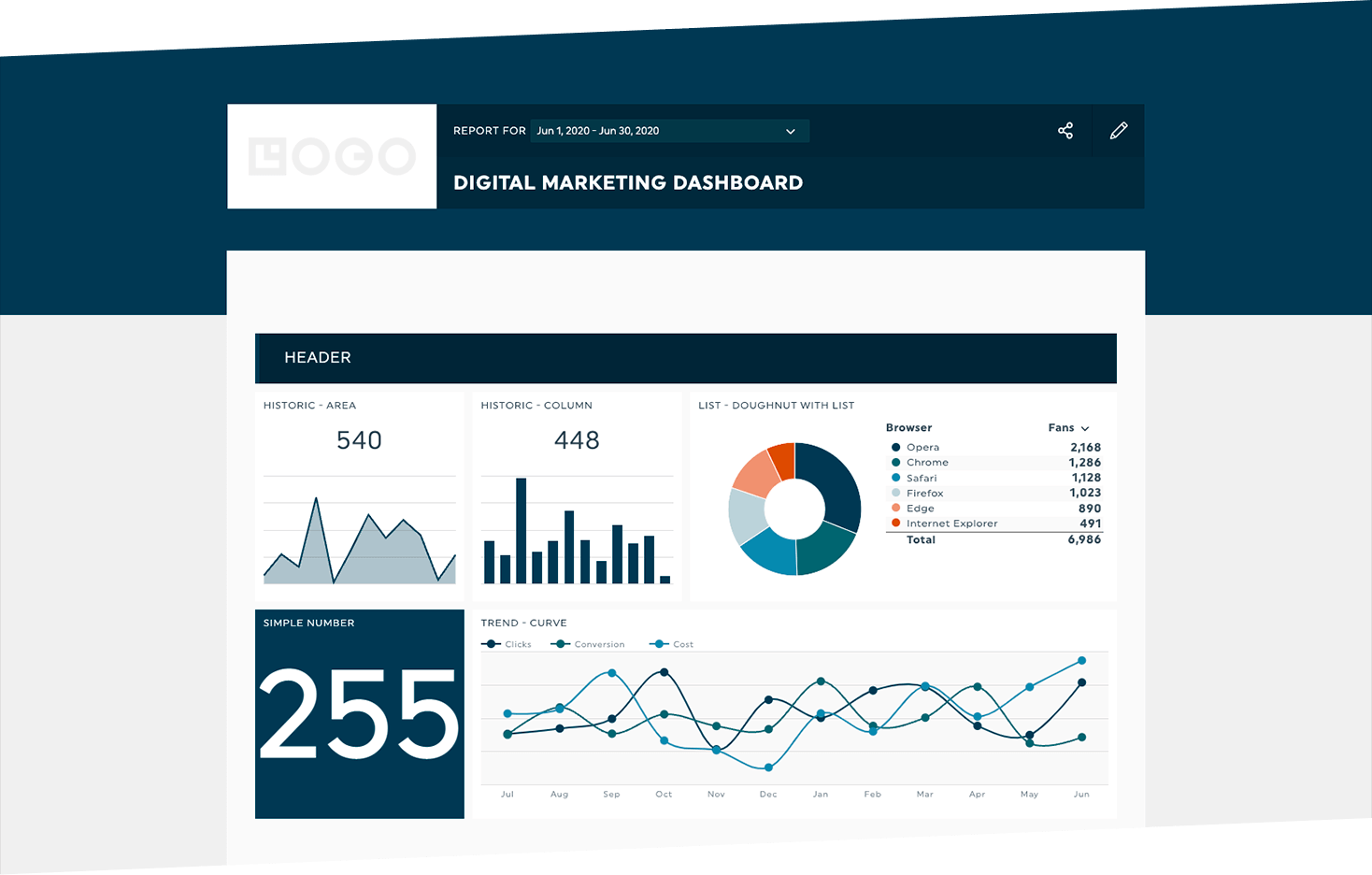
DashThis is not solely a social media analytics tool but a comprehensive marketing dashboard designed to consolidate data from across an entire marketing tech stack. Its strength lies in its ability to integrate social media metrics with data from over 30 other platforms, including Google Analytics, Ahrefs, HubSpot, and various ad platforms (TikTok Ads, Meta Business Suite, Google Ads).
This makes DashThis invaluable for marketing teams needing to present a holistic view of their marketing efforts to stakeholders. It enables the creation of unified reports that demonstrate how social media contributes to overall marketing goals and ROI, overcoming the challenge of siloed data. With unlimited users and data sources on all plans, it’s well-suited for large marketing teams. Plans begin at $54/month, with a 15-day free trial. Supported social platforms include Facebook, Instagram, LinkedIn, Pinterest, TikTok, and YouTube. -
Socialinsider: AI-Driven Insights for Content Pillar Optimization
Socialinsider is an advanced analytics tool that leverages AI to provide deep insights into content pillars and competitive strategies. Its AI-driven features help marketers identify which content categories perform best and why. Higher-tier plans offer AI-powered competitor analysis, allowing users to benchmark the effectiveness of content pillars against industry rivals and adapt their strategies accordingly.
The tool’s post tagging feature is particularly useful for grouping social media posts by campaign or theme, enabling collective performance monitoring. While its advanced features offer significant strategic advantages, the pricing, starting at $99/month, can be prohibitive for smaller operations, with the best features reserved for higher tiers. All plans include a 14-day free trial. Supported platforms include Facebook, Instagram, LinkedIn, TikTok, X, and YouTube. -
Talkwalker: Deep Audience Insights and Social Listening for Enterprises
Talkwalker (now owned by Hootsuite) is an advanced social media monitoring and analytics tool renowned for its in-depth audience insights. It can pull data from a vast array of sources beyond social media, including customer calls, support tickets, and online communities, to reveal what audiences truly care about. This comprehensive approach helps in identifying content ideas, understanding consumer needs, and tracking brand perception across the digital ecosystem.
Its audience segmentation features allow for granular analysis based on demographics, providing actionable insights for global brands or those targeting diverse segments. Talkwalker’s AI assistant, Yeti, further enhances accessibility to these insights. With Hootsuite’s acquisition, Talkwalker’s capabilities are now integrated into a broader social media management suite, though many of its advanced features are found in higher-tier Hootsuite plans, starting from $199/month. Pricing for standalone Talkwalker features is not publicly available. Supported platforms include Facebook, Instagram, YouTube, Pinterest, X, and more.
Strategic Implications and Future Outlook
The comprehensive adoption of social media analytics is no longer a luxury but a necessity for businesses of all sizes. It empowers marketers to move from reactive posting to proactive, data-driven strategy development, directly impacting return on investment (ROI). Companies that consistently track metrics, analyze performance, and adjust their strategies based on data invariably outperform those that rely on intuition or simply "post and hope." Studies indicate that organizations effectively leveraging advanced analytics can see a 15-20% improvement in their social media marketing ROI.
The future of social media analytics is poised for even greater sophistication. We can anticipate deeper integration of AI and machine learning, making predictive and prescriptive analytics more accessible to a broader range of users. Real-time trend forecasting, automated content recommendations, and hyper-personalized audience insights will become standard. Furthermore, as data privacy regulations evolve, analytics tools will need to adapt, ensuring ethical data collection and usage while still providing valuable insights. The ongoing fragmentation of social platforms and the rise of niche communities will also drive demand for tools capable of consolidating data from an even wider array of sources.
Ultimately, social media analytics tools transform raw data into actionable intelligence. They allow marketers to understand their audience, optimize their content, benchmark against competitors, and justify their social media investments. By streamlining data collection and reporting, these tools free up valuable time for creative work and strategic thinking, ensuring that social media efforts are not just visible, but truly impactful.
Frequently Asked Questions (FAQs)
What exactly is a social media analytics tool?
A social media analytics tool is a software application designed to collect, measure, analyze, and interpret data from various social media platforms. Its primary purpose is to help users understand their content performance, audience behavior, and overall social media impact. These tools provide metrics like reach, impressions, engagement rates, click-through rates, and audience demographics, often adding advanced features such as competitor analysis, social listening, and predictive insights to convert raw numbers into actionable strategic intelligence.
Why are social media analytics important for businesses?
Social media analytics are crucial for businesses to prove the return on investment (ROI) of their social media efforts, identify which content strategies drive traffic and conversions, and optimize their posting schedules and content themes based on empirical data. By continuously monitoring and adjusting strategies based on analytics, businesses can create more effective content, accelerate audience growth, enhance brand reputation, and make smarter, data-informed marketing decisions that directly contribute to business objectives.
Which social media metrics should be tracked?
The most helpful metrics depend on specific business goals. However, a foundational set of metrics for most teams includes:
- Reach: The number of unique users who saw your content.
- Impressions: The total number of times your content was displayed.
- Engagement Rate: A measure of interactions (likes, comments, shares) relative to reach or followers.
- Click-Through Rate (CTR): The percentage of people who clicked a link in your post.
- Audience Growth: The rate at which your follower count increases.
- Conversion Rate: The percentage of social media users who complete a desired action (e.g., purchase, sign-up) after engaging with your content.
Beyond these, specific goals might necessitate tracking video views, sentiment, website referrals from social media, or lead generation numbers.
What are the different types of social media analytics?
Social media analytics typically fall into four categories:
- Descriptive Analytics: Answers "what happened?" (e.g., raw metrics like impressions, clicks, likes).
- Diagnostic Analytics: Explains "why it happened?" (e.g., analyzing content type or posting time to understand performance).
- Predictive Analytics: Forecasts "what will happen?" (e.g., trend forecasting based on historical data patterns).
- Prescriptive Analytics: Recommends "what you should do?" (e.g., AI-powered suggestions for optimal content strategy).
Most common tools focus on descriptive and diagnostic analytics, while premium solutions venture into predictive and prescriptive capabilities.
How to choose the best social media analytics tool?
To choose the best tool, consider:
- Your operational scale: How many social media accounts do you manage?
- Feature needs: Do you require competitor benchmarking, social listening, or just your own data?
- Reporting requirements: Do you need automated, white-label reports for clients or stakeholders?
- Budget: What is your financial allocation for the tool?
- Integrations: Does it connect with your existing marketing tech stack?
- Ease of use: Is the interface intuitive and easy to navigate?
It’s advisable to utilize free tiers or trials of 2-3 tools that fit your criteria to assess their practical usability and data accuracy before committing.
What is the difference between social media analytics and insights?
"Insights" is commonly the term social media platforms use for their native, built-in analytics dashboards (e.g., Instagram Insights, TikTok Analytics). "Analytics," especially in the context of third-party tools, typically refers to more comprehensive solutions that aggregate data from multiple platforms, offer advanced features like competitor comparison, cross-platform reporting, and deeper trend analysis. Native insights are free but limited to your own data on a single platform, whereas third-party analytics tools offer greater flexibility, cross-platform visibility, and often come with a cost.
Are native social media analytics good enough?
Native analytics are sufficient for basic performance tracking by individual creators or very small businesses managing a single platform. However, they have significant limitations. They only show your own data, lack competitive comparisons, offer limited customization, and do not integrate with other marketing tools. For businesses managing multiple accounts, requiring competitive benchmarking, or needing to generate professional reports for stakeholders, a third-party tool is a worthwhile investment.
How often should social media analytics be checked?
Most creators and social media managers benefit from checking analytics at least once a week. A weekly review helps identify immediate patterns, such as top-performing posts, peak audience activity, and trending topics. A more in-depth monthly review is valuable for evaluating long-term trends, refining the overall social media strategy, and assessing campaign effectiveness over time. For active campaigns or critical events, daily check-ins may be necessary to ensure optimal performance and timely adjustments.
What’s the difference between analytics tools and social media management tools?
Dedicated analytics tools focus solely on measuring performance, providing deep data analysis, and generating reports. Social media management tools, conversely, offer a broader suite of functionalities, combining analytics with features such as post scheduling, content creation, audience engagement (social inbox), and team collaboration. For many, particularly solo creators and small teams, an SMMS with built-in analytics is the preferred option for its convenience. However, if highly specialized analytics (like in-depth competitive intelligence or sentiment analysis) are paramount, a standalone analytics tool might be added to the tech stack.