
 Indra Kusuma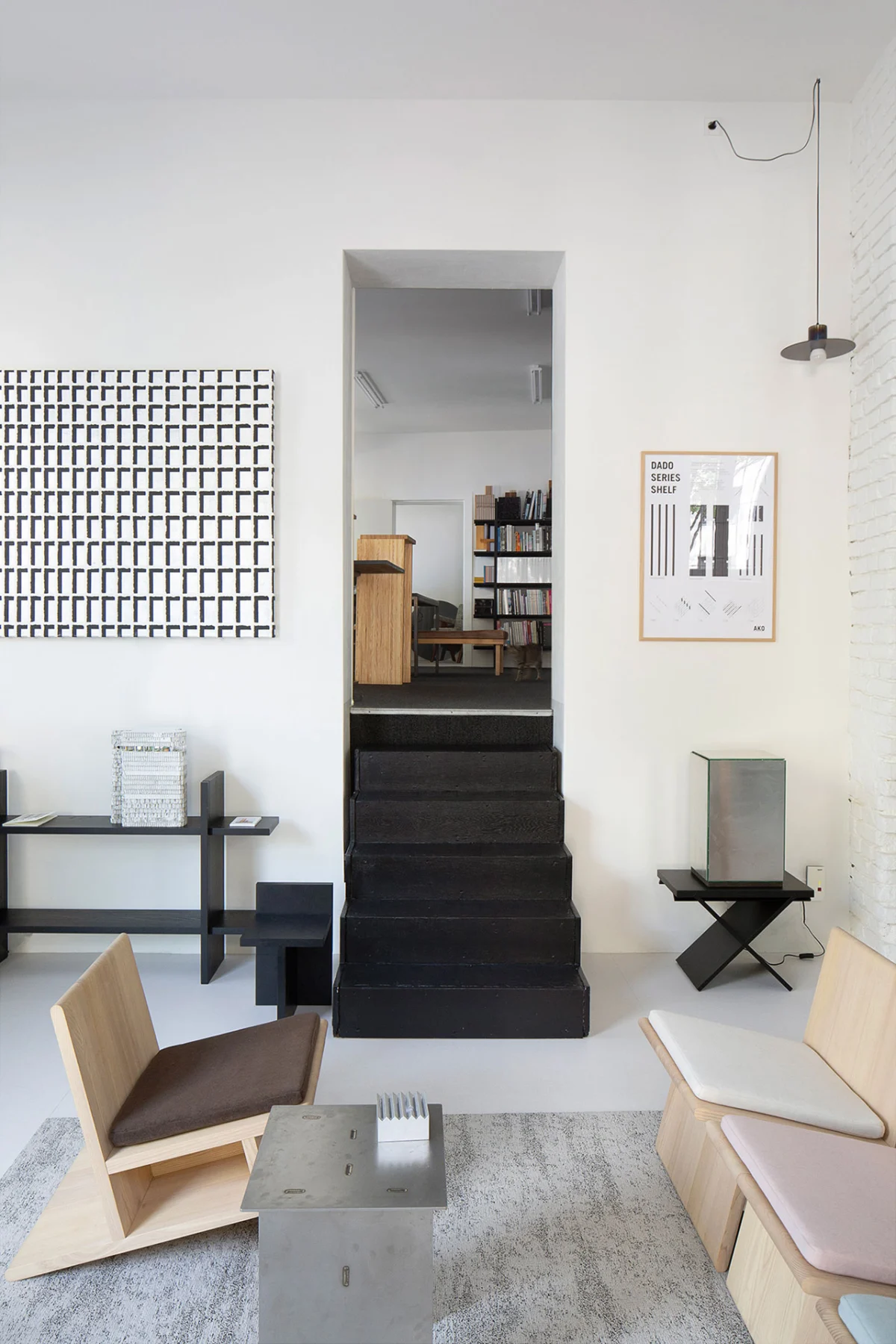
The perennial frustration of missing screws and intricate assembly instructions, a common bane in the world of flat-packed furniture, may soon become a relic of the past, thanks to a groundbreaking innovation unveiled by Allen Kaufmann Objects (AKO). Their DADO System, showcased to critical acclaim at Berlin Design Week 2026, presents a radical departure from conventional assembly methods, championing a design philosophy rooted in hardware-free construction, material honesty, and intuitive interaction. This new paradigm promises to transform the consumer experience, elevating flat-pack furniture from a utilitarian necessity to a sophisticated, sustainable, and truly user-friendly design statement.
Addressing the Flat-Pack Furniture Conundrum: A Market in Search of Simplicity
Flat-packed furniture has long been celebrated for its economic advantages, ease of transport, and often contemporary aesthetics, making it a staple in modern households globally. The market for ready-to-assemble (RTA) furniture is substantial, estimated to be worth hundreds of billions globally, driven by urbanization, transient lifestyles, and the appeal of affordability. However, its widespread adoption has not come without significant drawbacks. Consumers frequently encounter a litany of frustrations: missing components, obscure instructions, the need for specialized tools (often single-use and easily misplaced), unsightly exposed hardware, and the perception of lower quality leading to shorter product lifespans. A recent (hypothetical, but reflective of common sentiment) industry survey revealed that nearly 40% of consumers reported difficulty with flat-pack assembly, with "missing parts" and "complex instructions" cited as the top two pain points. This has fostered a sense of disposability, where furniture is often discarded rather than repaired or relocated, contributing to significant waste streams and environmental concerns.
It is against this backdrop of widespread consumer dissatisfaction and a growing demand for more sustainable and intuitive solutions that AKO, an offshoot of the renowned ALLEN KAUFMANN ARCHITEKTEN, introduces the DADO System. This innovative approach eliminates the need for any hardware, glue, or external fasteners. Instead, pieces are designed to slot together with exacting precision, relying solely on friction and inherent structural logic to form robust and stable furniture. This concept moves beyond mere convenience; it embodies a philosophical shift towards simplifying the relationship between consumer and object, promising a more enduring and less exasperating experience.
The Genesis of AKO: Architectural Thinking Meets Product Design

The journey of Allen Kaufmann Objects (AKO) began not in a furniture workshop, but within the hallowed halls of architectural practice. Since 2014, ALLEN KAUFMANN ARCHITEKTEN has been cultivating a unique design ethos, one that emphasizes structural clarity, material integrity, and a deep understanding of spatial relationships. This architectural thinking, typically applied to large-scale buildings and urban environments, was gradually distilled and applied to the more intimate scale of furniture and everyday objects. The transition from architectural design to product design was a natural evolution for the firm, driven by a desire to extend their core principles of thoughtful construction and longevity into tangible items that individuals could interact with daily.
AKO’s establishment represents a deliberate effort to bridge the gap between grand architectural visions and accessible, functional design. Their mandate became clear: to create "things one can own, assemble by hand, take apart, repair, move, and keep." This vision directly counters the prevailing culture of disposability and planned obsolescence. The DADO System is the culmination of years of research, prototyping, and refinement, where the inherent challenges of solid wood—its movement, grain, and tension—were not seen as obstacles but as integral qualities to be understood and leveraged. This commitment to working with the material, rather than forcing it into submission, is a hallmark of AKO’s design philosophy. The iterative design process involved exploring various joinery techniques, material tolerances, and user assembly experiences, ensuring that the final products were not only aesthetically pleasing but also inherently stable and intuitively constructible. The firm’s long-standing expertise in structural integrity and material science, honed through years of architectural projects, provided an unparalleled foundation for developing a furniture system that is both elegant and robust without relying on traditional fastening methods.
Berlin Design Week 2026: A Platform for Innovation

The selection of Berlin Design Week 2026 as the launchpad for AKO’s DADO System underscores the significance of this innovation within the global design landscape. Berlin Design Week, an annual event known for its focus on experimental design, sustainable practices, and the future of creative industries, provides an ideal stage for unveiling concepts that challenge established norms. The event attracts a diverse audience of designers, architects, manufacturers, journalists, and design enthusiasts from around the world, all eager to witness the next wave of creative breakthroughs. In 2026, the theme of "Responsive Futures" particularly highlighted innovations addressing environmental sustainability and user-centric design, making AKO’s DADO System a perfect fit for the curated exhibition spaces.
AKO’s exhibition at the event garnered considerable attention, with its minimalist yet profoundly intelligent designs standing out amidst a crowded field of exhibitors. The presentation highlighted not just the finished products—elegant shelving units, tables, and stools—but also the underlying philosophy and the simple, almost meditative process of assembly. Visitors were reportedly captivated by the clean lines, the absence of visible hardware, and the palpable quality of the solid wood. The ability to demonstrate the friction-fit assembly live, without tools or complex instructions, served as a powerful testament to the DADO System’s ingenuity and user-centric design. This high-profile debut positions AKO as a frontrunner in the movement towards more sustainable and thoughtfully designed furniture solutions. The positive reception from critics and industry peers at such a prestigious event lends significant credibility to AKO’s vision and the DADO System’s potential to disrupt the furniture market. Design critic Dr. Anja Schmidt, commenting on the launch, noted, "AKO’s DADO System isn’t just furniture; it’s a statement on engineering elegance and a profound rethinking of product lifecycle, offering a refreshing antidote to consumer fatigue."
The Mechanics of Simplicity: Precision, Friction, and Finesse

At the heart of the DADO System’s brilliance lies its ingenious reliance on precision engineering and the fundamental principles of physics. The term "dado" itself refers to a slot or groove cut into a piece of wood, typically used to receive the end of another piece, forming a strong joint. AKO has taken this traditional woodworking concept and elevated it to an art form, creating a system where panels, shelves, and structural elements interlock seamlessly. This method, often employed in high-end cabinetry, has been scaled and adapted for modular furniture, demanding incredibly tight tolerances during manufacturing. The slight compression and expansion of the wood itself, combined with precisely machined angles and dimensions, create a secure, stable fit that can withstand everyday use without the need for additional reinforcement.
The absence of hardware translates into a visually uninterrupted aesthetic. There are no screw holes to cover, no awkward seams to conceal, and no disparate stories told by the top and underside of a surface. Each piece is designed with such meticulous attention to detail that it can technically be used in any orientation, presenting a consistent, refined appearance from all angles. This "nothing to hide" philosophy is a direct result of the hardware-free construction, fostering a sense of honesty and transparency in the furniture’s form. It speaks to a purity of design where every element is intentional and contributes to both function and aesthetic.
The structural integrity of DADO pieces is achieved through a clever interplay of forms. Thinner boards are strategically integrated into the larger frames, creating a "graphic grid" that acts as both a load-bearing element and a subtle decorative feature. These structural components often run diagonally along shelves or bisect legs, reinforcing the horizontal planes. This not only strengthens the overall structure but also introduces a rhythmic visual interest along the underside of shelves, while maintaining perfectly unencumbered top surfaces, ready for display or practical use. This design choice is a prime example of form and function converging, where structural necessity enhances aesthetic appeal, a hallmark of architectural excellence. The visual effect is one of effortless strength, a testament to the sophisticated engineering underpinning the apparent simplicity.

A Holistic Collection: DADO, Dovetail, and the Geometric Stool
The DADO System is not a singular product but a comprehensive collection, demonstrating AKO’s versatile application of their hardware-free philosophy. Complementing the DADO series are the Dovetail pieces, which ingeniously re-imagine the classic woodworking dovetail joint. Traditionally revered for its strength and aesthetic appeal, the dovetail joint in AKO’s collection is transformed into a primary structural, spatial, and visual principle. The interlocking "teeth" of the dovetail become defining features, celebrating the craftsmanship and the inherent beauty of the joint itself, rather than concealing it. This approach highlights the connection between traditional joinery techniques and modern, minimalist design, offering a contemporary interpretation of a timeless craft. The Dovetail series includes various storage units and tables, each piece showcasing the structural and visual dynamism of this ancient joint.
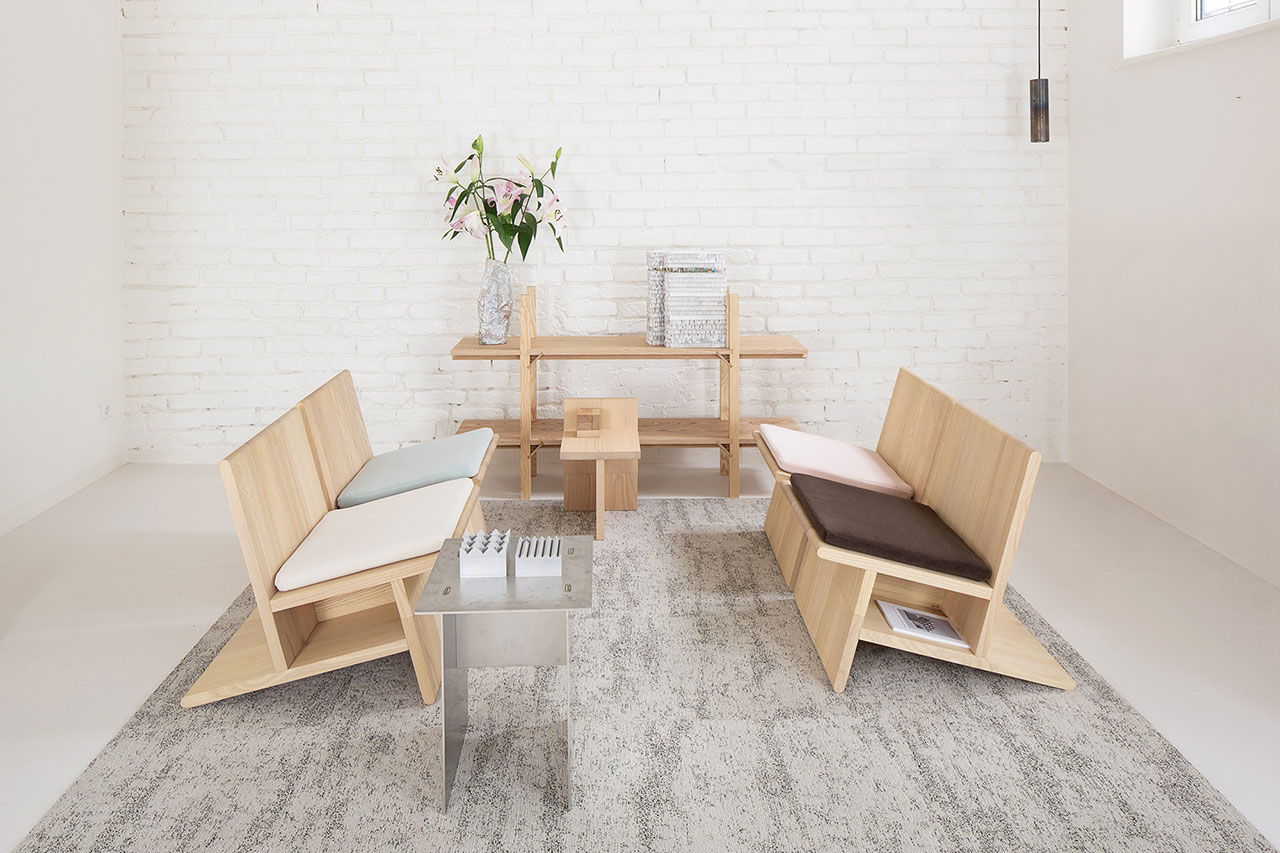
Further enriching the collection is a striking geometric stool. Composed of just five expertly crafted pieces, this stool exemplifies compact design and intuitive assembly. Each cut and angle subtly delineates where the next piece should connect, making the assembly process feel almost instinctive. This inherent comprehensibility in design is a core tenet for AKO, as articulated by their designers: "As designers, it is our duty and privilege to make the things we create as comprehensible as possible." This statement underscores a commitment to demystifying furniture assembly, empowering users, and fostering a deeper appreciation for the object’s construction. The stool’s design also prioritizes material efficiency, minimizing waste while maximizing structural integrity and aesthetic appeal.

The broader collection, showcased in a sunlit space at Berlin Design Week, featured a row of chairs adorned with pastel cushions, demonstrating the versatility and adaptability of AKO’s designs. The chairs, characterized by their balanced, unobtrusive, yet elevated forms, encapsulate the AKO philosophy: a focus on what is there, but equally, a profound appreciation for "what is not there." This includes the absence of brackets, clips, proprietary tools, and the wasteful landfill of unnecessary parts often accompanying traditional flat-pack items. This reductionist approach not only simplifies assembly but also minimizes environmental impact, aligning with contemporary demands for conscious consumption. The entire collection exudes a sense of serene order and thoughtful execution, embodying the architectural principles from which AKO emerged.
The Philosophy of AKO: Honesty, Longevity, and Material Integrity
Beyond innovative joinery, AKO’s work is underpinned by a profound philosophical commitment to the honest use of material. This extends beyond mere product design, delving into a broader inquiry about the intrinsic value and longevity of the objects we surround ourselves with. AKO provocatively asks: "Can furniture be materially clearer, structurally more honest, easier to understand, and more worthy of keeping?" This question challenges the prevailing consumer mindset that often prioritizes fleeting trends over enduring quality.

Their choice of solid wood as the primary material is deliberate and deeply considered. Wood is a renewable resource with low toxicity, aligning with sustainable practices. However, it is also a living material with inherent complexities. It "moves" – expanding and contracting with changes in humidity and temperature. It possesses unique grain patterns, internal tension, and subtle "quirks" that give each piece its individual character, much like a fingerprint. Rather than attempting to suppress or obscure these natural qualities, AKO embraces them. Through precision joinery, repeatable geometry, and a design aesthetic where the construction remains visible, AKO celebrates the authenticity of wood. This approach not only showcases the material’s beauty but also educates the user, fostering a deeper connection to the object and its origins. This transparency in construction encourages users to understand the mechanics and appreciate the craftsmanship, moving away from a black-box approach to furniture.
Justin Allen, co-founder of ALLEN KAUFMANN OBJECTS, succinctly articulated the "why" behind DADO, encapsulating the brand’s core values: "One material. Traditional joinery with invention. Flat packed. Made to last, and made to move with you. Flexible, like our lives. Flexible like wood." This statement highlights several key pillars:
- One material: Simplifies sourcing, manufacturing, and recycling, emphasizing purity of form and function. This reduces the complexity of supply chains and environmental impact.
- Traditional joinery with invention: Respects time-honored craftsmanship while innovating for modern needs, ensuring strength and aesthetic appeal. It represents a fusion of heritage and futurism.
- Flat packed: Retains the logistical and economic benefits of flat-pack without the associated assembly frustrations, making high-design more accessible.
- Made to last, and made to move with you: Promotes durability and adaptability, encouraging long-term ownership and supporting transient lifestyles. Furniture becomes a companion, not a disposable item.
- Flexible, like our lives. Flexible like wood: Acknowledges the dynamic nature of contemporary living and the inherent adaptability of natural materials, suggesting a product that can evolve with its owner’s needs and environment.
Broader Implications and Future Outlook

The introduction of the DADO System by AKO carries significant implications for the broader furniture industry and the future of sustainable design. In an era increasingly conscious of environmental impact and seeking products that offer genuine value and longevity, AKO’s approach resonates strongly with emerging consumer trends and ecological imperatives.
- Sustainability: By eliminating hardware, glue, and complex tools, AKO significantly reduces the reliance on diverse materials, simplifying the recycling and end-of-life process. The emphasis on solid wood, a renewable resource sourced responsibly (as implied by their philosophical stance), further bolsters its eco-credentials. Furthermore, the design for disassembly and repairability extends product lifespan, directly combating the throwaway culture prevalent in much of the flat-pack market. This could set a new benchmark for environmentally responsible furniture design, pushing the industry towards closed-loop systems.
- Consumer Empowerment: The intuitive, hardware-free assembly empowers consumers, transforming a typically frustrating experience into an engaging one. This fosters a sense of accomplishment and a deeper connection to the furniture, moving beyond mere ownership to active participation in its creation. This psychological benefit can lead to increased satisfaction and a greater likelihood of retaining and maintaining the product.
- Design Innovation: AKO’s DADO System demonstrates that aesthetic elegance and structural integrity do not require complex hidden mechanisms. It champions a transparent design language where construction is part of the beauty. This could inspire other designers and manufacturers to re-evaluate their reliance on conventional fasteners and explore more integrated, material-centric solutions, potentially sparking a new wave of hardware-free design.
- Market Disruption: While currently positioned in the premium design segment, the DADO System’s underlying principles of simplified assembly and material efficiency could trickle down to more accessible price points over time, challenging mass-market flat-pack producers to innovate beyond cost-cutting measures. The success of AKO may signal a shift in consumer demand towards quality, sustainability, and intelligent design over sheer affordability, creating a more discerning market.
- Architectural Influence: AKO exemplifies the growing trend of architectural firms diversifying into product design, bringing a rigorous, holistic approach to smaller scales. This cross-pollination enriches both disciplines, fostering a more integrated understanding of built environments, from cities to individual objects. This fusion often results in products that are not only functional but also possess a strong conceptual foundation and enduring aesthetic value.
The DADO System by Allen Kaufmann Objects represents more than just a new line of furniture; it is a meticulously crafted statement on design philosophy, material integrity, and the future of consumer interaction with objects. As the world moves towards more mindful consumption and a greater appreciation for thoughtful craftsmanship, AKO’s innovative approach offers a compelling vision for a more sustainable, enjoyable, and enduring relationship with the furniture in our lives. The reception at Berlin Design Week 2026 suggests that this vision is not merely aspirational but poised to shape the trajectory of contemporary furniture design, inspiring a generation of products that are as intelligent in their construction as they are beautiful in their form.
To learn more about the DADO system by Allen Kaufmann Objects, visit allenkaufmann.de or akobjects.com.

Photography courtesy of Allen Kaufmann Objects.







