Angie Faith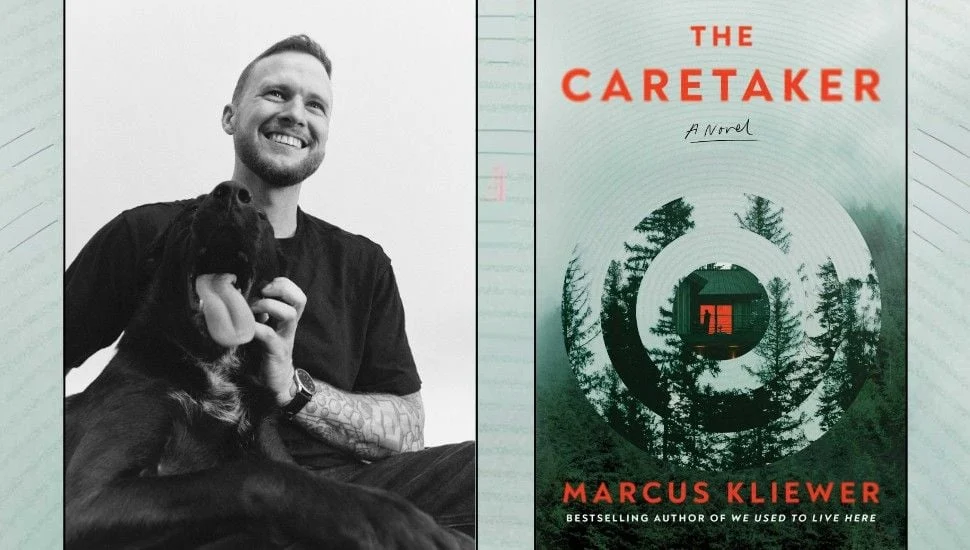
Author Marcus Kliewer’s Journey Through Horror Writing and an OCD Diagnosis
In a surprising and deeply personal revelation, bestselling horror author Marcus Kliewer has shared how his re-engagement with the genre during the COVID-19 pandemic not only reignited his passion for writing but also served as a catalyst for his own diagnosis of Obsessive-Compulsive Disorder (OCD). Kliewer, known for his debut novel We Used to Live Here, discusses this profound connection in light of the release of his latest work, The Caretaker, published by 12:01 Books. The narrative of his journey underscores the often-unseen psychological underpinnings of creative expression and the potential for art to illuminate personal struggles.
A Return to the Macabre Amidst Global Uncertainty
Kliewer describes rediscovering his affinity for horror writing in the midst of the pandemic, a period marked by widespread isolation and a pervasive sense of unease. He found a peculiar solace in crafting narratives of controlled "misery," a sentiment that resonated with many grappling with the unprecedented realities of the time. The financial support provided by programs like CERB (Canada Emergency Response Benefit) enabled Kliewer to dedicate significant time to his writing, a luxury he hadn’t previously afforded himself.
This renewed focus led him back to r/NoSleep, a popular subreddit dedicated to original horror stories. The community, Kliewer notes, offered a crucial sense of connection and purpose during a time when the global community felt fractured and adrift. It was within this digital space that the seeds of his personal discovery were sown.
The Unforeseen Mirror: The Man in My Basement Takes One Step Closer Every Week
While developing a series titled The Man in My Basement Takes One Step Closer Every Week, Kliewer received a direct message from a reader that would prove to be a turning point. The reader inquired if the story was about OCD, explaining that the main character’s internal monologue felt strikingly familiar to their own experiences with the disorder.
Initially, Kliewer perceived the similarities as coincidental. His understanding of OCD at the time was, by his own admission, limited, largely shaped by stereotypical portrayals of extreme cleanliness or a fixation on symmetry. The possibility of him personally experiencing OCD was a distant thought, if it registered at all.

Unraveling the Layers: From Fiction to Diagnosis
However, as Kliewer delved deeper into research about OCD, particularly exploring subtypes like harm OCD and religious OCD, the perceived coincidences began to solidify into a compelling pattern. The internal struggles and anxieties depicted in his fictional work, which he had initially conceived as purely elements of horror, began to mirror aspects of his own thought processes and behaviors.
This growing self-awareness prompted him to seek professional guidance. He consulted with counselors and specialists in OCD. The subsequent evaluation led to his official diagnosis of the disorder. This diagnostic journey provided him with a framework to understand the internal world he had been inadvertently exploring through his fiction.
The Caretaker: A Metaphorical Exploration of Lived Experience
Kliewer’s latest novel, The Caretaker, has emerged as a direct consequence of this personal revelation. Described as a "vaguely spiritual successor" to his Reddit series, the novel functions as a deeply personal, albeit veiled, metaphor for his experience with OCD. The narrative is crafted to offer readers a window into the complexities of the disorder, which Kliewer characterizes as "exhausting, shapeshifting, and often horrific."
The release of The Caretaker signifies more than just a new literary work; it represents a convergence of Kliewer’s professional craft and his personal journey toward understanding and acceptance. By externalizing his internal struggles through the medium of horror, Kliewer aims to foster greater empathy and understanding among readers, particularly those who live with OCD and those seeking to comprehend its multifaceted nature.
The Broader Context of OCD Representation in Media
Kliewer’s experience highlights a growing trend of individuals finding pathways to self-understanding and diagnosis through artistic expression and community engagement. The internet, particularly platforms like Reddit, has become a fertile ground for sharing personal narratives and connecting with others who share similar experiences. This can be particularly impactful for mental health conditions that are often misunderstood or stigmatized.
The National Institute of Mental Health (NIMH) reports that OCD affects approximately 1.2% of the U.S. adult population, with onset typically occurring in childhood, adolescence, or early adulthood. The disorder is characterized by obsessions (recurrent, persistent, intrusive, and unwanted thoughts, urges, or images that cause significant anxiety or distress) and compulsions (repetitive behaviors or mental acts that an individual feels driven to perform in response to an obsession or according to rigidly applied rules). These compulsions are often aimed at preventing or reducing anxiety or distress, or preventing some dreaded event or situation; however, they are not connected in a realistic way with what they are designed to neutralize or prevent, or are clearly excessive.
The misrepresentation of OCD in popular culture has historically contributed to stigma and a lack of understanding. Kliewer’s candid approach, by openly linking his creative process to his diagnosis, contributes to a more nuanced and authentic portrayal of the disorder. His work with The Caretaker is poised to offer a valuable contribution to this ongoing conversation, providing a fictionalized yet deeply resonant exploration of a condition that impacts millions worldwide. The novel’s potential to resonate with individuals experiencing OCD, while simultaneously educating a broader audience, marks it as a significant literary and personal achievement.