Ali Ikhwan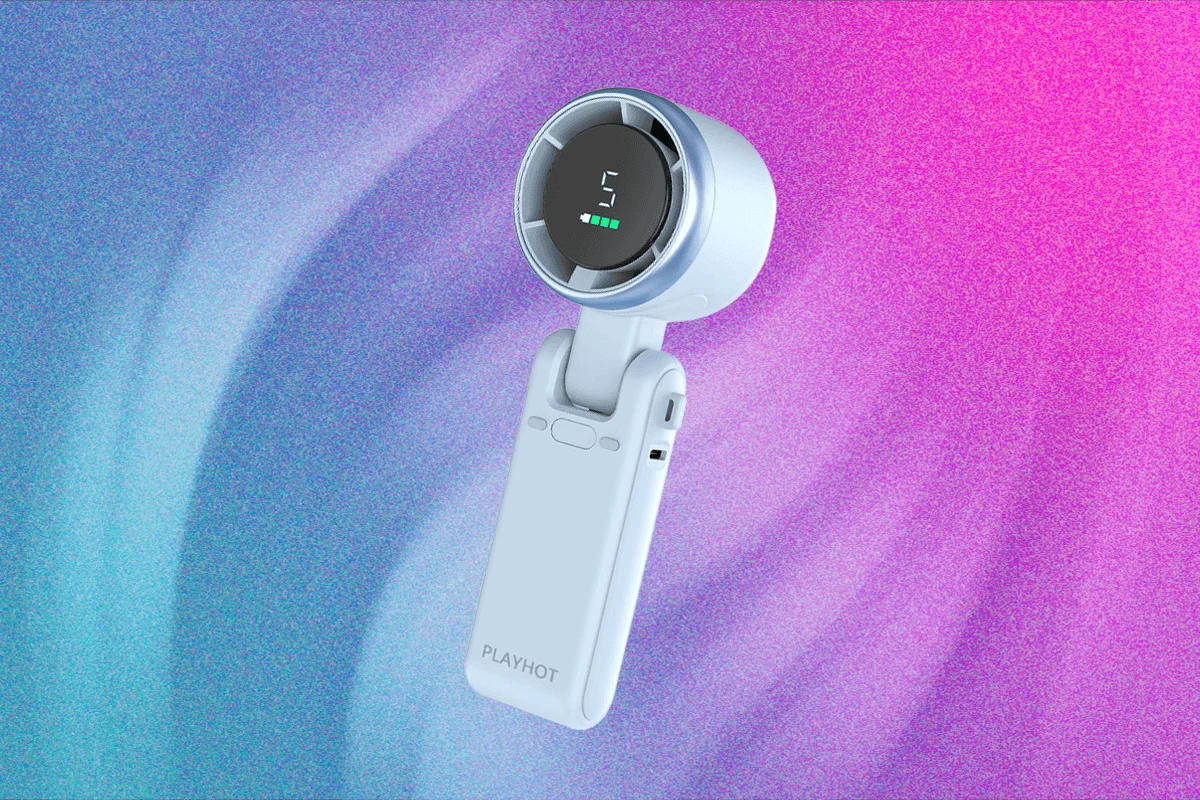
The global personal cooling market has undergone a significant transformation over the last decade, transitioning from a niche category of novelty items to an essential sector of consumer electronics. As record-breaking summer temperatures become an annual occurrence across the Northern Hemisphere, the demand for sophisticated, portable, and efficient cooling solutions has surged. Once dismissed as ineffective gadgets, modern handheld and wearable fans now utilize advanced aerodynamics, high-capacity lithium-ion batteries, and brushless motor technology to provide meaningful thermal relief in environments ranging from humid subway platforms to open-air festivals.
The Evolution of Personal Cooling Technology
The trajectory of personal cooling devices reflects broader trends in battery efficiency and miniaturization. In the early 2010s, portable fans were typically powered by disposable AA batteries and featured soft foam blades with negligible airflow. However, the integration of USB-C charging and high-torque motors has allowed manufacturers to develop "turbo" fans capable of reaching wind speeds previously reserved for desktop models.
Current market leaders focus on three primary form factors: handheld turbo fans for targeted cooling, neck fans for hands-free convenience, and waist-mounted fans designed for laborers and outdoor enthusiasts. The most recent innovations, introduced in the 2025-2026 product cycles, have even begun to incorporate "cold plate" technology—Peltier-effect cooling surfaces that provide conductive heat transfer directly to the skin, supplementing the convective cooling provided by airflow.
Top-Tier Handheld Solutions: The PlayHot Handheld Turbo Fan
In the current landscape of 2026, the PlayHot Handheld Turbo Fan has emerged as a benchmark for the "Best Overall" category. Retailing between $18 and $20, this device exemplifies the shift toward high-performance, high-value electronics. Equipped with a 4,000mAh rechargeable battery, the PlayHot model offers up to 10 hours of continuous operation on its lower settings, a significant improvement over the 2-to-4-hour lifespan of previous generations.

The device utilizes what engineers call "Air Turbo Tech," a system that compresses air within a cylindrical housing before accelerating it through a narrowed aperture. This creates a focused jet of air rather than a wide, turbulent breeze. With five adjustable speed gears, the fan allows users to calibrate their cooling needs based on ambient temperature. Data suggests that at its highest setting, the fan can lower the perceived temperature for the user by as much as 10 degrees Fahrenheit through enhanced evaporative cooling.
Wearable Innovation: Neck and Waist-Mounted Fans
For users requiring hands-free operation, the Jisulife Portable Neck Fan and the Aecooly Portable Waist Fan represent the pinnacle of ergonomic design. The Jisulife model, priced at approximately $30, adopts a bladeless "headphone" aesthetic. This design is not merely stylistic; it prevents long hair or loose clothing from being caught in the intake—a common safety concern with traditional portable fans. By utilizing multiple air outlets around the neck, the device targets the carotid arteries, which can help regulate core body temperature more effectively than cooling the face alone.
Parallel to this is the rise of the waist-mounted fan, a category that has seen a 40% increase in adoption among construction workers, agricultural laborers, and delivery personnel. The Aecooly Portable Waist Fan ($20-$30) clips onto a belt or waistband, blowing air upward beneath the user’s shirt. This creates a micro-climate against the skin, facilitating the rapid evaporation of sweat. Modern iterations of this device often include secondary features such as built-in flashlights and the ability to act as a power bank for mobile devices, reflecting a trend toward multi-functional utility.
Premium Thermal Management: The Ororo ZenFlow and High-End Alternatives
At the premium end of the spectrum, the Ororo ZenFlow Power Cooling Jacket ($150) represents a fusion of apparel and hardware. Unlike standalone fans, the ZenFlow system integrates high-velocity fans directly into the garment’s structure. This approach is particularly effective in high-humidity environments where natural sweat evaporation is hindered. By maintaining a constant flow of air through the jacket’s interior, the system prevents the "greenhouse effect" often experienced in protective outdoor clothing.
Other luxury entries in 2026 include the Shark ChillPill 3-in-1 Personal Cooling System and the Dyson HushJet Mini Cool. Shark’s entry, priced at $150, introduces a cryo-inspired metal cold plate. Users can press this chilled surface against pulse points—such as the neck or wrists—to achieve immediate physiological relief. While the device’s modular nature requires users to carry separate attachments for misting and traditional fanning, the inclusion of conductive cooling marks a new frontier in the industry.

Dyson’s HushJet Mini Cool ($100) focuses on acoustic engineering. While many high-speed portable fans produce a high-pitched whine exceeding 60 decibels, the HushJet utilizes Dyson’s proprietary airflow geometry to deliver a consistent breeze at significantly lower noise levels. Despite its premium branding, market analysis indicates that the wind speed of the HushJet is comparable to mid-range models, suggesting that its primary value proposition lies in its quiet operation and aesthetic integration.
Supporting Data and Market Trends
The surge in personal cooling sales is closely correlated with global climate data. According to the National Oceanic and Atmospheric Administration (NOAA), the last five years have seen an unprecedented number of "extreme heat days" in urban centers. In cities like New York, London, and Tokyo, the "Urban Heat Island" effect can keep temperatures 15 to 20 degrees higher than surrounding rural areas.
Market research from 2025 indicates that the portable fan sector is growing at a Compound Annual Growth Rate (CAGR) of 8.2%. Consumers are increasingly prioritizing:
- Battery Longevity: A move away from 2,000mAh batteries toward 4,000mAh and 5,000mAh standards.
- Charging Speed: The adoption of Power Delivery (PD) through USB-C, allowing devices to reach 80% charge in under 45 minutes.
- Weight-to-Power Ratio: The use of lightweight polycarbonate resins to keep handheld devices under 250 grams.
Chronology of Personal Cooling Milestones
- 2018-2019: The "Neck Fan" goes viral on social media, primarily as a novelty item.
- 2021: Major electronics brands begin integrating brushless DC motors (BLDC), increasing motor lifespan and reducing energy consumption.
- 2023: Introduction of bladeless technology in portable formats, inspired by industrial air multipliers.
- 2025: The first "Hybrid" cooling devices hit the market, combining airflow with Peltier-effect cold plates.
- 2026: Consolidation of the market, with "Turbo" airflow becoming the standard for handheld models and wearable technology integrating with "smart" fabrics.
Official Responses and Industry Perspectives
Industry analysts suggest that the rise of these devices is a pragmatic response to a changing environment. "We are seeing a shift in consumer behavior where personal cooling is no longer a luxury but a health necessity," says Dr. Elena Vance, a thermal ergonomics researcher. "In temperatures exceeding 95 degrees Fahrenheit, the body’s ability to cool itself through sweating becomes less efficient. Mechanical assistance, such as high-velocity airflow or conductive cooling, can significantly reduce the risk of heat exhaustion."
Manufacturers like Shark and Dyson have indicated that their entry into the portable market is a result of years of R&D originally intended for home climate control. A spokesperson for SharkNinja noted that the "ChillPill" was designed to address the "portability gap"—the lack of professional-grade cooling for individuals on the move. Meanwhile, budget-friendly brands like PlayHot have focused on democratizing high-pressure airflow technology, making it accessible to a wider demographic.

Broader Impact and Implications
The implications of widespread personal cooling technology extend beyond individual comfort. In the professional sector, these devices are becoming a standard part of Personal Protective Equipment (PPE). Occupational Health and Safety (OSHA) guidelines in several regions have begun to acknowledge the role of wearable fans in preventing workplace heat illness.
Furthermore, there is an environmental consideration. As individuals turn to personal cooling devices, there is a potential for a "micro-cooling" shift. If a person can stay comfortable using a 5-watt portable fan rather than lowering the thermostat of a central air conditioning system for an entire building, the net energy savings could be substantial. However, the environmental impact of producing and eventually recycling millions of lithium-ion batteries remains a point of concern for sustainability advocates.
As the summer of 2026 progresses, the reliance on these devices is expected to reach an all-time high. The transition from simple plastic blades to sophisticated turbo-engines and cryo-plates demonstrates a remarkable feat of engineering, providing a vital tool for resilience in an increasingly warming world. Whether for a commuter on a sweltering train or a worker in a sun-drenched field, the portable fan has solidified its place as an indispensable component of modern life.