
 Ali Ikhwan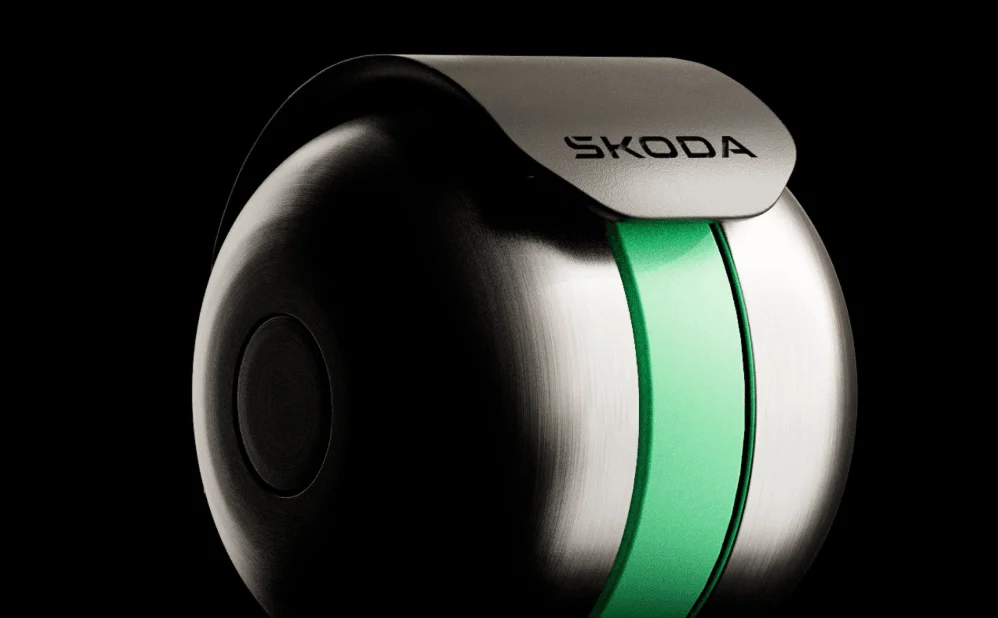
The rapid proliferation of active noise cancellation (ANC) technology in consumer electronics has created an unintended consequence for urban safety: the "perceptive bubble." As pedestrians and commuters increasingly utilize high-end headphones to shield themselves from the cacophony of city life, they are simultaneously insulating themselves from critical auditory cues necessary for survival in shared traffic spaces. In response to this growing public safety concern, the Czech automaker Škoda has unveiled the DuoBell, a mechanical bicycle bell specifically engineered to penetrate the digital barriers of modern audio hardware. This analog device represents a significant shift in safety design, utilizing sophisticated acoustic research to exploit a specific "safety gap" in noise-canceling algorithms.
The Digital Silence Problem in Modern Urban Environments
Active noise cancellation works by using integrated microphones to pick up external ambient sounds. The headphone’s internal circuitry then generates an inverted sound wave—a "counter-phase" signal—that effectively cancels out the incoming noise before it reaches the wearer’s eardrums. While this technology is highly effective at neutralizing consistent, low-frequency sounds such as the drone of an airplane engine or the hum of a ventilation system, it has become so advanced that it now filters out transient alerts, including standard bicycle bells and vehicle horns.
The safety implications are measurable. According to various urban transport studies, the inability to hear approaching vehicles or warnings leads to a significant decrease in reaction time. Pedestrians wearing ANC headphones often fail to notice hazards until they are within their immediate peripheral vision, which, in a fast-moving urban environment, is frequently too late to avoid a collision. The DuoBell’s primary objective is to bridge this sensory divide, ensuring that the cyclist’s warning is registered by the pedestrian’s brain, regardless of the sophistication of their audio equipment.
A Legacy of Two-Wheeled Innovation
While Škoda is globally recognized today as a major automotive manufacturer under the Volkswagen Group umbrella, the company’s foray into bicycle safety is a return to its foundational roots. In 1895, founders Václav Laurin and Václav Klement began their commercial journey not with cars, but with the production of bicycles under the "Slavia" brand in Mladá Boleslav. This historical context provides a unique backdrop for the DuoBell project, framing it as a modern evolution of the company’s century-old commitment to mobility and safety.
The development of the DuoBell was not an isolated engineering task but a collaborative effort between Škoda’s internal research and development teams and acoustic scientists at the University of Salford in the United Kingdom. The University of Salford is home to some of the world’s most advanced acoustic testing facilities, including anechoic chambers that allow for the precise measurement of sound propagation without interference from echoes or external vibrations.
Identifying the Safety Gap: The Science of 750-780 Hz
The core of the DuoBell’s effectiveness lies in a specific frequency range identified during the research phase at Salford. The researchers discovered what they termed a "safety gap" located between 750 and 780 Hz. Through rigorous testing of various ANC headphone models—ranging from premium over-ear units to budget-friendly in-ear monitors—the team found that current digital signal processing (DSP) chips struggle to generate effective counter-phase waves within this narrow window.
Most ANC systems are optimized to handle frequencies below 500 Hz (the typical range of engine noise) or much higher frequencies through passive isolation. The mid-range frequencies, particularly around the 750-780 Hz mark, represent a technical blind spot. By tuning the DuoBell to resonate primarily within this frequency, Škoda has ensured that the sound waves physically bypass the electronic filters of the headphones, reaching the listener’s ear as a distinct, un-muffled alert.
Mechanical Complexity in an Analog Housing
The DuoBell is entirely mechanical, eschewing batteries or digital components in favor of precision engineering. Its design incorporates two distinct elements to maximize its reach:
- The Primary Resonator: Tuned specifically to the 750-780 Hz "safety gap," this component ensures the base frequency of the bell is audible through digital interference.
- The High-Frequency Secondary Resonator: To improve overall efficiency and "cut" through the general din of a city, an additional resonator is tuned to a higher pitch. This creates a multi-tonal sound profile that the human brain is naturally programmed to prioritize as an alert.
Furthermore, the bell’s hammer mechanism is designed to produce rapid, irregular strikes. While traditional bells might produce a rhythmic "ding-ding," the DuoBell’s mechanism generates a staccato of blows. This irregularity is crucial; ANC algorithms are most effective at canceling predictable, repetitive patterns. By introducing a chaotic, rapid-fire sequence of sounds, the DuoBell makes it mathematically difficult for the headphone’s DSP to predict and neutralize the signal in real-time.

Empirical Evidence: The London Trials
To validate the laboratory findings, Škoda conducted extensive field tests on the streets of London, a city known for its high density of both cyclists and headphone-wearing commuters. The methodology involved cyclists approaching pedestrians who were wearing various models of ANC headphones playing music at standard volumes.
The results were statistically significant. Pedestrians alerted by the DuoBell detected the approaching cyclist an average of five seconds earlier than those alerted by a conventional bicycle bell. In terms of physical distance, this translated to a 22-meter advantage. In an urban setting where a cyclist may be traveling at 20 to 25 kilometers per hour, those five seconds represent the difference between a controlled stop and a high-risk emergency maneuver.
The study also noted a psychological component. The specific tonal quality of the DuoBell elicited a more immediate "startle response" from test subjects, suggesting that the frequency range is not only physically audible but also cognitively harder to ignore.
Industry Reactions and the Responsibility Debate
The announcement of the DuoBell has sparked a broader conversation regarding the responsibilities of both tech manufacturers and road users. Safety advocates have largely praised the initiative, noting that as cities become more crowded and quiet—thanks to the rise of electric vehicles (EVs) and "silent" transport—the burden of signaling intent falls increasingly on the shoulders of individual road users.
"We are seeing a convergence of two silent trends," says an urban safety analyst. "On one hand, we have the electrification of transport, which removes the natural ‘warning track’ of engine noise. On the other, we have pedestrians and cyclists who are increasingly sensory-deprived by their own devices. Solutions like the DuoBell are a necessary mechanical intervention in an increasingly digital world."
However, some technology critics argue that the existence of such a device highlights a failure in headphone design. There are growing calls for "AI-aware" headphones that can recognize emergency frequencies—such as sirens or specific safety-tuned bells—and automatically lower the music volume or switch to a "transparency mode." Until such software becomes a mandatory industry standard, mechanical solutions like the DuoBell remain the most reliable failsafe.
Broader Implications for Urban Design and Safety
The DuoBell is more than just a cycling accessory; it is a case study in "adversarial design"—creating products that intentionally overcome the limitations or obstructions created by other technologies. As cities move toward "Vision Zero" goals—the international initiative to eliminate all traffic fatalities and severe injuries—innovations that address the reality of human behavior (such as wearing headphones) are becoming essential.
The implications of the DuoBell research extend beyond cycling. The identification of the 750-780 Hz safety gap could potentially be used to standardize the warning sounds of electric scooters, delivery robots, and even electric cars when traveling at low speeds in pedestrian zones. If a universal "safety frequency" can be established, it would allow for a safer coexistence between high-tech personal entertainment and public safety requirements.
Availability and Future Outlook
As of the current publication, Škoda has not yet released specific pricing or a commercial launch date for the DuoBell. The company has, however, published the full results of its study with the University of Salford, offering the data to the wider engineering and safety community. This transparency suggests that Škoda views the project as both a brand-building exercise in safety leadership and a genuine contribution to urban mobility research.
In the interim, the DuoBell stands as a testament to the enduring power of analog engineering. In an era where "smart" is often equated with "digital," the DuoBell proves that sometimes the most effective way to solve a problem caused by a computer is through the clever application of physics, resonance, and a well-timed mechanical strike. For the urban cyclist navigating a world of distracted pedestrians, those extra five seconds of awareness could be the most valuable innovation on their handlebars.







