 Ali Ikhwan
The Evolution of the Mac Mini Price Strategy
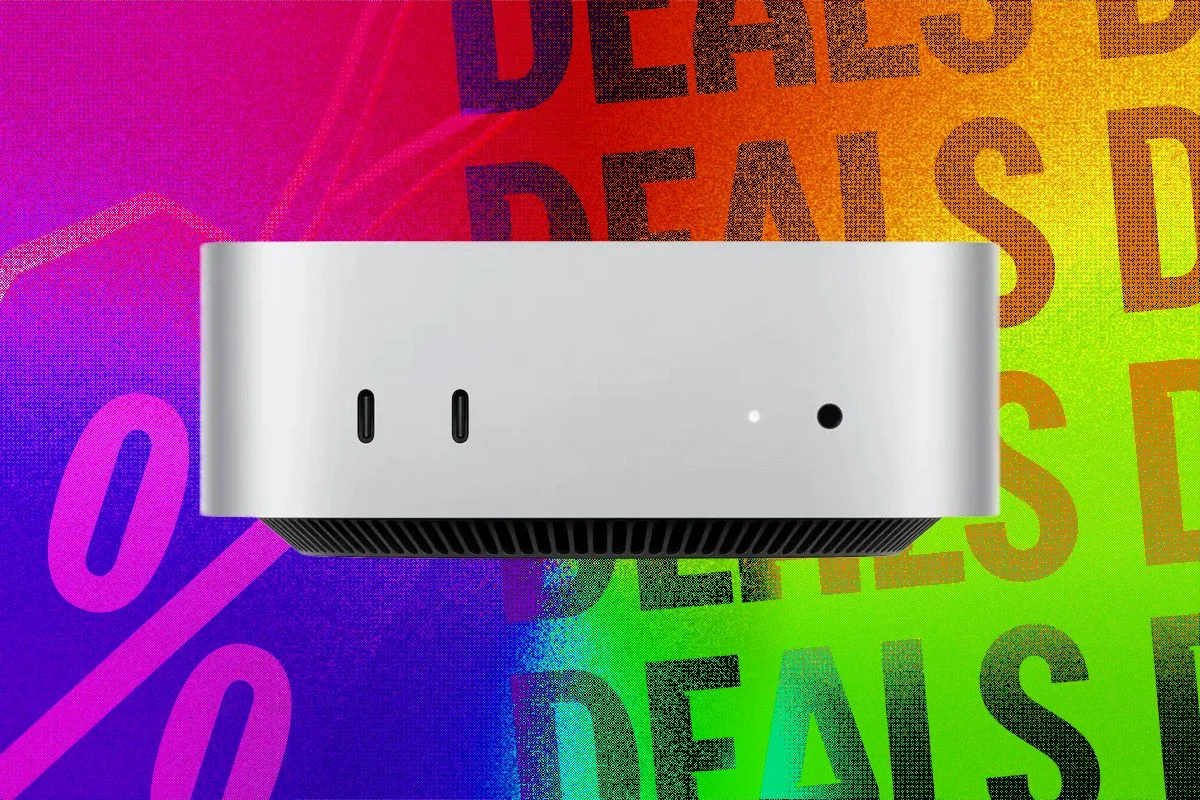
To understand the current retail landscape, one must examine the pricing trajectory of Apple’s desktop line over the past two years. When the Mac Mini M4 first launched in 2024, it arrived with a competitive $599 starting price, positioning it as the quintessential entry point for the macOS ecosystem. However, the global semiconductor market proved volatile throughout the year. Due to compounding pressures from chip and memory shortages, Apple—like many of its peers in the consumer electronics sector—was forced to recalibrate its pricing structure. By the time supply chain stabilization measures were fully implemented, the M4 model’s retail price had crept up to $799.
This upward trend was not unique to the Mac Mini; it reflected a broader industry-wide "knockout round" of price increases that impacted everything from tablets to high-performance workstations. The introduction of the M6 chip, which carries a starting price of $899, provides a baseline for the next generation of computing performance. Consequently, the current $649 sale price for the M4 offers a complex value proposition. While it is undeniably a discount relative to the current market climate, it remains a reminder of the inflationary pressures that defined the hardware market in the mid-2020s.
Chronology of a Silicon Workhorse
The rise of the Mac Mini M4 was largely unexpected by market analysts who traditionally viewed the device as a secondary machine for home offices or basic server tasks. The timeline of its ascent began in early 2024 with the launch of the M4 silicon, which featured improved neural engine capabilities.
- Q1 2024: Apple announces the M4-powered Mac Mini. Early reviews praise the compact footprint and the integration of advanced unified memory architecture.
- Q2 2024: Developers discover that the M4’s specialized AI acceleration units, combined with its thermal efficiency, allow it to handle complex, local agentic AI tasks that previously required expensive server-grade hardware.
- Q3 2024: Inventory levels collapse. A surge in demand from hobbyists, AI researchers, and small-scale developers leads to sustained shortages, with retailers reporting backorders spanning several weeks.
- Q4 2024 to Q2 2026: Apple maintains steady supply, though the device remains difficult to acquire at MSRP.
- Q3 2026: The official announcement of the Mac Mini M6. The release of this new architecture allows retailers to clear out remaining M4 inventory, leading to the current $649 promotion.
Comparative Performance Analysis: M4 vs. M6
When evaluating whether to invest in the discounted M4 or the premium M6, it is necessary to parse the technical requirements of modern software. The M6 system-on-a-chip (SoC) introduces significant gains in memory bandwidth, higher core counts for both CPU and GPU operations, and enhanced neural processing for real-time generative AI tasks. For professionals involved in heavy video editing, high-resolution 3D rendering, or the deployment of large language models (LLMs) that require massive memory overhead, the M6 is the clear choice.
However, for the vast majority of consumers, the performance delta between the two generations is negligible. The M4, even in its base configuration, remains highly capable for everyday tasks, including high-definition media consumption, web browsing, and general productivity software. The bottleneck for most users is not the chip itself, but rather the 16 GB memory limit. Users interested in local AI execution should note that while the M4 can handle lightweight models with ease, intensive AI workloads—such as training local agents—benefit significantly from the 32 GB or higher configurations. The base model’s 256 GB of storage is sufficient for operating systems and applications, though power users will likely need external storage solutions, which further impacts the total cost of ownership.
Broader Market Implications
The current retail environment for the Mac Mini serves as a bellwether for the "prosumer" computing market. As local AI becomes a standard feature rather than a niche hobbyist pursuit, the hardware requirements for home computing have been permanently shifted upward. The fact that the M4 Mac Mini became a target for "AI-mining" and local model deployment signals a change in how consumers view desktop hardware. The machine is no longer just a monitor-less computer; it is a specialized tool for the next wave of local automation.

Industry observers note that the decision by retailers to discount the M4 is a strategic necessity to clear inventory before the M6 ecosystem fully matures. For the consumer, this creates a rare window of opportunity to acquire high-performance hardware at a price point that acknowledges the original, pre-inflationary pricing model. While the $649 price tag is technically $50 higher than the 2024 launch price, it is objectively the lowest point of entry for modern Apple silicon currently available in the new-device market.
Expert Perspectives on Value Retention
Economic analysts following the technology sector have observed that Apple products, particularly those with the company’s proprietary silicon, tend to maintain their resale value longer than comparable Windows-based PCs. The M4 Mac Mini, by virtue of its widespread adoption in the development community, is likely to remain a relevant machine for several years. Even as newer iterations of the M-series chips are released, the M4’s efficiency and compatibility with the latest macOS updates ensure that it will not become obsolete in the near term.
However, stakeholders caution against viewing the $649 price as a "cheap" computer. It remains a premium device, and the total cost of building out a workstation—accounting for peripherals such as displays, high-quality keyboards, and trackpads—should be considered. For those who already possess the necessary peripherals, the M4 Mac Mini represents a cost-effective way to integrate a high-performance desktop into a home or professional workflow.
Final Considerations for the Consumer
The decision to purchase the M4 Mac Mini should be dictated by the user’s specific use case. If the goal is to enter the Apple ecosystem, perform daily office tasks, or engage in light-to-moderate software development, the M4 is arguably the best value-per-dollar machine currently on the market. It offers the speed and reliability of the Apple M-series architecture without the premium markup associated with the latest M6 launch.
Conversely, if the user is planning for long-term scalability—specifically regarding AI research or high-fidelity media production—the constraints of the base-model M4’s unified memory and storage may prove restrictive. In such instances, the newer M6, despite the higher barrier to entry, may offer better long-term performance and longevity.
Ultimately, the return of the Mac Mini M4 to retail shelves at a sub-$700 price point is a welcome development for the hardware market. It provides a reliable, proven, and efficient solution for users who have been waiting for a price correction. While the "catch" of the previous supply shortages and the inflationary price hikes remains a part of the product’s narrative, the current deal effectively balances performance, cost, and immediate availability. As the computing landscape continues to evolve toward more intensive local processing, the M4 Mac Mini stands as a testament to the longevity of well-engineered hardware, offering a bridge between the previous generation of computing and the high-performance demands of the future.