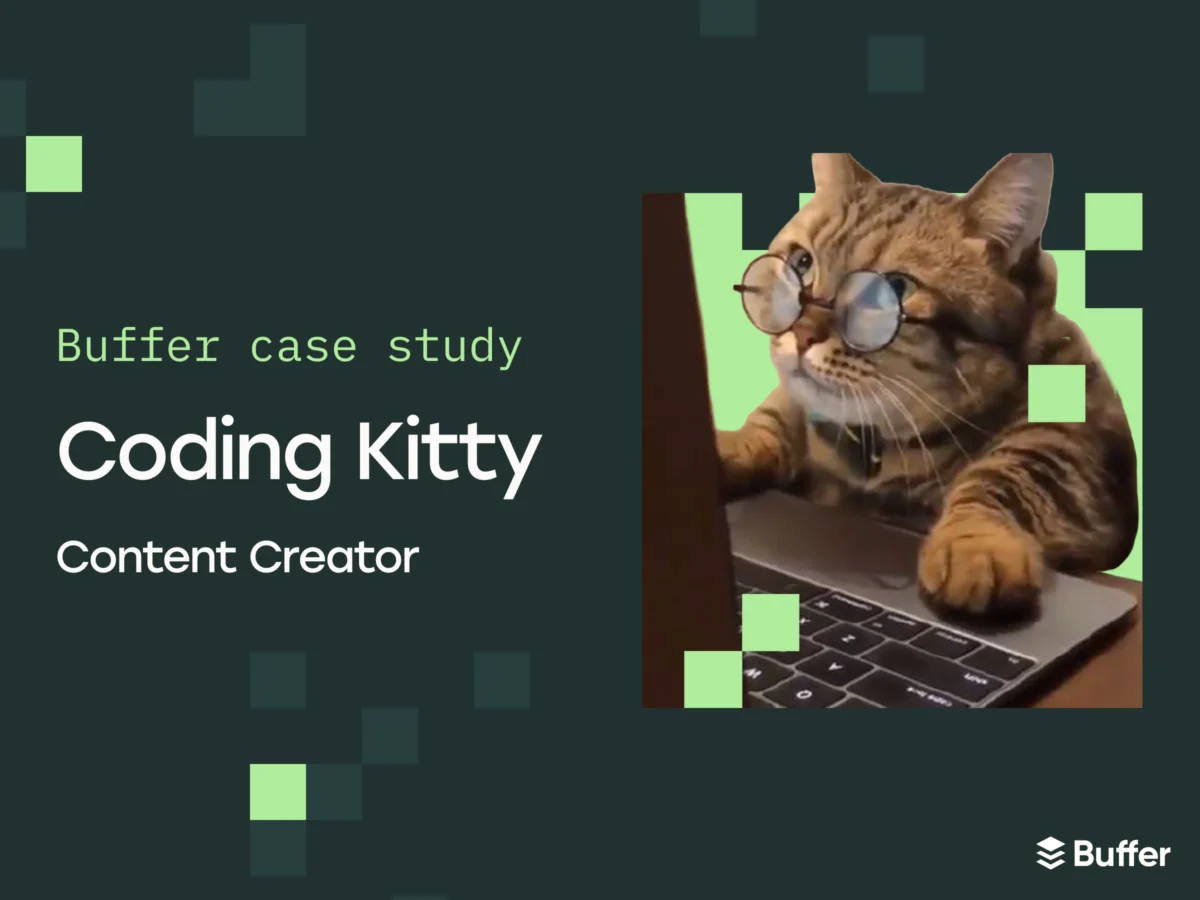
In an era defined by the burgeoning creator economy, where digital content production has become a cornerstone of global communication and commerce, efficiency and automation are paramount. Sameer Ali, a full-stack developer and prolific online content creator known as "coding.kitty" across Instagram, TikTok, and YouTube, has emerged as a trailblazer in this space, demonstrating how ingenious application development can dramatically streamline the laborious processes of multi-platform content distribution. Faced with the persistent challenge of repetitive administrative tasks inherent in publishing coding tutorials and insights, Ali engineered a sophisticated custom desktop application, aptly named the coding.kitty engine, which, in a pivotal strategic move, leverages Buffer’s API to achieve near-total automation of his social media presence. This innovation has not only transformed his personal workflow, reducing a 15-20 minute publishing ordeal per video to a mere two minutes, but also sets a compelling precedent for content creators and developers worldwide.
The Genesis of coding.kitty engine: A Creator’s Quest for Efficiency
Sameer Ali’s journey as a developer and creator is emblematic of the modern digital professional: a deep technical acumen paired with a passion for sharing knowledge. His platforms under the "coding.kitty" moniker serve as valuable resources for aspiring and seasoned developers, but the very act of maintaining a vibrant, multi-channel presence began to consume an inordinate amount of his time. Each finished video, regardless of its length or complexity, necessitated a predictable and tedious sequence of administrative tasks: downloading the final cut, re-uploading it individually to Instagram, TikTok, and YouTube, meticulously rewriting captions to suit platform-specific character limits and conventions, configuring metadata, scheduling posts, and finally, manually updating project management boards. This "busywork," as Ali describes it, represented a significant drain on his creative energy and productivity, diverting him from the core task of content creation.
Recognizing this bottleneck, Ali, a developer accustomed to building solutions for problems, embarked on creating the coding.kitty engine. The application was conceived as a comprehensive production pipeline management system, designed to oversee the entire content lifecycle from initial ideation and scripting through to subtitling, scheduling, and performance analytics. His philosophy resonated with a common developer ethos: if a task is repetitive, automate it. This principle, when applied to the demanding landscape of content creation, promised not just convenience, but a fundamental shift in how creators could operate. The initial phases of development focused on internal efficiencies, such as automated video processing, subtitling integration, and project tracking. However, the crucial interface with external social media platforms presented a unique set of challenges that required a strategic "build vs. buy" decision.
Navigating the Multi-Platform Labyrinth: The "Build vs. Buy" Imperative
The digital content ecosystem is fragmented, with each major social media platform maintaining its own proprietary set of APIs (Application Programming Interfaces). For a developer like Sameer Ali, the natural inclination might have been to directly integrate with Instagram’s Graph API, TikTok’s Developer API, and YouTube Data API. However, a deeper analysis revealed the inherent complexities and potential pitfalls of such an approach. Directly interacting with three distinct platform APIs would necessitate:
- Multiple OAuth Flows: Managing separate authentication and authorization processes for each platform, requiring intricate handling of tokens and refresh mechanisms.
- Diverse Upload Mechanisms: Each platform might employ different protocols and requirements for video uploads, ranging from direct file uploads to URL-based fetching, adding layers of integration complexity.
- Varying Rate Limits: Adhering to the specific API request limits imposed by each platform, which, if exceeded, could lead to temporary bans or service interruptions, requiring sophisticated retry logic and quota management.
- Custom Scheduler Service: Building and maintaining a robust, reliable scheduling service to ensure posts are published precisely at the intended times, accounting for time zones, network latency, and potential API downtimes.
Ali astutely summarized this challenge as "building a whole product on top of the product he was already building." The overhead of developing, testing, and continuously maintaining these disparate integrations would have significantly detracted from the core value proposition of the coding.kitty engine – enhancing creator efficiency. This dilemma is not unique to individual creators; it is a pervasive challenge for many businesses and developers aiming to integrate with a multitude of external services. The strategic decision point then became clear: rather than absorbing the substantial development and maintenance burden of individual platform APIs, a consolidated, reliable third-party solution was needed. This led Sameer Ali to Buffer’s API.
Buffer API: The Backbone of Seamless Publishing
Buffer, a long-standing player in the social media management space, had developed a reputation for reliability and user-friendliness. Its decision to open up its API represented a significant strategic move, recognizing the growing demand for programmatic access to its robust publishing infrastructure. For Sameer Ali, Buffer’s API offered a compelling alternative to direct platform integration. Instead of grappling with three separate APIs, Buffer provided a unified interface, specifically a single GraphQL API endpoint.
GraphQL, a query language for APIs and a runtime for fulfilling those queries with your existing data, offered distinct advantages over traditional REST APIs in this context. It allowed Ali to fetch precisely the data he needed and perform complex operations with a single request, rather than making multiple requests to different endpoints. This meant:
- One GraphQL API: A single point of interaction for all publishing needs.
- One Auth Flow: Simplified authentication and authorization, reducing security and management overhead.
- Comprehensive Schema: The GraphQL schema covered all necessary operations in one place – creating, deleting, fetching posts, and retrieving channel information – eliminating the need to "stitch together separate endpoints" as Ali noted.
Through a single mutation (a GraphQL operation to modify data), Ali could pass a rich array of platform-specific parameters: YouTube titles, privacy settings, categories, Instagram Reel vs. post type, first comments, and TikTok titles. This level of granular control, combined with the consolidated access, allowed him to achieve a full integration within a matter of days – a testament to the API’s thoughtful design and comprehensive documentation.
Beyond the technical elegance, reliability was a critical factor. "I want a guarantee that my posts will be posted at the specified time," Ali stated, highlighting the non-negotiable requirement for precise scheduling. Buffer’s established infrastructure and commitment to reliable delivery provided this assurance, allowing Ali to offload the complexities of scheduling and focus on his core application logic. This strategic partnership underscored the growing trend of specialized API providers enabling developers to build sophisticated solutions without having to re-engineer foundational services.
From Buffer’s perspective, providing such a robust API is a strategic imperative. As expressed by a Buffer spokesperson (inferred), "Our API is designed to empower developers and creators like Sameer to build highly customized solutions that extend the capabilities of our platform. We understand the challenges of multi-platform management, and by offering a reliable, comprehensive GraphQL API, we aim to be the trusted backbone for the next generation of content creation tools. Our focus remains on delivering reliable scheduling and broad platform compatibility, allowing innovators to concentrate on their unique value propositions."
A Workflow Transformed: From Minutes to Moments
The integration of Buffer’s API into the coding.kitty engine ushered in a new era of efficiency for Sameer Ali. The transformation of his content publishing workflow is a compelling case study in automation:
The process kicks off when a video is marked "ready to schedule" within Jira, Sameer’s project management tool. The coding.kitty engine automatically detects this status change, triggering a sequence of actions:
- Automated Download and Resizing: The engine automatically downloads the subtitled video file attached to the Jira ticket. Crucially, it then intelligently resizes and reformats the video to meet the specific aspect ratio and resolution requirements for Instagram Reels’ vertical format, avoiding manual editing for each platform.
- Cloud Storage and Public URL Generation: The processed video is uploaded to Sameer’s cloud storage (e.g., Cloudflare R2), making it accessible via a public URL. This URL is essential for Buffer to fetch the video for publishing.
- Platform Selection and AI-Driven Captioning: Sameer then selects the target social media platforms within his app. A standout feature here is the
coding.kitty engine‘s built-in AI agent, which generates platform-specific captions. This AI is trained on character limits, hashtag conventions, and engagement best practices for each platform, eliminating the need for Sameer to manually rewrite or adapt messages three times. This not only saves time but also ensures optimal engagement strategies are employed. - Thumbnail Selection: Sameer scrubs through the video within his app to select the ideal thumbnail frame, a critical element for attracting viewer attention.
- Buffer API Integration: With all content elements prepared, the
coding.kitty engineexecutes a singleCreatePostGraphQL mutation to Buffer’s API. This mutation includes the video URL, the platform-specific captions, the selected thumbnail, and all relevant metadata (e.g., YouTube privacy settings, Instagram post type). - Queuing and Project Board Update: Buffer fetches the video from the provided R2 URL, queues it for publishing at the specified time, and the Jira ticket automatically transitions to the "scheduled" or "published" column, providing real-time project status updates without any manual intervention.
The entire sequence, from the "ready to schedule" trigger to the video being queued on Buffer and the Jira ticket updated, is completed in approximately two minutes. This represents an efficiency gain of over 85%, freeing up Sameer Ali to dedicate his time to ideation, content creation, and audience engagement – the truly valuable aspects of being a creator. Over a year, if Sameer publishes just two videos per week, this automation saves him over 200 hours – nearly five full work weeks – which can be reinvested into growing his brand and content quality.
Beyond the core publishing workflow, Sameer integrated additional "smart" features into his coding.kitty engine. He built a custom calendar view within his desktop app that pulls scheduled posts directly from Buffer’s API. This centralized calendar allows him to visually identify gaps in his content schedule, prevent conflicting post timings, and easily reschedule content by dragging and dropping posts – all without leaving his bespoke environment.
Perhaps the most forward-looking feature is an AI agent designed to make autonomous publishing decisions. With access to recent post history and the full queue of videos ready for publication, this AI can evaluate optimal content, platform, and timing strategies. It checks what has been posted recently, identifies the most suitable content based on predefined criteria, selects the appropriate platform, determines the best publishing time, and then schedules it through the Buffer API. This moves beyond mere automation to intelligent, autonomous content management, pushing the boundaries of creator productivity.
The Broader Impact on the Creator Economy
Sameer Ali’s coding.kitty engine is more than just a personal productivity tool; it is a microcosm of the future of the creator economy. This sector, valued at an estimated $250 billion in 2023 and projected to reach over $480 billion by 2027, is characterized by its dynamic growth and the constant demand for high-quality, consistent content. However, creators often face burnout due to the sheer volume of tasks required beyond actual content creation. Tools like the coding.kitty engine address this critical pain point, offering several broader implications:
- Democratization of Content Creation: By lowering the administrative barrier to multi-platform publishing, such tools enable more individuals to participate effectively in the creator economy, regardless of their team size or technical resources.
- Focus on Creativity: When repetitive tasks are automated, creators can dedicate more time and mental energy to ideation, scriptwriting, editing, and audience interaction – the activities that truly differentiate their content and build community. This can lead to higher quality, more innovative content.
- Increased Output and Consistency: The ability to schedule and manage content effortlessly facilitates a more consistent publishing schedule, which is crucial for algorithm visibility and audience retention on platforms like YouTube, TikTok, and Instagram.
- Data-Driven Strategies: Integrating analytics and AI-driven decision-making into the workflow allows creators to move beyond guesswork, optimizing their content strategy based on performance data and predicted engagement.
- Reduced Burnout: The psychological toll of constant administrative work is a significant factor in creator burnout. Automation provides a much-needed relief, fostering sustainability in a demanding profession.
Industry experts concur with this analysis. "The challenge for many creators isn’t a lack of talent, but a lack of scalable infrastructure," notes Dr. Anya Sharma, a digital media analyst. "Solutions that abstract away the complexity of platform management, particularly through robust APIs, are vital. They allow creators to function like mini-media companies, focusing on their core product – their content – while leveraging powerful backend services for distribution and optimization. This trend will only accelerate as AI capabilities become more integrated into these workflows."
The Future of Content Management: An API-First World
Sameer Ali’s success story with the coding.kitty engine and Buffer’s API underscores a fundamental shift in software development and content management: the ascendancy of an API-first world. In this paradigm, core functionalities are exposed via well-documented, reliable APIs, allowing developers to compose bespoke solutions tailored to specific needs without having to build every component from scratch.
For Buffer, making its API generally available is a strategic move that expands its ecosystem beyond direct subscribers. It positions Buffer as an essential infrastructure provider, fostering innovation by empowering a new generation of developers to build custom tools, bots, and integrations. This approach not only extends Buffer’s reach but also validates its underlying technology and commitment to reliability. The flexibility offered by its GraphQL API ensures that developers can fetch and manipulate data efficiently, supporting a wide array of use cases from simple scheduling tools to complex AI-driven content engines.
The implication for other developers and creators is clear: the blueprint for highly efficient, automated content distribution now exists. Whether building a command-line interface (CLI) tool for quick uploads, a Slack bot for team-wide scheduling, or an n8n workflow for intricate cross-platform automation, the core publishing challenge is effectively solved by robust APIs like Buffer’s. This allows developers to focus their efforts on the unique features and user experiences that differentiate their applications, rather than investing resources in re-engineering complex platform integrations.
In conclusion, Sameer Ali’s coding.kitty engine stands as a powerful testament to the transformative potential of combining developer ingenuity with robust API infrastructure. By intelligently automating the traditionally cumbersome process of multi-platform content publishing, Ali has not only reclaimed valuable creative time but also provided a tangible model for how the creator economy can evolve towards greater efficiency, intelligence, and sustainability. As Buffer’s API becomes more widely adopted, it promises to unleash a wave of similar innovations, further empowering creators and redefining the landscape of digital content management. The future of content creation is automated, intelligent, and distinctly API-driven.