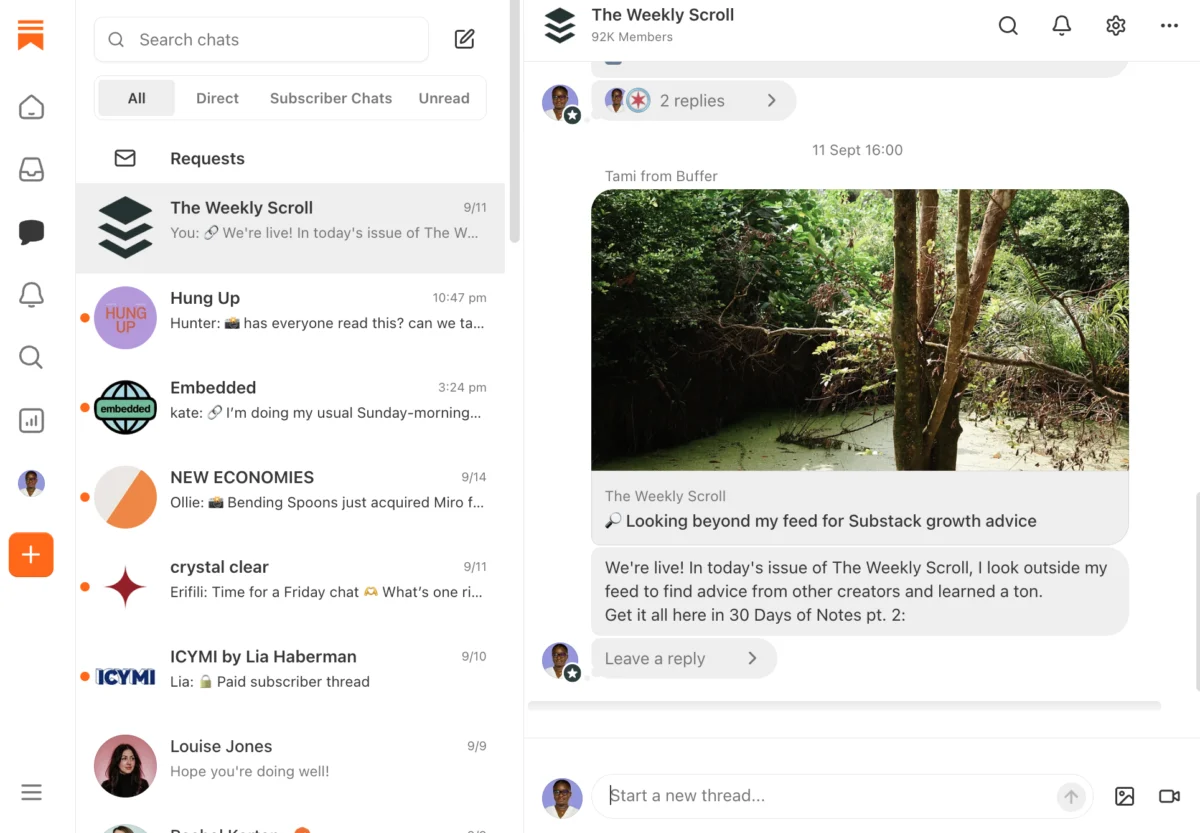


In the rapidly evolving digital ecosystem of 2026, content creators, small business owners, and global marketing agencies face an ever-expanding array of platforms and communication channels. Establishing a cohesive digital footprint requires robust social media management tools capable of handling everything from rapid, text-based updates to complex evergreen content distribution models. Selecting the appropriate software solution directly impacts operational efficiency, team collaboration, and audience engagement metrics. To assist organizations in navigating this software landscape, a detailed evaluation of two industry stalwarts—Buffer and RecurPost—was conducted, examining their publishing capabilities, analytical depth, inbox management systems, and team workflows.
Buffer is structurally designed around rapid, flexible publishing suited for solo creators and expanding teams alike. It features a streamlined user interface with minimal learning curve and maintains a perpetual free tier. Conversely, RecurPost centers its architecture around automated content cycling and evergreen libraries, making it a specialized choice for organizations that rely heavily on automated background distribution and advanced Instagram direct message configurations. Understanding the fundamental differences in their business models, technical integrations, and platform support is crucial for stakeholders aiming to optimize their digital strategies.
Pricing Structures and Financial Implications
The financial architectures of Buffer and RecurPost utilize entirely distinct paradigms. Buffer implements a tiered model that scales per social channel, incorporating volume discounts as organizations expand their digital footprint. Furthermore, Buffer’s Team plan integrates unlimited user seats, ensuring that scaling human resources does not inflate monthly overhead costs. Entry-level paid options begin at $6 per channel per month for the Essentials plan, while the comprehensive Team plan is priced at $12 per channel per month. Notably, Buffer also offers a permanent free tier encompassing three social channels and ten scheduled posts per channel.
RecurPost operates on a flat-rate plan model supplemented by à la carte add-ons for additional channels, user seats, and specialized features. Starting paid options begin at $9 per month for the Starter plan, which accommodates two profiles and a single user. Higher-tier options include the Personal plan at $25 per month for five profiles, and the Agency plan at $79 per month for up to 20 profiles. Additional profiles can be integrated for a flat fee of $4 per profile per month, while extra user seats on the Agency tier cost $20 per seat monthly. Additional overhead costs may arise from specialized add-ons, including Meta Ads Manager boosting capabilities, X analytics access, and enhanced artificial intelligence generation credits.

For individual creators managing a minimal number of channels, Buffer’s free tier provides a cost-effective entry point. However, for smaller agencies and concentrated teams managing specific profiles, RecurPost offers competitive flat-rate pricing structures at lower volumes. As enterprise needs scale in terms of total channels and concurrent users, Buffer’s per-channel scaling with unlimited user seats frequently proves more economically sustainable.
Scheduling, Publishing, and Content Architecture
The core operational philosophies of both platforms diverge significantly within their scheduling mechanics. Buffer assumes that users are actively generating fresh, original content on a regular basis. Its composer enables rapid drafting, cross-platform customization, and queue integration. Users define posting schedules once, and incoming content populates the designated slots automatically. Additionally, Buffer provides a dedicated "Create" workspace—a collaborative board where teams can brainstorm, organize, and refine drafts before scheduling.

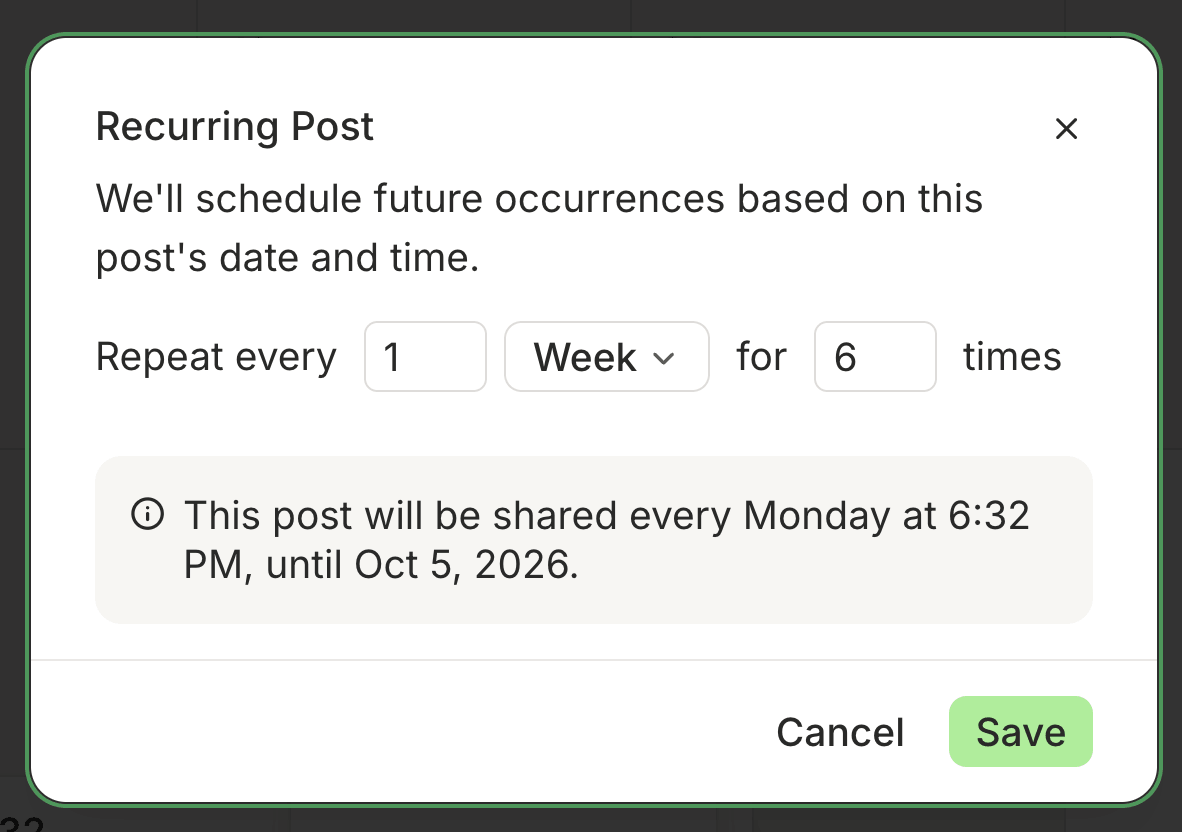
RecurPost approaches scheduling through the lens of continuous content recycling. Users organize materials into categorical libraries, assign recurring time slots by day or month, and allow posts to circulate and loop automatically. While this methodology requires a steeper initial learning curve to configure evergreen queues, it excels for organizations with steady, repeatable content assets. Buffer has introduced native recurring post capabilities in beta, though these function as single-post repetitions rather than expansive, multi-post rotating libraries.
Advanced platform-specific publishing capabilities also differentiate the two services. RecurPost integrates specialized Instagram tools directly into its composer, allowing users to schedule trial reels, incorporate licensed audio via Facebook integrations, tag collaborators, and deploy keyword-triggered direct message automations. An optional monthly add-on further enables direct post boosting through Meta Ads Manager.
Inbox Management and Community Engagement
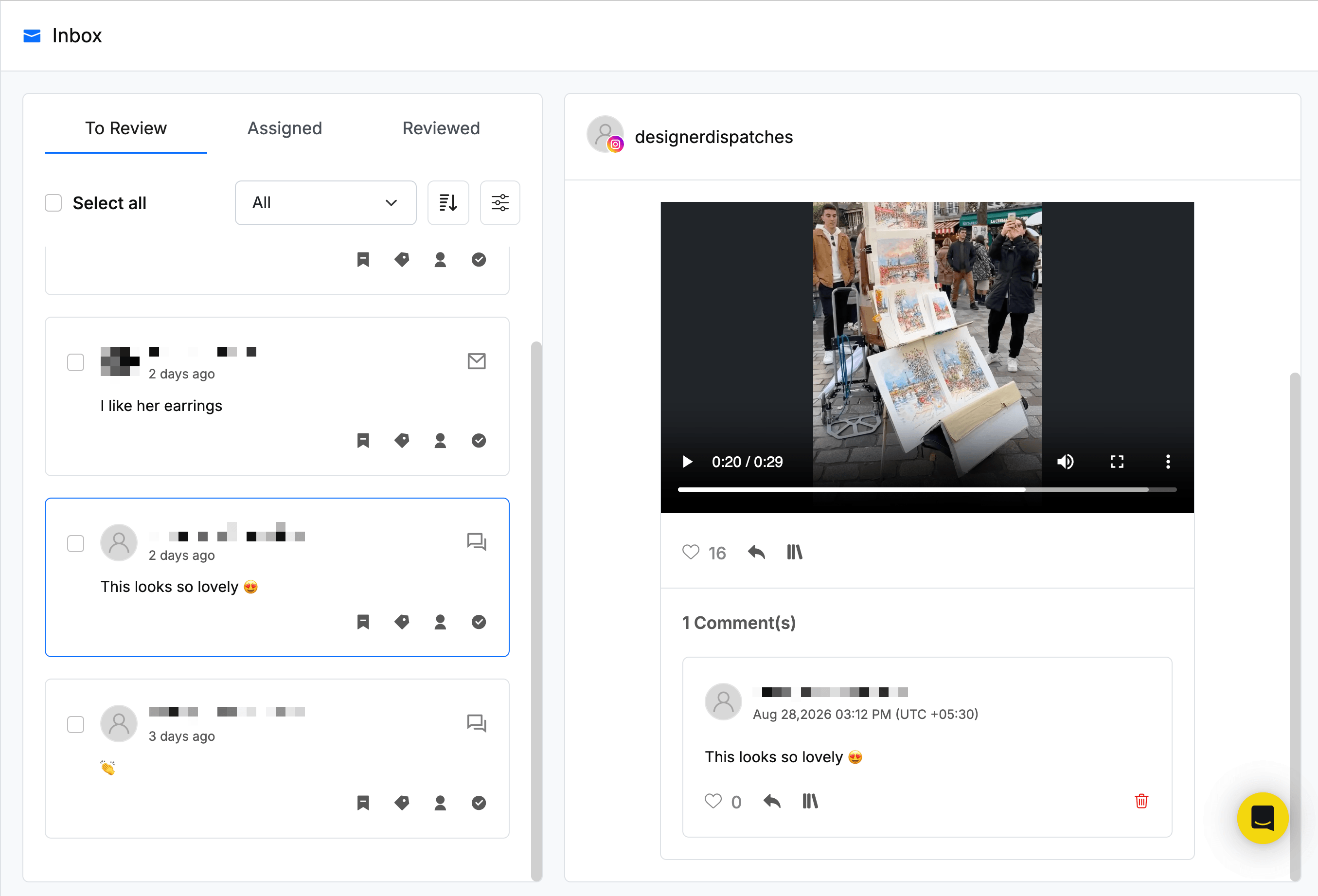
Customer engagement features dictate how efficiently brands can interact with their audiences across digital touchpoints. Buffer’s Community inbox provides a broad platform footprint, supporting comments and mentions across Facebook Pages, LinkedIn profiles and company pages, Instagram professional accounts, Threads, Bluesky, X, Google Business Profiles, TikTok, YouTube, and Mastodon. It includes AI-powered reply suggestions, response time tracking metrics, and organization-wide saved replies to streamline frequently asked questions.
RecurPost restricts its inbox footprint to a more localized set of channels, including Instagram business profiles, Facebook Pages, LinkedIn Company Pages, and Google Business Profiles. However, it extends its utility by supporting direct messages for Facebook and Instagram. RecurPost’s standout engagement feature is its Instagram DM automation, which triggers instant or follower-restricted responses based on specific keyword criteria or blanket rules. While highly effective for marketing campaigns, testing revealed that automated responses occasionally register as pending within the unified inbox, necessitating careful team oversight to prevent duplicate replies. Furthermore, RecurPost currently lacks organization-wide saved replies, requiring manual text entry for common inquiries outside of automated sequences.
Analytics, Reporting, and Data Utilization

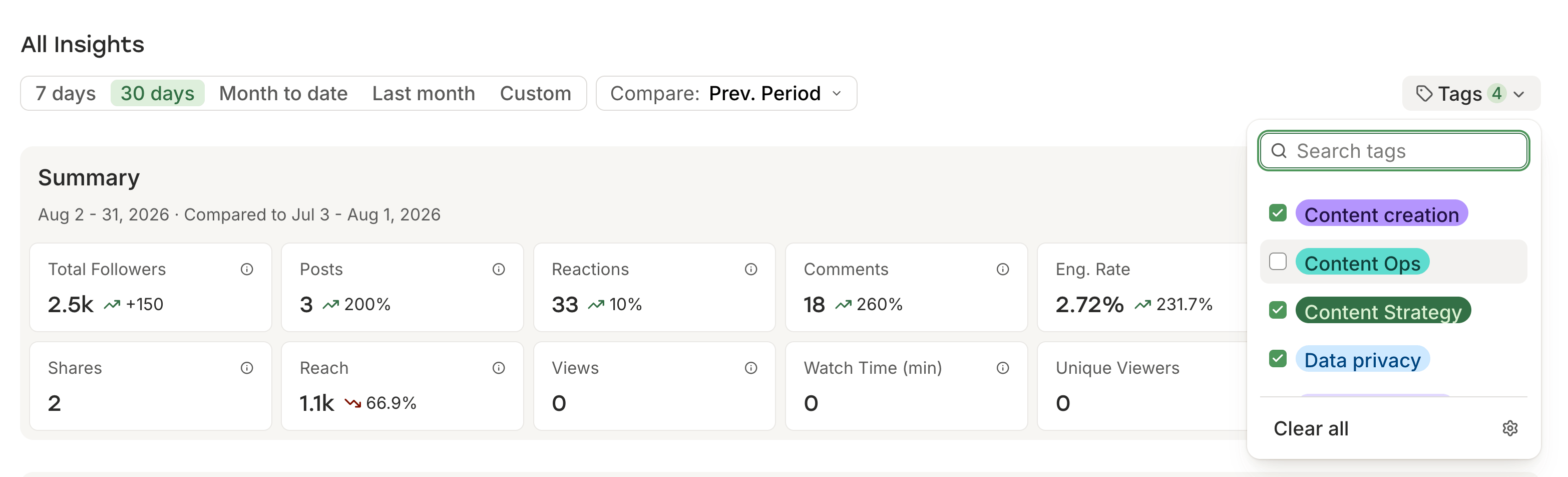
Data-driven decision-making requires comprehensive metrics and exportable reporting frameworks. Buffer consolidates its analytics within the "Insights" module, covering ten distinct platforms. The interface allows users to construct custom dashboards filtered by channel groups or content tags—such as categorizing posts by specific marketing topics or thematic campaigns. Weekly AI-generated takeaways offer actionable growth recommendations, and data can be exported in PDF, CSV, or Markdown formats for advanced external analysis.
RecurPost approaches analytics with a focus on granular reporting depth. Its dashboards deliver exhaustive performance snapshots, including detailed demographic breakdowns categorized by age, gender, country, and city, alongside link-click performance metrics and publishing cadence evaluations. The custom report builder, available on Agency tiers and above, allows marketing teams to tailor visualization types, filter specific metrics, and generate white-label PDF reports featuring agency branding. An integrated conversational AI assistant permits plain-language queries regarding performance data, though users must verify responses against raw metrics to ensure absolute accuracy.
Team Collaboration and Administrative Permissions

Managing multi-user workflows requires precise permission controls to safeguard brand integrity. Buffer’s Team plan incorporates unlimited user seats, enabling administrators to configure granular permissions on a per-channel basis. Team members can be granted full publishing access, restricted to approval-required workflows, or assigned view-only privileges for inbox monitoring. These permissions operate independently across publishing and community management domains, allowing seamless collaboration with internal personnel and external clients within a unified environment.
RecurPost organizes collaborative efforts through isolated workspaces. Channel allocations are distributed across specific client workspaces, each featuring dedicated media libraries, team members, and reporting metrics. While this structure prevents cross-client data leakage, RecurPost lacks mandatory multi-tier approval workflows for general publishing. Team members within a workspace can schedule content or reply to messages without mandatory oversight, though the platform does provide shareable external calendars that permit client commentary without requiring direct system logins.
Artificial Intelligence Integration and Technical Ecosystems
Artificial intelligence features are increasingly central to modern social media strategy. Buffer embeds its AI Assistant across all subscription tiers without usage caps, facilitating idea generation, post drafting, cross-platform repurposing, and image alt-text creation. Additionally, Buffer supports Model Context Protocol (MCP) integrations, enabling direct execution from external productivity environments such as ChatGPT, Claude, Cursor, and Raycast.
RecurPost provides extensive AI capabilities focused on multi-post content planning, automated holiday scheduling, and native image generation. During operational testing, RecurPost’s image generation tool produced high-quality visual assets from descriptive prompts. However, these AI features operate under strict credit caps—such as monthly limits for post generation and image creation—without a persistent dashboard counter to track remaining allocations.
Regarding developer resources, Buffer maintains a publicly accessible API across all plans, supported by extensive developer documentation, active community channels, and dedicated advocacy staff. RecurPost also provides an API and MCP infrastructure, but lacks formal public documentation, explicit usage guidelines, and dedicated support ecosystems, leaving technical users to navigate implementations independently.
Strategic Recommendations by User Segment
Evaluating these platforms against specific organizational profiles reveals distinct operational advantages for each tool:
- Creators and Solopreneurs: Buffer represents the optimal choice for independent operators, primarily due to its permanent free tier, unlimited AI assistance, and straightforward publishing interface. RecurPost is better suited only if continuous evergreen cycling is central to the creator’s core methodology.
- Small Businesses and Growing Teams: Organizations requiring strict, enforced approval workflows and unlimited user scaling will find Buffer to be the more reliable framework. Conversely, teams prioritizing evergreen content libraries with minimal user expansion may benefit from RecurPost’s flat-rate agency framework.
- Video-Centric Creators: RecurPost emerges as the superior platform for video-first operations, offering advanced Instagram toolkit features, comprehensive YouTube video upload capabilities, and granular TikTok configuration options.
- Digital Marketing Agencies: Buffer provides a balanced agency solution through its per-channel pricing, unlimited team seats, robust multi-platform inbox, and 24/7 customer support. RecurPost offers superior white-label reporting depth, but is constrained by per-user cost scaling beyond three seats and a more limited inbox platform footprint.
- Technical Builders: Buffer clearly outpaces competitors in developer support, offering thoroughly documented APIs, MCP connectors, and an active community of builders.
Summary of Findings

RecurPost remains a specialized platform tailored for video-focused content creators and agencies managing evergreen content libraries with white-label reporting requirements. For the broader majority of marketing teams, small businesses, and solopreneurs, Buffer offers a more flexible, cost-predictable, and comprehensively supported operational environment. Organizations are encouraged to leverage Buffer’s permanent free tier and RecurPost’s 14-day trial to evaluate how each platform aligns with their specific workflow requirements.