
 Indra Kusuma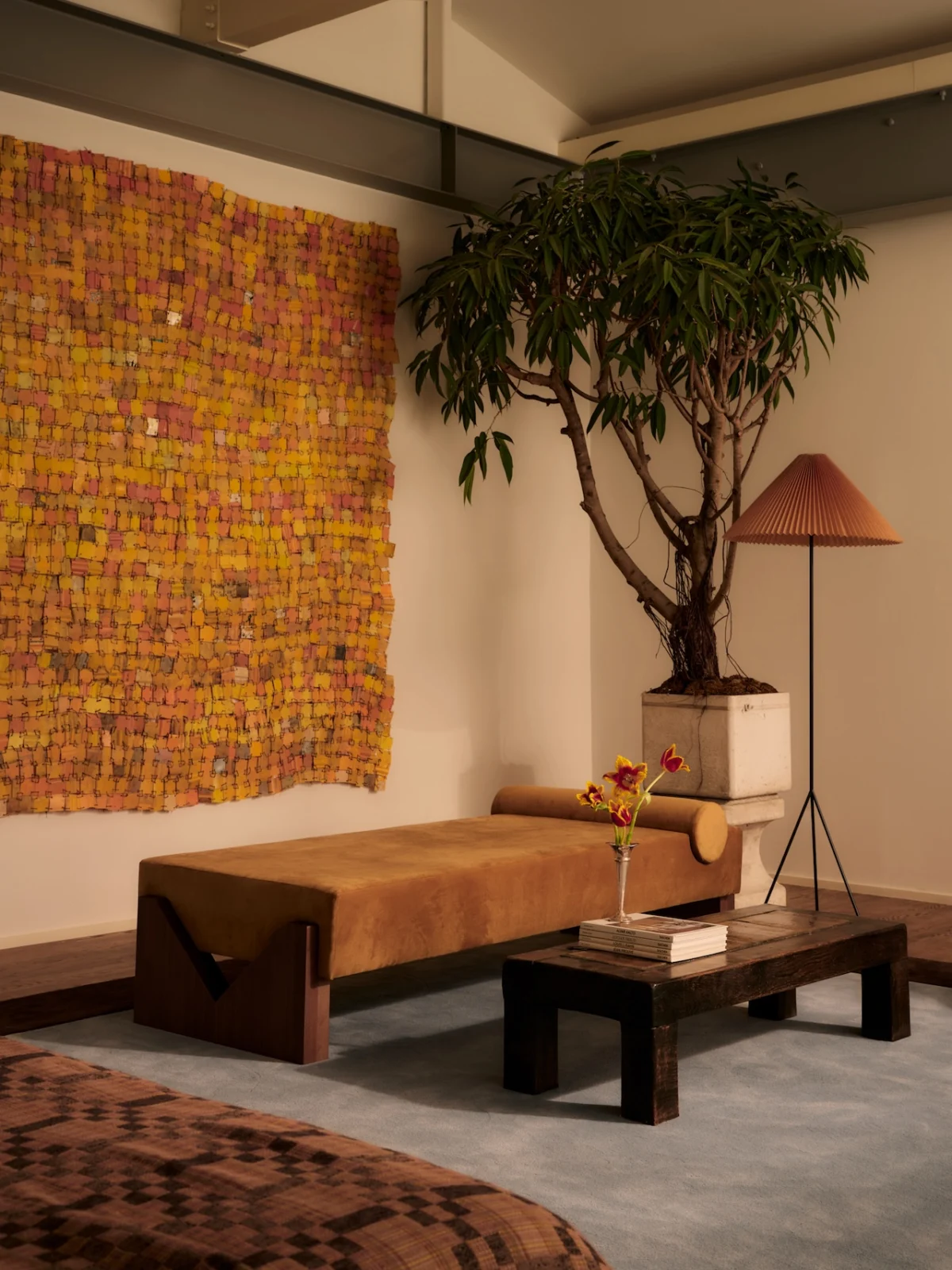
In the exclusive enclave of The Colony, nestled within the verdant Hollywood Hills, where an unusually high concentration of architecturally significant mid-century modern residences has been meticulously preserved, a 1960 home by the celebrated architect Whitney R. Smith has undergone a profound revitalization at the hands of Ome Dezin. This ambitious project transcended the conventional definition of renovation, positioning itself instead as a respectful dialogue with the original architectural intelligence, aiming to re-establish the home’s foundational clarity and timeless appeal. Smith, a distinguished figure in Southern California modernism and a key participant in the iconic Case Study House program, was renowned for his innovative use of sawtooth ceilings and precise angular geometries, elements designed not merely for aesthetic impact but as sophisticated instruments to draw and sculpt natural light within interior volumes. Ome Dezin’s mandate was to honor this legacy, undoing decades of well-intentioned but ultimately dilutive alterations, and restoring the residence to its intended architectural brilliance while subtly integrating contemporary sensibilities.
The Enduring Legacy of Whitney R. Smith and Mid-Century Modernism
Whitney R. Smith (1911-2003) was a pivotal figure in the development of Southern California’s distinctive post-war architectural identity. A graduate of the University of Southern California and a protégé of the influential Richard Neutra, Smith established Smith & Williams with Wayne R. Williams in 1946. Their practice quickly became synonymous with the progressive ideals of mid-century modernism, particularly its emphasis on functionality, material honesty, and a seamless integration with the natural environment. Smith’s inclusion in the Case Study House program, initiated by Arts & Architecture magazine, cemented his place in architectural history. This experimental program, launched in 1945, sought to address the post-war housing boom by commissioning leading architects to design affordable, replicable modern homes using innovative materials and construction techniques. Smith & Williams contributed to Case Study House #2A (designed by Charles and Ray Eames) and, notably, Case Study House #20 (also known as the "Bailey House"), showcasing their commitment to accessible, cutting-edge design.
Smith’s architectural philosophy was deeply rooted in the manipulation of light and space, an approach evident in his 1960 Hollywood Hills residence. His signature sawtooth ceilings were not merely decorative; they were meticulously engineered to channel sunlight, diffusing it into the living spaces at measured intervals, creating dynamic interplay of light and shadow that changed throughout the day. This intelligent design minimized the need for artificial lighting during daylight hours, embodying a proto-sustainable approach. The Colony itself is a testament to the foresight of mid-century planners and architects, a tightly held enclave that has resisted extensive redevelopment, thereby preserving a unique architectural fabric. The survival of so many mid-century homes here underscores the historical and aesthetic value placed on this period of design, making Ome Dezin’s restoration not just a private project but a significant contribution to the area’s architectural heritage.

Ome Dezin’s Philosophy: A Negotiation, Not a Renovation
The challenge presented to Ome Dezin was multifaceted. The residence, while retaining its fundamental Whitney R. Smith character, had been subjected to various renovations throughout the 1980s and 1990s. These interventions, typical of their eras, had inadvertently obscured Smith’s original design logic, introducing elements that disrupted the harmonious flow and precise proportions that defined the home. Recognizing this, Ome Dezin embarked on a process that they describe as less a renovation and more a "negotiation with intelligence"—a profound respect for the architect’s initial vision coupled with a contemporary understanding of livability and aesthetics.
The studio’s early assessment underscored a critical realization: the architecture itself had to lead the project. This meant that the primary discipline for the design team lay in restraint. Rather than imposing a new aesthetic, the goal was to peel back layers of subsequent alterations, identifying and removing elements that deviated from Smith’s original intent. This process of "subtraction" became as crucial as any "addition." The project commenced with an extensive research phase, delving into Smith’s oeuvre, archival plans, and the general principles of mid-century modernism, particularly as applied in the Case Study House program. This deep dive allowed Ome Dezin to understand the nuances of the original design, including the specific relationships between volumes, the strategic placement of openings, and the subtle interplay of materials.

The restoration phase meticulously addressed several key areas. Proportions, which had been skewed by previous modifications, were carefully refined. The natural flow between interior spaces, a hallmark of mid-century design that blurs the line between indoors and outdoors, was recovered by reconfiguring transitional zones and removing obstructive elements. Crucially, Ome Dezin resisted the common temptation to "over-design" the house, opting instead for a minimalist approach that celebrated the inherent beauty of Smith’s structure. Iconic original features, such as the custom spiral staircase, the distinct ceiling heights that varied throughout the home, and the underlying structural rhythm, were not reinterpreted but preserved and enhanced, serving as anchors to the home’s history. This philosophy ensures that the residence retains its authentic soul while functioning flawlessly for contemporary living.
Materiality and Light: Crafting a Grounded Aesthetic
The material palette selected by Ome Dezin was central to achieving the project’s delicate balance between honoring the past and embracing the present. A warm, grounded array of rich woods, subtly textured plaster, and tonal stone was chosen to provide a counterweight to the inherent sculptural drama of Smith’s angular architecture. These materials, deeply rooted in the mid-century modern tradition, offer tactile richness and a sense of permanence, allowing the architectural forms to speak without distraction. The wood paneling, often seen in walnut or teak during the period, brings warmth and natural grain, while the plaster walls provide a soft, diffused surface for the play of light. The tonal stone, used for countertops, flooring, and perhaps even in bespoke bathroom elements, grounds the spaces with its natural heft and understated elegance.

The mastery of light, a central tenet of Whitney R. Smith’s design, was amplified through Ome Dezin’s interventions. The oversized pivot door, a bold statement piece, opens into a double-height foyer, immediately establishing a sense of grandeur and openness. Here, the restored gallery proportions and the signature sawtooth ceiling work in concert to deliver a deliberate, almost theatrical, flood of daylight. This dramatic entrance not only connects the interior to the exterior but also showcases the architect’s original intent for light to be an active, shaping element within the home.
The spiral staircase, a curvilinear counterpoint to the home’s angularity, emerges as a singular highlight. Its sculptural form, a retained original feature, is accentuated by a bold red underside, a graphic gesture that injects a vibrant energy into the otherwise calm, sophisticated surfaces. This unexpected pop of color transforms a functional element into a work of art, a focal point that draws the eye and guides movement through the multi-level dwelling. The strategic use of color in this manner reflects a nuanced understanding of mid-century aesthetics, where carefully placed accents often defined spaces.

Inspired by Milanese Elegance: Furnishings and Interior Details
Ome Dezin’s design sensibilities extended beyond structural restoration to the interior curation, drawing inspiration from a diverse range of influences. A notable reference point was Milan, particularly Piero Portaluppi’s 1930s Villa Necchi Campiglio. This Italian architectural masterpiece is celebrated for its lacquered surfaces, controlled luxury, and rooms that exude an enduring composure under pressure. This European sensibility informed Ome Dezin’s approach to the interior, manifesting in thoughtful color pairings, a sophisticated material palette, and a preference for low, structured furniture that complements the home’s modernist lines without competing with them.
The furniture selection, sourced from esteemed design houses such as Dusty Deco, Made by Choice, NO GA, and Kallemo, reflects this controlled luxury. These pieces, characterized by clean lines, quality craftsmanship, and often natural materials, integrate seamlessly into the home, providing comfort and functionality while maintaining the minimalist composure. For example, a sleek, dark wood sofa might be paired with nested beige tables, and a vase of white calla lilies, creating a serene yet inviting living space. The integration of such furnishings ensures that the interior design speaks the same language as the architecture, creating a cohesive and harmonious environment.

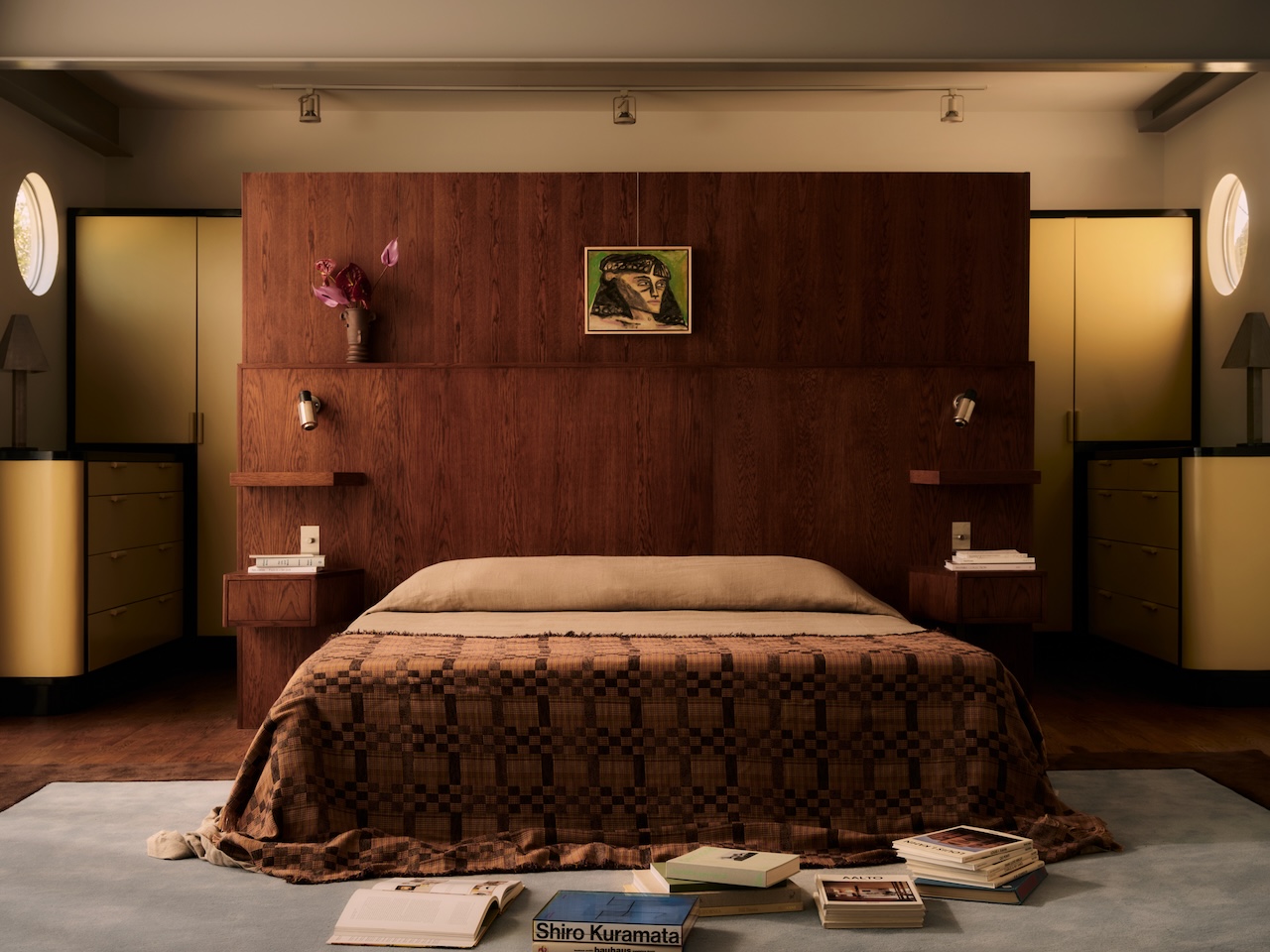
Throughout the residence, individual spaces are treated with distinct character while maintaining overall unity. A shared bath in the second wing, for instance, fully embraces a lemony yellow palette, complemented by copper accents and glass brick. This combination reads as a deliberate nod to mid-century optimism, avoiding pastiche by authentically capturing the era’s joyful and experimental spirit. The glass brick, a popular material in the mid-20th century, provides privacy while allowing diffused light to enter, creating a soft, ethereal glow. The primary suite, in contrast, offers a more subdued, minimalist composure. Set under original high ceilings, it evokes a loft-like openness. Its en-suite bathroom frames a clean, expansive view of the Hollywood Hills, turning the natural landscape into an integral part of the room’s serene aesthetic. Graphic works from Creative Art Partners are strategically placed throughout the home, serving as vibrant punctuation marks that enhance the calm surfaces and add a contemporary artistic layer to the carefully restored interiors. These art pieces, chosen for their abstract forms or bold colors, resonate with the modernist spirit of the home, providing visual interest without overwhelming the architectural narrative.
Broader Implications and the Future of Architectural Preservation
Ome Dezin’s meticulous restoration of the Whitney R. Smith residence in The Colony represents more than just a successful design project; it serves as a significant case study in the broader discourse of architectural preservation and the enduring relevance of mid-century modernism. In an era where demolition often precedes new construction, this project highlights the immense value in understanding, respecting, and revitalizing existing structures, especially those by historically significant architects.

The "negotiation" approach championed by Ome Dezin offers a blueprint for future preservation efforts. By prioritizing the architect’s original intent and carefully subtracting incongruous additions, the studio demonstrated that modernization need not come at the expense of historical integrity. This approach is inherently sustainable, reducing waste associated with new builds and honoring the embodied energy of the original construction. An architectural historian, perhaps Dr. Eleanor Vance of the Los Angeles Conservancy, might comment, "This project exemplifies how thoughtful intervention can breathe new life into an important piece of architectural heritage. It’s a testament to Whitney R. Smith’s visionary design and Ome Dezin’s sensitive understanding of its context and enduring appeal. Such restorations are vital in maintaining the unique character of our cities and inspiring future generations of architects and homeowners."
Furthermore, such high-profile restorations contribute significantly to the cultural and economic landscape of areas like the Hollywood Hills. Properties within The Colony, already commanding premium values due to their unique architectural lineage and desirable location, see their market desirability enhanced by authentic and expertly executed renovations. These projects reinforce the aesthetic standards for the neighborhood and serve as benchmarks for quality in a competitive real estate market.

The work also contributes to the ongoing appreciation and understanding of mid-century modern architecture. By showcasing how principles of light, space, and material honesty from the 1960s can be seamlessly integrated with contemporary living, Ome Dezin has helped to solidify the style’s place not just as a historical movement, but as a timeless design language. Their selection of furniture, which balances classic modernism with contemporary pieces from innovative brands, suggests a path forward for integrating diverse design elements while maintaining a cohesive aesthetic. This sensitive restoration not only honors Whitney R. Smith’s original genius but also ensures that his vision continues to inspire and function beautifully for decades to come, setting a precedent for respectful, yet forward-thinking, architectural stewardship.







