
 Ali Ikhwan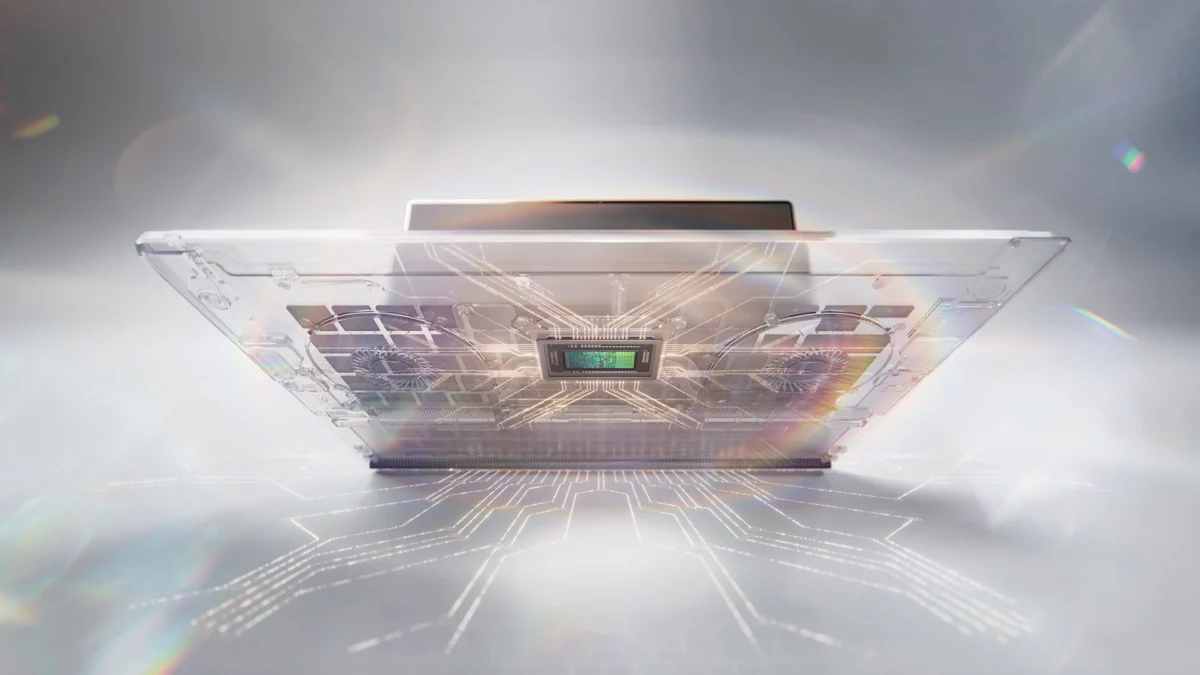
The global semiconductor landscape shifted significantly during the Computex technology expo in Taipei, as Nvidia unveiled its most ambitious move toward personal computing dominance to date. For decades, Nvidia has functioned as a critical component provider, supplying the discrete graphics cards that powered high-end gaming and professional workstations within the Windows ecosystem. However, with the announcement of the RTX Spark "superchip" and the accompanying N1 CPU, the company has signaled its intent to transition from a peripheral manufacturer to the primary architect of the next generation of Windows hardware. This strategic pivot aims to bring the "unified memory" architecture—a hallmark of Apple’s recent success—to the PC market, potentially resolving the performance bottlenecks that have hindered local artificial intelligence (AI) development on Windows-based machines.
The Architecture of the RTX Spark Superchip
The RTX Spark represents a departure from the traditional modular design of PC hardware, where the Central Processing Unit (CPU) and Graphics Processing Unit (GPU) are separate entities with distinct memory pools. Instead, the RTX Spark utilizes a "superchip" design that integrates the new N1 CPU, an RTX-class GPU based on the latest architecture, and a unified memory system. This design allows the CPU and GPU to access the same high-speed memory pool simultaneously, eliminating the latency caused by moving data across the PCIe bus—a common "tax" on performance in traditional PC builds.
Central to this new hardware is the N1 CPU, an ARM-based processor that leverages Nvidia’s extensive experience with its "Grace" data center chips. By moving to ARM architecture, Nvidia is targeting a drastic improvement in power efficiency, a metric where Windows laptops have historically lagged behind the MacBook Pro. The high-end configurations of the RTX Spark are reported to support up to 128 GB of unified memory. This capacity is critical for running Large Language Models (LLMs) locally; whereas a standard laptop with 16 GB of RAM might struggle to run a quantized 7-billion parameter model, an RTX Spark-equipped machine could theoretically handle foundation-level models with 70 billion parameters or more without relying on cloud-based processing.
Chronology of Nvidia’s Transition to Personal Supercomputing
The road to the RTX Spark began in early 2024 at the Consumer Electronics Show (CES), where Nvidia introduced the DGX Spark, a desktop-class "personal supercomputer." While the DGX Spark was aimed at enterprise researchers and deep-learning professionals, it served as a proof of concept for the unified architecture now being miniaturized for mobile platforms.
Following the CES debut, industry rumors intensified regarding Nvidia’s collaboration with Microsoft to optimize Windows for ARM-based superchips. The culmination of this development was the Computex announcement, which detailed the roadmap for the first wave of RTX Spark laptops. This timeline suggests a rapid development cycle, moving from data center technology to consumer-ready silicon in less than twelve months, reflecting the urgent demand for local AI processing capabilities.
Deconstructing the "Fake AI PC" Narrative
Since early 2024, the term "AI PC" has become a central marketing pillar for Microsoft and its partners. The initial wave of Copilot+ PCs featured Neural Processing Units (NPUs) designed to handle low-power AI tasks, such as background blur in video calls or basic image categorization. However, industry analysts and power users have criticized these early iterations as "Fake AI PCs," noting that their NPUs lacked the raw computational power required for serious generative AI work.
The RTX Spark addresses this critique by providing a GPU capable of performance levels comparable to a discrete RTX 5070. By combining this raw power with the CUDA (Compute Unified Device Architecture) software layer, Nvidia is offering a platform that developers already use in data centers. This continuity is expected to accelerate the porting of AI tools to the Windows desktop, as developers will no longer need to optimize for underpowered NPUs, but can instead utilize the same CUDA kernels that drive global AI research.
Strategic Partnerships and the Surface Laptop Ultra
Nvidia’s entry into the CPU market is not a solitary venture. The company has secured commitments from major Original Equipment Manufacturers (OEMs), including Dell, ASUS, Lenovo, and HP, all of whom are expected to release RTX Spark-powered workstations by the end of the year.
Perhaps the most significant partnership is with Microsoft itself. The announcement included details of the Microsoft Surface Laptop Ultra, a flagship device designed to showcase the full potential of the RTX Spark platform. The Surface Laptop Ultra is positioned as a direct competitor to the MacBook Pro, featuring a 15-inch Mini-LED display with high refresh rates and a chassis designed to manage the thermal demands of a high-performance superchip. This device represents Microsoft’s first performance-oriented Surface in several years, filling a gap in their lineup that had previously forced creative professionals and AI researchers toward Apple’s ecosystem.

Comparative Performance and Supporting Data
While independent benchmarks are still forthcoming, Nvidia’s internal data suggests that the RTX Spark system-on-a-chip (SoC) provides a substantial leap over current x86-based laptops. In LLM inference tasks, the 128 GB unified memory configuration reportedly offers up to 5 times the throughput of a traditional laptop equipped with 32 GB of DDR5 RAM and a discrete GPU.
Furthermore, the power efficiency of the N1 CPU allows for extended battery life during AI-intensive tasks. Traditional Windows gaming laptops often see battery life drop to under two hours when the discrete GPU is fully engaged. Nvidia claims that the RTX Spark’s integrated approach allows for "sustained AI workflows" on battery power that were previously impossible. This claim is bolstered by the use of the 20-core N1 CPU, which utilizes a mix of high-performance and high-efficiency cores to balance the workload.
Implications for the Semiconductor Industry and Market Dynamics
The introduction of the RTX Spark and N1 CPU poses a direct threat to the established dominance of Intel and AMD in the Windows space. For decades, the "Wintel" partnership (Windows on Intel) defined the PC market. However, the rise of AI has shifted the value proposition from general-purpose processing to specialized acceleration.
Market analysts suggest that if Nvidia successfully captures the high-end "Pro" segment of the Windows market, it could lead to a permanent fragmentation of the ecosystem. Intel’s Panther Lake and AMD’s Strix Point architectures are also racing to improve AI performance, but Nvidia’s advantage lies in its software ecosystem. With millions of developers already trained in CUDA, the barrier to entry for Nvidia’s competitors remains high.
Additionally, the pricing of these devices indicates a shift toward a "luxury-pro" tier in the PC market. With high-end configurations expected to exceed $4,000, the RTX Spark is not intended for the mass market initially. Instead, it targets the "agentic AI" era, where users run local AI agents to manage complex workflows, prioritize privacy, and reduce latency.
Official Responses and Industry Sentiment
While Intel and AMD have not released formal statements regarding the RTX Spark, their recent product roadmaps have emphasized "AI TOPS" (Trillions of Operations Per Second) as a primary metric, a clear response to Nvidia’s encroachment. Microsoft, through its Windows and Devices division, has expressed enthusiasm for the "diversity of silicon" coming to the platform, suggesting that the company is willing to move away from its x86 roots to remain competitive in the AI era.
Apple, the primary target of this hardware shift, has recently emphasized the AI capabilities of its M4 chips and the "Apple Intelligence" suite. However, Apple’s walled-garden approach to software may give Nvidia an opening; the RTX Spark remains an open platform for developers who require the flexibility of the Windows environment and the industry-standard CUDA libraries.
Conclusion: The Dawn of the Local AI Era
The announcement of the Nvidia RTX Spark and the N1 CPU represents more than just a new line of processors; it is a fundamental redesign of what a personal computer is expected to do. By merging the efficiency of ARM, the power of RTX graphics, and the massive bandwidth of unified memory, Nvidia is providing the first hardware platform capable of fulfilling the "AI PC" promise for professional-grade applications.
As the industry moves toward agentic models and local inference for privacy-conscious enterprises, the demand for high-performance local silicon will only grow. Whether Nvidia can overcome the historical challenges of "Windows on ARM"—specifically software compatibility and emulation—remains to be seen. However, with the backing of Microsoft and the world’s leading OEMs, the RTX Spark is the most credible challenge to the status quo in the history of the Windows ecosystem. The era of the "personal supercomputer" has moved from the data center to the laptop bag, and the implications for creators, developers, and the broader tech industry are profound.







