Michael Sholeh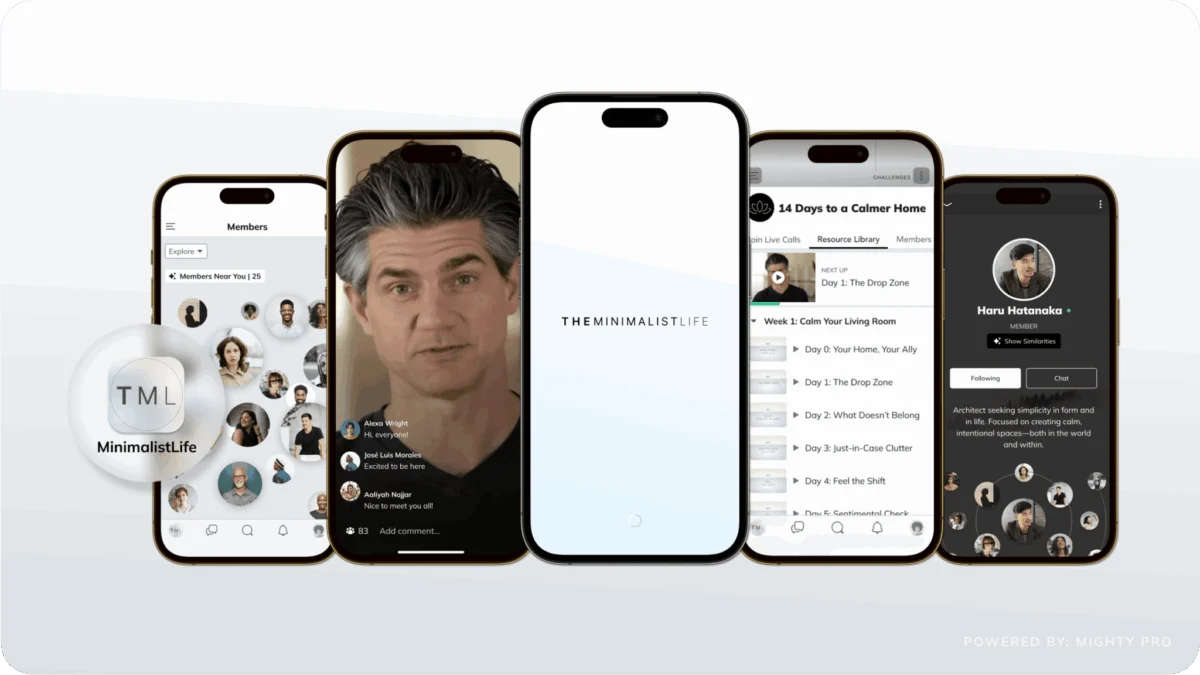
Joshua Becker, the founder of the influential lifestyle platform Becoming Minimalist, has officially announced the launch of a new subscription-based community titled "The Minimalist Life." This initiative, which Becker describes as the culmination of nearly two decades of advocacy for intentional living, represents a strategic shift from static content delivery to a dynamic, community-driven model aimed at long-term habit sustainability. Since the inception of his platform 17 years ago, Becker has produced over 1,700 articles and 400 videos, and his "Uncluttered Course" has reached an estimated 90,000 participants globally. The introduction of this new community is designed to address a recurring challenge cited by followers of the movement: the difficulty of maintaining minimalist principles after the initial "decluttering" phase is complete.
The Evolution of the Minimalist Movement
The minimalist movement has undergone significant transformations since Becker began documenting his journey in 2008. What started as a niche blog focused on physical decluttering has expanded into a global cultural phenomenon. Becker’s body of work has been instrumental in defining minimalism not merely as an aesthetic choice, but as a holistic philosophy centered on removing distractions to focus on personal values.
Over the past 17 years, Becker’s metrics indicate a substantial appetite for this philosophy. With hundreds of thousands of books sold and a massive YouTube following, the data suggests that the desire for "less" is no longer a fringe sentiment but a mainstream response to the excesses of modern consumerism. However, the launch of The Minimalist Life indicates a recognition that education alone is often insufficient for lasting behavioral change. Industry experts in the self-improvement sector note that while information is abundant, the "sustainability gap"—the space between learning a concept and integrating it into a lifelong rhythm—remains a significant hurdle for most individuals.
Addressing the Sustainability Gap in Lifestyle Change
The core motivation behind The Minimalist Life is the feedback Becker has received from his audience regarding the struggle to maintain momentum. "I start strong, but I struggle to keep minimalism going over time," is a sentiment that reflects a broader psychological reality. Research into habit formation, such as the widely cited 2009 study by Phillippa Lally and colleagues at University College London, suggests that it takes an average of 66 days for a new behavior to become automatic. For complex lifestyle shifts like minimalism, which involve constant decision-making in a consumer-driven society, the timeline can be even longer.
The Minimalist Life seeks to bridge this gap by providing an ongoing framework rather than a one-time course. The program is structured to move beyond the physical home, applying minimalist principles to various sectors of human experience:
- Financial Intentionality: Moving from impulsive spending to value-based budgeting.
- Schedule Management: Addressing "time poverty" by eliminating non-essential commitments.
- Digital Hygiene: Reducing the clutter of notifications, social media, and digital consumption.
- Relationship Boundaries: Cultivating deeper connections by removing social obligations that do not align with one’s values.
- Habit Reinforcement: Establishing daily rhythms that prevent the re-accumulation of possessions and distractions.
Chronology of the Becoming Minimalist Platform
The trajectory of Joshua Becker’s influence provides context for this latest expansion. The following timeline illustrates the growth of his platform and the gradual shift toward comprehensive life management:
- 2008 – The Inception: Becker founds Becoming Minimalist after a conversation with a neighbor while cleaning his garage, realizing that his possessions were consuming the time he wanted to spend with his family.
- 2008-2015 – Content Proliferation: Becker publishes over 1,000 articles, establishing a foundation of principles and practical tips that would later be synthesized into best-selling books like The More of Less.
- 2016 – The Uncluttered Course: Recognizing the need for a structured approach to physical decluttering, Becker launches a guided course that eventually serves over 90,000 students.
- 2018-2023 – Multimedia Expansion: The launch of a YouTube channel and several more books, including The Minimalist Home and Things That Matter, further diversifies the reach of the message.
- June 2025 – The Minimalist Life Community: The official launch of a private, interaction-focused community designed for ongoing personal development and growth.
Market Trends and the Rise of the "Community-as-a-Service" Model
The launch of The Minimalist Life aligns with broader trends in the creator economy. As the internet becomes increasingly saturated with AI-generated content, there is a measurable shift in consumer preference toward "Community-as-a-Service" (CaaS). Users are moving away from passive consumption of blogs and videos toward private, moderated spaces that offer direct access to experts and peer support.
Becker specifically highlights this distinction in his announcement, noting that in an online world populated by AI, his new community emphasizes human interaction. This move is supported by market data showing that the global self-improvement market, valued at approximately $41.2 billion in 2021, is increasingly driven by interactive and subscription-based models. Consumers are showing a willingness to pay for curated environments that offer accountability, which is often the missing ingredient in self-directed lifestyle changes.

Structural Details and Pricing Tiers
The Minimalist Life is positioned as a membership program with a focus on monthly themes. Members receive ongoing support to integrate minimalism into their daily rhythms. To incentivize early adoption, Becker has introduced a "founding member" rate of $18 per month or $180 per year, representing a discount for those who join before the June 30th deadline.
The program includes:
- Monthly deep dives into specific areas of life (finances, digital, relationships).
- Direct interaction with Becker and a community of like-minded individuals.
- A focus on "human-centric" engagement rather than automated content delivery.
- Resources designed for "lasting, legitimate personal development."
Analysis of Broader Implications and Societal Impact
The move toward a holistic "minimalist life" reflects a growing societal awareness of the psychological costs of clutter—both physical and mental. A 2010 study published in the Personality and Social Psychology Bulletin found that women who described their homes as "cluttered" or full of "unfinished projects" had higher levels of the stress hormone cortisol. By expanding the scope of minimalism to include schedules and digital lives, Becker is addressing the modern "burnout" culture that many experts attribute to over-stimulation and excessive choice.
Furthermore, the emphasis on financial minimalism has significant economic implications. As inflation and cost-of-living concerns remain prevalent, a philosophy that advocates for "owning less" serves as a practical tool for financial resilience. By encouraging participants to re-evaluate their relationship with money and possessions, the community may provide a buffer against the debt-driven consumption patterns that characterize much of the modern economy.
Official Response and Community Reception
While official testimonials for the new community are still being gathered, the initial response from Becker’s long-term followers has been characterized by a sense of readiness. Long-time readers have noted that while the Uncluttered Course was effective for "clearing the house," they felt a vacuum when the course ended. The new community is being viewed as the "next logical step" for those who have mastered the basics of physical minimalism but struggle with the "mental clutter" of a high-speed world.
Becker’s statement, "You want minimalism to become your way of life, not just something you think about when your house gets messy," resonates with a demographic that is increasingly skeptical of quick-fix solutions. The emphasis on "intentional choices" suggests a move toward a more stoic, disciplined approach to modern living.
Conclusion and Future Outlook
The launch of The Minimalist Life marks a significant milestone in Joshua Becker’s 17-year career. By transitioning from a content creator to a community leader, Becker is attempting to solve the most difficult aspect of any self-improvement journey: the maintenance of long-term change. As the June 30th deadline for founding membership approaches, the success of this venture will likely be watched closely by others in the lifestyle and wellness industries.
If successful, The Minimalist Life could serve as a blueprint for how digital influencers can provide deeper value in an age of information overload. By focusing on human connection, accountability, and a comprehensive application of minimalist principles, Becker is positioning his platform not just as a source of advice, but as a permanent infrastructure for those seeking a "calm, focused, and intentional life." The evolution from a blog about a clean garage to a global community about intentional living is a testament to the enduring relevance of the "less is more" philosophy in an increasingly complex world.