Michael Sholeh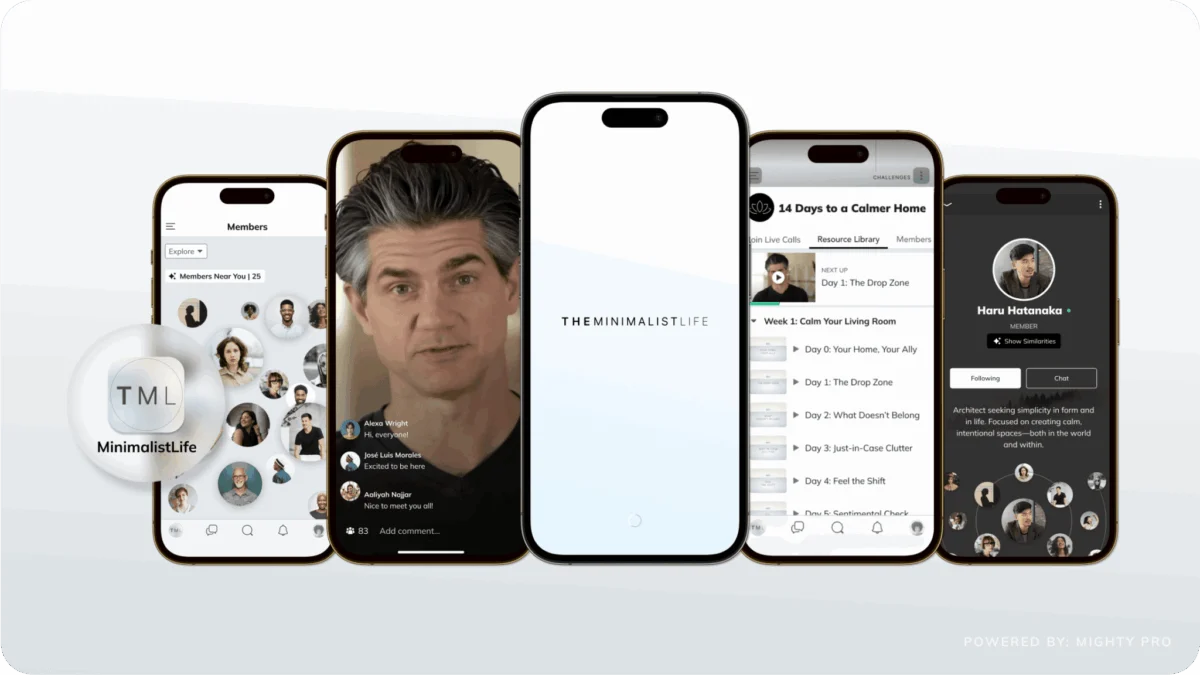
For the past seventeen years, the global conversation surrounding modern minimalism has been heavily shaped by digital essays, self-guided courses, and video-sharing platforms. During this nearly two-decade evolution, millions of individuals have sought out strategies to reduce physical clutter, optimize personal finances, and reclaim time from an increasingly hyper-connected society. Yet, despite the proliferation of books, instructional videos, and digital archives, a persistent challenge has continually surfaced among practitioners: the difficulty of maintaining long-term behavioral change. Addressing this ongoing systemic hurdle, veteran minimalist author and digital creator Joshua has announced the official launch of his first-ever interactive membership platform, titled The Minimalist Life.
The debut of this private, month-by-month community marks a significant pivot in the digital wellness and intentional living sector. Rather than relying on static educational content or one-off organizational projects, the newly established platform is engineered to provide continuous, peer-supported reinforcement. By transitioning from passive consumption to active, communal application, the initiative aims to bridge the gap between initial enthusiasm and enduring lifestyle integration.
Main Facts and Platform Overview
The newly introduced initiative, officially opened to the public, represents a departure from traditional self-help models by integrating structured monthly guidance across multiple facets of daily existence. While conventional decluttering programs typically focus on physical spaces—such as closets, garages, and living rooms—The Minimalist Life expands its operational scope to encompass personal finances, weekly scheduling, digital consumption habits, interpersonal relationships, and psychological well-being.
Membership pricing has been structured to encourage sustained participation, featuring a founding member rate of $18 per month or $180 annually for those who enroll prior to the June 30 deadline. Unlike asynchronous online courses where participants complete a curriculum independently and depart, this initiative is anchored by ongoing human interaction. Organizers emphasize that the platform is explicitly designed to counter the rising tide of automated, artificial intelligence-generated wellness content by fostering authentic human connection, guided mentorship, and real-time accountability among like-minded individuals.
Chronology of a Seventeen-Year Movement
To understand the significance of this latest development, it is necessary to examine the chronological progression of the digital minimalism movement over the past two decades.
The mid-to-late 2000s marked the genesis of modern online minimalism, coinciding with a broader cultural reckoning following the 2008 global financial crisis. As economic instability forced households to reevaluate consumer habits, early digital pioneers began documenting their experiences of downsizing. Over the next seventeen years, this informal digital whisper grew into a mainstream lifestyle movement characterized by several distinct phases:
Phase One (2008–2014): The Blog and Essay Era. Initial efforts focused primarily on personal narratives, written reflections, and philosophical arguments against hyper-consumerism. Content was largely text-based, distributed via independent blogs and early social media networks.
Phase Two (2015–2020): The Multi-Media Expansion. As platforms evolved, the movement expanded rapidly into video-sharing networks, documentary films, and structured digital courses. During this period, the flagship "Uncluttered Course" was developed, eventually guiding more than 90,000 participants through room-by-room home decluttering frameworks.
Phase Three (2021–Present): The Integration and Habit-Formation Era. Following widespread lifestyle disruptions in the early 2020s, public interest shifted away from mere aesthetic minimalism toward holistic lifestyle design. Individuals increasingly sought remedies for digital burnout, over-scheduling, and chronic decision fatigue. The launch of community-driven support networks in mid-2025 directly reflects this contemporary demand for sustainable, long-term habit reinforcement.
Supporting Data and Behavioral Psychology Insights
The introduction of a community-based minimalist framework aligns closely with established findings in behavioral psychology and consumer research regarding habit formation and lifestyle retention.
According to data compiled across various behavioral health studies, self-directed lifestyle modifications—such as dietary changes, financial budgeting, and home organization—suffer from high attrition rates when attempted in isolation. Academic research published in health and psychology journals frequently indicates that individuals attempting complex behavioral shifts without peer support or continuous accountability experience a success rate drop of up to 60 percent after the initial ninety-day period.

Within the context of home organization and consumer reduction, market research indicates that the global self-storage and home organization industries continue to expand, suggesting that physical clutter remains a persistent societal challenge despite widespread access to minimalist literature. Industry analyses reveal that consumer acquisition rates for organizational products peak annually, yet households frequently report cyclical accumulations of unused goods.
Furthermore, digital consumption data underscores the modern necessity for digital minimalism. Statistical overviews of daily screen time indicate that the average adult spends upwards of three to four hours per day interacting with mobile devices and digital platforms. This relentless exposure to digital stimuli has amplified feelings of cognitive overload, driving heightened consumer interest in structural digital detoxification and time-management frameworks. By incorporating digital habits into a broader monthly curriculum, the newly launched platform directly targets these quantifiable modern stressors.
Industry and Expert Perspectives on Community-Led Wellness
While independent creators have historically relied on books and video series to disseminate educational material, the broader digital creator economy has experienced a notable shift toward membership-based communities. Analysts tracking digital media trends note that audiences are increasingly fatigued by asynchronous, one-way content models.
Industry observers suggest that consumers are placing a higher premium on curated, distraction-free environments that prioritize genuine human interaction over algorithmic feeds. In an era dominated by automated content generation, platforms that facilitate direct access to experienced mentors and active peer networks command higher retention and engagement rates.
Behavioral experts specializing in habit change point out that physical environment manipulation—such as throwing away unwanted items—is often only the first step in a much deeper psychological process. True intentional living requires ongoing cognitive reframing, boundary-setting, and emotional regulation, particularly when navigating societal pressures driven by consumer advertising and social comparison. By framing minimalism as a continuous, month-by-month practice rather than a finite weekend project, community-led initiatives provide the structural scaffolding required to withstand external pressures.
Broader Impact and Implications for Intentional Living
The launch of The Minimalist Life carries several broader implications for the future of personal development and the intentional living movement.
First, it signals a maturation of the digital minimalism genre. As the demographic of individuals interested in reducing clutter ages and diversifies, the demand for sophisticated, multi-domain life planning has eclipsed the foundational messaging of simply owning fewer physical objects. Practitioners are increasingly asking how minimalist principles intersect with career management, parenting, financial independence, and digital boundaries.
Second, the structure of the platform addresses a growing cultural skepticism toward passive digital consumption. Modern internet users are increasingly selective about where they invest their time and attention. Platforms that offer tangible, actionable outcomes supported by real-time community engagement are well-positioned to capture the loyalty of audiences seeking substantive personal growth.
Finally, the initiative highlights the evolving economic models available to independent content creators. By transitioning from ad-supported or one-time transactional models to recurring, community-centric memberships, creators can foster deeper relationships with their audiences while providing more comprehensive, high-touch resources.
Conclusion and Future Outlook
As the doors to The Minimalist Life officially open, the success of the platform will serve as an informative case study for the broader self-improvement and digital wellness sectors. By shifting the focus from initial acquisition of minimalist philosophies to long-term operational execution and community support, the initiative attempts to solve one of the most persistent hurdles in modern personal development.
Whether this model will inspire a wider industry shift toward community-led, habit-reinforcing digital spaces remains to be seen. However, for the tens of thousands of individuals who have spent years navigating the challenges of intentional living, the availability of a structured, human-centered support system offers a promising pathway from theoretical aspiration to daily reality.