Angie Faith
The modern landscape of sequential art continues to broaden its appeal, with mystery, thriller, and graphic crime fiction emerging as major drivers of growth within the global publishing industry. As readers increasingly seek out complex narratives that blend visual storytelling with intricate puzzle-boxes, publishers are responding with an array of titles ranging from dark academia and high-stakes international heists to supernatural investigations and politically charged noir. This surge in popularity reflects a broader literary trend wherein graphic novels are no longer viewed merely as superhero vehicles, but as legitimate literary vessels capable of housing sophisticated whodunits on par with traditional prose mysteries.
The enduring cultural fascination with investigative fiction often traces its roots back to foundational crossover milestones in media history. Cinematic touchstones such as 1988’s genre-defining hybrid Who Framed Roger Rabbit? demonstrated the viability of blending surreal, animated elements with grounded, hard-boiled mystery tropes. That film’s legacy—echoed in recent spiritual successors and contemporary cartoon-infused capers—underscores a long-standing appetite for stories that juxtapose playful aesthetics with dark, suspenseful undercurrents. Today’s graphic novel creators are channeling that exact spirit, utilizing the visual medium to deliver tightly wound plots that challenge both the characters and the audience to piece together disparate clues.

Elite Academies and Dark Academia in Sequential Art
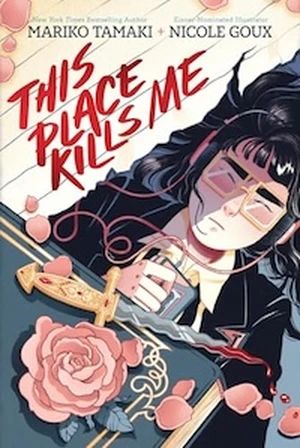
Among the most prominent subgenres capturing reader interest is the dark academia thriller, a category defined by isolated elite institutions, hidden histories, and high-pressure social hierarchies. A prime example of this trend is This Place Kills Me, written by Eisner Award-winning author Mariko Tamaki and illustrated by Eisner-nominated artist Nicole Goux. Published by Harry N. Abrams, the graphic novel focuses on an exclusive preparatory school and its hyper-competitive Theatrical Society.
The narrative centers on Elizabeth Woodward, the undisputed star of the school’s dramatic arts program who secures the lead role in Romeo & Juliet. When a newcomer to the academy, transfer student Abby Kit, enters the rigid social ecosystem, she finds herself suddenly thrust into a nightmare. Abby becomes the last person to see Elizabeth alive before the star student is found dead in what authorities quickly label a suicide. Skeptical of the official narrative, Abby launches an unauthorized, high-stakes investigation to uncover the truth behind the tragedy, exposing the toxic underbelly of elite academic life. Industry analysts note that such titles resonate strongly with young adult and adult readers alike, tapping into universal anxieties surrounding institutional pressure, social displacement, and the pursuit of perfection at all costs.
Technological Paranoia and Modern Noir
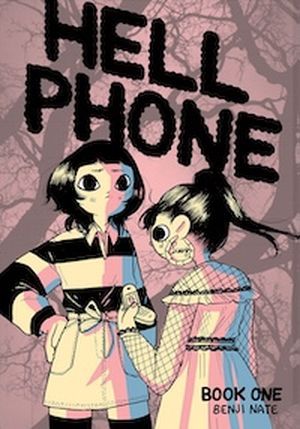
In addition to traditional institutional settings, contemporary creators are exploring how modern technology alters the traditional investigative dynamic. Benji Nate’s Hell Phone, Vol. 1, published by Silver Sprocket, introduces a distinct brand of technological dread. The narrative follows two friends, Sissy and Lola, who find themselves burdened by a seemingly indestructible, haunted flip phone.
What begins as an annoying fixture of daily life transforms into a terrifying ordeal when Sissy answers a call that delivers precise, chilling instructions concerning a decades-old murder. As the calls continue, the device acts as a malicious anchor, dragging the protagonists into a dark labyrinth of local history and long-buried crimes. Critics have observed that Hell Phone mirrors contemporary societal anxieties regarding constant connectivity and digital intrusion, transforming an everyday object into an instrument of psychological terror and suspense.
The Rise of Crime Anthologies and Multi-Perspective Storytelling
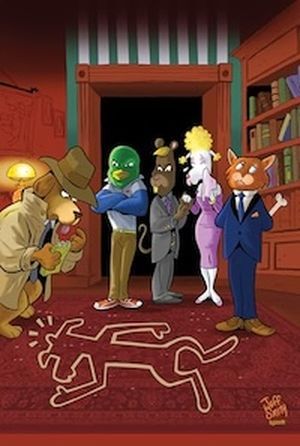
Short-form storytelling has similarly found a lucrative home within the mystery genre, allowing diverse creative teams to experiment with various shades of crime fiction. Iron Circus Comics’ Perfect Crime Party, edited by Kel MacDonald and featuring a cover illustrated by Bone creator Jeff Smith, exemplifies this collaborative approach.
Comprising 25 distinct short comic stories, the anthology showcases a wide spectrum of artistic styles and narrative tones. The collection ranges from lighthearted heists and capers to bleak noir thrillers characterized by ambiguous moral motives and sudden fatalities. Featuring contributions from notable creators such as Ryan Estrada, Tango, and Amy Chase, the anthology serves as a comprehensive cross-section of modern crime comics. Publishing executives point to anthologies of this scale as vital barometers for industry trends, noting that they provide emerging creators a platform to test innovative visual techniques while offering consumers a diverse array of narrative pacing within a single volume.
International Intrigue and Political Thrillers
Geopolitical tensions and historical settings have also enriched the graphic mystery landscape, moving the genre beyond domestic crime dramas. Ozge Samanci’s award-winning graphic novel Evil Eyes Sea, published by Uncivilized Books, anchors its suspense in mid-1990s Istanbul.
Set during the 1995–1996 academic year at Bosphorus University, the story follows two financially strapped students, Ece and Meltem, as they navigate academic pressures alongside recreational scuba diving. During their spare time, the pair playfully indulge in folklore, pretending to possess the mythic, petrifying stare of Medusa. Their lighthearted routine is shattered when they witness a woman drive her vehicle directly into the water. Initially gripped by superstitious fear that their imaginary powers caused the disaster, the students soon uncover evidence suggesting the death was a deliberate homicide rather than a tragic accident.
As Ece and Meltem delve deeper into the circumstances surrounding the victim, they inadvertently stumble into a dangerous network involving conservative politics and organized crime. The narrative functions not only as a compelling procedural mystery but also as a cultural snapshot of a specific political and social climate, demonstrating the capacity of graphic novels to engage with complex historical realities.
Supernatural Investigations and Witchy Procedurals
The intersection of the supernatural and investigative procedure continues to expand, offering readers alternative environments for traditional whodunits. Sweeney Boo’s Over My Dead Body, published by HarperAlley, transports readers to Younwity’s Institute of Magic.
When Abby’s best friend, Noreen, vanishes without a warning, Abby attempts to sound the alarm, only to find the institutional administration entirely preoccupied with preparations for the upcoming Samhain festival. Headmistress directives explicitly forbid Abby from pursuing the matter independently under threat of expulsion. Refusing to let the disappearance go uninvestigated, Abby and a small circle of allies initiate their own search, ultimately discovering that Noreen is merely the latest in a troubling line of student disappearances at the academy. The release of the sequel, Speak of the Devil, further expands this dark universe, reinforcing the commercial viability of multi-volume supernatural mysteries in the graphic novel market.
International Art Heists and Classic Whodunits
For readers inclined toward traditional globe-trotting capers, Matt Kindt and Margie Kraft Kindt’s Gilt Frame, published by Dark Horse Books, delivers a classic investigative framework. The narrative follows Sam and his affluent Aunt Merry as they traverse international borders to acquire rare antiques and resolve complex homicides.
A trip intended for routine art appraisal and antique acquisition in Paris quickly deteriorates when the pair becomes the primary suspects in a brutal murder. Stripped of their routine itinerary, Sam and Aunt Merry must navigate a treacherous landscape of professional art forgers, ruthless jewel thieves, and a skeptical French detective determined to keep amateur sleuths out of official police business. The title highlights the enduring appeal of the "accidental detective" trope, executed through the distinct visual pacing characteristic of modern graphic fiction.
Broader Implications for the Publishing Industry
The sustained commercial and critical success of these diverse graphic mysteries signals a permanent shift in how publishers curate their lists. Industry observers note that the cross-demographic appeal of mystery narratives—bridging young adult readers, traditional comic enthusiasts, and mainstream fiction fans—has stabilized the graphic novel sector against broader economic fluctuations.
As creators continue to push the boundaries of visual pacing, narrative structure, and thematic depth, the graphic novel format is increasingly recognized as a premier destination for innovative mystery and thriller storytelling. With numerous upcoming adaptations and expanding publishing slates, the genre is poised for continued growth, ensuring that readers will have access to complex, visually driven investigations for years to come.