Indra Kusuma
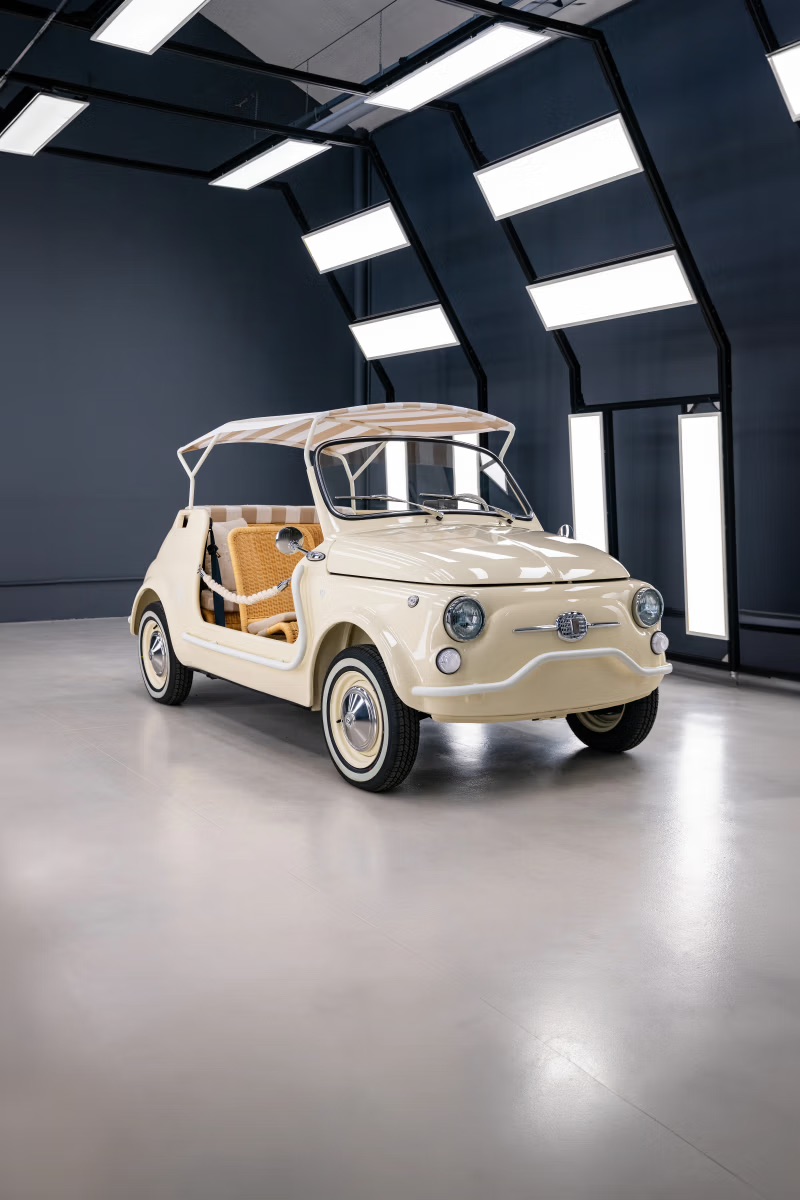
For yacht owners arriving at an exclusive Mediterranean port, the final mile of transit has long presented a logistical hurdle. While the humble scooter or a rental bicycle might offer a quick solution, they often fall short of the aesthetic and comfort expectations associated with the superyacht lifestyle. Addressing this specific niche, the Italian automotive custom shop Garage Italia has unveiled a modernized, electric iteration of the classic Fiat 500 Spiaggina, transforming a mid-century icon into a high-end, customizable transport solution tailored for coastal living.
A Legacy of Italian Mobility
The Fiat 500, affectionately known as the "Cinquecento," holds a foundational position in European automotive history. Introduced in 1957, the original Nuova 500 was designed by Dante Giacosa as an affordable, compact solution to postwar congestion and the necessity for mass motorization. Much like the Mini Cooper in the United Kingdom or the Volkswagen Beetle in Germany, the Fiat 500 became the vehicle that mobilized a nation.

By the late 1950s, the Spiaggina—or "Jolly"—variant emerged as a specialty model. Produced by Carrozzeria Ghia, these vehicles were modified by removing the doors and roof, replacing standard steel features with wicker seating and fringed canvas canopies. They were specifically marketed to the affluent vacationers of the French and Italian Rivieras, becoming a quintessential accessory for the yachting crowd who required a lightweight, open-air vehicle to traverse marinas and resort towns.
Engineering the Modern Electric Spiaggina
Garage Italia’s contemporary interpretation maintains the visual charm of the original 1950s design while integrating modern electric propulsion. The vehicle is powered by a rear-mounted electric motor capable of producing 13 horsepower and 60 lb-ft of torque. While these specifications are modest by modern automotive standards, they are optimized for the low-speed, high-density environments of Mediterranean seaside villages.
The technical specifications for this electric conversion include an 11 kWh battery pack, which provides an estimated range of 87 miles based on the Worldwide Harmonized Light Vehicles Test Procedure (WLTP). For the yacht owner, this configuration offers a significant practical advantage: the elimination of onboard gasoline storage. Many vessels face strict maritime regulations regarding the carriage of flammable fuels in tender garages; by utilizing a fully electric powertrain, the Spiaggina mitigates these safety concerns and simplifies the logistics of stowage. With a top speed exceeding 45 miles per hour, the vehicle is well-suited for its intended purpose of short-range shuttle duties.
The Art of Bespoke Customization
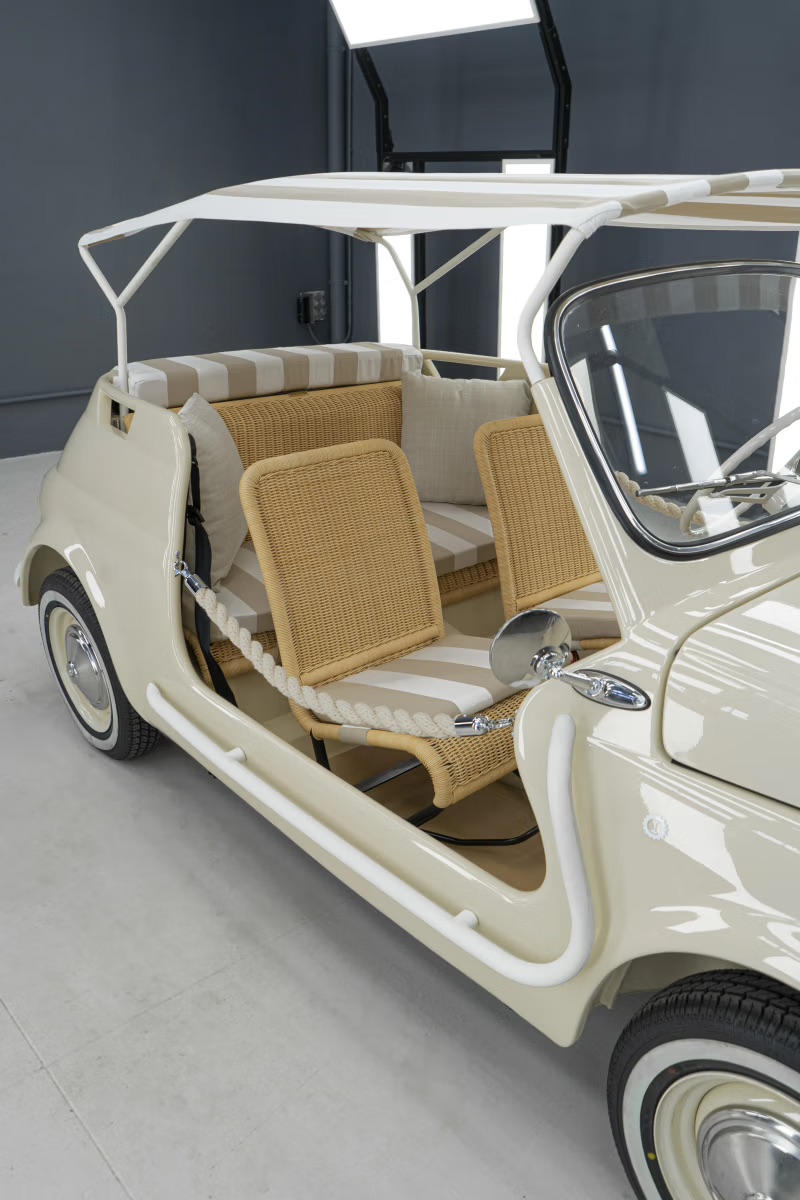
The defining feature of the Garage Italia Spiaggina is its extensive catalog of customization options, which elevates the vehicle from a mass-produced automobile to a bespoke design object. Prospective owners are provided with 18 standard exterior color palettes, though the firm accommodates custom color matching to ensure the car complements the specific livery or hull color of the owner’s yacht.
The interior materials reflect a commitment to both maritime durability and high-end craftsmanship. Garage Italia has partnered with the textile house Mariaflora to provide weather-resistant, UV-stable fabrics for the canopy and upholstery. Furthermore, the seating is constructed by Bonacina, a heritage Italian firm recognized for its expertise in rattan and woven furniture since 1889. These seats are available in natural rattan or a synthetic "Polycore" composite, engineered specifically to withstand the corrosive effects of salt air and prolonged sun exposure.
Flooring, often a weak point in open-air vehicles, is addressed through the use of high-performance EVA (ethylene-vinyl acetate) material sourced from ItalDek. This marine-grade decking mimics the aesthetic of teak wood found on luxury yachts while providing non-slip, waterproof functionality. The integration of these high-end materials allows for a level of personalization akin to the commissioning of a custom furniture set, with a dedicated digital configurator available on the Garage Italia website to facilitate the design process.
Economic Context and Market Positioning
Priced at €85,000 (approximately $97,000) before taxes and custom options, the Garage Italia Spiaggina occupies a unique space in the automotive market. This valuation places it in direct competition with luxury sedans like the BMW 7-Series or entry-level models from high-performance sports car marques.
Analysts note that this price point signals a shift in the market toward "lifestyle assets." The Spiaggina is not being marketed as a primary vehicle but as a luxury accessory. The move reflects a broader trend in the automotive industry where boutique coachbuilders are capitalizing on the electrification of classic vehicles—a movement often referred to as "restomodding"—to command significant premiums. By stripping away the internal combustion engine and replacing it with reliable, low-maintenance electric components, firms like Garage Italia ensure that the vehicle remains functional for modern use while retaining the historical prestige of the original chassis.
Industry Implications and Sustainability
The introduction of this vehicle underscores a growing demand for sustainable, small-footprint transportation within the luxury sector. As coastal municipalities across Europe and the United States continue to implement stricter emissions regulations and low-emission zones, the appeal of a vintage-styled, zero-emissions vehicle increases.

Furthermore, the collaboration between traditional Italian craftsmanship—represented by Bonacina and Mariaflora—and modern electric engineering highlights a symbiotic relationship between heritage manufacturing and future-facing technology. This trend is likely to influence how luxury brands approach "last-mile" mobility, moving away from utility-focused solutions and toward products that emphasize design identity and regional culture.
A New Chapter for the Cinquecento
The revival of the Spiaggina by Garage Italia serves as a case study in the longevity of iconic design. While the original Fiat 500 was an exercise in extreme economy, this modern iteration is an exercise in extreme luxury. It bridges the gap between the mid-century resort aesthetic and the contemporary requirements of the maritime luxury industry.
For the owner, the vehicle functions as an extension of the yacht itself—an onboard amenity that provides the freedom to explore the shoreline with the same level of comfort and aesthetic coordination found within the vessel’s interior. As the industry continues to monitor the adoption of electric tenders and shore-side vehicles, the Garage Italia Spiaggina stands as a prominent example of how electrification can be utilized not just for efficiency, but to preserve and enhance the cultural legacy of automotive design.

As of late 2026, the vehicle remains available for private commission, with production slots managed directly through the studio’s bespoke division. The transition from a utilitarian post-war economy car to an exclusive, customizable electric cruiser marks a definitive shift in the life cycle of one of Italy’s most recognizable industrial exports. Whether seen parked on the deck of a superyacht at anchor or cruising through the cobblestone streets of Portofino, the Spiaggina continues to serve as a symbol of the intersection between classic style and modern mobility.