
 Ali Ikhwan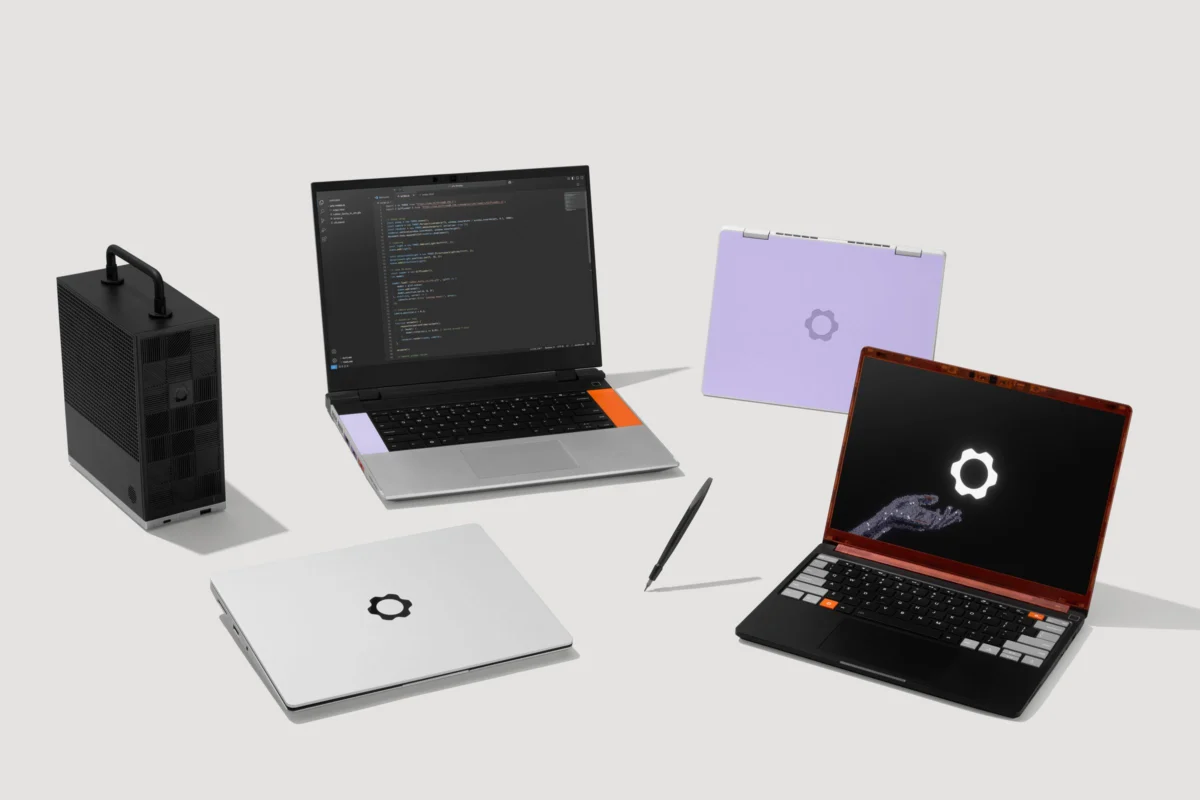
In a strategic expansion of its modular hardware lineup, Framework, the San Francisco-based pioneer of repairable consumer electronics, officially introduced the Framework Laptop 13 Pro at a dedicated press event today. The new flagship 13-inch device represents the company’s most significant leap in performance and hardware refinement since its inception, integrating Intel’s latest Core Ultra Series 3 processors, a high-resolution touchscreen, and a haptic touchpad. The announcement signals a pivot toward the professional and high-end enthusiast markets while doubling down on the company’s core mission of user-led repairability and long-term hardware sustainability.
During the keynote in San Francisco, Framework CEO Nirav Patel positioned the new hardware as a direct counter-narrative to the prevailing trends in the Silicon Valley tech sector. Addressing a room of developers and early adopters, Patel opened with a satirical nod to the current industry obsession with artificial intelligence. While many of Framework’s competitors are pivoting toward "AI PCs" with dedicated, often non-removable neural processing units, Patel emphasized that Framework remains focused on the physical sovereignty of the user.
"That industry is fighting for you to own nothing, and they own everything," Patel stated, referring to the shift toward subscription-based software and hardware with planned obsolescence. "We’re fighting for a future where you can own everything and be free."
Technical Specifications of the Framework Laptop 13 Pro
The Framework Laptop 13 Pro is engineered to bridge the gap between the ultra-portable consumer market and the high-performance professional segment. The most notable internal upgrade is the transition to Intel Core Ultra Series 3 processors. Framework representatives characterized these chips as "insanely efficient," a claim supported by internal testing data. According to the company, the combination of the new silicon architecture and a higher-capacity 75Wh battery allows the Laptop 13 Pro to achieve over 20 hours of battery life during 4K video streaming. This marks a nearly 12-hour improvement over the standard Framework 13 model, addressing one of the primary criticisms leveled against previous modular designs.
The display has also seen a substantial overhaul. The 13 Pro features a 13.5-inch 3K-resolution panel (2880 x 1920), offering a pixel density and aspect ratio (3:2) comparable to premium tablets like the iPad Pro or the Microsoft Surface Pro line. The screen is capable of reaching a peak brightness of 700 nits, which, combined with a new anti-glare matte polarizer, ensures visibility in high-ambient-light environments. Framework noted that the display was specifically optimized for productivity tasks, such as software development and data analysis, which constitute a significant portion of the company’s user base.

For the first time, Framework has integrated a haptic touchpad into its 13-inch chassis. Unlike traditional mechanical trackpads, haptic versions use vibration motors to simulate clicks, allowing for a thinner profile and uniform pressure sensitivity across the entire surface. The audio system has also been upgraded to include Dolby Atmos-certified speakers, providing a more immersive acoustic profile for media consumption and professional communication.
Pricing and Availability
Framework is maintaining its commitment to the "DIY Edition" for enthusiasts who prefer to assemble their own machines. The DIY Edition of the Framework Laptop 13 Pro starts at $1,199, providing the barebones chassis and mainboard while allowing users to supply their own memory, storage, and operating system. Prebuilt configurations, which come ready to use out of the box, start at $1,499 and offer various tiers of RAM and SSD capacity. Framework confirmed that pre-orders are open effective immediately, with shipping expected to commence in June.
A Legacy of Cross-Generational Compatibility
The core value proposition of the Framework ecosystem remains its modularity. The Laptop 13 Pro utilizes the company’s signature "Expansion Card" system, featuring four Thunderbolt 4 interfaces. This allows users to hot-swap ports—including USB-C, USB-A, HDMI, DisplayPort, and MicroSD—based on their immediate needs.
Crucially, Patel emphasized that the 13 Pro was designed with cross-generation compatibility in mind. In an era where most manufacturers require a full device replacement for a processor upgrade, Framework owners can purchase the 13 Pro’s mainboard, display, or battery separately to upgrade their existing Framework 13 chassis. This "Mainboard-as-a-Product" strategy is central to the company’s environmental goals, aiming to reduce electronic waste by extending the lifecycle of the laptop’s external components.
Chronology of Framework’s Evolution
The announcement of the 13 Pro marks a significant milestone in a timeline characterized by rapid iteration:
- May 2021: Framework launches its first 13-inch laptop, introducing the concept of a fully repairable, modular consumer notebook.
- 2022: The company expands into the international market and introduces the 12th Gen Intel Core upgrades.
- 2023: Framework introduces the Framework Laptop 16 and adds AMD Ryzen processor options to the 13-inch lineup, diversifying its hardware partnerships.
- Early 2024: The company focuses on software optimization and the launch of its "Factory Seconds" program to offer more affordable, refurbished parts.
- Today: The launch of the 13 Pro and the OCuLink developer ecosystem signifies a move toward high-end professional workflows.
Updates to the Framework Laptop 16 and Developer Tools
While the 13 Pro was the center of the event, the 16-inch model also received significant updates. The Framework Laptop 16, which is designed for gamers and creators who require discrete graphics, now features a new haptic touchpad and expanded keyboard customization options. The company also introduced a new AMD Ryzen 5 processor configuration for the 16-inch model, aiming to provide a more accessible entry point for the larger form factor. A new aesthetic option, a "Bezel" colorway, was also showcased.

In a move aimed at the hardware hacking community, Framework previewed an OCuLink Developer Kit. OCuLink is a high-bandwidth interface that allows for the connection of external graphics cards (eGPUs) with significantly less performance loss than traditional Thunderbolt 4 connections. This kit is intended to allow users to add "extra graphical oomph" to their systems, effectively turning a portable laptop into a high-end workstation or gaming rig when docked.
Furthermore, the company showcased a prototype for a wireless keyboard. Utilizing the same mechanical key structure found in the Framework 13, the keyboard can be operated via a dedicated dongle. Framework has invited the community to contribute to the device’s development through the ZMK open-source keyboard firmware project, reinforcing the company’s transparent, community-driven approach to product design.
Industry Context: The Right to Repair Movement
The launch of the Framework Laptop 13 Pro comes at a pivotal moment for the "Right to Repair" movement. Legislators in states such as California, Oregon, and New York have recently passed landmark bills requiring manufacturers to provide parts, tools, and manuals to consumers and independent repair shops.
Framework’s success serves as a proof of concept that repairability does not have to come at the cost of modern aesthetics or performance. While industry giants like Apple and Microsoft have made incremental steps toward repairability—such as Apple’s Self Service Repair program—Framework remains the only major manufacturer building modularity into the fundamental architecture of the device.
The 13 Pro is also the first Framework device to receive official Ubuntu certification. For the Linux community, this certification ensures that all hardware components, from the haptic touchpad to the fingerprint sensor, will function seamlessly with the Ubuntu operating system out of the box. The laptop also maintains full support for various other Linux distributions and Microsoft Windows.
Broader Market Implications and Analysis
Market analysts suggest that Framework’s move into the "Pro" space is a calculated attempt to capture a segment of the corporate fleet market. Businesses are increasingly concerned with ESG (Environmental, Social, and Governance) metrics, and the ability to repair and upgrade laptops rather than replacing them every three years offers a clear path to reducing a corporation’s carbon footprint.

However, challenges remain. The $1,199 to $1,499 price point places Framework in direct competition with the MacBook Air M3 and the Dell XPS 13, both of which benefit from massive economies of scale and established enterprise support networks. Framework’s reliance on a modular chassis also results in a slightly thicker profile (16 mm) compared to the ultra-thin designs of its competitors.
Despite these hurdles, the enthusiasm at the San Francisco event suggests a growing fatigue with "disposable" tech. By offering a 20-hour battery life and a 3K display without sacrificing the ability to turn a screw and swap a motherboard, Framework is betting that "refinement" and "freedom" are features consumers are finally willing to pay for.
"We took six years of learning how to build the most repairable and upgradable computers on the planet and brought this one to a new level of refinement," Patel concluded. "It’s the ultimate expression of our vision."
As the tech industry continues to grapple with the environmental costs of the AI boom and the limitations of integrated hardware, Framework’s 13 Pro stands as a functional argument for a different path—one where the user, not the manufacturer, remains in control of the machine.
This report will be updated as more technical benchmarks and regional pricing details become available.







