
 Indra Kusuma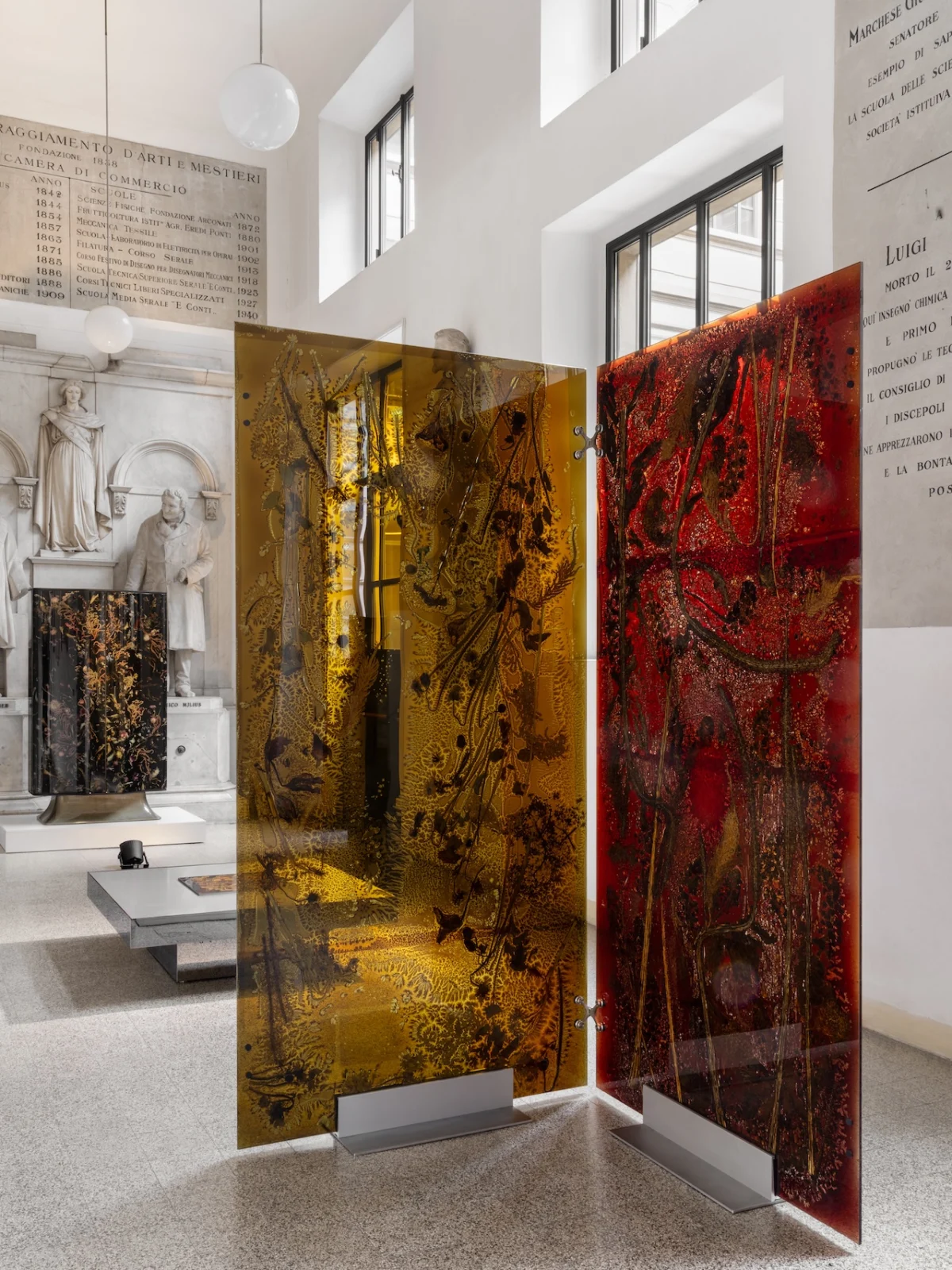
Milan Design Week, an annual global beacon for design and innovation, typically operates at a frantic pace, characterized by a relentless surge of hundreds of installations, product launches, and experiential events vying for immediate attention across a single, compressed week. This environment, often described as rewarding velocity over reflection, prioritizes commercial spectacle and rapid consumption. However, Marcin Rusak Studio’s Forum Florum: Herbarium of the Present deliberately counters this prevailing current, offering a profound counter-narrative centered on contemplation, education, and a deeper engagement with nature and material culture. Staged not within the bustling commercial showrooms of Salone del Mobile or the ephemeral pop-ups of Brera and Tortona, but within the venerable halls of SIAM (Società d’Incoraggiamento d’Arti e Mestieri), an institution founded in 1838, the exhibition consciously shifts from a spectacle economy to an environment more akin to a study hall or a living archive.
Milan Design Week: A Context of Speed and Spectacle
Milan Design Week, encompassing the official Salone del Mobile fair and the sprawling Fuorisalone events throughout the city, is arguably the most significant annual event in the global design calendar. Attracting over 370,000 visitors from 188 countries to the Salone alone, and countless more to the Fuorisalone districts, it generates an immense economic impact, estimated to be in the hundreds of millions of euros for the city. Its dynamism is fueled by a competitive landscape where brands, both established and emerging, unveil their latest innovations, often through elaborate, immersive, and visually striking installations designed to capture fleeting attention. This intense competition often translates into a demand for novelty, speed, and a rapid turnover of trends, creating an atmosphere where deeper contemplation can be overshadowed by the sheer volume of offerings. Against this backdrop, Rusak’s decision to cultivate an experience demanding time, introspection, and intellectual engagement stands as a deliberate and powerful artistic statement, questioning the very mechanisms of contemporary design dissemination.
SIAM: A Legacy of Craft, Education, and Public Engagement
The choice of SIAM as the venue for Forum Florum is central to its conceptual framework. The Società d’Incoraggiamento d’Arti e Mestieri was established in 1838 with a clear and progressive mission: to encourage and foster arts and crafts among Milanese workers, thereby contributing to the cultural and economic upliftment of the region. Throughout its long history, SIAM has remained steadfast in its commitment to public education and cultural enrichment. Unlike commercial galleries or brand-centric exhibition spaces, SIAM operates as a public cultural institution, primarily serving students, emerging designers, and a culturally engaged audience, rather than primarily targeting collectors or buyers. This inherent pedagogical nature of the institution perfectly aligns with Rusak’s intent. By situating his new body of work here, rather than in a high-traffic Brera gallery or a sprawling Tortona warehouse, Rusak effectively reframes the exhibition from a commercial display into an educational platform, inviting visitors to learn, reflect, and engage with the ideas presented on a deeper, more sustained level. The exhibition’s Latin title, Forum Florum, which translates roughly to "flower market" or "forum of flowers," further reinforces this intention, doubling as an open invitation for intellectual gathering and the exchange of ideas, much like a traditional academic forum.

Marcin Rusak Studio: A Visionary Approach to Nature and Materiality
Marcin Rusak, a Polish artist and designer based in London, has carved a distinctive niche in contemporary design through his profound exploration of nature, ephemerality, and sustainability. His studio is renowned for its innovative use of organic materials, often incorporating real flowers and plants into resin, creating unique, sculptural pieces that blur the lines between art and design. His celebrated "Flora series," for instance, transformed discarded flowers into intricate, decorative surfaces, challenging perceptions of waste and beauty. Rusak’s work frequently engages with themes of decay, preservation, and the passage of time, using botanical elements not merely as aesthetic embellishments but as carriers of memory and narratives about our relationship with the natural world. This philosophical underpinning guides his practice, positioning him as a leading voice in the growing movement towards "slow design" and material consciousness. Forum Florum represents a significant evolution in his artistic journey, expanding his material vocabulary and conceptual depth while maintaining his signature reverence for nature.
A Journey Through "Forum Florum": Installations Unveiled
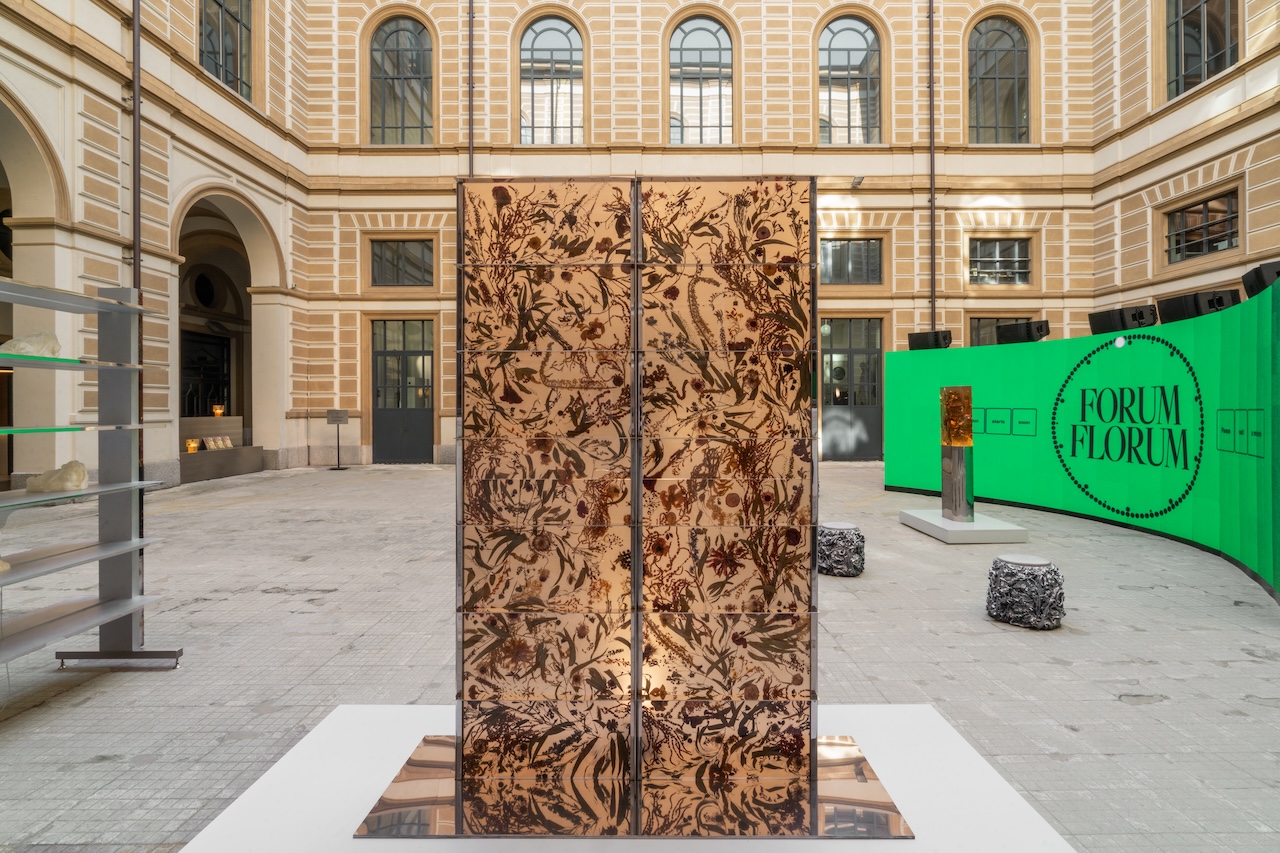
The exhibition unfolds across SIAM’s historic courtyard and two meticulously curated interior rooms, guiding the visitor through a sequence of installations designed to provoke thought and sensory engagement.

The "Flower Journey": Unpacking the Global Cut Flower Trade
The initial encounter within Forum Florum is the "Flower Journey" installation, a monumental portal that immediately draws the visitor into the exhibition’s core themes. This imposing structure, partially 3D-printed and partially cast in bronze, traces the complex and often problematic global history of the cut flower industry. Rusak’s design draws formal cues from the intricate, yet sometimes unfinished, facades of Medieval cathedrals and the organic, flowing lines of ornamental Art Nouveau thresholds, creating a piece that feels both ancient and contemporary.
Beyond its aesthetic grandeur, the "Flower Journey" serves as a powerful commentary on an industry that has scaled dramatically since its origins in 19th-century Dutch greenhouse cultivation. Today, it has transformed into a massive, extractive global trade, heavily reliant on export agriculture in regions like Kenya and Colombia. This industry, while economically vital for many developing nations, often comes with significant environmental and social costs. Data from organizations like the International Association of Horticultural Producers (AIPH) indicates that the global cut flower market is valued at tens of billions of dollars annually, with millions of stems exchanged daily. However, this scale is sustained through intensive agricultural practices that can involve high water consumption, extensive use of pesticides and fertilizers, and significant carbon emissions from refrigerated air transport across continents. By highlighting this "extractive trade," Rusak compels visitors to reflect on the hidden ecological footprints and socio-economic dynamics embedded within seemingly innocuous everyday objects like cut flowers, urging a re-evaluation of our consumption patterns and the global supply chains that sustain them.

"Plant Pulses": The Unheard Language of Nature
Further within the exhibition, visitors encounter "Plant Pulses," an immersive installation developed in collaboration with the renowned champagne house Perrier-Jouët. This ambitious project delves into the fascinating, often imperceptible, realm of plant communication. It translates ultrasound recordings of plant activity, meticulously captured by AGH University researchers Bartłomiej Chojnacki and Klara Chojnacka, into a compelling multisensory environment. Scientific research into plant bioacoustics suggests that plants, far from being passive organisms, engage in complex communication, emitting ultrasonic clicks and vibrations that play a role in their growth, stress responses, and interactions with their environment.
Composer Justyna Stasiowska and digital artist Eli Magaziner have ingeniously shaped this raw scientific data into a rich tapestry of sound and image, giving tangible form to a register of plant communication that ordinarily lies far below human perception. The installation invites visitors to attune themselves to the subtle rhythms and unheard voices of the botanical world, fostering a deeper sense of connection and empathy. This collaboration with Perrier-Jouët, a brand deeply rooted in its relationship with nature and terroir, further underscores the shared commitment to exploring the beauty and complexity of the natural world, albeit through different lenses. The installation is not just an artistic expression but a bridge between scientific inquiry and human sensory experience, challenging anthropocentric views and expanding our understanding of biological intelligence.

New Works and Material Innovation: A Stylistic and Technological Shift
Beyond the immersive installations, Forum Florum also serves as the debut platform for several significant new statement pieces that mark a stylistic and technological evolution for Marcin Rusak Studio. Among these are monumental 2.5-meter herbarium panels, which showcase an intricate lamination technique where selected flowers and plants are meticulously preserved between sheets of glass. These large-scale works elevate the traditional herbarium specimen into a grand artistic statement, capturing ephemeral beauty in a timeless form.
Accompanying these panels are new additions to Rusak’s flagship Flora series, including a new shelving system, a coffee table, and a mirror. These pieces extend the studio’s signature aesthetic, characterized by the embedded botanical elements, but with refined forms and perhaps new material combinations. A notable technological shift is evident in the inclusion of custom 3D-printed biodegradable sconces, which not only illuminate the space but also underscore the studio’s commitment to sustainable practices and material innovation. The use of biodegradable materials reflects a conscious move towards minimizing environmental impact, aligning with the exhibition’s broader themes of rethinking our relationship with nature. The overall staging of the exhibition, with its thoughtful arrangement of these new works, encourages visitors to "sit, recline, and linger," a direct antithesis to the fast-paced consumption model of typical design fairs. This invitation to slow down and physically inhabit the space reinforces the exhibition’s core message of reflection and prolonged engagement.

The Philosophy of Interdependence: Rusak’s Guiding Principle
Marcin Rusak articulates the overarching philosophy behind his exhibition, stating, "Forum Florum is an invitation to see plants as carriers of memory, knowledge, and interdependence—living archives through which we can rethink our relationship with materials, time, and nature." This powerful statement encapsulates the profound intellectual and emotional core of the exhibition. Rusak views plants not merely as decorative elements or raw materials, but as repositories of complex information – biological memory encoded in their structures, ecological knowledge derived from their interactions, and an inherent model of interdependence that sustains ecosystems.
By framing plants as "living archives," Rusak challenges conventional human-centric perspectives, proposing that much can be learned from observing and respecting the intricate systems of the natural world. This perspective encourages a re-evaluation of our own material culture, urging designers and consumers alike to consider the origins, life cycles, and ultimate impact of the materials and objects we produce and consume. It is a call to move beyond purely utilitarian or aesthetic considerations towards a more holistic understanding of design’s role in fostering a sustainable and interdependent future. This philosophical stance resonates deeply with contemporary global concerns about climate change, biodiversity loss, and the urgent need for a more symbiotic relationship between humanity and the planet.

Implications for Design and Exhibition Practice
Forum Florum: Herbarium of the Present offers significant implications for the future of design exhibitions and the broader design discourse. In a landscape increasingly dominated by commercial imperatives and digital distractions, Rusak’s exhibition champions a return to slow, immersive, and educational experiences. It demonstrates that exhibitions can serve not only as platforms for showcasing new products but also as spaces for critical inquiry, scientific exploration, and philosophical reflection.
By choosing a historically significant, non-commercial venue like SIAM, Rusak highlights the potential for design to engage with public institutions and serve a wider, more intellectually curious audience. This approach could inspire other designers and cultural organizations to explore alternative exhibition models that prioritize depth over breadth, and engagement over mere display. Furthermore, the exhibition’s explicit focus on sustainability, material ethics, and the hidden narratives of global supply chains underscores the increasing responsibility of designers to address pressing environmental and social issues. Forum Florum is a compelling example of how design can function as a catalyst for awareness and a vehicle for rethinking our collective future, inviting not just admiration, but genuine introspection and a renewed appreciation for the intricate, interdependent web of life.

Conclusion
Marcin Rusak Studio’s Forum Florum: Herbarium of the Present at SIAM during Milan Design Week is a deliberate and thought-provoking counterpoint to the event’s typical frenetic energy. Through its choice of venue, its meticulously crafted installations like "Flower Journey" and "Plant Pulses," and its profound philosophical underpinnings, the exhibition offers a powerful invitation to slow down, reflect, and engage with the botanical world as a source of memory, knowledge, and interdependence. It challenges prevailing commercial paradigms, champions sustainable practices, and redefines the potential of a design exhibition as a pedagogical platform for deeper understanding. In doing so, Rusak not only presents a stunning body of work but also offers a vital commentary on our relationship with materials, time, and nature, charting a path towards a more conscious and reflective future for design.







