
 Ali Ikhwan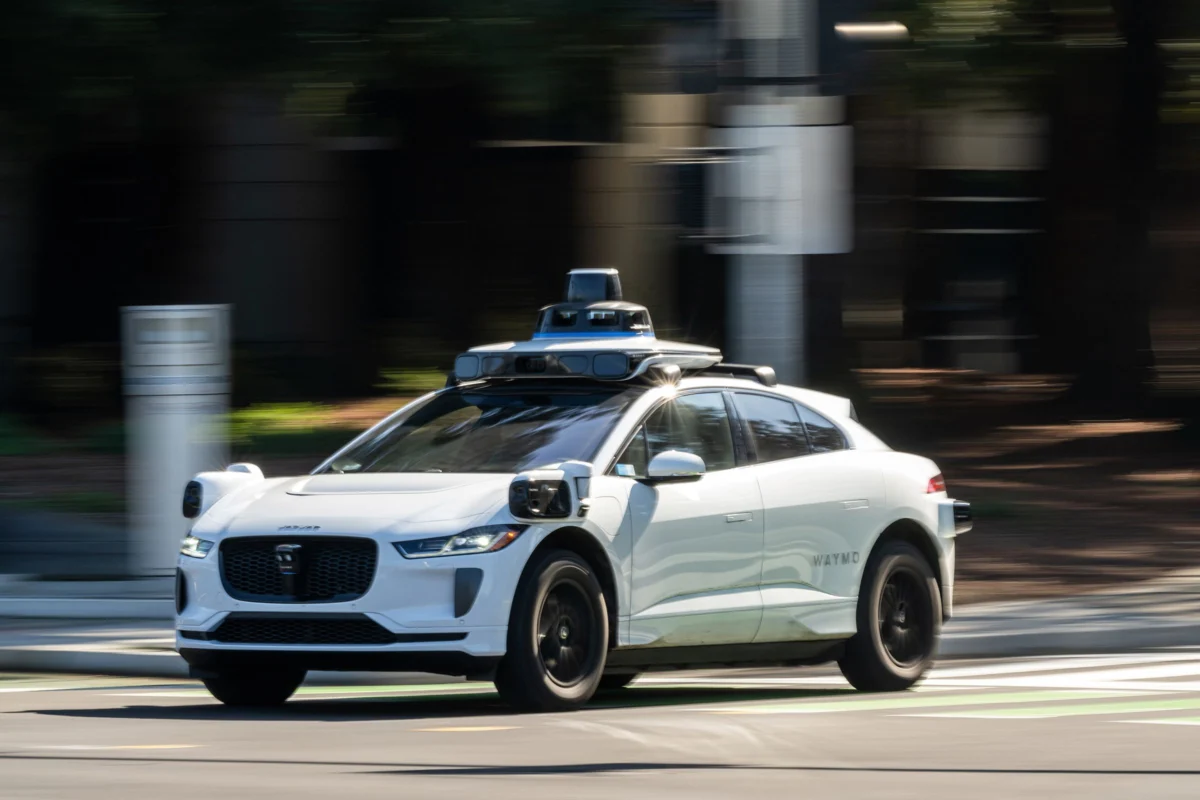
The friction between the rapid expansion of autonomous vehicle technology and the immediate needs of public safety reached a critical juncture last month during a private briefing between emergency first-responder leaders and federal regulators. In a meeting with the National Highway Traffic Safety Administration (NHTSA), high-ranking officials from San Francisco and Austin expressed deep-seated frustrations regarding the performance of driverless cars, specifically those operated by Waymo. According to audio recordings of the session obtained by WIRED, firefighters, police officers, and paramedics reported that they are increasingly forced to divert their attention from life-saving duties to manage "frozen" or "stuck" autonomous vehicles (AVs) that obstruct emergency routes and ignore manual traffic control signals.
The testimony provided by these officials suggests a troubling trend: rather than improving as the technology matures, the behavior of autonomous vehicles in complex urban environments may be deteriorating. Mary Ellen Carroll, Executive Director of San Francisco’s Department of Emergency Management, informed NHTSA officials that the city is observing a "backsliding" of progress. She noted that vehicles are committing more traffic violations and exhibiting unpredictable behaviors that had seemingly been resolved in previous years. This assessment stands in stark contrast to the marketing narratives of AV companies, which frequently emphasize the safety benefits of removing human error from the driving equation.
The Freezing Phenomenon and Its Impact on Emergency Response
Central to the complaints is the "default to freeze" programming inherent in Waymo’s software. When the vehicle’s artificial intelligence encounters a scenario it cannot confidently navigate—such as a complex accident scene, a power outage, or conflicting signals—it is designed to stop moving entirely to avoid a collision. While intended as a fail-safe, this behavior has become a significant liability for emergency crews. Chief Patrick Rabbitt, head of the San Francisco Fire Department, testified that Waymo vehicles are frequently blocking access to fire stations. He emphasized that these obstructions prevent firetrucks from responding to emergencies in a "timely and appropriate" manner, where every second is vital for fire suppression and medical intervention.
In Austin, the situation is similarly dire. Lieutenant William White, who leads the Highway Enforcement Command at the Austin Police Department, described the vehicles as being "stymied" by the "human element." One of the most significant technical gaps identified is the inability of AVs to recognize or respond to hand signals from officers. This failure is particularly problematic during "unusual road incidents" or when officers are mounted on motorcycles, where standard traffic patterns are disrupted. Lieutenant White argued that the technology was deployed "too quickly in too vast amounts" before it was fully prepared for the nuances of urban law enforcement and emergency management.
A Chronology of Critical Incidents
The concerns raised in the private NHTSA meeting are supported by a series of documented incidents over the past several months that highlight the practical dangers of AV integration.
In December, a widespread power outage in San Francisco provided a stress test that the AV fleet failed significantly. Without functioning traffic signals, more than 1,000 Waymo vehicles became stranded or struggled to navigate intersections. Waymo later reported that 60 of these vehicles had to be manually retrieved by human operators during the three-hour blackout. Mary Ellen Carroll testified that during this period, a 911 operator was kept on hold on Waymo’s emergency hotline for 53 minutes. Such delays in communication can have fatal consequences when dispatchers are trying to coordinate responses to life-and-death situations.
More recently, in Austin, a driverless vehicle blocked an ambulance for two minutes while it was attempting to reach the scene of a mass shooting downtown. The incident, which resulted in three deaths and 14 injuries, underscored the physical barriers these cars can pose. Although officers eventually moved the vehicle, they reported that in previous instances, it had taken up to three minutes just to connect with a remote Waymo agent.
Furthermore, the Austin Independent School District has raised alarms regarding student safety. Multiple reports have surfaced of driverless vehicles passing school buses while their stop arms were extended and alert lights were flashing—a move that is both illegal and highly dangerous for children boarding or exiting the buses. These incidents suggest that the vision systems of these vehicles may still struggle with specific, high-stakes regulatory signs and signals.
The Technical and Human Interface Gap
The "human element" remains the most challenging hurdle for autonomous systems. First responders noted that the current method of interacting with the vehicles is inefficient and often places personnel in harm’s way. Assistant Chief Nicole Jones of the San Francisco Police Department expressed frustration that officers often have to lean their heads inside the windows of robotaxis to speak with remote operators. This physical requirement is not only impractical during a fast-moving emergency but also potentially dangerous for the officer.
In response to these challenges, the San Francisco Police Department has advocated for the installation of exterior microphones and speakers on the vehicles. This would allow law enforcement and emergency personnel to communicate with Waymo’s remote support teams from a safe distance outside the vehicle. Despite these suggestions, the implementation of such hardware changes across existing fleets remains a point of contention.
Waymo’s Expansion and Corporate Response
Despite the vocal opposition from city leaders, Waymo—a subsidiary of Alphabet Inc.—is moving forward with an aggressive global expansion. The company currently provides approximately 500,000 paid rides per week across 10 U.S. cities, a tenfold increase from the previous year. Plans are already in motion to launch services in 10 additional cities, including high-density hubs like London, New York City, and Washington, D.C.
Waymo maintains that its data shows a significant reduction in serious crashes compared to human-driven vehicles. In a public statement, Waymo spokesperson Julia Ilina emphasized the company’s commitment to safety and its partnership with first responders. Waymo claims to have conducted in-person training for more than 35,000 emergency responders nationwide. Regarding the Austin City Council meeting—which Waymo declined to attend, leaving "Reserved for Waymo" chairs empty—Ilina stated that the company had already engaged in "substantive conversations" with city leadership and remains dedicated to building trust.
However, the disconnect between corporate safety data and the lived experience of city officials is growing. While Waymo points to a lower frequency of high-speed collisions, first responders are pointing to a high frequency of "low-speed obstructions" and "operational failures" that compromise the overall safety ecosystem of a city.
Regulatory Shifts and Future Implications
The tension between local governments and autonomous vehicle operators is complicated by the regulatory structure in the United States. In states like California and Texas, AV operations are primarily regulated at the state level rather than by individual cities. This leaves municipal first-responder departments with limited authority; they can request changes but lack the power to mandate them or halt operations.
This dynamic is beginning to shift, particularly in California. New regulations from the California Department of Motor Vehicles (DMV), set to take effect in July, aim to address several of the issues raised by first responders. The new rules will require AV companies to:
- Respond to calls from first responders within 30 seconds.
- Comply with temporary "do not enter" directives issued by emergency officials to clear incident zones.
- Ensure that vehicles exit an emergency area within two minutes of receiving a directive.
These regulations represent a significant win for local safety agencies, providing them with a legal mechanism to move obstructions during crises. However, the political landscape remains fraught. Waymo faces growing opposition from organized labor and political leaders in cities like Boston and Seattle, who are wary of both the safety implications and the potential for job displacement in the ride-hailing and delivery sectors.
Analysis of the Road Ahead
The reports of "backsliding" performance suggest that as AVs move from controlled testing environments to the chaotic reality of major metropolitan areas, the complexity of urban navigation is proving more difficult than initially anticipated. The "frozen" vehicle issue is a direct result of a conservative programming approach—better to stop than to hit something—but in the context of emergency management, a stopped vehicle can be just as dangerous as a moving one.
The upcoming July regulations in California will serve as a bellwether for the rest of the country. If these rules successfully mitigate the disruptions to emergency services without stifling the growth of the AV industry, they may provide a blueprint for other states. Conversely, if the technical limitations of the vehicles prevent them from meeting these 30-second and two-minute benchmarks, the industry could face a significant slowdown in its rollout.
For now, the sentiment among first responders remains one of cautious cooperation. As Lieutenant White of Austin noted, "We want them to succeed, and we understand that the technology is here." However, the consensus among those on the front lines is clear: the current pace of deployment has outstripped the technology’s ability to integrate safely into the delicate infrastructure of emergency response. The goal of "zero deaths" on the road, a common refrain in the AV industry, must include the victims who are currently waiting for ambulances blocked by the very technology designed to save them.







