The digital landscape of social media marketing continues to grow increasingly competitive, forcing brands, creators, and small business owners to optimize every element of their distribution strategy. According to comprehensive new research published in Buffer’s State of Social Engagement 2026 report, the timing of a social media post remains a critical factor in determining its initial reach and algorithmic visibility. Analyzing an extensive dataset of 9.6 million Instagram posts published between January 2024 and December 2025, researchers have identified specific windows that consistently maximize audience interaction. The findings indicate that the optimal moments to publish content on the platform are Thursdays at 9:00 a.m., Wednesdays at 12:00 p.m., and Wednesdays at 6:00 p.m.
Background Context and Methodology
The challenge of timing content distribution has evolved alongside the architecture of major social platforms. In the foundational years of photo-sharing applications, chronological feeds dictated that content appeared strictly in the order it was published, making exact posting times vital. Today, algorithmic curation governs user feeds, prioritizing relevance, user history, and engagement signals over simple recency. However, marketing professionals and data scientists have long recognized that recency still serves as a vital catalyst. When a piece of content is published precisely when a target audience is actively browsing, it generates early interactions—such as likes, comments, and direct shares. This initial velocity signals to the underlying algorithm that the media asset holds intrinsic value, prompting the platform to distribute it to a broader secondary audience.
![Best Time to Post on Instagram: Data from 9.6M Posts [Updated Sep 2026]](https://storage.ghost.io/c/6d/21/6d217297-aa70-41fe-b68d-e29e411dd3ed/content/images/2026/01/best-time-to-post-on-instagram-2026.png)
Buffer’s comprehensive study evaluated 52 million total posts across 10 distinct social platforms, drawing insights from over 200,000 verified accounts. Within the Instagram ecosystem specifically, the analysis of 9.6 million posts provided a granular look at user habits across different time zones. To ensure global applicability, data scientists normalized the timestamps so that local times apply uniformly regardless of whether a user is operating in Eastern Standard Time, Pacific Standard Time, or international zones.
Chronological Breakdown of Engagement Patterns
The data reveals that user engagement on Instagram does not distribute evenly across the week. Instead, clear peaks and troughs emerge, dividing the week into high-performing periods and severe engagement lulls.
Wednesday stands out as the highest-performing day overall, driven by multiple traffic spikes. In addition to the primary evening peak at 6:00 p.m., Wednesday features an unusual midday spike at 12:00 p.m., coinciding with typical workplace lunch breaks. Thursday follows closely as a premier day for publishing, anchored by a unique morning peak at 9:00 a.m. Tuesday secures the position of third-strongest day overall, with peak engagement stretching from mid-afternoon into early evening, particularly around 7:00 p.m.
![Best Time to Post on Instagram: Data from 9.6M Posts [Updated Sep 2026]](https://storage.ghost.io/c/6d/21/6d217297-aa70-41fe-b68d-e29e411dd3ed/content/images/2026/01/best-time-to-post-instagram-2026-heatmap.png)
Conversely, the data highlights significant contractions in audience activity during the late-night and weekend hours. The absolute worst times to publish content across any day of the week fall between 1:00 a.m. and 5:00 a.m., corresponding with standard sleeping hours. On a macro level, Friday and Saturday emerge as the weakest days for overall engagement, characterized by depressed activity across nearly all hourly slots. For publishers compelled to maintain a weekend presence, Sunday evenings—specifically between 8:00 p.m. and 10:00 p.m.—offer the most viable window to capture users winding down before the start of the standard workweek.
| Day of the Week | Optimal Posting Times (Local) | Engagement Tier |
|---|---|---|
| Wednesday | 12:00 p.m., 6:00 p.m., 8:00 a.m. | Highest |
| Thursday | 9:00 a.m., 8:00 a.m., 7:00 a.m. | Highest |
| Tuesday | 7:00 p.m., 3:00 p.m., 5:00 p.m. | High |
| Monday | 7:00 p.m., 6:00 p.m., 8:00 p.m. | Moderate |
| Sunday | 9:00 p.m., 10:00 p.m., 8:00 p.m. | Moderate |
| Friday | 10:00 p.m., 9:00 p.m., 6:00 a.m. | Low |
| Saturday | 9:00 p.m., 10:00 p.m., 8:00 p.m. | Low |
Algorithmic Priorities and Format Considerations
Understanding how the platform ranks content provides essential context for why certain posting times succeed. According to public statements from Adam Mosseri, Head of Instagram, platform algorithms have evolved to prioritize specific user behaviors. Most notably, "sends per reach"—the frequency with which users direct-message a post or reel to a peer—has emerged as a premier ranking signal.
This behavioral metric heavily influences how different content formats perform throughout the day. Instagram Reels, which Mosseri notes are primarily consumed for entertainment, align naturally with evening hours between 6:00 p.m. and 11:00 p.m. During these late hours, users possess the unhurried blocks of time necessary to watch video content and share it within their social circles. Carousels and multi-image static posts also perform effectively during transitional periods, such as lunch breaks and post-work evening windows, where readers can dedicate cognitive focus to swiping through informative slides.
![Best Time to Post on Instagram: Data from 9.6M Posts [Updated Sep 2026]](https://storage.ghost.io/c/6d/21/6d217297-aa70-41fe-b68d-e29e411dd3ed/content/images/2026/01/best-day-to-post-instagram-2026-.png)
Instagram Stories operate under a different lifecycle entirely. Because Stories automatically expire after 24 hours, publishing consistency supersedes precise hourly targeting. Industry best practices derived from platform guidance suggest maintaining a steady cadence of one to two Stories daily to remain prominent at the top of the user interface.
Broader Economic and Strategic Implications
For corporate marketing teams and independent creators alike, the saturation of the digital marketplace demands higher efficiency. Statista demographic data indicates that over a third of Instagram’s user base falls within the 25-to-34 age bracket—a demographic deeply integrated into the modern workforce. The evening engagement peaks identified in Buffer’s study directly reflect the lifestyle patterns of this core audience, who utilize the application as a primary vehicle for post-work relaxation and personal connection.
While optimizing posting schedules represents a powerful lever for visibility, industry analysts emphasize that timing alone cannot salvage low-quality material. Content value, visual fidelity, relevance, and adherence to community interests remain foundational. Strategic scheduling should be viewed as an optimization layer that amplifies high-caliber creative work rather than a substitute for it.
![Best Time to Post on Instagram: Data from 9.6M Posts [Updated Sep 2026]](https://storage.ghost.io/c/6d/21/6d217297-aa70-41fe-b68d-e29e411dd3ed/content/images/2026/05/image-6.png)
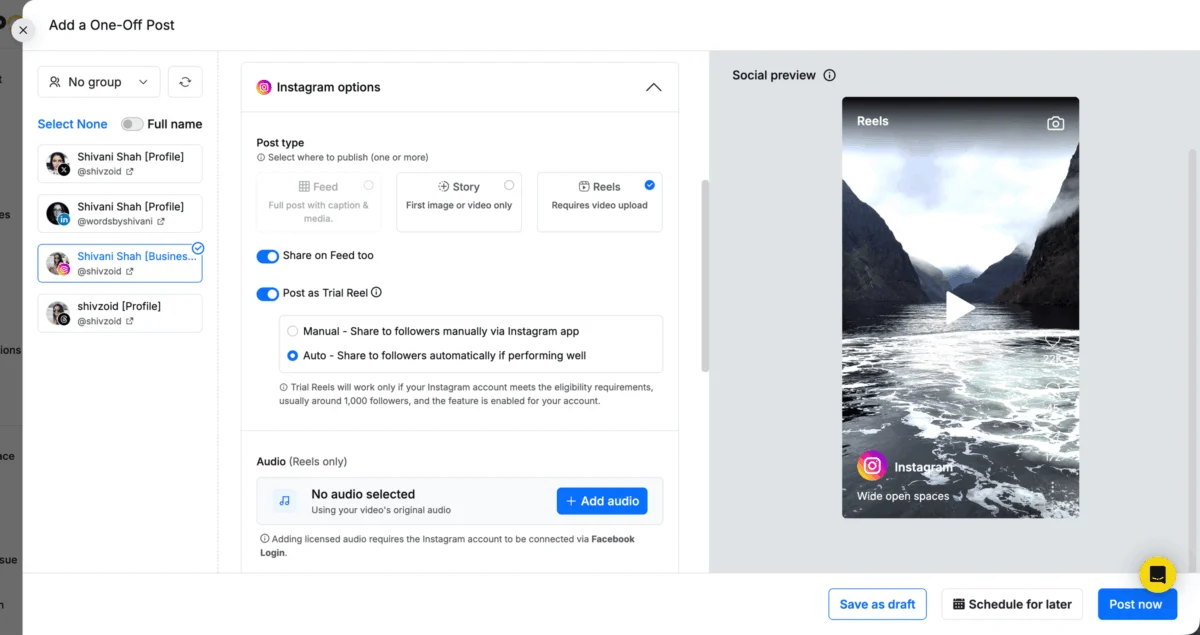
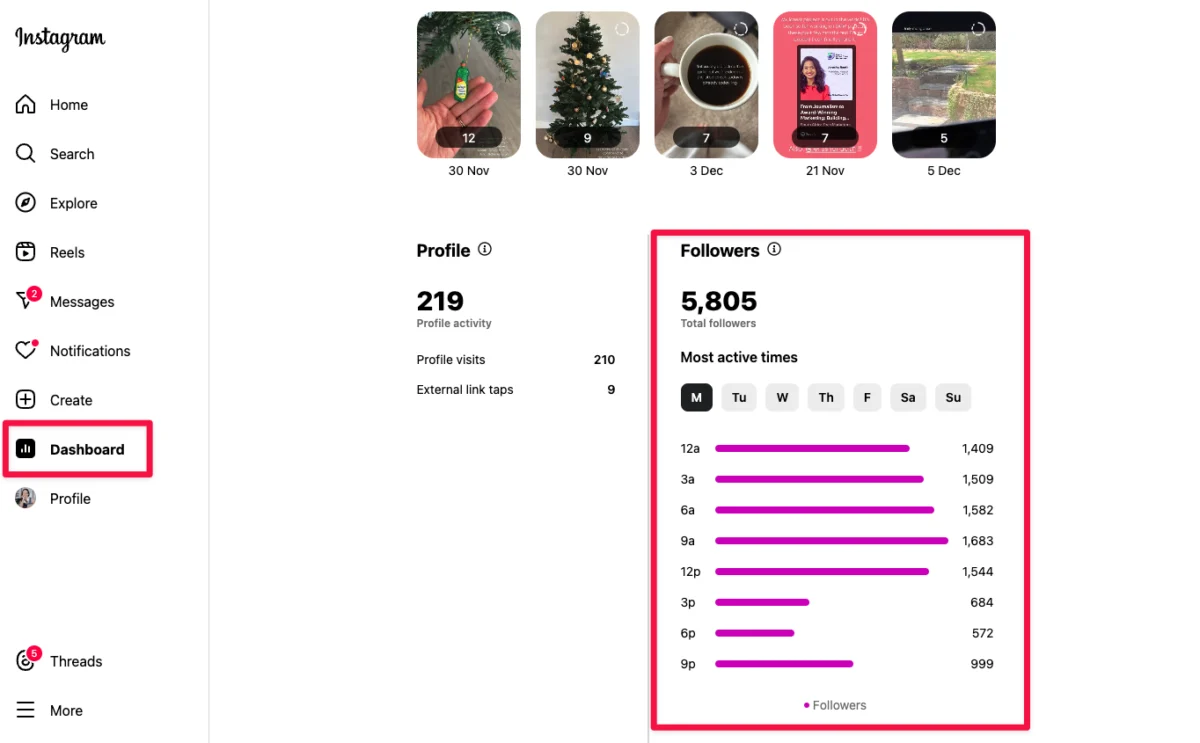
To operationalize these findings, marketing professionals frequently leverage automated social media management platforms, such as Buffer, which allow users to pre-program optimal posting slots directly into their content calendars. By synchronizing publishing workflows with empirical audience activity data, organizations can systematically reduce the guesswork associated with digital distribution and secure a competitive advantage in an increasingly crowded social ecosystem.