
In the contemporary digital landscape, maintaining a consistent and strategic brand presence across multiple social networks requires robust infrastructural support. As digital marketing continues to evolve from an auxiliary operational task into a core revenue driver for enterprises and independent creators alike, the selection of a primary social media management tool has become a critical operational decision. Among the myriad software-as-a-service (SaaS) options available on the market, Buffer and Later have emerged as two of the most prominent platforms. While both ecosystems facilitate post-scheduling, audience engagement, and performance analytics, their underlying architectures, pricing mechanisms, and feature sets cater to distinctly different user requirements. Understanding the technical and financial distinctions between these two platforms is essential for marketing professionals, small business owners, and digital creators aiming to maximize their digital ROI.
Evolution and Market Positioning
The social media management software sector has expanded rapidly over the past decade, driven by the proliferation of digital platforms and the increasing complexity of cross-channel publishing algorithms. Buffer entered the market as a pioneer in streamlined, queue-based scheduling, focusing heavily on user-friendly interface design and multi-platform flexibility. Over successive development cycles, the platform has expanded its capabilities to include unified community management, AI-assisted content generation, and advanced analytics, all while maintaining its core commitment to simplicity and predictable scaling.
Conversely, Later originated with a specialized emphasis on visual-first platforms, most notably Instagram. Recognizing the challenges associated with grid aesthetics and visual asset management, Later developed a signature drag-and-drop calendar interface that allowed marketers to curate visual feeds prior to publication. As the platform matured, Later broadened its support to include a wider array of networks—such as TikTok, LinkedIn, and YouTube Shorts—while introducing advanced commerce integrations, influencer marketing tools, and social listening add-ons. Consequently, the historical divergence between Buffer’s efficiency-driven, cross-platform approach and Later’s visual-centric, commerce-oriented philosophy continues to shape their current market positioning.
Pricing Structures and Cost Implications
Financial scalability is frequently the primary determinant when organizations select a social media management solution. The pricing models employed by Buffer and Later reflect fundamentally different philosophies regarding resource allocation and user monetization.
Buffer utilizes a flexible, channel-centric pricing architecture. Users can select and pay exclusively for the specific social channels they require, preventing organizations from incurring expenses for unused network connections. Buffer’s free tier accommodates up to three social channels across any supported platform, while paid plans commence at modest entry points. Furthermore, Buffer’s team-oriented tiers incorporate unlimited user seats, ensuring that personnel expansion does not trigger incremental software licensing costs. This predictable financial model appeals strongly to growing teams, agencies, and independent creators operating under tight budgetary constraints.
In contrast, Later adopts a bundled subscription framework structured around "social sets." Under this model, paid users must purchase bundles that include one account from each supported platform. Consequently, organizations cannot cherry-pick individual network connections; connecting a single Facebook page and a LinkedIn profile still requires subscribing to a full social set. Furthermore, managing multiple accounts on the same platform—such as two distinct Instagram profiles—necessitates the purchase of additional social sets, which can substantially increase overhead. Later’s user seat allocation is similarly tiered, with specific limits imposed on Starter, Growth, and Scale plans, requiring supplementary expenditures for additional team member access.
Platform Compatibility and Channel Support
Comprehensive channel integration remains a vital metric for evaluating social media software. Discrepancies in platform support can directly influence an organization’s distribution strategy.
Buffer currently supports eleven distinct platforms and network variants, offering extensive versatility for brands seeking broad digital visibility. Supported channels include Instagram, Facebook (Pages and Groups), X (formerly Twitter), LinkedIn, TikTok, Pinterest, Google Business Profiles, Mastodon, YouTube Shorts, Threads, and Bluesky. This wide-ranging compatibility enables holistic multi-channel campaigns managed from a single operational dashboard.
Later provides native integration for eight core platforms: Instagram, Facebook (Pages only), Threads, Pinterest, TikTok, LinkedIn, YouTube Shorts, and Snapchat. Notably, Later omits support for X, Bluesky, Mastodon, and Google Business Profiles, while remaining the only option of the two to integrate directly with Snapchat. For enterprises heavily invested in professional networking or micro-blogging ecosystems absent from Later’s roster, Buffer provides a more inclusive operational environment.
Content Scheduling, Automation, and Publishing Workflows
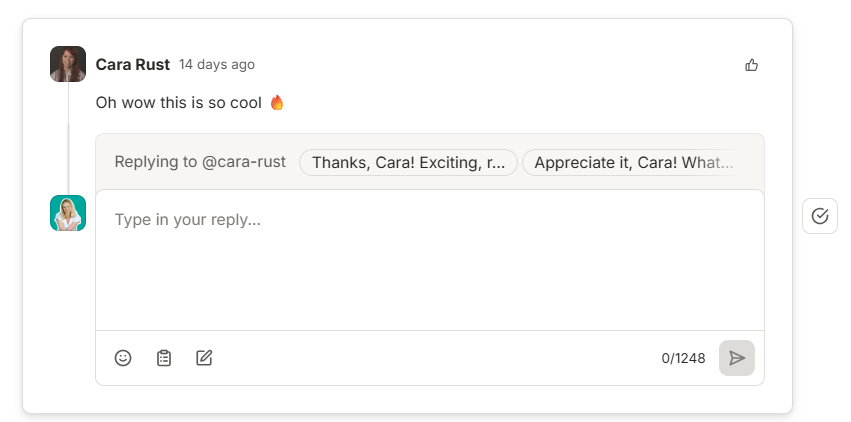
Both platforms facilitate advanced post-creation and scheduling, enabling users to draft content simultaneously for multiple destinations while customizing captions per network. However, their underlying workflow mechanics diverge significantly regarding volume caps and bulk-processing capabilities.
Buffer imposes no restriction on scheduled posts across its paid tiers, while its free plan allows up to 10 scheduled posts per channel concurrently. Additionally, Buffer accommodates bulk content uploads via CSV files on paid tiers, enabling organizations to upload up to 100 posts simultaneously to streamline large-scale marketing campaigns. Channel grouping features further optimize this process, allowing managers to define pre-selected combinations of accounts—such as a corporate LinkedIn, Facebook, and Threads bundle—and publish to all designated endpoints with a single click.
Later enforces strict monthly scheduling quotas on its lower-tier plans; the Starter tier limits users to 30 scheduled posts per profile monthly, while the Growth tier caps output at 180 posts per profile. Unlimited scheduling is reserved exclusively for the high-end Scale plan. Furthermore, Later does not currently support bulk scheduling via CSV imports, requiring manual input for high-volume content operations. Nevertheless, Later excels in visual asset organization through its shared media libraries and drag-and-drop calendar integration, making it exceptionally well-suited for aesthetic-driven campaigns on platforms like Instagram and Pinterest.
Artificial Intelligence Integration and Content Ideation
The integration of generative artificial intelligence has fundamentally altered how digital marketers draft copy, conceptualize campaigns, and repurpose content. Both Buffer and Later have incorporated AI capabilities into their software suites, though their monetization and access models differ starkly.
Buffer integrates its AI Assistant across all subscription tiers, including the permanent free plan, without usage restrictions. Users can generate creative prompts, draft and refine captions, and reformat content for alternative networks without risking service interruptions or incurring supplementary fees. This universal accessibility mitigates operational friction for resource-constrained creators.
Later restricts its AI-powered features to paid tiers, employing a credit-based consumption model. Each generation of captions or content ideas deducts specific credits from the user’s monthly allocation. Once exhausted, organizations must either wait for the subsequent billing cycle or purchase supplemental credit tokens, introducing a variable operational cost for heavy AI users.
Audience Engagement and Community Management
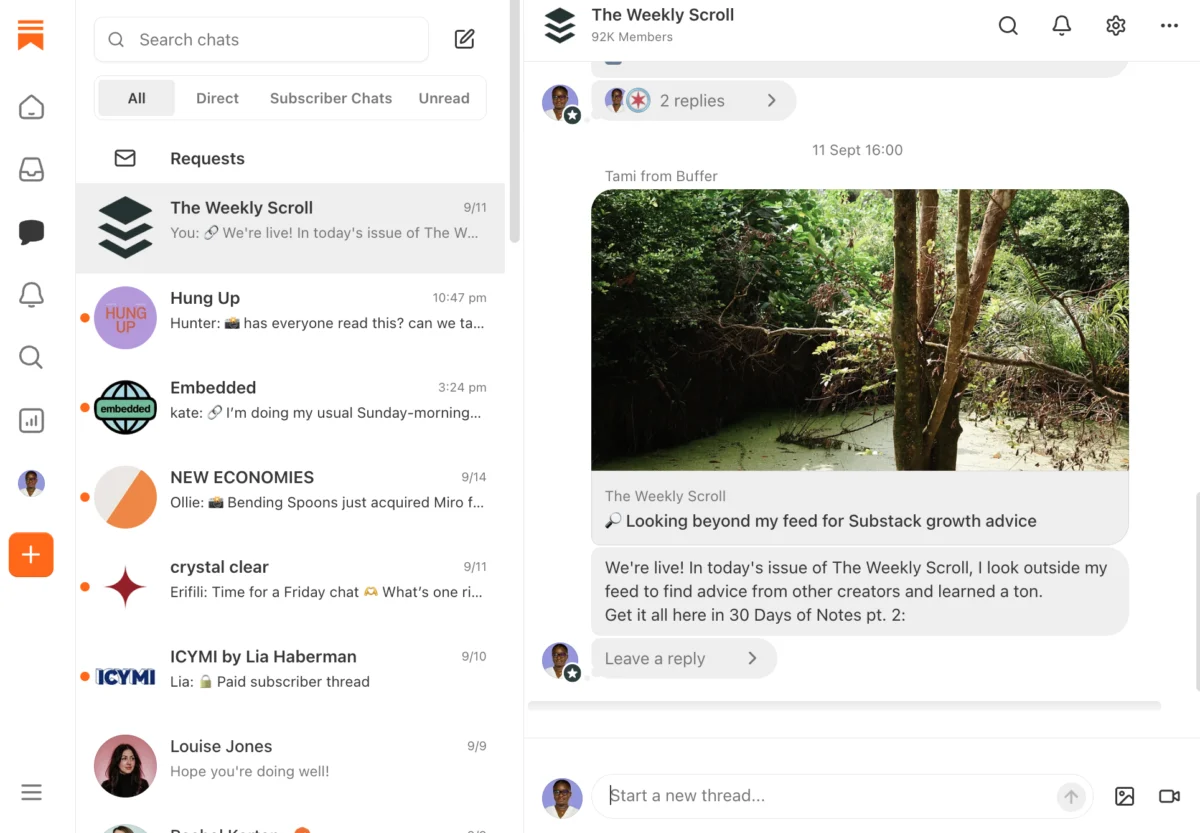
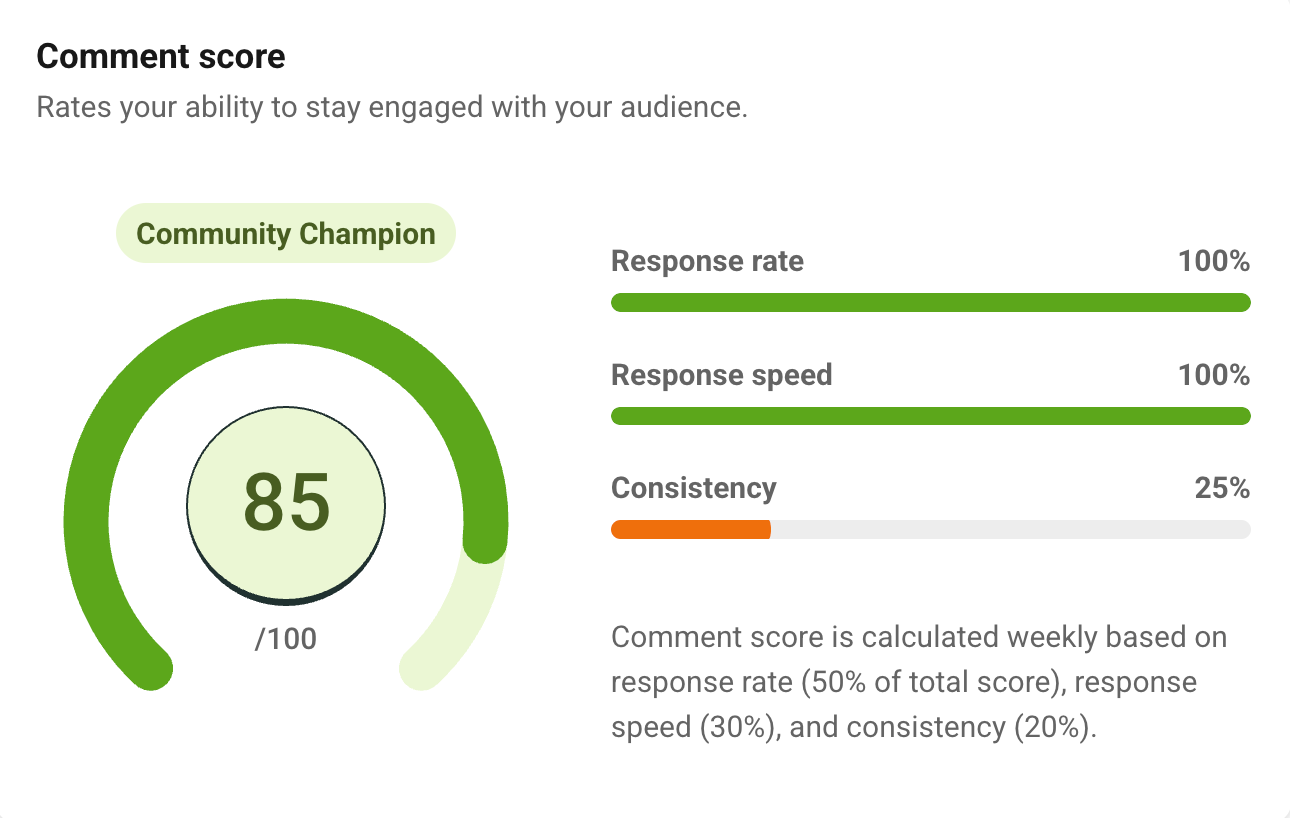
Maintaining active communication with digital audiences requires responsive engagement tools. Buffer approaches community management through its integrated Community feature, accessible across all plans, including the free tier. The tool consolidates comments and mentions from numerous networks into a unified inbox, supplemented by AI-generated response suggestions and saved reply templates for frequently asked questions. Uniquely, Buffer introduces a "comment score" metric, tracking response times and consistency to help managers identify engagement bottlenecks.
Later restricts its Social Inbox to higher-tier Growth and Scale plans, leaving solo users on free or starter tiers unable to manage direct messages and comments natively within the platform. However, Later includes robust administrative controls within its inbox, such as the ability to hide inappropriate or spam comments directly from the management interface. Additionally, Later offers advanced social listening and sentiment analysis tools as paid add-ons for enterprise-level accounts, providing competitive benchmarking and brand monitoring capabilities.
Analytics, Insights, and Performance Reporting
Data-driven optimization relies on comprehensive performance metrics. Buffer offers fundamental analytics across all tiers—including the free version—with advanced historical reporting unlocked on paid subscriptions. A defining capability of Buffer’s analytics suite is its AI-powered "Takeaways" feature, which autonomously evaluates performance data to highlight operational patterns, successful content formats, and strategic recommendations.
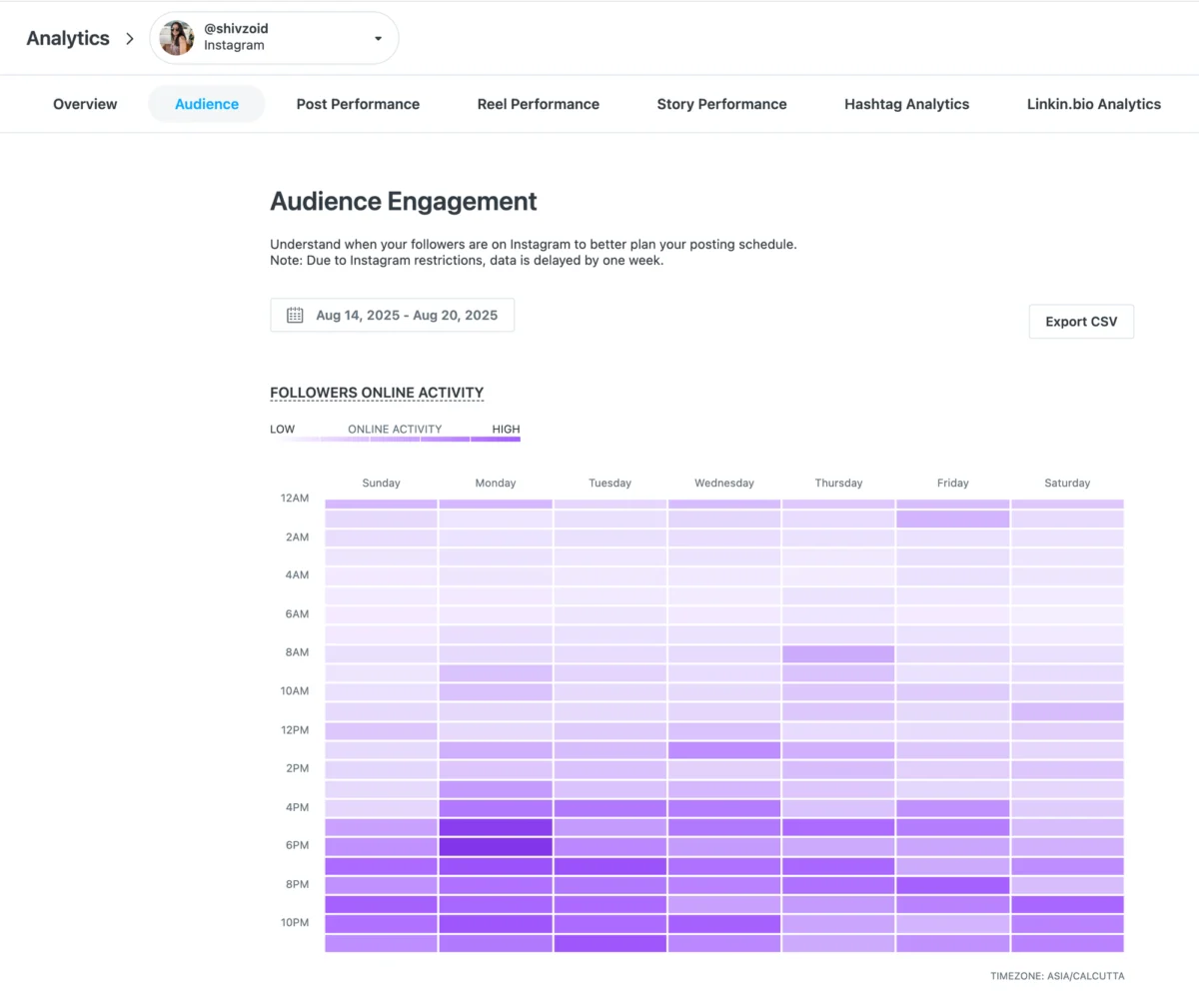
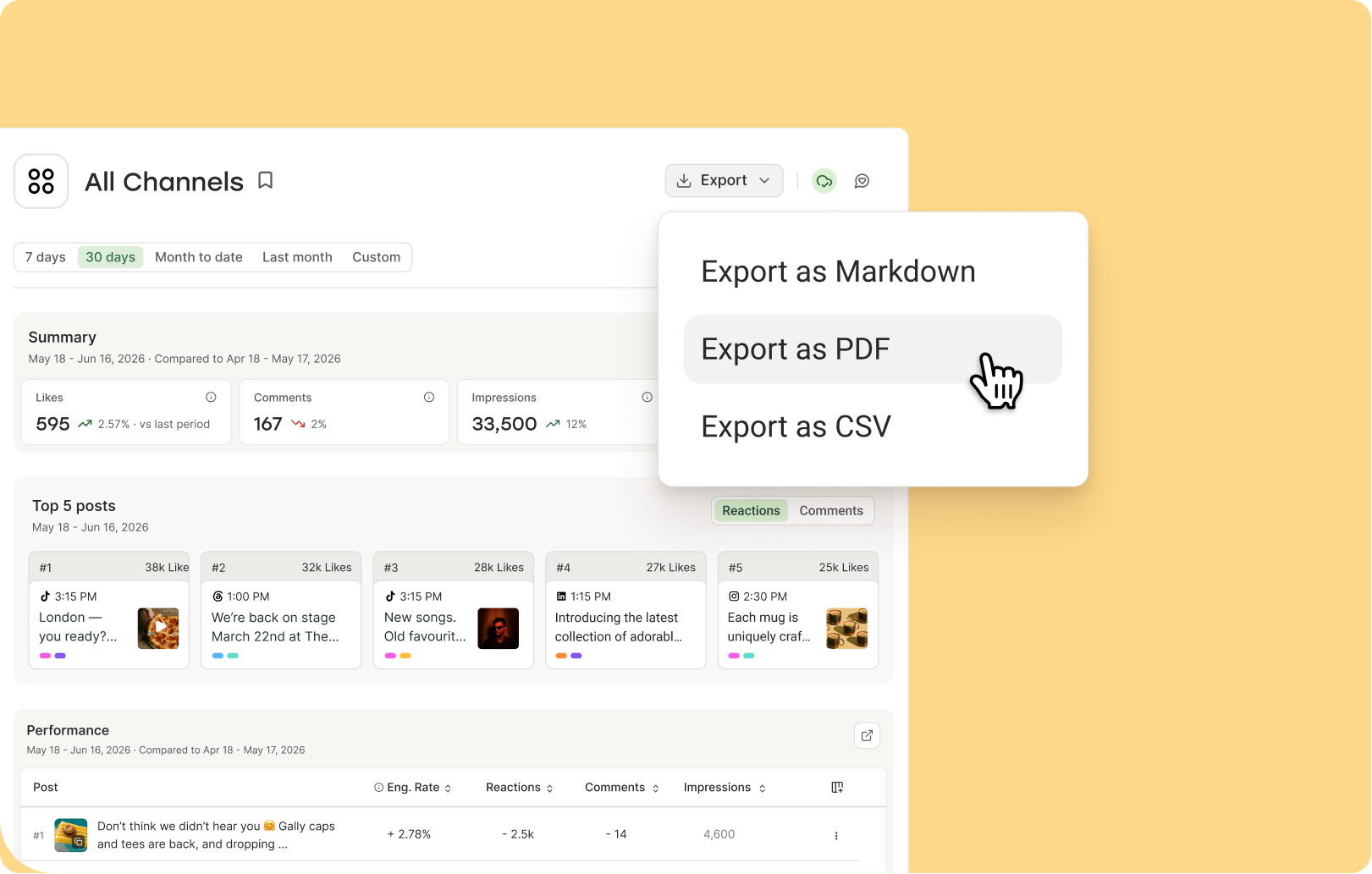
Later provides granular demographic data for Instagram, Facebook, TikTok, and Threads, detailing audience age, geographic distribution, and optimal posting times based on follower activity heatmaps. However, cross-account performance aggregation is restricted to top-tier enterprise plans, and native PDF export capabilities are absent, requiring users to download data via CSV files or rely on specialized Instagram performance report links.
Link-in-Bio and Commerce Solutions
Maximizing conversion rates from social media profiles requires effective landing page tools. Buffer’s Start Page enables users to construct customizable link-in-bio sites featuring modular content blocks, unlimited image grids, and affiliate link integration, all available across all plan levels.
Later’s Linkin.bio tool emphasizes electronic commerce, offering native integrations with Shopify and Mavely. This enables merchants to tag specific products within visual posts, track conversion metrics directly from social traffic, and seamlessly convert standard URLs into monetized affiliate links.
Strategic Implications and Selection Framework
Selecting between Buffer and Later depends heavily on an organization’s structural priorities, financial model, and channel strategy. Buffer provides an economically predictable, flexible, and feature-rich environment well-suited for multi-platform generalists, solopreneurs, and collaborative teams requiring unlimited user seats and broad network compatibility. Conversely, Later delivers specialized utility for visually oriented brands, e-commerce merchants, and agencies deeply committed to Instagram-centric workflows, visual calendar planning, and commerce-driven funnel optimization. As social media algorithms continue to demand both consistent cross-platform dissemination and high-fidelity visual curation, understanding these systemic differences will remain paramount for effective digital governance.